Culture

Culture

The good, the bad and the ugly in books, exhibitions, cinema, TV, dance, music, podcasts and theatre.

Meet the musicians trying to revive French-language pop 

Arts feature

The other day, I went to see a nouveau riot-girl band called Claire Dance play in a disused factory in Bagnolet on the edge of Paris. They were great: the kind of sonic kick in the nuts I’d been waiting more than a decade for an all-female band to deliver. I half-wondered whether it was just my own imperfect command of French that left me clueless as to their message. ‘C’était tout een eenglish,’ came the response from the guitarist afterwards. How come they never considered accompanying such emotionally charged music with lyrics in their mother tongue? ‘It’s considered cringe,’ she replied. ‘We only like English music.

The problem with Swan Lake

Dance

Over this summer you can see Swan Lake performed at the Royal Opera House by the Royal Ballet; at the Coliseum by a company from Georgia; at Sadler’s Wells by Chinese acrobats; and at the Royal Albert Hall by English National Ballet. It is expected therefore to attract audiences of Taylor Swiftian magnitude – well in excess of 100,000, by my very rough reckoning. And should you dread autumnal withdrawal symptoms, then fear not: a film of Matthew Bourne’s version will be shown in cinemas in September, prior to a national live tour starting in November and continuing until May, including a two-month season at Sadler’s Wells over Christmas.

Does it matter how posh pop stars are?

Pop

‘A working class hero is something to be.’ Rishi Sunak and Keir Starmer must have missed the conflicted, sardonic edge to John Lennon’s lyric, from his 1970 song ‘Working Class Hero’, given their rush to scrub away the whiff of privilege in the crudest manner imaginable. Sunak, desperately, by means of bemoaning a childhood forever blighted by lack of access to satellite TV; Starmer by dully hammering home that he is the son of a toolmaker. A country pile, a double-barrelled girlfriend and a mock-regal drawl were valued plunder in 1960s pop As in politics, so in music. In both fields, class anxiety has become inverted. The fear now is to appear too privileged. It wasn’t always thus.

A sugar rush for the eyes: Glyndebourne’s The Merry Widow reviewed

Opera

In 1905, shortly before the world première of The Merry Widow, the Viennese theatre manager Wilhelm Karczag got cold feet and tried to pull it. He offered Franz Lehar hard cash to withdraw the score, and when that failed, he rushed it on under-rehearsed, using second-hand sets from an older show. Or so the story goes anyway. Karczag couldn’t know that within a decade The Merry Widow would become the most successful piece of musical theatre in human history up to that point: an all-conquering global brand that gave its name to hats, corsets, cigarettes and a rather nice cocktail (equal measures gin and vermouth, splashed with absinthe, Bénédictine and bitters, in case you’re curious). In the 1920s an American firm even marketed Merry Widow condoms.

‘I want every production I do to be the funniest’: an interview with Cal McCrystal

Arts feature

There are certain things that you don’t expect at the opera. Laughter, for example. Proper laughter, that is; not the knowing sort that ripples politely across the auditorium five seconds after the punchline appears in the surtitles. We’re talking unconstrained laughter; laughter that gives you an endorphin rush and sends you straight online to tell your friends that they must see the show. But that’s Cal McCrystal’s whole business. He’s the director who devised James Corden’s delirious plate-spinning capers in the National Theatre’s One Man, Two Guvnors and whose face (in motion-capture) provided the elastic expressions of a small Peruvian bear in Paddington. ‘I want every production I do to be the funniest I’ve ever done.

‘Psychedelic folk that twists and leaps’: Beth Gibbons, at the Barbican, reviewed

Pop

A decade ago, a group of people who owned small music venues came to the conclusion that the kinds of places they ran were teetering on the brink of a catastrophic extinction event. And so they formed the Music Venue Trust, which has spent ten years kicking cans and shouting the odds about the need to preserve these places, about how they are the production lines from which the festival headliners of tomorrow come. A brilliant guitarist, a fascinating songwriter, St Vincent cycles sleekly through styles with utter assurance Quite right. Good, small venues are the best place to enjoy both live, loud, raucous music and intimate performances where the crowd’s hush is as deafening as any amp.

Thank goodness Busoni’s Piano Concerto is returning to the Proms

Classical

On 5 August, Ferruccio Busoni’s Piano Concerto will be performed at the Proms for only the second time. It should have been the third time, but a Musician’s Union strike in 1980 forced the cancellation of the concert at which Martin Jones had been booked to give the première. Jones is a fearless virtuoso, still recording in his eighties, but one can’t help wondering whether his disappointment back then was tinged with relief. In one place, the soloist’s fingers must wrap themselves around 128 notes in a single bar Garrick Ohlsson, a long-time champion of the work, describes its difficulties as ‘absolutely immense, and 25 per cent of this piece is the most cruelly difficult writing in any piano concerto’.

A fitting – and lovable – tribute to Frederick Ashton

Dance

I encountered Frederick Ashton at a dinner party shortly before he died in 1988. Frail and anxious, he clutched my arm and demanded to know which of his creations I thought would survive him. I duly reeled off some titles, but felt that any opinion I expressed would have disappointed him. In public, he professed to care not a fig for posterity, but he evidently did, and his will set out thoughtful arrangements parcelling ownership of his works out to various trusted colleagues, with the bulk passing to his nephew, the Royal Ballet’s administrative director Anthony Russell-Roberts. How exhilarating to be reminded of Ashton’s remarkable range, and of choreography so inventive This may have seemed like a sound investment, but it turned out badly.

An exhilarating debut: Peltokoski’s Mozart Symphonies reviewed

The Listener

Grade: A- Here’s an oddly structured album of Mozart’s symphonies 35, 40 and 36 from the world’s most fashionable young Finnish conductor – and, no, it isn’t Klaus Makela, the 28-year-old maestro of the Oslo Philharmonic and Orchestre de Paris who’s taking over in Amsterdam and Chicago. It’s Tarmo Peltokoski, 24, who hasn’t yet had to cope with iffy reviews hinting that he’s been overpromoted. Peltokoski is cute, clever and scarily self-assured. He’s already music director of the Latvian National Symphony Orchestra and is about to hold the same position in Toulouse. He’s principal guest conductor of the Rotterdam Philharmonic and also the Deutsche Kammerphilharmonie Bremen, the Mercedes-Benz of chamber orchestras.

How a TikTok dance craze turned into a brainwashing cult

Television

Because you don’t – I hope – use TikTok you will never have heard of the Wilking sisters. But back in the day (2020) they were huge, their homemade videos of dance routines performed at their suburban Michigan home attracting 127 million views. A year later, it all turned sour. Dancing for the Devil: The 7M TikTok Cult opens with one half of the sibling duo, Melanie, talking tearfully about her terrible loss. You think at first that Miranda has died. But no, it’s almost worse, for Miranda has become a living ghost – still present on social media, but dead to her family and friends, and unrecognisable from the girl-next-door she used to be. She has been sucked into a religious cult called the Shekinah Church.

Shiny, raunchy, heartless spectacular: Platée, at Garsington, reviewed

Opera

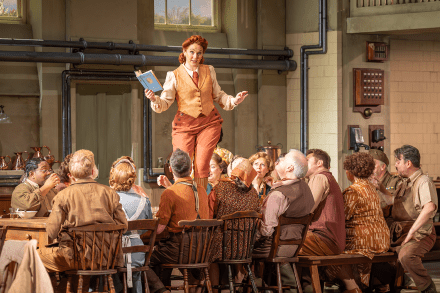
Fast times on Mount Olympus. Jupiter has been shagging around again and now his wife Juno has bailed on their hit reality show Jupiter & Juno, storming off set in a thundercloud of gold lamé and wheeled luggage. The producers are freaking out. Production runners scamper in all directions until Bacchus sends out to Starbucks and they all sit down to brainstorm a route out of ratings Hades. Meanwhile the luxury villa lies silent, its jacuzzi empty and the fake grass scattered with cardboard coffee trays. Cupid, it turns out, might have a plan – she knows a wannabe called Platée and, hilariously, she’s a total minger. Garsington’s new Platée is Greco-Roman mythology restaged as Celebrity Love Island And that’s just the prologue.

An exclusive look at Graham Linehan’s Father Ted musical

Arts feature

The tree-lined streets of Rotherhithe are an odd place to unveil a West End musical. But this is a suitably odd situation. Graham Linehan – lauded comedy writer turned culture warrior – is about to unveil what he calls ‘a musical that may never be seen’. For much of the past 30 years, the idea of turning Father Ted, cult sitcom of the 1990s, into a West End musical would have seemed a hot prospect – certainly to the legions of nerdy, largely male fans who still stream episodes decades later. Once upon a time, it looked destined for Shaftesbury Avenue, backed by one of the biggest names in theatre. Now it might be going nowhere.

When Fauré played The Spectator

Classical

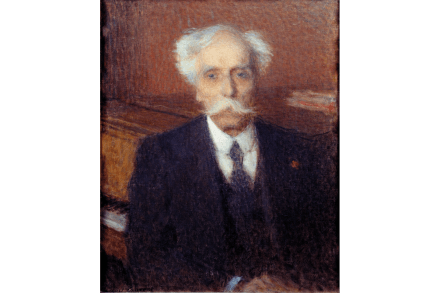
Gabriel Fauré composed his song cycle La bonne chanson in 1894 for piano and voice. But he added string parts later and he premièred that version in April 1898 at the London home of his friend Frank Schuster: 22 Old Queen Street, the building currently occupied by this very magazine. I’m not sure how much Fauré gets played at Spectator HQ these days; his music certainly hasn’t been a feature of recent summer parties. Perhaps Fauré himself caressed the ivories where James Delingpole and Toby Young now prop up the bar. Imagine Verlaine’s poetry drifting out into the garden to mingle with Rod Liddle’s cigarette smoke on the moonlit air. L’heure exquise, indeed.

Arresting and memorable: Compagnie Maguy Marin’s May B reviewed

Dance

Samuel Beckett was notoriously reluctant to let people muck about with his work, so it’s somewhat surprising to learn that he licensed and approved Maguy Marin’s May B. This 90-minute ‘dance theatre’ fantasia may play on vaguely Beckettian themes but in no way is it faithful to his texts or instructions – in some respects it even subverts them. Yet it has enjoyed huge success all over Europe since its première in 1982, and finally reached Britain last week. A long wait, for something that turns out to be very odd indeed. Ten dancers of all shapes and sizes in grotesque make-up and dressed in chalky, tatty underclothes stand immobile as light slowly grows out of the darkness to the sound of Fischer-Dieskau singing the doom-laden final song from Winterreise.

Nickelback may not be cool but they are very good at what they do

Pop

In May 2013, Rolling Stone polled its readers in an attempt to discover which band might be crowned the worst of the 1990s. The winners – or losers, depending on how you look at it – were Creed, trailed in second place by Nickelback. Eleven years on and Creed appear to have turned that status around, in America at least – Vanity Fair, Vice and Slate have noticed that they have, whisper it, become cool. And Nickelback? Well, no one’s claiming coolness for them: last year they released a documentary called Hate to Love: Nickelback, a recognition of the fact that, outside their fanbase, they are usually mentioned only as a punchline.

The unstoppable rise of country music

Arts feature

When a major artist releases a new album, the first thing to follow is the onslaught of think pieces. And when Beyoncé released Cowboy Carter earlier this year, the tone of these think pieces – especially on this side of the Atlantic – was one of slightly baffled congratulation. Here, at last, was a pioneer who might drag this hidebound genre – of sequins and satin, of lachrymose, middle-aged songs about drink and divorce – into the modern age. ‘Modern country is like punk for the Hannah Montana generation’ The only problem is that Beyoncé was not leading; she was following. Beyoncé pivoted to country not to make it cool, but because it’s become cool – and more of a commercial powerhouse than it has been for years.

Bristol’s new concert hall is extremely fine

Classical

Bristol has a new concert hall, and it’s rather good. The transformation of the old Colston Hall into the Bristol Beacon has been reported as if it was simply a matter of upgrading and renaming. There were probably sound reasons for doing so, but in fact (and despite protests from the Twentieth Century Society) the postwar auditorium has been demolished outright and replaced with a wholly new orchestral hall designed on the best current principles: shoebox-shaped, with much use of wood and textured brick. Butterworth sears his melodies on to the eardrums. Isn’t it weird we still think of the Edwardians as inhibited? Acoustically, it’s extremely fine – not a glamorous sound, but a remarkably transparent one.

The weird, hypnotic world of Willie Nelson

Pop

Many years ago, I wrote a book about Willie Nelson. At its conclusion, I reached for an elegiac, valedictory tone. In 2006, when The Outlaw was published, Nelson was already 73, and it seemed plausible to suggest that one of the great American lives might be winding down. I pictured Nelson rolling off the road and into the sunset, his work on Earth more or less complete. Nelson embodies both sides of an increasingly divided nation; hippie and redneck, patriot and agitator Well, scratch that ending. Having recently turned 91, Nelson is still going strong.

Nowhere near as miserable as I remember it: The Beatles – Let It Be reviewed

Television

Beatles lore has long held that the film Let It Be was a depressing portrait of the band falling apart. According to the same lore, that’s why Peter Jackson’s Get Back was such a revelation. Revisiting Michael Lindsay-Hogg’s footage of the group at work in January 1969, Jackson discovered there was far more joy around than anyone suspected – including the surviving Beatles. Yoko remains a darkly brooding presence (the revisionism that sees her as benign needs its own revision) All of which, it now turns out, only goes to prove the ever-reliable power of suggestion. I vaguely remember seeing Let It Be on TV in the 1970s, before it disappeared until last week – and finding it as miserable as I already knew everybody said it was. Except that it really isn’t.

Meet the man who says improvisation is the key to Mozart

Classical

In August 1993, the pianist Robert Levin sat down in Walthamstow Assembly Rooms with the conductor Christopher Hogwood and the Academy of Ancient Music (AAM) to record the complete piano concertos of Wolfgang Amadeus Mozart. Mozart was big – the bicentenary celebrations of 1991 had made a global impact. And Hogwood and the AAM were big too. After their groundbreaking period-instrument Mozart symphony cycle a decade earlier, the 27 piano concertos seemed like a wholly achievable ambition. What could go wrong? ‘For Mozart’s contemporaries, what surpassed even his virtuosity was his ability to improvise’ Only, as it turned out, the entire classical record industry. The project was meant to take a decade but in 2000 the record label, Decca, lost its nerve and pulled the plug.

Lovely slice of Cosmic Scouse: Michael Head & the Red Elastic, at EartH, reviewed

Pop

One of the more bizarre but recurring tales about how the music of Liverpool has been shaped over these past 45 years concerns Courtney Love, the American musician famed, music aside, for being married to Kurt Cobain, and for being wildly unpredictable. This story claims the 17-year-old Love, who had travelled across the Atlantic to be near the bands she loved, introduced Liverpudlian musicians to LSD, setting in train a decades-long phenomenon known as ‘Cosmic Scouse’.

Yunchan Lim’s Chopin isn’t as good as his Liszt or Rach

The Listener

Grade: B- In 2022 the South Korean pianist Yunchan Lim became, at 18, the youngest winner of the Van Cliburn competition, displaying a virtuosity that stunned the judges. You could see conductor Marin Alsop’s astonishment as he bounded through the finale of Rach 3, combining accuracy and swirling fantasy at daredevil speed. It’s been viewed nearly 15 million times on YouTube. In truth, though, he’d have had to screw up badly not to win, because he’d already dispatched Liszt’s fiendish Transcendental Études with perfect articulation and mercurial wit; in places he out-dazzled even the current master of this repertoire, Daniil Trifonov. Decca snapped him up and here’s his first studio album: both sets of Chopin’s Études.

Across Britain punters are lapping up ultra-trad opera – the Arts Council will be disgusted

Classical

Another week at the opera, another evening with an elitist and ethically dubious art form. I love it; you love it; but the authors of the Arts Council’s recent report on opera in England are less enamoured. One issue they identified was that ‘the stories which opera and music theatre tells are failing to connect fully with contemporary society’. Possibly the memo never reached the promoters of Ellen Kent’s spring tour, which since January has visited 40-odd venues not typically served by major opera companies, and has done so without public subsidy. You might imagine that the only commercial outfit to make live opera pay in Wolverhampton, Ipswich and Sunderland would have featured prominently in the Arts Council’s research, but they don’t appear to have been consulted.

Dense, melancholic, hypnotic: Brighde Chaimbeul, at Summerhall, reviewed

Pop

The hip end of the folk spectrum is in rude health right now. Dublin’s mighty Lankum lead the way, but plenty of other interesting artists are following in their wake, Brighde Chaimbeul among them. If a Gaelic-speaking trad musician from Skye reinterpreting Philip Glass for the small pipes sounds like your thing – and why on earth wouldn’t it? – then Chaimbeul is worthy of exploration. At 17 she won the BBC Radio 2 Young Folk Award. Her 2019 debut, The Reeling, released via Rough Trade, cross-pollinated traditional with experimental electronic music. More recently, and still in her early twenties, she has collaborated with American avant-garde saxophonist Colin Stetson on the album Carry Them With Us.

There are passages of considerable eloquence in Royal Ballet’s The Winter’s Tale

Dance

There’s no escaping Christopher Wheeldon – a modest, amiable fellow from Yeovil of whom anyone’s mum would be proud. Reaching outside the ballet bubble, his stagings of An American in Paris and the Michael Jackson musical have wowed the West End, Broadway and beyond. My guess is that his take on Oscar Wilde, to be premiered in Australia later this year, will soon travel north, too. Next season the Royal Ballet will revive his box-office smash Alice’s Adventures in Wonderland as well as a programme drawn from his plentiful short pieces. Two summers ago, he presented us with an adaptation of the novel Like Water for Chocolate (not so tasty). And if that wasn’t enough, here is a revival of his version of The Winter’s Tale, first seen a decade ago.

Don’t write off Hofesh Shechter – his new work is uniquely haunting

Dance

In 2010, when his thrillingly edgy and angry Political Mother delivered modern dance a winding punch right where it hurt, I had high hopes for Hofesh Shechter. Here was an outsider with the courage to make his own rules and engage dance with real-world issues (he had served a traumatising period in the Israeli army) rather than blindly following the fashionable goddess Pina Bausch down the rabbit hole of postmodern irony. He wasn’t interested in playing games. But success has taken his edge off and what has followed has largely been disappointing. Trapped by a limited choreographic vocabulary, Shechter has repeated himself, relying too hard on the brute effect of mere chaos and failing to find sharper images in which to express his rage and anxieties.

Fat White Family’s new album is much, much better than I had feared

The Listener

Grade: A- The irresistibly catchy – if you are not quite right in the head – ‘Touch The Leather’ was probably my favourite single of the previous decade, aided by a video which was simultaneously marvellously seedy, threatening and infantile. ‘Left-wing skin on the right-wing leather – touch the leather leather…’ Well it did it for me, and so I set great stock by these scrofulous squat-dwelling skaggies from Brixton, until with every subsequent dim-witted release the notion began to embed itself that they weren’t, actually, very good. ‘Touch The Leather’ was maybe just one of those glorious singular flukes you find in pop music by performers who aren’t really up to much. I might have to revise that opinion a little.