Culture

Culture

The good, the bad and the ugly in books, exhibitions, cinema, TV, dance, music, podcasts and theatre.

Americans still think ‘punk rock’ was about the music, bless them

Pop

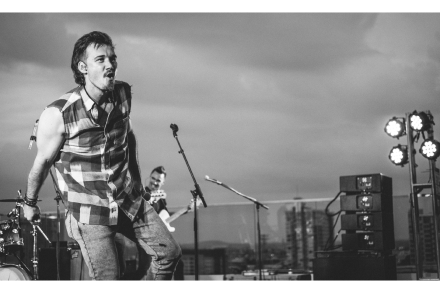
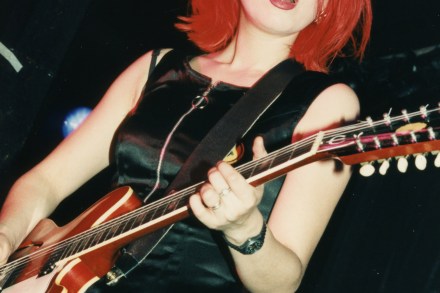
Of their many cultural quirks, Americans retain a slightly ridiculous and yet rather touching belief in the power of ‘punk rock’ (nobody in the UK ever calls it that, of course: it’s just ‘punk’). Despite laying claim to the progenitors of the whole punk thing – the Stooges, the New York Dolls, the Ramones – Americans still don’t quite seem to understand it. They actually think it was about the music, bless them. More bafflingly, they seem to regard ‘punk rock’ as something that has enduring currency, rather than being a brief – though significant – cultural phenomenon of the mid-to-late 1970s that was more or less over before it began. Americans still don’t seem to understand punk.

Everything hits the spot: Royal Opera’s Elektra reviewed

Opera

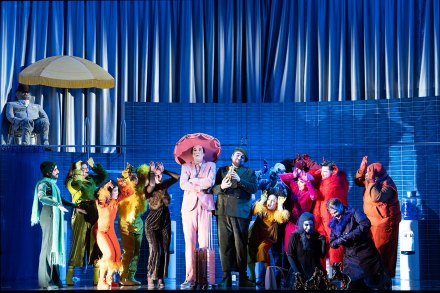
Aristotle wrote that classical tragedy should evoke pity and awe. With Richard Strauss’s Elektra, the awe can be taken as read: a certain irreducible level of epicness is written into the score, even if – like Sir Antonio Pappano on the first night of this new production at the Royal Opera – a conductor takes the composer’s advice and treats it like Mendelssohn’s ‘fairy music’. But I genuinely hadn’t expected quite so much of the other emotion – pity, or if you prefer, compassion.

The stars are aligned for Royal Opera’s tantalising new production of Elektra 

Arts feature

About 30 minutes before the end of Richard Strauss’s Elektra, the universe splits open. Elektra, daughter of the murdered king Agamemnon, lives for the day when her brother Orest will return to avenge her father by slaughtering her mother. Now Orest is here and his sister no longer recognises him. Until suddenly, shatteringly, she does, and Strauss’s 109-piece orchestra unleashes a dissonant scream unlike anything that had been heard in European music. Indeed, for many listeners in 1909 it was the end of music. Satirists compared it to capital punishment (one cartoon depicted a quaking victim of ‘Elektra-cution’). When it transferred to Covent Garden in 1910, newspapers promised London audiences ‘the most arduous score ever written’. It sold out.

The confusing, overwhelming, exhilarating music of Jockstrap

Pop

Shall we get the pop predictions for this year out of the way first? Taylor Swift will continue to conquer the world; the charts will continue their descent into meaninglessness; some long-forgotten group or style will become inexplicably popular because kids use it to soundtrack their TikTok videos. There. That’s the coming year taken care of. And how did the old one wrap up? With a week of gigs in the run-up to Christmas that was so overloaded it was impossible to get to them all. That still left plenty of treats, though, beginning with Jockstrap. The band was joined on stage by strings, a percussionist, a soprano, as well as someone on stilts dressed up as a monster straight from the props cupboard of Terry Nation-era Doctor Who.

Irresistible: Hansel and Gretel, at the Royal Opera House, reviewed

Opera

Fun fact: Engelbert Humperdinck composed part of Wagner’s Parsifal. Shortly before the première, it was discovered that Wagner’s score didn’t allow time for a crucial scene change. The 27-year-old Humperdinck, then working as Wagner’s assistant, composed a few temporary bars to cover the gap and, rather to his own surprise, found that they met with the Master’s full approval: ‘Why not? It should work!’ It’s worth knowing partly because of the light it throws on the practical, collegial working methods of music’s favourite cartoon supervillain, and partly because it reaffirms the originality of Humperdinck’s own best-known opera, Hansel and Gretel. How many artists could have flown that close to Wagner’s magic fire, and still emerged with their individuality unsinged?

Albums should be forced by law to reveal where each song was written

Pop

Bob Dylan is heading into the new year with a reduced property portfolio, having sold his Scottish bolthole, Aultmore House in Speyside, for a shade over four million quid. Though the spec looks grand – 16 bedrooms, 11 bathrooms, a folly (to complement his Christmas album, presumably) – only one aspect interests me: did Dylan ever write anything notable there? Is some piece of the Cairngorms National Park forever preserved in a line – perhaps the one he cribbed from Robbie Burns about his heart being in the Highlands – that came to him while gazing out enigmatically over the croquet lawn?

The best British Nutcracker

Dance

The Nutcracker is one of those Christmas traditions that turns out to be not very traditional at all. First performed in St Petersburg in 1892, it didn’t catch on outside Russia until the late 1950s, when Balanchine’s version for New York City Ballet was repeatedly screened on network television in the USA and Festival Ballet’s production became a hardy perennial at the Royal Festival Hall. The Royal Ballet embraced it only in 1968; since then, it has become globally ubiquitous and an infallible money-spinner. The enormous affection that The Nutcracker inspires is underpinned by a magnificent score that shows Tchaikovsky at his most freshly inventive (it’s bizarre that he composed it joylessly, under duress). Yet the dramatic scenario it illustrates is insolubly problematic.

In Mumbai, orchestras are playing western classics without apology

Classical

Choosing a concert opener is an art in its own right. Fashions shift: the traditional overture has fallen from favour in recent years, and you might go seasons now without hearing such one-time favourites as The Thieving Magpie or Euryanthe. The opening slot is more likely to contain something short and contemporary, or worthy and obscure (cynics call it ‘box-ticking repertoire’). Or it might be empty, tipping you straight into a symphony or concerto the way a Michelin-starred chef presents his signature creation – unadorned, on a bare white plate. The Symphony Orchestra of India began its latest UK tour with John Williams’s ‘Imperial March’ from The Empire Strikes Back – and goodness alone knows why.

Pleasant, underwhelming: Kurt Vile’s Back to Moon Beach reviewed

The Listener

Grade: C+ Maximum points for self-awareness, you have to say. The title track of this pleasant, if largely underwhelming, album include the lines: ‘These recycled riffs aren’t going anywhere, any time.’ Never a truer word spoken. Here, this fitfully engaging singer-songwriter shuffles through predictable chord changes pinioned by forgettable piano riffs and intones – deploying an often exaggerated southern drawl somewhat at odds with his Pennsylvanian provenance – basic and repetitive melodies which stay in the memory for about the half-life of Oganesson and then vanish. There is a pleasing twang to the guitar, bursts of scuzzy bottleneck and the occasional lap steel, but the songs go nowhere, as Kurt is generous enough to admit.

You’ll want all the characters to die: Infinite Life, at the Dorfman Theatre, reviewed

Theatre

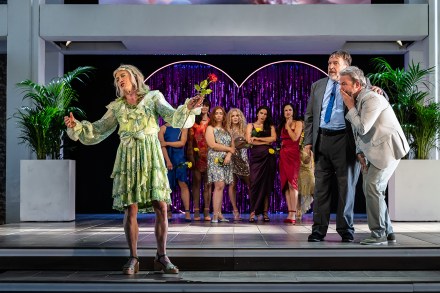
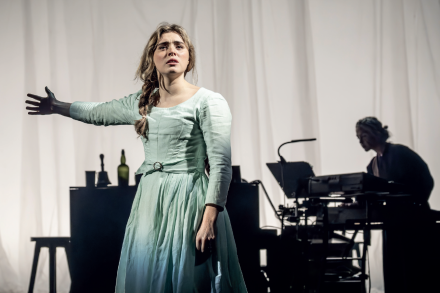
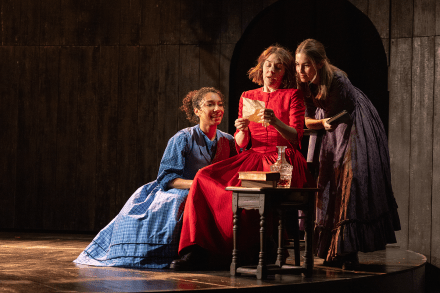
Infinite Life is about five American women, all dumpling-shaped, who sit in a hotel garden observing a hunger strike. Some of them haven’t touched food for days, some for weeks. ‘Don’t be afraid to puke,’ counsels one of the dumplings. ‘Puking is good.’ They pass their afternoons wittering inanely about nothing at all. One dumpling is an air hostess, another works in banking, a third has a job as a fast-food executive. Or so they claim. Each of the dumplings might be lying to the others but it would make no difference because nothing connects them, and they have no stake in the situation other than the desire to burn up time.

Why I love the Hold Steady

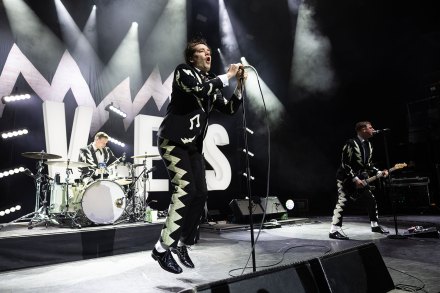
Live music is thriving right now. According to the US trade magazine Billboard, Taylor Swift’s Eras tour has so far grossed an estimated $838m, and that’s just from 66 shows in the Americas. It’s already the second highest-grossing tour in pop history, and she hasn’t had to cross an ocean yet. At the top end, live music is indeed awash in cash. But at the grassroots end, it really isn’t: December began with one of the UK’s best loved small venues, Moles, in Bath, announcing its bankruptcy – one more historic room set to shut down. Bands complain about venues taking a third of their merchandise revenues, a recent practice that eats into one of the few areas where musicians really can make some money. International touring has become harder and harder.

Small moments vs Big Ideas: Peter Gabriel’s i/o reviewed

Pop

Peter Gabriel is terribly fond of a Big Idea. With Genesis he would sing in character as a lawnmower, a fox and as ‘Slipperman’. His final work with the band, in 1974, was The Lamb Lies Down on Broadway, a double album driven by what we might kindly describe as a ‘kaleidoscopic’ narrative involving a Puerto-Rican protagonist on a voyage of self-discovery in New York City. Since going solo there has always been plenty of stuff whirling around each new Gabriel project. His Real World HQ in the West Country is part recording studio, part hi-tech hippie lab, encompassing conceptual technological probing, multimedia collaborations, NGOs and various foundations.

Simply not as good as Mozart’s: RCM’s Don Giovanni Tenorio reviewed

Classical

In Bernard Shaw’s Man and Superman, Don Giovanni finds himself in hell, chatting to the sentient Statue that dragged him to his doom. ‘It sounds rather flat without my trombones,’ admits the Statue, conceding that once you remove the genius of Mozart from the mix, you’re left with a trite (if titillating) morality tale. You could draw the same conclusion from the opera Don Giovanni Tenorio, by Giuseppe Gazzaniga (1743-1818), and if you haven’t heard of him you might wonder why not. Institutional racism? Patriarchal hegemony? Not this time. Gazzaniga was a Neapolitan composer of perfectly adequate operas that simply aren’t as good as Mozart’s. Anyway, Don Giovanni Tenorio made an amusing end-of-term show at the Royal College of Music.

‘Stomp clap hey’ music: Noah Kahan, at O2 Forum Kentish Town, reviewed

Pop

I first heard of Noah Kahan in a cave in France this summer, when my 23-year-old daughter started wailing with distress at realising she had missed the chance to buy tickets to see him because she was in a cave when they went on sale (two shows at the Forum sold out in seconds). Kahan, a 26-year-old singer-songwriter from Vermont, has so far made very little impact on the world of the over-thirties, but his contemporaries and those a little younger adore him. If you Google reviews, you won’t find very much from the traditional music press or from big newspapers and magazines – but you’ll find plenty from student papers. What they like so much about him is a little mysterious.

Eloquent, understated poetry: Llyr Williams, at the Wigmore Hall, reviewed

Classical

Imagine being a concert pianist and choosing your own programmes. All those possibilities; all that power! ‘I am the orchestra!’ declared Hector Berlioz, imagining himself inside the head of Franz Liszt. ‘I am the chorus and conductor as well. My piano sings, broods, flashes, thunders.’ The heart lifts when a pianist thinks a little differently about their recital programmes and tries to make connections and tell stories beyond the familiar tramlines of Bach, Beethoven and late Schubert. Don’t get me wrong; the Austro-German big boys are a healthy part of a balanced musical diet. It’s just that – well, you know. There is a world elsewhere. Solo piano recitals leave me cold.

An awesome spectacle: The Mongol Khan, at the London Coliseum, reviewed

Dance

When the Ballets Russes first presented Fokine’s Polovtsian Dances at Covent Garden in 1911, such was its orgiastic savagery that ladies in the audience were said to be genuinely terrified that its grease-painted warriors were about to leap off the stage and ravish them. The Mongol Khan, a great hit imported from Ulan Bator, may not induce genteel screaming, but it has some awe-inspiring moments and belongs in the same ersatz orientalist tradition as Fokine’s ballet – primitive Asiatic culture made colourfully palatable to western tastes.

Melodic elegance and literate sass: Ben Folds, at Usher Hall, reviewed

Pop

Choose your weapon. Artists are closely defined in the public imagination by their instrument of choice. Though the most untamed and transgressive progenitors of rock’n’roll – Jerry Lee Lewis and Little Richard – were piano pounders, and despite the later efforts of Elton John, over time the instrument has come to be associated with restraint and politesse; the straight second cousin to rock’s clichéd wild child, the electric guitar. He strolled on stage like a stranger and left 100 minutes later as an old friend I hadn’t realised I’d missed American singer-songwriter Ben Folds has been playing with these expectations for the best part of 30 years, first in Ben Folds Five, then as a solo artist.

A farrago of Blakean mysticism and steampunk twaddle: BalletBoyz’s England on Fire, at Sadler’s Wells, reviewed

Dance

It’s nearly a quarter of a century since Michael Nunn and William Trevitt bravely left their safe haven at the Royal Ballet to set up BalletBoyz, a company aimed at developing the underused potential of male dancers and exploiting Nunn and Trevitt’s passion for film technology. At the time this seemed like a useful mission – stereotypes and prejudices lingered around men in tights, and the formats for smaller dance companies needed loosening up. It lasts a moderate 70 minutes and, in its nutty way, it’s quite enjoyable One measure of BalletBoyz’s subsequent success is that so many of their experiments have been incorporated into the mainstream, and the enterprise no longer seems as edgy or necessary as it did.

Gig of the year: Ezra Collective, at the Royal Albert Hall, reviewed

Pop

The American music website Pitchfork is the journal of record for alternative America. It has became this generation’s Rolling Stone, for both good and ill. Long before it was bought by Condé Nast, however, it was famous for a disastrous jazz review in which the site’s founder chose to employ what he appeared to believe was the vernacular of a jazz ‘cat’ of the early 1960s. All is forgiven, though. Here was the London outpost of the Pitchfork Festival, opening with jazz stars Ezra Collective, the quintet who earlier this autumn won the Mercury Prize for their second album, Where I’m Meant To Be. Ezra Collective are very easy to like.

Cliché, cynicism and a car-crash finale: Royal Opera’s Jephtha reviewed

Opera

London’s two opera houses have been busy staging non-operas. Handel’s English oratorio, Jephtha, is his final exercise in a form that only existed because it was, explicitly, not opera (Georgian theatres needed something to play during Lent). We know better today, and dramatised reboots of Handel oratorios are proliferating, possibly because – unlike his actual operas – they give the chorus something to do. Katie Mitchell directed Theodora at Covent Garden last year. Now Oliver Mears has had a bash at Jephtha and has encountered the same basic problem. Operas seduce; oratorios preach. These are explicitly Christian, implicitly patriotic works, and what self-respecting contemporary director could allow that?

A rather beautiful farewell to rock’n’roll: The Beatles’ ‘Now and Then’ reviewed

The Listener

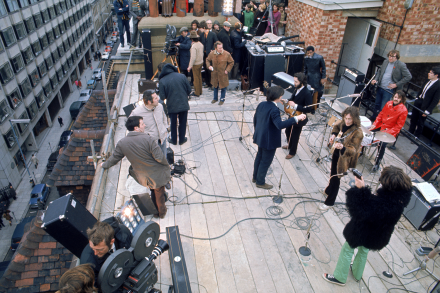
Grade: A The last song the Beatles ever recorded was called, appropriately enough, ‘The End’, on the Abbey Road album. As a consequence of digital sorcery, however, ‘Now and Then’ is the last song we will ever hear from them – a demo passed from John to Paul, dubbed over in the early 1990s by the (then) three surviving members and, more recently, unearthed and remastered. It does not sound very much like the Beatles; it is more akin to a mid-1970s John Lennon solo album song (think ‘#9 Dream’) but overseen by Paul McCartney – which in effect is kind of what it is. It’s a fine, lachrymose ballad and the notion that it is also a tender love letter from John to his then estranged former bandmate does moisten the eyes a little.

Subtle, intriguing and inventive: Rambert’s Death Trap reviewed

Dance

Ben Duke belongs to a class of younger choreographers who have decided to flout the convention that dancers should remain silent on stage. Liberating their voices is by no means a new phenomenon (in 1961 Frederick Ashton had Svetlana Beriosova speak verse by Gide in his sadly forgotten Persephone), but it’s one that particularly suits our culture’s dislike of rigid genres, and Duke makes playful use of it in the double bill entitled Death Trap that makes up Rambert’s current tour, which lands at Sadler’s Wells on 22 November. Rambert’s superb troupe of dancers let rip in bursts of gloriously exuberant jiving Goat is the less successful of his two pieces.

Funny, faithful and inventive: Scottish Opera’s Barber of Seville reviewed

Classical

A violinist friend in the City of Birmingham Symphony Orchestra used to talk about an orchestra’s ‘muscle memory’; a collective instinct that transmits itself, unspoken and unconscious, among the members of the ensemble. The occasion was a return visit from Sir Simon Rattle, a good decade and a half after he’d left Birmingham. At that point, perhaps only one third of the musicians had been present when Rattle last conducted this particular work. No matter. ‘You know how we play this,’ said Rattle, and sure enough they did, slipping as one into the exact articulation and dynamics that Rattle had instilled all those years ago. As with the human body, cells are replaced, but the individual remains the same.

This recreation of Dylan’s Free Trade Hall concert is supremely good

Pop

In May 1966, Bob Dylan toured the UK with The Band, minus drummer Levon Helm, and abrasively pulled the plug on any lingering notions of his being a mere folk singer. Playing two sets every night – the first acoustic, the second electric – even the solo numbers were wild, lysergic, unravelled. The electric ones whipped through the tweed and tradition like the howl of a strange new language. The crowds booed and one chap famously cried ‘Judas!’ (though presumably many of those present also enjoyed it). Dylan muttered and swore and was unbowed. The fast-moving currents of pop culture changed course almost perceptibly.

Spellbinding performance of a career-defining record: Corinne Rae Bailey, at Ladbroke Hall, reviewed

Pop

You won’t see two more contrasting shows this year than Corinne Bailey Rae performing her album Black Rainbows and Brian Eno presenting work with a symphony orchestra. One had music that did everything; one had music that did very little. But both were overwhelming and filled with joy of rather different kinds. When Bailey Rae last made an album, in 2016, it was gentle, tasteful, soulful R&B, the kind the young professional couple in a prestige Netflix drama listen to before their lives are overturned by a vengeful nanny. Black Rainbows,by contrast, from earlier this year, was an abrupt embrace of everything: from scuzzy garage punk to psychedelic soul to American show tunes, all inspired by the Stony Island Arts Bank in Chicago and its exhibits on the black experience in America.

Modest means, but striking results: Opera North’s La rondine reviewed

Classical

Opera North is ending its autumn season with a big-hearted production of a lopsided opera. There’s much to love about Puccini’s La rondine, and much to drive you up the wall. This bittersweet love story about an older woman and a younger man, set in Paris and Nice and channelling the operetta sweetness and sparkle of Puccini’s great friend Lehar, ought to sweep you off your feet. Instead, it tempts critics into that most shameless form of condescension, the armchair rewrite. Giacomo, old chap, isn’t five minutes into Act One a bit soon to be introducing your big hit aria? We’re halfway through Act Two: shouldn’t the lovers be together by now? And isn’t this basically just La traviata played for lower emotional stakes? Come on, man, you wrote Bohème.

The miracle of watching a great string quartet perform

Classical

Joseph Haydn, it’s generally agreed, invented the string quartet. And having done so, he re-invented it: again and again. Take his quartet Op. 20, No. 2, of 1772 – the first item in the Takacs Quartet’s recital last week at the Wigmore Hall. The cello propels itself forward and upward, then starts to warble like a bird on the wing. The viola sketches in a rudimentary bass line; the second violin – higher than the cello on paper, but actually playing at a lower pitch – shadows the melody in its flight. The first violin? Nothing: the leader (or so you might imagine) of the group is entirely silent until finally, blissfully, he isn’t. It’s the opposite of how a string quartet is supposed to begin, and it’s perfect.

The case against re-recording albums 

Pop

In 2012, Jeff Lynne released Mr Blue Sky: The Very Best of Electric Light Orchestra. Except it wasn’t. It was 11 new re-recordings of classic ELO songs – which isn’t the same thing at all. Lynne, bless him, believed that having gained more experience as a producer, he could now improve the songs that made him famous. ‘You know how to make it sound better than it did before,’ he said, ‘Because I have more knowledge… and technology.’ Sheesh. How wrong can one man be? Pop music is all about the definitivearticle. Not only the bold prefix attached to its greatest practitioners – Beatles, Byrds, Wailers, Temptations, Fall, et al – but the notion of a defining recording of a song. The stage is the place for revision: to jam, change the words, the rhythm, the feel.

A Radio 3 doc that contains some of the best insults I’ve ever heard

Radio

A recent Sunday Feature on Radio 3 contained some of the best insults I have ever heard. Contributors to the programme on the early music revolution were discussing the backlash they experienced in the 1970s while reviving period-style instruments and techniques. Soprano Dame Emma Kirkby remembered one critic complaining that listening to her performance was ‘as about as interesting as eating an entire meal of plain yoghurt’. Another critic, writing in Gramophone, pronounced the strings of the new ensembles ‘as beautiful as period dentistry’. Those strings were mostly made of animal guts. There was, as one of the musicians interviewed recalled, ‘a DIY atmosphere’ to the movement, which developed alongside a spate of others in 1973.