Culture

Culture

The good, the bad and the ugly in books, exhibitions, cinema, TV, dance, music, podcasts and theatre.

In defence of conceptual art

Exhibitions

At the tail end of last year, an artist called Peter Goodfellow mounted an exhibition of paintings titled Treason of the Scholars. The works were a garish parody of the signature styles of blue-chip artists including Jeff Koons, Damien Hirst and Joseph Beuys — not so much satire as aggravated assault. In terms of nuance, it made the giant inflatable butt plug artist Paul McCarthy had installed in Paris’s Place Vendôme in 2014 look subtle. But that, Goodfellow stressed, was precisely the point. His complaint, he wrote in an accompanying essay, was that the ‘charlatans’ of the contemporary art establishment had come to neglect his medium in favour of figures possessed of ‘no ability, no technique, no intellectual gravity’.

Sound and fury | 7 April 2016

Exhibitions

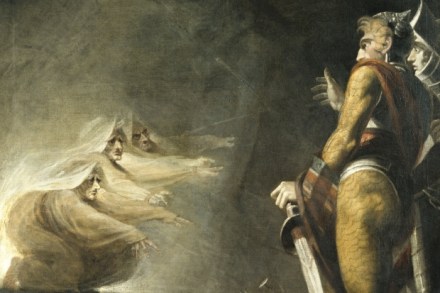
There was a genteel brouhaha last year — leaders in the Times, letters to the Telegraph, tutting in the galleries — about the British Museum’s decision to play Pan-pipe music into its exhibition Celts: Art and Identity. Did the gold torcs and coin hoards sparkle the more for the looped song of Pan-pipes? Not really, and it didn’t half annoy visitors. Not put off by the British Museum’s Pan-pipe complaints, Compton Verney in Warwickshire has been at the jukebox for its Shakespeare in Art: Tempests, Tyrants and Tragedy.

Old masters

Exhibitions

The Fitzwilliam Museum is marking its bicentenary with an exhibition that takes its title from Agatha Christie: Death on the Nile. But it turns out it was another writer of a different type of fiction who was directly involved. M.R. James, author of Ghost Stories of an Antiquary, amassed some of the exhibits in his capacity as director of the Fitzwilliam from 1893 to 1908. And almost any object on display would have made a perfect prop for one of his tales, because the subject is ancient Egyptian coffins. Generally, the main character in a story by James is a retiring gentleman scholar who comes across a venerable item which then brings upon him some diabolic haunting or curse.

The counterfeiters

Exhibitions

One day, in the autumn of 1960, a young Frenchman launched himself off a garden wall in a suburban street to the south of Paris. He jumped in an unusual away; not as if he expected to land, feet first on the pavement below, nor even as if he were diving into water, but arms outstretched, back arched, apparently taking off into the air above. The result was Yves Klein’s ‘Le Saut dans le vide’ (Leap into the Void), which opens the exhibition Performing for the Camera at Tate Modern. Beside the finished product — a photomontage — are two other images that together explain how it was done. One shows the same quiet stretch of road, completely empty except for a solitary cyclist passing by like an extra in a Maigret dramatisation.

Repeat prescription

Exhibitions

Walter Sickert was once shown a room full of paintings by a proud collector, who had purchased them on the understanding that they were authentic Sickerts. The painter took one look around, then announced genially, none of these are mine, ‘But none the worse for that!’ Were Giorgione to return to life, and take a stroll around the Sackler Galleries at the Royal Academy, he might echo those words. Few of the works on show, in all probability, were actually executed by Giorgione, but they are none the less magnificent for that. This is — wisely — not an exhibition that attempts to reassemble the artistic personality of that enigmatic figure (there have been quite a few of those over the years).

Topsy-turvy

Exhibitions

When Tom Birkin, hero of J.L. Carr’s novel A Month in the Country, wakes from sleeping in the sun, it is to a vision: the vicar’s wife Alice Keach in a wide-brimmed straw hat, a rose tucked into the ribbon. ‘Her neck was uncovered to the bosom and, immediately, I was reminded of Botticelli — not his Venus — the Primavera. It was partly her wonderfully oval face and partly the easy way she stood. I’d seen enough paintings to know beauty when I saw it and, in this out of the way place, here it was before me.

Hellzapoppin’

Exhibitions

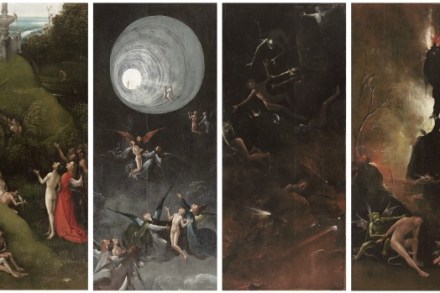
The 20th-century painter who called himself Balthus once proposed that a monograph about him should begin with the words ‘Balthus is a painter of whom nothing is known. Now let us look at the pictures.’ But while Balthus may have felt that far too much was known about his private life, Hieronymus Bosch is an artist about whom we truly know if not exactly nothing then very little that is personal or revealing. He adopted his name from his native town, ’s-Hertogenbosch, where his death 500 years ago is marked by a superb exhibition. Bosch (c.1450–1516) was christened Jheronimus — alternatively Joen or Jeroen — van Aken, came from a family of painters and died, perhaps of an epidemic disease, aged about 65.

Internal affairs

Exhibitions

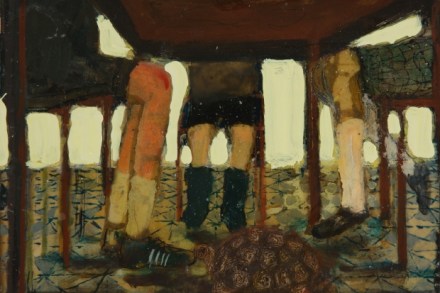
The ten vignettes that punctuate the white walls of the Ingleby Gallery invite us to step into the many-chambered mind of Andrew Cranston. These densely textured and patterned figurative scenes of obscure meaning enthrall, drawing the viewer into a peculiar realm of fantasy where tortoises crawl for ever and infants abandon their toys to stare out of viewless windows. Cranston’s painting is the kind that provokes extravagant responses from observers uncomfortable with art that refuses clearly to state its purpose. Read profiles of the artist and you will find much pontificating about ‘the despondent poetry of the creative process’, and so on. To my eyes, Cranston’s painting is about surface, colour and imagination.

‘So quick and chancy’

Exhibitions

When asked the question ‘What is art?’, Andy Warhol gave a characteristically flip answer (‘Isn’t that a guy’s name?’). On another occasion, however, he produced a more thoughtful response: ‘Does it really come out of you or is it a product? It’s complicated.’ Indeed, it’s those complications that make Warhol’s works compelling, as is demonstrated by a new exhibition at the Ashmolean Museum, Oxford. One is that it is hard to tell how much he was really in control. When you look at one of his pictures, are you really looking at the work of his assistants or, indeed, of chance? And the way he forces you to think about that makes you ponder other kinds of art as well.

Show me the Monet

Exhibitions

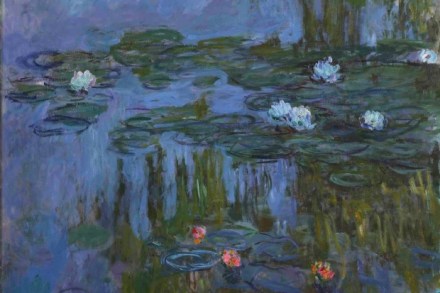
Philip Larkin once remarked that Art Tatum, a jazz musician given to ornate, multi-noted flourishes on the keyboard, reminded him of ‘a dressmaker, who having seen how pretty one frill looks, makes a dress bearing ninety-nine’. If you substitute paintings of flower-beds and dappled sunlight for chromatic keyboard runs, something similar is true of the new blockbuster at the Royal Academy, Painting the Modern Garden. That, however, is only half the verdict on this curious affair. It is a show that feels a bit overblown — like a visit to an enormous Victorian conservatory — but contained inside it is another, triumphantly successful exhibition that is inspiring, exalting and almost entirely about Claude Monet.

Disciple of Duchamp

Exhibitions

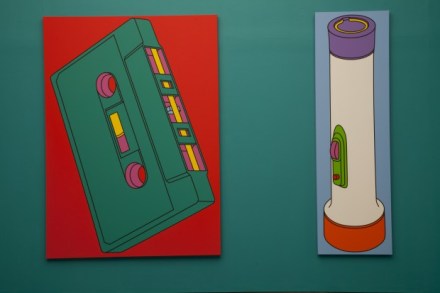
Michael Craig-Martin has had a paradoxical career. He is, I think, a disciple of Marcel Duchamp. But the latter famously gave up painting in favour of something more conceptual — ready-mades and whatnot — whereas Craig-Martin began with Duchampian concepts. He once exhibited a glass of water on a shelf together with a claim that he had mentally transformed these, by a kind of transubstantiation, into an oak tree. Then he metamorphosed himself into a still-life painter. As his current exhibition at the Serpentine demonstrates, for nearly 40 years Craig-Martin’s staple subject-matter has been everyday tools, gadgets and accessories.

A paean to the fleshy delights and tacky excess of Soho

Exhibitions

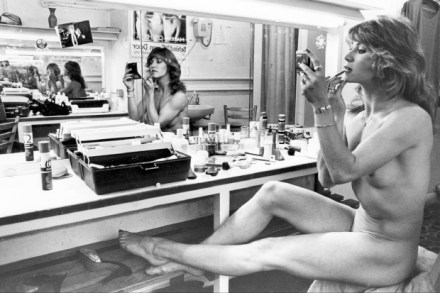
The other evening, surrounded by Christmas shoppers in the West End of London, I happened to glance up at the illuminations and was moved all over again by the old, old story. Yes, the sign was lit up once more over the defunct Raymond Revuebar, all that’s left of the club where men and women used to act out the ageless tragicomedy of desire. Strange — even blasphemous — as it may seem, the lurid blazon of a topless dancer in feathers and stilettos affected me like a holly-decked hall or a Slade-loud department store. ‘Personal appearances of the world’s greatest names in striptease’, spelled out in throbbing neon, made me come over all festive, Christmassy even.

In a class of their own

Exhibitions

Painters and sculptors are highly averse to being labelled. So much so that it seems fairly certain that, if asked, Michelangelo would have indignantly repudiated the suggestion that he belonged to something called ‘the Renaissance’. Peter Blake is among the few I’ve met who owns up to being a member of a movement; he openly admits to being a pop artist. The odd thing about that candid declaration is that I’m not sure he really is one. A delightful exhibition at the Waddington Custot Gallery presents Blake in several guises, including photorealist and fantasist, but — although one of the exhibits is an elaborate shrine in honour of Elvis Presley — ‘pop’ is not the term that comes to mind.

Artistic taste is inversely proportional to political nous

Exhibitions

‘Wherever the British settle, wherever they colonize,’ observed the painter Benjamin Robert Haydon, ‘they carry and will ever carry trial by jury, horse-racing and portrait-painting.’ This doesn’t sound like a bad set of cultural baggage, even for those who don’t care for the races. There is clearly a lot to be said for trial by jury, and portraits make up the most enjoyable — in fact, downright humorous — section of Artist & Empire, a curious new exhibition at Tate Britain. Not, of course, that Tate approaches this subject in a playful spirit. At the entrance, a hand-wringing text declares that the British empire’s ‘history of war, conquest and appropriation is difficult, even painful to address’.

Death watch | 19 November 2015

Exhibitions

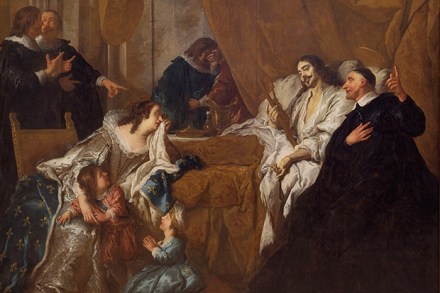
At the beginning of the summer of 1715 Louis XIV complained of a pain in the leg. In mid-August gangrene set in and by 1 September he was dead. He’d been on the throne for 72 of his 77 years. A new exhibition at Versailles looks at the elaborate rituals that followed. The Sun King died as he had lived — in public. Despite his illness, he carried on his daily routine until two days before his death, a decision made easier perhaps by the fact that he’d always conducted a good part of the affairs of France from his bedroom. It was no ordinary bedroom, and what went on there wasn’t ordinary either.

The man who made abstract art fly

Exhibitions

One day, in October 1930, Alexander Calder visited the great abstract painter Piet Mondrian in his apartment in Paris. The Dutch artist had turned this small space on rue du Départ, which also doubled as his studio, into a walk-in work of art. Even his gramophone, painted bright red, had become a note of pure form and colour. Calder was impressed by the squares and oblongs of the pictures all around. But he also asked a question: wouldn’t it be fun to make these rectangles move? With a perfectly straight face Mondrian replied that this wasn’t necessary: ‘My paintings are already very fast.’ As I walked around Performing Sculpture, the new Calder exhibition at Tate Modern, I mused on which of them had got the better of this exchange.

M.C. Escher: limited, repetitive, but he deserves a place in art history

Exhibitions

‘Surely,’ mused the Dutch artist M.C. Escher, ‘it is a bit absurd to draw a few lines and then claim: “This is a house.”’ He made a good point. That is what almost all artists since the days of Lascaux have done: put down some splodges of paint or a line or two and proclaimed, ‘This is a bison’, ‘This is a man’, ‘This is Mona Lisa’. One of the aims of Escher’s work, which is currently displayed in an exhibition at Dulwich Picture Gallery, was to undermine such pretensions to represent reality. At first glance, his images often seem meticulously, even aridly factual.

Hanging offence

Exhibitions

Modern Scottish Men, a new exhibition celebrating the achievements of male artists in the 20th century, opens next month in Edinburgh. Men only; no women. Bold! Only joking. That show would never happen today. How could it? Where would an exclusive, specifically male-only exhibition be tolerated these days? A women-only show, on the other hand, would be fair enough; we need to point out that the wee dears can paint too. And so we have Modern Scottish Women: Painters and Sculptors 1885–1965. Should we perhaps be feeling patronised, ladies? The recent death of Brian Sewell has again thrown up his old allegations regarding the inferiority of women artists.

Intelligent design | 29 October 2015

Exhibitions

Peter Mandelson, in his moment of pomp, had his portrait taken by Lord Snowdon. He is sitting on a fine modern chair. Mandy would no doubt have been aware of the ancient historic associations, through bishoprics and universities, that chairs have with power. Since it is a chair much admired by architects, Mandy also looks quite cool, although these things are relative. The chair and its footstool are known as Eames Lounge 670 and Eames Ottoman 671, and they were first manufactured in 1956 by Herman Miller of Zeeland, Michigan. Curved plywood shells are veneered with Brazilian rosewood, upholstered with shallow black leather-studded cushions and supported, at a meaningful tilt (suggestive of relaxed authority), on a stellar metal support.

Unreliable evidence

Exhibitions

I hadn’t really thought much about pixels before, despite spending a large portion of my day looking at them. After all, a pixel is just a tiny unit in a digital image, and we all tend to look at the bigger picture. But how about this: this humble unit has now become a key feature of drone warfare. Drone-fired missiles have reportedly been developed that can burrow through targeted buildings, and leave a hole that appears smaller than a pixel on publicly available satellite images. This means that drone strikes are often invisible to groups who try to monitor attacks, such as NGOs or the UN.

Repetitive but compelling: Giacometti at the National Portrait Gallery reviewed

Exhibitions

One day in 1938 Alberto Giacometti saw a marvellous sight on his bedroom ceiling. It was ‘a thread like a spider’s web, but made of dust’, an object that was both ‘very, very fine’ and in constant motion, like a snake except that ‘no animal’, he thought, had ever made such movements: ‘light and sweeping and always different’. This was, you might say, a revelation of the beauty that lay in extreme thinness and fragility. In Giacometti: Pure Presence at the National Portrait Gallery you see that process of attenuation occurring, in different ways, again and again in his art.

With this Tate Britain exhibition, Frank Auerbach joins the masters

Exhibitions

No sooner had I stepped into the private view of Frank Auerbach’s exhibition at Tate Britain than I bumped into the painter himself. Auerbach was standing, surrounded by his pictures of 60 years ago, but he immediately started talking instead about Michelangelo. Of course, it is generally safe to assume that when artists talk about other artists they are also reflecting, at second hand, on their own work. And so it was in this case. Michelangelo, Auerbach pointed out, had stingingly described someone else’s architectural design as looking like ‘a cage for crickets’. So, he argued, Michelangelo was clearly striving to make his own work the opposite of that: to give it grandeur.

Why did Goya’s sitters put up with his brutal honesty?

Exhibitions

Sometimes, contrary to a widespread suspicion, critics do get it right. On 17 August, 1798 an anonymous contributor to the Diario de Madrid, reviewing an exhibition at the Royal Spanish Academy, noted that Goya’s portrait of Don Andrés del Peral was so good — in its draughtsmanship, its freedom of brushwork, its light and shade — that all on its own it was enough to bring credit to the epoch and nation in which it was created. He (or she) was absolutely correct. [caption id="attachment_9657482" align="alignnone" width="520"] Goya's portrait of Don Andrés del Peral[/caption] The same could be said of many of the exhibits in Goya: The Portraits at the National Gallery.

Now you see it, now you don’t

Exhibitions

The artist, according to Walter Sickert, ‘is he who can take a piece of flint and wring out of it drops of attar of roses’. In other words, whatever else it is — and all attempts at definition tend to founder — art consists in making something rare and memorable out of not very much. Those words of Sickert’s popped into my mind as I looked at an exhibition of works by Avigdor Arikha at Marlborough Fine Art. Among these were pictures of a piece of toast, two pairs of socks, a casually folded orange tie, and part of a bathroom including a roll of toilet paper. Arikha (1929–2010) was a French-Israeli artist based for much of his life in Paris. For 15 years he was an abstract painter, then in 1965 he abruptly began to depict the world around him.

Stars in their eyes | 24 September 2015

Exhibitions

‘The dominant narrative of space,’ I was told, in that strange language curators employ, ‘is America.’ Quite so. Kennedy stared at the moon and saw a promotional opportunity. Nasa’s logo was designed by the flamboyant Raymond Loewy. A PR man wrote Neil Armstrong’s unforgettable lines. Every event at Cape Canaveral (later the Kennedy Space Center) was televised, while, in the USSR, Star City was built in furtive secrecy just outside Moscow. Tom Wolfe glorified the US space programme in The Right Stuff, his boisterous 1979 masterpiece of reportage where the cowboy mentality of the fly-boys co-mingled with the technical marvels of California aerospace, myth-making the while.

Indiscreet astronaut

Exhibitions

Among my more bohemian friends in 1980s London, Brion Gysin was a name spoken with a certain awe. He was the man who William Burroughs, the author of Junky and Naked Lunch, said was ‘the only man I ever respected’. Gysin was a modernist novelist, inventor and artist. He and his mathematician friend Ian Sommerville invented something called the Dream Machine, which was a spinning cylinder said to induce drug-free hallucinations. He came up with the idea of literary cut-ups, arguing that writing was 50 years behind art in its innovations and this was the writing equivalent of collage. The idea, of introducing random elements by literally cutting up and reassembling either new or found texts, was, for better or worse, taken up with gusto by the likes of Burroughs and David Bowie.

Melting pot

Exhibitions

‘Celtic’ is a word heavily charged with meanings. It refers, among other phenomena, to a football club, a group of languages, a temperament, a style of art and a fringe, once the stronghold of the Liberal Democrats. But who are — and were — the Celts? The curators of the new British Museum exhibition are not at all sure, and that’s one of the reasons why the result is so enthralling. There is a familiar answer to this question: the Celts were an ancient people who moved into Europe from the east in prehistoric times and occupied most areas north and east of the Alps, together with northern Italy and much of the Balkans. They spoke a kindred group of languages and created a style of art that continued to evolve from the 5th century BC into the Middle Ages.

Bursting the bubble

Exhibitions

The conventional history of modern art was written on the busy Paris-New York axis, as if nowhere else existed. For a while, nowhere else did. People wondered, for example, whyever the mercurial Whistler volunteered for the unventilated backwaters of Britain. But London was eventually allowed into the international conversation following successful pop eruptions that began in the Fifties. Germany followed. Now, perhaps as a response to a wired and borderless planet, where images can be instantaneously transmitted and sacred cows may be frivolously slaughtered, there is a revisionist and more inclusive policy for entrance to art’s pantheon. The braided cord has been lifted. Everyone can join the club.

Lines of beauty | 10 September 2015

Exhibitions

Marshall McLuhan got it at least half right. The medium may not always be the entire message, but it certainly dictates the kind of message that can be transmitted. This is one lesson of Drawing in Silver and Gold: Leonardo to Jasper Johns, an exhibition at the British Museum that is packed with subtle masterpieces, and as a bonus contains — for those who like such things — two of art’s great studies of dogs. I might as well start with those: one by Albrecht Dürer from around 1520, ‘Dog resting’, and the other by the later Dutch artist Hendrick Goltzius of his own pet, curled up and sleeping in about 1597. Both of these display the virtues of silverpoint.