Culture

Culture

The good, the bad and the ugly in books, exhibitions, cinema, TV, dance, music, podcasts and theatre.

Across the literary pages | 30 August 2011

Robert McCrum profiles Michael Ondaatje to coincide with the publication of Ondaatje’s latest novel, The Cat’s Table. ‘The eyes of Michael Ondaatje, prize-winning author of The English Patient, are a baffling window on the inner man: the brilliant, pale sapphires of a witty Dutch burgher set in a 68-year-old Tamil frame. As he says of

In a class of his own | 27 August 2011

More from Books

Ysenda Maxtone Graham’s Mr Tibbits’s Catholic School captures the hilarity and pathos of an eccentric headmaster and the unusual establishment he founded in Kensington in the Thirties. A.N.Wilson introduces us to his funny, peculiar world There are two sorts of school stories. Much the most popular, of course, are those that observe the drama of

The call of the wild | 27 August 2011

More from Books

Christopher Ondaatje is best known as a member of the great and the good and a generous patron of the arts, notably the National Portrait Gallery. The pieces collected in this book give glimpses of another, quite different life as a traveller and writer. Ondaatje’s family were long-established Dutch tea planters in Ceylon. In 1947

Art for ransom

More from Books

These two books make mutually illuminating and surprisingly contrasting companions, given the similarity of their subjects. Both are written by those with hands-on experience in the field of art preservation and security. Sandy Nairne was Director of Programmes at the Tate Gallery in 1994 when two important paintings by J.M.W. Turner were stolen while on

Tallinn tales

More from Books

During the Twenties and Thirties, the Estonian capital of Tallinn was known to be a centre for espionage, infiltrated by White Russian intriguers bent on blocking Bolshevik access to north-west Europe. Graham Greene first visited in the spring of 1934  — ‘for no reason’, he writes in his memoir Ways of Escape, ‘except escape to

In the land of doublespeak

More from Books

An Oxford don and poet, Patrick McGuinness lived in Bucharest in 1989, and in this fictionalised account of the regime’s death throes he puts his first-hand experience to compelling use. An Oxford don and poet, Patrick McGuinness lived in Bucharest in 1989, and in this fictionalised account of the regime’s death throes he puts his

The bigger picture

More from Books

Many among you, I know, have been fretting that thanks to a combination of political correctness, New Labour educational policy and the European Union’s usurpation of everything the free-born Englishman holds dear, big-picture narrative history is on the point of vanishing from the earth. All that our children’s children will know of British history, you

Hatchet jobs of the month | 25 August 2011

A few weeks ago it looked like this column might have to be rechristened Feather Duster Jobs of the Month. The High Court judgment that The Telegraph pay £65,000 in damages over a “spiteful” book review would, we panicked, lead to a climate of fear on Grub Street, with literary editors terrified to publish anything

A presidential reading list

The US president’s summer reading list has recently been at the centre of a media furore. The White House released a statement that Barack Obama had bought two books at Martha’s Vineyard bookstore to add to the three he had brought with him from Washington. Other sources say that Obama actually bought five books at Bunch

Going into the language

The Oxford English Dictionary and the Collins Dictionary have both published their new shorter versions. A crop of words has been defined and introduced, replacing those words that are now deemed to be obsolete. This is the age of the social network. ‘Re-tweet’ has been officially recognised by both dictionaries as a noun and a

Across the literary pages | 22 August 2011

Hilary Spurling and Tatjana Soli have won the James Tait Black prize. The award is prestigious, for being decided by scholars and students of literature. Soli won for her debut novel, The Lotus Eaters, which is set during the dying moments of the Vietnam War as a group of western journalists survey the decline. The

Nothing left to lose

More from Books

In chess, the king is never taken. When defeat is inevitable, the losing player resigns. And so it is in war. Defeated leaders sue for terms. Or they are toppled and replaced by fresh leaders who sue for terms, like Napoleon in 1814 and 1815, Reynaud in 1940 and Mussolini in 1943. ‘Wars are finally

What the eye don’t see

More from Books

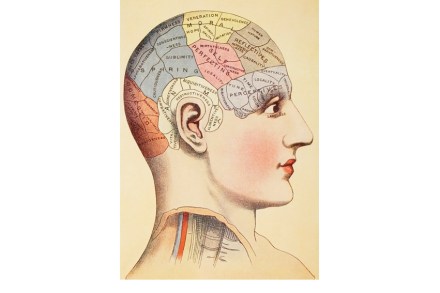
  Since I began to watch films on video and not so much in cinemas, I have found that I sometimes get the itch to rewind reality itself, in order to check on what I have seen. There must be many oddities in my way of seeing of which I am less aware. Julian Rothenstein,

A menacing corruption

More from Books

E. L. Doctorow became an American household name with the publication of Ragtime in 1975. It was a jaunty book (later a successful movie) which lightened an American mood darkened by the lingering war in Vietnam. It benefited from having authentic historical figures — Harry Houdini and J. P. Morgan among them — interspersed with

Sting in the tale

More from Books

Bees are news. The advent of a sinister condition dubbed Colony Collapse Disorder has concentrated many minds on the future of the honey bee, not least in the US where the disorder is prevalent and pollination by bees accounts for billions of dollars’ worth of agricultural produce. Bees are news. The advent of a sinister

When the great ship went down

More from Books

The looming centenary of the world’s most notorious shipping calamity, when the Titanic ruptured its starboard flank as it scraped the side of an iceberg on its maiden voyage in April 1912, presents publishers with a tactical challenge. The looming centenary of the world’s most notorious shipping calamity, when the Titanic ruptured its starboard flank

Worshippers at the high altar

More from Books

What grabbed me about Newman and His Contemporaries was a puff from an Australian writer quoted on the back. This book, it said, ‘is like a Victorian Dance to the Music of Time’. Sounded like my kind of thing, especially since the central figure interlocking the characters is in this case not Widmerpool but that

The father of songs

More from Books

‘The two great gifts of the Greeks to humanity, said the poet Hölderlin, were Orpheus-Love and Homer-Song.’ ‘The two great gifts of the Greeks to humanity, said the poet Hölderlin, were Orpheus-Love and Homer-Song.’ The great German poet’s statement shows him as belonging to our own phase of Western civilisation. For us Orpheus — born

Ignorance is bliss

More from Books

This novel frightened me several times. Here is how Chan Koonchung, brought up in Hong Kong but now living in Beijing, does it. He sets the story in a very near future, 2013, that closely resembles China today, but with two creepy additional elements: an entire month, during 2011, has vanished from most written records,

A new world in the making

More from Books

Alexis de Tocqueville is a prophet for all seasons, continually reinterpreted as the zeitgeist shifts. He sailed to Jacksonian America to compile a report on the prison system, and ended up writing a meditation on the nature of democracy that remains in print after 160 years. In this latest addition to the fertile field of

Bookends: The Jazz Baroness

More from Books

She was born Kathleen Annie Pannonica Rothschild. Her father, Nathaniel Charles Rothschild, an ardent lepidopterist, named her Pannonica, Nica for short, as a tribute to the region in Hungary where he met her mother and captured a particularly interesting moth. Nica married a French aristocrat and became the Baroness de Koenigswarter. When he divorced her

Bookends: A Jazz baroness

Patrick Skene Catling has written the Bookends column in this week’s issue of the magazine. Here it is for readers of this blog: She was born Kathleen Annie Pannonica Rothschild. Her father, Nathaniel Charles Rothschild, an ardent lepidopterist, named her Pannonica, Nica for short, as a tribute to the region in Hungary where he met

The end of an era | 18 August 2011

I entered the Harbour Bookshop in Dartmouth in search of warmth. I had been camped on Dartmoor for a couple of nights, taking part in a cadet weekend, back in the days when I believed the army might be my vocation. Dartmouth is several miles from the Dartmoor National Park and a section of 13

Anatomy of a blockbuster

Behind fashion as usual, I’ve finally read One Day, the runaway success by David Nicholls. To be honest, I was slightly underwhelmed by the time I finished it. The combination of too much hype and the excruciating plot contrivance in the closing pages left me unsatisfied – irritated even. But, I’m largely nit-picking. It’s an extraordinary

A Very Special Relationship…

It was 70 years ago yesterday that Winston Churchill and Franklin D. Roosevelt, floating perilously across a sea of U-boats, signed the declaration of wartime aims that came to be known as the Atlantic Charter.   The maps preserved at the Churchill War Rooms (CWR), Churchill’s former Westminster bunker, are heavily speckled by pinholes, not least

Across the literary pages | 15 August 2011

Tristram Hunt reviews his parliamentary colleague Kwasi Kwarteng’s book, Ghosts of Empire. ‘Ghosts of Empire marks a return to traditional, Tory scepticism shorn of ideology and purpose. There is little rhyme or rhythm to this history; it is a tale of chaps doings things and then other things happening, mostly to foreigners. Which is both