Culture

Culture

The good, the bad and the ugly in books, exhibitions, cinema, TV, dance, music, podcasts and theatre.

Allan Massie’s books of the year

Graham Swift is probably still best known for Waterland, published almost 30 years ago. I rather think he is now out of fashion. Certainly Wish You Were Here received less attention that it deserved. Swift has the admirable ability to write literary novels about characters who would never read such books. He presents us with a complete world, one which his inarticulate characters struggle to understand. William Empsom wrote that ‘the central function of imaginative literature is to make you realise that other people act on moral convictions different from your own’. Graham Swift does just that. The Fat Years by Chan Koonchung is a novel that everybody interested in contemporary China should read.

Across the literary pages: Three dead wise men

Death has made a telling visit to the literary world in the past week: Christopher Hitchens, George Whitman and Vàclav Havel have all died. The appreciation of Hitchens is fast approaching the precedents set by his targets, Princess Diana and Mother Theresa — an irresistible irony that he would certainly have appreciated. The growing beatification is the measure of journalists who aspire to Hitchens' undoubted courage and style; the greatest possible testament to the man himself. Next to the fabled Hitchens, Whitman needs further introduction. He restored the Shakespeare & Company English bookshop on the Rue Bûcherie in Paris after the war. But he was rather more than a shopkeeper.

Portrait of a singular man

More from Books

The posthumous publication of Hugh Trevor-Roper’s wartime diaries continues the restoration of his reputation, says Geoffrey Wheatcroft Nothing is more elusive than reputation. A writer’s standing goes up and down like a share price, during his life and after, for no obvious or objective reason, as D. J. Taylor observed in a recent perceptive essay in the TLS on the fall from favour of Angus Wilson, although I still read his novels if no one else does. Then again, others recover. Terence Rattigan’s stock was very low when he died in 1977, long sneered at as the epitome of middlebrow, middle-class West End theatre. But lo, there has been a startling Rattigan renaissance.

Currents of imagery

More from Books

In the first book of his scientific-cum-philosophical poem ‘De rerum Natura’ — or ‘On the Nature of Things’ — Lucretius draws the reader’s attention to the power of invisible forces. The wild wind, he wrote, whips the waves of the sea, capsizes huge ships, and sends the clouds scudding; sometimes it swoops and sweeps across the plains in tearing tornado, strewing them with great trees, and hammers the heights of the mountains with forest-spitting blasts. It was a description I was well placed to appreciate as I read this whimsical, scholarly and original book while staying in a Georgian folly on a country estate in Kent.

Poison Ivy

More from Books

‘Who was she?’, a browser might ask on finding three re-issued novels by Ivy Compton-Burnett, and ‘Why should I read them?’ Dame Ivy Compton-Burnett (1884-1969) was one of 13 children of a Victorian physician. After his death, his widow wrapped herself in anger and subjected her children to cruel, neurotic tyranny. Their verbal laceration continued after her death in 1911, for Ivy took control of her siblings, and enforced a sadistic autocracy learnt from her mother. On Christmas Day 1917, the two youngest girls, ‘Topsy’ and 18-year-old ‘Baby’, for whom family life seethed with aggression, nerve storms and spite, locked themselves in a bedroom, and died in one another’s arms of overdoses of barbiturates.

Funny old world

More from Books

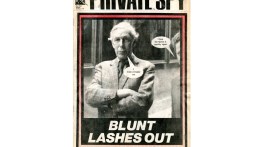
The most remarkable thing about this book is that it should have been published at all. No one could have imagined in 1961 that Private Eye — a blotchy reproduction stapled together on what looked like yellow scrap paper — would still be going 50 years later, selling hundreds of thousand of copies every fortnight and apparently employing about 50 people. Adam MacQueen has not written a history of the paper but has compiled a biographical album of contributors, staff, stories and various dramas in its history. The author suggests that it could be read from cover to cover, but that would be hard work even for a satirical anorak. It is much better approached on a random basis, following the cross-references or just leafing through it.

Soaring splendour

More from Books

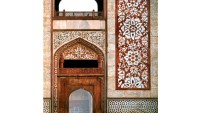
The glorious monuments built in India by the Mughal emperors, from Babur in the early 16th century to Bahadur Shah Zafar II in the mid-19th century, have long deserved a comprehensive illustrated survey in one volume. George Michell is the ideal author. He is both a great scholar and a fervent communicator on many aspect of India’s cultural history. He has worked as a hands-on archaeologist on major Indian sites and recently established a Deccan Foundation to protect the wonders of that little-known region. He has been extremely well served in this magnificent book by the photographs of Amit Pasricha, who describes himself as a ‘panoramic photographer’. His photographs are staggeringly beautiful and impossible to praise too highly.

Guilty by association

More from Books

It has become increasingly obvious that something went terribly wrong with British intelligence-gathering, both its methods and morality, after the destruction of the Twin Towers on 11 September 2001. Earlier prime ministers had displayed scruples about the use of intelligence gained from torture. But during the Blair premiership this changed. Britain became part of a nightmarish universe where the standards which we claim to represent were undermined and sabotaged. It is important to stress that there is no evidence at all that our intelligence officers were (unlike their gung-ho counterparts at the CIA) directly engaged in torture.

Friends across the sea

More from Books

On 12 February 1952 the novelist Anthony Powell received a letter from a bookseller in New York. Robert Vanderbilt Jr was the proprietor of a couple of Manhattan bookstores and a great admirer of Powell’s. He wrote to ask if he might himself publish a couple of the novelist’s out-of-print works. Powell was delighted. The two titles chosen were Venusberg and Agents and Patients, the covers of both to be designed by Powell’s old friend Osbert Lancaster. As their letters make clear, Powell and Vanderbilt quickly found they had much in common, and as Powell had worked in publishing before the war, he was able to engage very much on a level with Vanderbilt when discussing the more technical aspects of the process.

A kind of tenderness

More from Books

The son of a grocer, Anton Chekhov was born in 1860 in Taganrog, on the Sea of Azov. While studying medicine at Moscow university, he published hundreds of comic sketches in order to pay his way and support his parents and siblings. After becoming famous in the late 1880s, he practised as a doctor only intermittently; most of his medical work was on behalf of the peasants, and unpaid. In 1890 he made the difficult journey across Siberia to Sakhalin Island, where he investigated the living conditions of the convicts, around 10,000 of whom had been exiled there. During the 1890s Chekhov’s tuberculosis worsened and from 1897 he had to spend most of his time in the Crimean resort of Yalta.

Oh brother!

More from Books

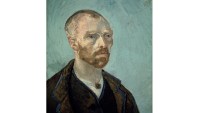
Long in the writing, deep in research, heavy to hold, this is the latest of umpteen biographies of Vincent van Gogh (1853-90). But it should be said straightaway that it is extremely readable, contains new material and is freshly, even startlingly re-interpretative of a life whose bare bones are very familiar. The more one reads, the more absorbing it becomes, both in its breadth of approach and its colossal detail. Potential readers, however, should be warned: this is no sentimentalising study, no apologia for the excesses of the ‘mad genius’ of popular renown. Quite the contrary: one’s dismay intensifies as the self-crucifixion of Van Gogh’s life unfolds, disaster after disaster on page after page.

The tale of Chitty-Chitty-Bang-Bang

More from Books

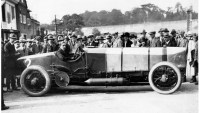
On 31 May 1961 Ian Fleming wrote to Michael Howard at Jonathan Cape, publisher of his James Bond novels: ‘I am now sending you the first two “volumes” of Chitty-Chitty-Bang-Bang. Heaven knows what your children’s book readers will think of them.’ He ended his letter: ‘I am gradually reactivating myself and I hope to be up in London for about two days each week. Though much will depend on a gigantic medical conference this afternoon.’ Six weeks earlier, Fleming had suffered a serious heart attack. He was 52. Despatched to convalesce at a seaside hotel on the south coast and forbidden a typewriter to prevent him from working, he passed the time writing out in longhand the story for his eight-year-old son, Caspar.

Bookends: A metropolitan menagerie

More from Books

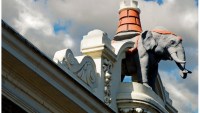
London has always loved its animals. James I kept elephants in St James’s Park (allowed a gallon of wine per day each to get through the English winter), while as recently as Live Aid an urban myth arose that the revolving stage was pulled by horses. The capital’s no different from the rest of the country; if the British showed as much concern for their fellow humans as they do for their dogs, life would be easier. The latest book tapping this market is Animal London (Square Peg, £9.99). Not that the photographer Ianthe Ruthven has gone for fluffy or cute. Her animals are inanimate, either because they’re statues, monuments, carvings, bits of graffiti or dead (pet cemetery, Hyde Park).

From the archives: Christopher Hitchens meets Jorge Luis Borges

To mark the death of Christopher Hitchens, here is a piece he wrote in June 1986 to commemorate the life of Jorge Luis Borges. Jorge Luis Borges, Christopher Hitchens, The Spectator, 21 June 1986 Christopher Hitchens recalls a meeting with the Argentine poet, who died last Saturday ‘This is my country and it might be yet, But something came between us and the sun.’ As the old man threw off these lines, he turned his blind, smiling face to me and asked, 'Do they still read much Edmund Blunden in England?' I was unsure of what might give pleasure, but pretty certain in saying that Blunden was undergoing one of his eclipses. ‘What a shame,' said Jorge Luis Borges, 'but then you still have Chesterton. I used to live in Kensington, you know.

Cressida Connolly’s books of the year

Nicola Shulman’s study of Sir Thomas Wyatt and his times, Graven With Diamonds, is both sparkling and scholarly. Nothing I’ve ever read about the court of Henry VIII has made it so vivid. For the first time one could really grasp Anne Boleyn’s wit and intelligence, both of which she must have needed, to keep the king off for seven years — seven years! — until they could marry. The book is marvellous about Wyatt’s poetry: indeed, about the point of poetry in general. A gem. I loved the young German writer Judith Hermann’s short story collection, Alice. The stories are beautifully written, very precise in their detail, yet enigmatic. Finally, a novel, New Finnish Grammar by Diego Marani.

Poets against progress

The TS Eliot Prize hedge-fund furore has been making headlines for more than a week. Even the Spectator has devoted space to the controversy caused by John Kinsella and Alice Oswald, whose motives were initially unclear. Kinsella has since taken to the pages of the New Statesman to explain himself. He says that he has spent ‘life enjoying the sublimity of a golden wheatcrop on the verge of harvest’. He opposes the ‘colonising culture’ of harvest and husbandry. Poetry is an ‘active entity’ that should ‘work against violence’. He has embarked on a campaign of ‘linguistic disobedience’ against the ‘scourge of salinity’ and the other ‘damages’ caused by the need to feed 7 billion souls and counting.

Britain fights back against gloating Sarko with killer reading list

It’s no state secret that Britain was outmanoeuvred by France at last week’s European Summit. The Old Foe triumphed and their political establishment has been, in the words of Monty Python’s The Holy Grail, farting in our general direction ever since. President Sarkozy has described David Cameron as an indignant child and the Parisian equivalent of Mervyn King has insisted that Britain’s credit rating be downgraded. We British are renowned for our stoicism, but there are limits. The Foreign Office has rebuffed the garlic-infused petulance wafting across La Manche: literary Tory minister Keith Simpson has produced his customary holiday reading list and it contains a few putdowns for our Gallic cousins.

Inside Books: A poetic licence for hedge funds

Last week saw poets Alice Oswald and John Kinsella withdraw from the shortlist of the TS Eliot Prize. Their refusal to be in the running for this prestigious award was on the grounds that the Poetry Book Society, which runs it, is sponsored by hedge fund manager Aurum Funds. Oswald said that she thought ‘poetry should be questioning not endorsing such institutions’. But, in this austere time of government cuts, when many arts organisations like the Poetry Book Society are about to lose their funding from the Arts Council, can we really blame them for accepting some ready cash from a hedge fund? Well, judging from the angry comments following any article in their defence, yes we can.

Lewis Jones’s books of the year

Even in translation, Michel Houellebecq’s novels are witty, mad (particularly in translation) and sickeningly funny. I’m reading his latest, The Map and the Territory, which won the Prix Goncourt last year. As expected, author and characters are superb in their disgust with and contempt for the world in general, and especially France, art, tourism and gastronomy, all of them hideously related. The sex and atrocities have been rationed, though; the writing has new polish and finesse; and a shocking sympathy has crept into the proceedings. Even if it did not win the Man Booker Prize after I backed it at 8-1, I thought Stephen Kelman’s Pigeon English was miraculous. I’m not saying that Sam Leith’s You Talkin’ To Me?

In memory of Russell Hoban

American author Russell Hoban died yesterday, aged 86. I’ve never read a word of Hoban, nor do I know anything about him: so the obituaries made for very interesting reading. There appear to have been two Russell Hobans. The first was the dreamy writer of children’s books; the second was an émigré in London who wrote experimental science fiction, of which Riddley Walker is the most famous and challenging example. The book opens: 'On my naming day when I come 12 I to gone front spear and kilt a wyld boar he parbly ben the las wyld pig on the Bundel Downs any how there hadnt ben none for a long before him nor I aint looking to see none agen.' That sentence discouraged me, but less faint-hearted souls have elevated the book to cult status.

Shelf Life: Ian Rankin

This week Ian Rankin tells us which Jilly Cooper heroine he would sleep with and the title he'd give his self-help book. 1) As a child, what did you read under the covers?  Enid Blyton books and lots and lots of comics (Victor, Hotspur, plus annuals dedicated to those same comics).   2) Has a book ever made you cry, and if so which one?  I had a lump in my throat towards the end of David Nichols' One Day.... 3) You are about to be put into solitary confinement for a year and allowed to take three books. What would you choose?  Gravity's Rainbow by Thomas Pynchon, Bleak House by Charles Dickens, Lanark by Alasdair Gray. 4) Which literary character would you most like to sleep with?

Egypt’s Dickens becomes the champion of a fledgling democracy

Naguib Mahfouz would have been 100 years old last Sunday (he died in 2006 aged 94). Mahfouz was the first Arabic writer to win the Nobel Prize for Literature. He was renowned for describing, in the words of the New York Times’ obituary,  ‘the scent, colour and texture of life in the streets of his native Cairo’. Those qualities were particularly apparent in his best known work, The Cairo Trilogy — a historical trio spanning the two world wars, published in the mid ‘50s during Colonel Nasser’s rise. The trilogy is a native counterpoint to Lawrence Durrell’s Levantine Alexandria Quartet.

Philip Ziegler’s books of the year

In her biography of William Morris Fiona MacCarthy opened a window onto the brilliantly talented yet curiously anaemic world of the Pre-Raphaelites and their associates. In The Last Pre-Raphaelite she switches her attention to Morris’s once great friend and later stern critic, Edward Burne-Jones. Her scholarship is exemplary; her style fluent; her judgment discriminating; above all, she makes her weird galère come vividly alive. Her book is fun to read. No one could say the same of Ian Kershaw’s The End.  Kershaw is not into fun: his cool yet remorselessly horrific account of the last days of Hitler’s Reich should be compulsory reading for any ruler contemplating taking his country into war.

<span id="1323854785983S" style="display: none"> </span>The potency of the eunuch

‘Castrati were even said to know the ‘secret des Lesbiennes’ when it came to giving women sexual pleasure, cheerfully making up for their cruel loss with improvised dildos made of wax.’ Helen Berry’s The Castrato and His Wife, a broadly biographical study of a castrated Italian opera singer named Giusto Ferdinando Tenducci, describes the sexual potency a eunuch could pose, or at least be considered to pose, in eighteenth-century England. While castrati (castrated men) were hardly rare in Italy at this date — it was estimated that 4,000 Italian boys were castrated each year to keep their voices juvenile for operatic training — in London they remained a curious, if not entirely rare, exotic import.

Sam Leith’s books of the year


Obviously Alan Hollinghurst’s The Stranger’s Child is a masterpiece. So is Ian Donaldson’s Ben Jonson. But having already said as much in these pages, I mention them only in passing. You’re less likely to have heard about Grant Morrison’s clever, passionate Supergods, but I urge it on you if you have any interest in myth, magic, comic-book culture or the question of why you’d put nipples on a Batsuit. I was grateful to the Man Booker judges, maligned as they have been, for shortlisting Patrick DeWitt’s The Sisters Brothers, which I’d not have read otherwise. It’s wonderfully funny and original. Oh, and there’s The Pale King, too.