Culture

Culture

The good, the bad and the ugly in books, exhibitions, cinema, TV, dance, music, podcasts and theatre.

Bookends: Prep-school passions

More from Books

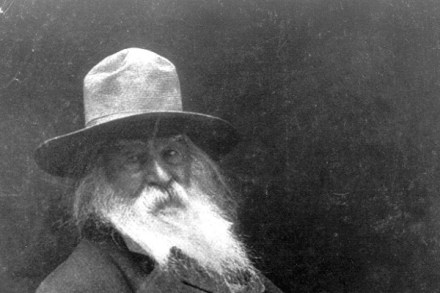
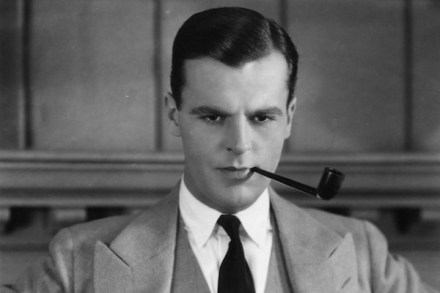
In his introductory eulogy, Peter Parker calls In the Making: The Story of a Childhood  (Penguin, £8.99) G. F. Green’s masterpiece, which, though not popular, attracted the admiration of E.M. Forster, Christopher Isherwood, Stephen Spender, J.R. Ackerley, John Betjeman, Philip Toynbee, C.P. Snow, Pamela Hansford Johnson, Frank Tuohy and Alan Sillitoe. According to Elizabeth Bowen, he was ‘the most neglected writer of his generation’. Explaining the title to his friend Michael Redgrave, Green (pictured above) said: ‘The theme is unequivocally that of the conditioning of a homosexual and the foreshadowing of his future love pattern.

Meeting Shin Dong-hyuk

‘I did not know about sympathy or sadness. They educated us from birth so that we were not capable of normal human emotions. Now that I am out, I am learning to be emotional. I feel like I am becoming human.’ You may have heard of Shin Dong-hyuk, the man who feels he is becoming human. He is the only person born in a North Korean concentration camp to have escaped to the West. He was 23 when he fled. Ten years before, he betrayed his mother and older brother’s escape plans to a camp guard in the hope of winning favour. He was pleased when they were executed, pleased that a threat to his safety had been eliminated. North Korea breeds children like Shin.

The art of fiction: Carlos Fuentes

The late Carlos Fuentes was a fluent English speaker — the product of being the son of a diplomat and his own careers in international academia and diplomacy. Here he is talking with Charlie Rose in February 2011. The interview captures the sense of how important politics was to Fuentes and the other writers of ‘El Boom’. The conversation is almost exclusively about politics past, present and future, touching on the drugs war, Cuba and U decline. Reference is also made to Garcia Marquez and his disagreements with Fuentes over the politics of the recent past. It is also fascinating, from the usually self-absorbed European perspective, to watch the two Americas sparring.

Audiobooks: the insomniac’s dream

I’ve recently been going to bed with Alan Bennett. He’s a very comforting presence as I drift off to sleep, his gentle voice soothing me with tales of what he’s been up to that day, or sometimes anecdotes from his long and successful past. It’s a real treat, the last thing I hear before nodding off being his mellifluous Yorkshire tones relating a Peter Cook one-liner from 1963. I’m talking audiobooks, of course. There’s a nebulous point somewhere sleeping and wakefulness, a state where insomnia still reigns but you’re too tired actually to turn the light on and read. The solution? An audiobook. You get the hypnotic effect of a book without the hassle of reading it yourself.

Q&A obituary: Carlos Fuentes

What’s happened? Carlos Fuentes died on Tuesday night. Who was he? He was a revered Mexican novelist, a crucial part of the literary movement in Latin America that came to be known as ‘El Boom’. What was ‘El Boom’? It was an artistic movement that emerged in the ‘60s. The writers were mavericks who defied the conventions of Latin American literature. They emphasised the modernist traits found in earlier European and American literature, and many of them experimented with form: they were exponents of magical realism, stream of consciousness and dialogue through question and answer. What about substance?

Shelf Life: Laurent Binet

The latest intellectual maverick to win the 2010 Prix Goncourt du Premier Roman, Laurent Binet certainly isn't shy, especially when it comes to his literary tastes. A single paragraph in his debut — a postmodern take on Heinrich Himmler's righthand man Reinhard Heydrich — reveals his position on Camus, Desnos, Flaubert, Hasek, Kafka, Marquez, Rimbaud and Hemingway among others. Jonathan Littell's The Kindly Ones is summarily dismissed as 'Houellebecq does Nazism'. Binet's next book, an account of Francois Hollande's presidential campaign, is unlikely to be quite as provocative. He lets us know what's on his book shelf. He tweets @laurentbinetH 1) What are you reading at the moment?

Great British Prime Ministers

Everyone enjoys making and perusing lists of ‘greatest’ — nineteenth-century novels, Beatles LPs, generals, opening batsmen, and so on. The choices inevitably reflect the compiler’s tastes and prejudices, and are always fun to dispute. I have spent the last few months considering the claims of Britain’s Prime Ministers, a process from which four semi-finalists ultimately emerged. How to choose? I realized straight away that I had to put personal politics aside. After all, no committed Socialist would include Margaret Thatcher, and no red-blooded Tory would consider Clement Attlee. Yet both would make most objective observers’ lists. Sadly, I also had to disregard some favourite characters.

10 great historical novels

The Observer’s William Skidelsky has taken it upon himself to list ‘The 10 best historical novels’. The usual suspects are present: War and Peace, The Leopard, I Claudius and The Blue Flower. There are a couple of surprising inclusions, too: Eliot’s Romola, for instance. And, of course, there are some glaring omissions — of which, more later. Above all, though, Skidelsky’s subjective list suggests that historical writing is fashionable. He picks Wolf Hall at number 2 — a demanding book that may prove too demanding for future readers. And he also says a word for Andrew Miller’s Costa prize winning Pure — a slight book that may prove not demanding enough for future readers. And so to the omissions.

What words <em>really</em> mean

I met a very interesting chap while doing my weekly video film for the Sunday Times. This was Dr Peter Mullen, Rector of St Michael, Cornhill. He hove into view like a disreputable clergyman from a lateish Graham Greene story, dog collar, strange hat, impish grin. He has just written a book — The Politically Incorrect Lexicon — which is very funny; intemperate, intolerant, astute and great fun. There’s a forword to it by Quentin Letts, but you can skip that. Here are some of my favourite definitions from the book: Islamophobia: Unreasonable dislike of suicide bombers. Vulnerable to Eating Disorders: Greedy, self-obsessed. Classic: Any pop song more than five years old.

Burroughs’s beat

William S. Burroughs is, alongside Jack Kerouac and Allen Ginsberg, the third part of the Beat generation’s holy trinity. Yet while those two were long ago ushered into the canon, Burroughs’ writing has stubbornly resisted a comparable assimilation into the mainstream. A less conventionally romantic figure than the unruly Kerouac or the hippie seer Ginsberg, the gaunt, irredeemably strange Burroughs is perhaps comparatively unappealing to the adolescent male readers who are so notoriously eager to recreate the lives recounted in On The Road and Howl. But a greater impediment to Burroughs’ incorporation into the reading lists of youthful idealists (if there are any left) is the simple fact that he is considerably more difficult to read.

Discovering poetry: Philip Sidney’s rising star

Astrophil and Stella 1 Loving in truth, and fain my love in verse to show, That she, dear she, might take some pleasure of my pain: Pleasure might cause her read, reading might make her know, Knowledge might pity win, and pity grace obtain; I sought fit words to paint the blackest face of woe, Studying inventions fine her wits to entertain, Oft turning others’ leaves to see if thence would flow Some fresh and fruitful shower upon my sunburnt brain. But words came halting out, wanting inventions stay; Invention (Nature’s child) fled step-dame study’s blows: And others’ feet still seemed but strangers in my way.

Across the literary pages: books Olympiad

It is upon us: the dreaded London Olympics. I’m not against the sport, not really. But the wall to wall advertising, the endorsements and the cultural tie-ins leave me totally cold. London is soon to be awash with Olympics-inspired arts exhibitions designed to snare the thousands of IOC plutocrats who will be attending the Games and overwhelming the transport system. I’ve been to the press launches of most of these exhibitions and can report that they are to be avoided at all costs. I won’t go into details because I’ll just get bilious, but suffice to say that these shows combine the trivial with the artificial to contrive something wholly forgettable. They are also achingly correct.

Another voice: The book no newspaper editor will want you to read

There are so many axes being ground in Tom Watson and Martin Hickman’s fascinating and explosive new book, Dial M for Murdoch: News Corporation and the Corruption of Britain, that it should be handled with asbestos gloves and read behind protective goggles. The health warning that should be given before reading is that two of the most persistent and relentless pursuers of News International and all things Murdoch are Tom Watson and Chris Bryant, who, after contributing to the downfall of Tony Blair, became the targets of appalling intrusions into their personal lives, sometimes by illegal methods. If they hadn’t been so persistent, I doubt we would have the Leveson Inquiry and a serious debate about the feral nature of the British tabloids.

Here’s to you, Mrs Robinson

More from Books

From time to time, society rethinks what its institutions mean. Despite what fundamentalists will tell you, this may include — indeed, almost invariably does include — the institution of marriage. Previous rethinks have involved the admissibility of polygamy (mostly in non-Western societies), the marriageable status of the religious, and the precise borders of incest. Some societies admit the concept of marrying a dead person, as in France and China. The possibility of a man’s marrying the sister of a deceased wife was as energetically opposed, during most of the 19th century in Britain, as the possibility of his marrying another man is now.

An ordinary monster

More from Books

While studying Buddhist trance in Cambodia in 1971 the ethnologist François Bizot was ambushed and imprisoned by Khmer Rouge rebels. In his previous much lauded and horrifying book, The Gate, he described his interrogation by the prison commandant known as Comrade Duch. In a variation on the Stockholm syndrome (in which captive grows attached to captor), Bizot and Duch developed, if not a friendship, then an intimacy. Duch, persuaded that Bizot was not a CIA agent, had him released, thereby saving the Frenchman’s life. Duch acted at no little risk to himself in so doing. Bizot was the only westerner to survive incarceration by the Khmer Rouge.

Hacked off

More from Books

Rupert Murdoch is the kept woman of British politics. He inspires love, fear, paranoia and obsessive secrecy. Tony Blair suppressed the fact that he was godfather to Murdoch’s daughter, Grace. Gordon Brown wooed Murdoch but later declared war on him. Cameron smuggled him into Downing Street through the back door. Now, as his vast empire teeters, a breathless bulletin arrives from the desks of an Independent journalist, Martin Hickman, and a campaigning MP, Tom Watson. Their book covers the countless strands of the hacking story with admirable gusto and thoroughness. The tone is combative but fair-minded throughout, though when Watson himself pops up it becomes melodramatic and silly.

Fatal entrapment

More from Books

I am no great fan of spy thrillers and positively allergic to conspiracy theories, but I found this book difficult to put down. In an earlier study, Edward Lucas examined Russia’s use of energy as a weapon against the EU and the Atlantic alliance. In this one, he dives below the surface into the murky waters of the country’s security apparatus and demonstrates that, while it has shed the old KGB image, it remains as pervasive and just as menacing. Before the fall of the Berlin Wall, the battlelines were clear cut and so was the role of the Soviet Union’s defenders. At home, they silenced any criticism of the system. Abroad, they carried on an ideological struggle for dominance with the United States and its allies.

Trouble at mill

More from Books

I have some sympathy with the pioneering incomers who moved to the Yorkshire mill town of Hebden Bridge in the 1970s. At the time Hebden was in a near terminal decline, its factories closing in rapid succession. As a result, the town suffered one of the fastest depopulations ever seen in Britain, as the more animated locals left to find work elsewhere. The incomers, called ‘offcomers’ locally, sought to reverse this with a strong dose of middle-class culture, although being for the most part liberal Guardian readers they would probably baulk at the idea they ever sought to engineer working-class Hebden into something more bourgeois. Nonetheless, that is what they did, and it worked.

Mission accomplished

More from Books

Two shots killed Osama bin Laden, one in his chest and one in his left eye. ‘Two taps’ is standard practice for close-quarter shootings — firing twice takes virtually no longer than firing once and you increase (without quite doubling) your chance of an instant kill. He was in his top-floor bedroom, in the dark, and his killers wore night-vision goggles. He died 15 minutes after the first sounds of attack — the roaring of helicopters, the crash-landing of one outside the compound, the blowing of a steel door in the wall. During those fateful 15 minutes he waited with one of his wives in the pitch black of that small room, paralysed perhaps by fear or indecision and hampered by the design of his house.

Interview: Jackie Kay’s voice

T.S. Eliot once commented that “humankind cannot bear very much reality.” Reality, Reality, Jackie Kay’s latest collection of short-stories, explores the thin line that separates art and the supposed real world. In these 15 stories, 14 of which are written in an intimate first-person voice, Kay brings the reader on a journey with the lonely and dispossessed, as they try and comprehend their own perceived reality.

The art of Maurice Sendak

Maurice Sendak, the writer and illustrator of such dark children’s classics as Where the Wild Things Are and In the Night Kitchen, died on Tuesday. Sendak, though hugely popular, always alienated a section of the American public because his books did not conform to their view of childhood. His stories were fantastical, but he insisted that he never lied to children – his grotesque scenes were infused, he said, with reality and fundamental truth. In the video above, he explains that his books were inspired by the memory of what his childhood was like – a mess of vague signals and misunderstandings, a world where poverty created dreams of sensual excess and otherness.

Rainy day reading

I am beginning to lose my patience with the weather. I suspect I am not alone in feeling utterly dispirited by this endless onslaught of rain. We have just come out of the wettest April on record, and still the rain falls … It’s too terrible for words. Except that nothing is too terrible for words. Words do rather a good job of getting things right. So I have turned to words – to written words – to seek advice and find inspiration in the dreadful wet weather. The weather is so deeply ingrained into the English psyche that it is no real surprise to find its presence equally pronounced in English literature. From an admittedly biased and cursory survey of some of my favourite books, when rain appears it seems to be urging one of two things.

We need to talk about Jacob, and his dad

No matter what anyone might say, no one ever really likes other people's children. Now, it seems, we’re not even sure if we like our own. Culturally, children became a cause for concern during the seventies. It seemed the fruits of the loins of baby boomers had been spoiled rotten. Spates of possessed brats wreaked havoc in books and on screens. But all that was needed back then was a visit from the local exorcist and a quick mop up of green bile. Nowadays, scary kids are harder to spot. They're usually apathetic, withdrawn and speak in monosyllables. In other words, you can never be sure whether you're living with a potential/practicing serial killer or a typical teenager.

Wanting more than a family history

It’s a dangerous business: rereading books you loved first time round. I found myself with some time on my hands last week and so returned to The Hare With Amber Eyes, Edmund de Waal’s award winning family history, told through an elaborate collection of netsuke, which he inherited from his great uncle. The book was published to fevered critical acclaim. There is evidence of this on the copy I bought last week. The inside and back covers are crammed with luminaries gushing superlatives. It is masterpiece, everyone said. I agreed with them then, but, having taken a more leisurely second read, I’m not so sure. De Waal’s book is certainly original. It is certainly captivating in parts.

Thick as thieves

There is honour among thieves. Richard Foreman’s reinvention of A.J. Raffles is underscored by morality of sorts. The exploitative rich are robbed, habitual criminals are caught, and men of true nobility triumph — or at least do not suffer the indignity of having their baubles snaffled by our silver-tongued felons. At the centre of Richard Foreman’s three-storied omnibus is the close and criminal relationship between Raffles and Harry ‘Bunny’ Manders. Raffles, for those of who do not know him, is a debonair rogue — a sparkling bon vivant with penchants for cricket and larceny. He is known as ‘the amateur cracksman’, which is misleading because he is an astonishingly expert thief.

State of the nation | 8 May 2012

Three clichés walk onto a stage and start telling bad jokes. Welcome to Love, Love, Love, the newish play by Mike Bartlett, playing at the Royal Court until 3rd June. It is 1967, on the night of the first global TV show, when the Beatles sang All You Need is Love. Still reading? Here are the characters. Henry is Jimmy Porter, but 10 years out of date. His younger brother Kenneth, a self-absorbed Oxonian, has pitched camp on his sofa for the summer. Henry is planning a date with Sandra, a tarty waif, also down from Oxford. While Henry’s out buying fish and chips, Sonia and Kenny get stoned, cop-off and vow to embark on a life of adventure. Fresh, they say. But the facts of life are little more conservative. It is 1990.

The importance of sex

Last time I made an off the cuff comment calling a book chick lit, I realised the skill involved in making an apology sound genuine, rehabilitating an entire literary genre and standing one's ground in the space of 140 characters. Why do women bristle at the term chick lit? Why do they forget that a literary rendering of the search for Mr. Right isn't an affront to the feminist dream nor does it preclude sharp social commentary, a racy plot and some great lines? Jane Austen didn't look down her nose at it. So I didn’t roll my eyes on seeing The Book of Summers: the pastels, swirly font and the fey title. For her debut novel, Emylia Hall, who was raised in Devon by her English father and Hungarian mother, has sensibly decided to write about what she knows.

Across the literary pages | 7 May 2012

Hilary Mantel dominates the bank holiday books pages. Bring Up The Bodies, the sequel to the Booker winning Wolf Hall, will be published this Thursday, and the acclaim has already begun. Mantel has been interviewed for the Telegraph by the renowned Tudor historian Thomas Penn. They talked of history and fiction, very carefully and very slowly: Penn says that Mantel speaks in ‘perfect paragraphs’. The Telegraph also carries an extract from Bring Up The Bodies. It has the searing pace and all the subtleties that characterised Wolf Hall. Cromwell travels to see Katherine of Aragon, and the two speak of the king’s latest woman problem, in this case Anne Boleyn’s childlessness.