Graham Stewart

Special providence …

From our UK edition

When Ed Smith became a full-time professional cricketer for Kent in 1999 the county side was preparing for the new millennium by shedding anything that smacked of old-fashioned amateurism. Professionalism was to be a state of mind. Players were henceforth required to sign up to a new code of conduct. This Core Covenant consisted mainly of a succession of abstract nouns, though it also proclaimed its faith in the transformative power of setting targets by requiring a ‘pledge’ from all players that they would take at least 50 extra catches during every practice session. What was more, it took personal responsibility to a higher level by abolishing bad luck as a valid excuse for anything that went wrong.
Bookends: A matter of opinion

From our UK edition

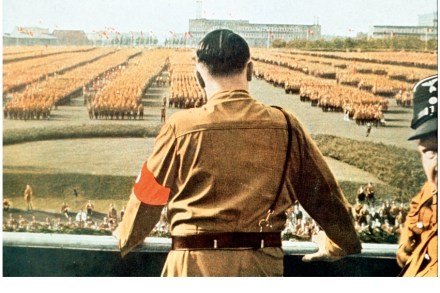
In an age when the merely mildly curious believe they can get all they really need to know from Wikipedia for free, A. N. Wilson’s fellow literary professionals must take heart from his expectation that there is still possibl to charge for a work of such succinctness that it is essentially an extended Wikipedia entry enlivened by some opinions. Wilson’s Hitler: A Short Biography (Harper Press, £14.99)certainly trumps Wiki for stylistic brio and brims with the author’s customary zip and zing.

Playing for high stakes

From our UK edition

1938: Hitler’s Gamble, by Giles MacDonogh Hitler’s greatest gamble in 1938 was his determination to occupy the Czechoslovak Sudetenland, even at the risk of sparking a European war. Neither Neville Cham- berlain nor the French prime minister, Edouard Daladier, was prepared to play for such high stakes and they threw in their chips, giving the Führer what he wanted without bloodshed. It will therefore come as a surprise that in Giles MacDonogh’s 1938: Hitler’s Gamble, a mere seven paragraphs are devoted to the Munich conference that effectively sealed Czechoslovakia’s fate. Instead it is the Austrian capital that takes centre stage in this compelling survey of a tumultuous year.

That worthless piece of paper

From our UK edition

Munich, by David Faber David Faber’s account of the Munich crisis has been published to mark the 70th anniversary of the four-power conference that made appeasement a dirty word.  But it is timely as well as commemorative.  True, the recent comparisons drawn between Hitler and Putin are dangerously misplaced. Nonetheless, Western politicians are finding themselves debating the same sort of issues over Georgia — with Ukraine and the Baltic States to follow — that divided their forebears over Hitler’s Czechoslovakian demands in 1938. Are national boundaries inviolate or subject to revision along ethnic grounds? Would offering guarantees to small countries protect them or make confrontation from their big neighbour more certain?

No need to panic — probably

From our UK edition

When there is so much data suggesting the world’s climate is heating up, some may find it presumptuous of Nigel Lawson, who is not a scientist and has undertaken no original research, to hope to challenge the prevailing orthodoxy. Would we take seriously an appraisal of his time as Chancellor of Exchequer written by someone whose only expertise was in oceanography? When there is so much data suggesting the world’s climate is heating up, some may find it presumptuous of Nigel Lawson, who is not a scientist and has undertaken no original research, to hope to challenge the prevailing orthodoxy. Would we take seriously an appraisal of his time as Chancellor of Exchequer written by someone whose only expertise was in oceanography?

Too much zeal

From our UK edition

Many of us are beginning to weary of the pushier sort of ‘expert’. Gone is the sense of proportion, the admission of scientific doubt, the ability to weigh risks against benefits. Taking seriously a year’s worth of their health warnings would give anyone an eating disorder. It hardly builds confidence when so much of the advice directly contradicts whatever was confidently pronounced beneficial only months previously. The natural reaction is to take it all with a pinch of salt (if that is still allowed) and assume that the hasty appearance of a government minister on the one o’ clock news to endorse the latest findings is an early indication that they will transpire to be nonsense.

A criminal waste

From our UK edition

With an estimated one surveillance camera in Britain for every 14 Britons, reality television has never been more invasive. The reason Big Brother has been allowed to watch its citizens so comprehensively in this way rests with the claim that CCTV is a protection rather than an intrusion. Only the guilty should fear the all-seeing eye. Those with nothing to hide have nothing to worry about. It is tempting to imagine this is what Calvin’s Geneva might have been like if only the technology had been the equal of the theology. Except, of course, the inner cities of 21st- century Britain are patently not where the Godly Elect hang out on a Saturday night. The creation of this surveillance society shows scant sign of making us conform to the orderly sobriety of the Swiss.

Catch me if you can | 27 October 2007

From our UK edition

It is a brave man who attempts to uncover the truth about George Galloway. One slip, one factual infelicity, one unguarded opinion and the biographer can expect to get his head bitten off. For, when it comes to receiving rather than dishing out abuse, the Respect MP and onetime Celebrity Big Brother contestant is no pussy cat. Perhaps therefore it is fortunate that David Morley is a seasoned documentary maker for radio and television who has no known links with the Republican party, New Labour, the security services, the Daily Telegraph or, indeed, any of the numerous entities that Galloway seems to believe are out to get him. Rather, Morley defines his objective early on, making clear that ‘this is not a critique of George Galloway’s political beliefs.

To flee or not to flee

From our UK edition

‘Why is no one talking about what is happening in our country?’ demands the splash across the front cover of the latest book by George Walden. It is therefore something of a surprise in the pages that follow to find the former Conservative minister discoursing at length on the problems of immigration, terrorism, crime and house prices — all familiar mainstays of the modern conversational canon. To be fair, it is Walden’s contention that these are but contributing factors to a national malaise manifesting itself in the under-reported fact that so many Britons want to leave the country of their birth. What is more, it is not our cleaners, plumbers and fruit-pickers who are throwing in the towel in the face of cut-throat competition from the Polish diaspora.

Toughing it out together

From our UK edition

Listing page content here Since the Suez debacle, the chemistry between American presidents and British prime ministers has helped determine the ‘special relationship’s’ potency. Between Harold Macmillan and John F. Kennedy, as with Margaret Thatcher and Ronald Reagan, it was dynamic. Between Edward Heath and Richard Nixon, John Major and Bill Clinton, it was inert. Many commentators reasonably assumed London-Washington relations would go the same way in 2000 when Tony Blair’s best buddy, Clinton, vacated the White House and in swaggered George W. Bush. To the horror of metropolitan opinion, Bush and Blair proceeded to form an alliance more controversial than any that had existed between their 20th-century predecessors.

Flocking to the standard

From our UK edition

Listing page content here Only in the last few years  have major memorials to  the wartime sacrifices of  the British Dominions and Colonies taken their place in the ceremonial plots of central London. They are a welcome if belated tribute. Yet, following the second world war’s end, the government made a more practical gesture. The 1948 British Nationality Act confirmed that passports would be granted not only to all Commonwealth peoples regardless of creed or colour but even to those in India, Pakistan and beyond who opted no longer to be the King’s subjects. It was a generous offer. Only the great take-up rate from so many of non-British stock led to its eventually curtailment.

The weasels in the wordpile

From our UK edition

The etymologists of the Oxford English Dictionary should be alerted that Steven Poole has coined a new word. First used as the title for his book, published in 2006, ‘unspeak’ is a noun for a ‘mode of speech that persuades by stealth’. How, it might be asked, does this differ from ‘spin’? Poole contends that politicians do not talk in platitudes as a means of obfuscation, as is commonly alleged, but rather sway debate by consciously deploying language in a careful and manipulative way. In recognising that newspapers and television bulletins have scant space, they have worked out that they need to reduce their arguments to soundbite size. This means deploying devious words. At its mildest, this is really about improving public relations.

Instant post-mortem verdicts

From our UK edition

Let us now praise famous men, and our fathers that begat us. In every life there is the subject for a sermon. Perhaps that is why so many sons of the manse have ascended into Fleet Street’s paper pulpits. Indeed, if there is one area of journalism that has progressively improved over the last 20 years it is the obituary notice. It is the reporter’s craft fused with the scholar’s judicious sense of perspective. The ability of the four quality newspapers to start each day with a fitting judgment on the lives of the departed is an astonishing achievement. Nothing comparable can be found in even the most renowned foreign journals.

Business as usual

From our UK edition

Reality television has demonstrated that it is no longer necessary to possess a distinguishing talent in order to enjoy celebrity status. Critics might argue that Simon Garfield has worked similar wonders for the diarist’s art. Where once we were treated to the inner demons of generals and statesmen, Garfield touts the daily musings of ordinary folk doing nothing much. For We Are at War, he has unearthed the diaries of five individuals who originally submitted their entries to the Mass Observation organisation in the first 14 months of the second world war. That clash of empires and ideologies has often been described as the ‘People’s War’. Yet, intriguingly, none of the diarists selected by Garfield is actually engaged in the conflict.

Moore means less

From our UK edition

Michael Moore’s Fahrenheit 9/11 is the most commercially successful documentary film ever made. It received a prolonged standing ovation from critics at the Cannes film festival where it became the first non-fiction film to win the Palme d’Or. If it does not win an Oscar at the next Academy awards, then do not rule out Moore making a documentary about the right-wing conspiracy at the heart of Hollywood. The acclaim, it has to be said, appears to have gone to his head. One can forgive the sort of puff his publishers and publicists put out on his behalf, but a little modesty from the great man himself would have been becoming. He loathes the smirking self-certainty of President Bush. He should look in the mirror.

Evangelism on the march

From our UK edition

When Robert Goizueta, Coca-Cola’s boss, attempted to justify his $80 million annual income to a meeting of shareholders he was interrupted four times — with applause. Attitudes to wealth and opportunity, as to so much else in the United States, are far removed from the prevailing mood in Britain and Europe. During the Cold War, many of these differences were overlooked in the common cause against a yet more alien ideology. The illusion of unity has disappeared with the Warsaw Pact. As John Micklethwait and Adrian Wooldridge argue in The Right Nation: Why America is Different, ‘it is rather like two relative strangers who fight off muggers and then go off for a celebratory meal only to discover that they don’t have as much in common as they thought’.

Two-way traffic: arrivals and departures

From our UK edition

Britannia’s Children: Emigration from England, Scotland, Wales and Ireland since 1600by Eric RichardsHambledon & London, £19.95, pp. 388, ISBN 1852854413 In the middle of the 19th century, Londoners grumbled about the number of Italian urchins grinding barrel organs on street corners. Criminals and people-traffickers had brought many of them to Britain and their melody- making was becoming a nuisance. Charles Babbage complained that their racket was disrupting his concentration while he was trying to build his calculating machine. The Times got equally huffy. With a change to the law making life more difficult for the grinders, the money, such as it was, fell out of the barrel-organ market. The boys grew up and went into the next big thing — ice cream-vending.

The lure of the far horizon

From our UK edition

In 1795, John Evans, the son of a Methodist preacher, set out from St Louis across the unchartered plains of North America in search of a lost tribe of ‘Welsh Indians.’ He had heard reports of a pale-skinned people speaking a language that sounded like Welsh inhabiting the area that is now North Dakota. Rumour had it that they were the descendants of Madoc, a 12th- century Welsh prince and his retinue who had supposedly made it to America 300 years before Columbus stood before the mast. After 1,800 miles, Evans discovered the tribe. He was welcomed into their huts and swapped pleasantries with their two chiefs, Big White and Black Cat. But even Evans could see that the Mandan Indians were about as Welsh as the Grand Mufti. He returned dejected and drank himself to death.

Rivals at the court of King Adolf

From our UK edition

One of the Great War’s consequences may have been the dethronement of the Romanovs, Habsburgs and Hohenzollerns but — as a new generation of scholars are attempting to show — court politics proved far more enduring. Although the costumes may have been cut from coarser cloth and the manners far cruder, the centres of power in totalitarian regimes continued to provide all the old opportunities for positional jostling that had been commonplace in the audience chambers and ante-rooms of the old dynasties. In his recent book, Stalin: The Court of the Red Tsar, Simon Sebag Montefiore proffered a fascinating whiff of the atmosphere surrounding Stalin and his associates. Now, with The Devil’s Disciples, Anthony Read gives an account of Hitler’s inner circle.

Northward and upward

From our UK edition

This first volume of Bill Clinton’s biography, taking the story as far as his presidential election victory in 1992, comes at a peculiar time. Unlike many of the hasty invectives pronounced upon the 42nd president, Nigel Hamilton’s study is written on the grand scale, drawing on much of the published record and delving further with interviews and insights. Yet it has been published too late to take account of what Hillary Clinton has to say in her recent chart-topping memoirs (soon to be a staple of second-hand bookshops). And it has been published prior to Bill Clinton’s autobiography and the release of his archives. Nigel Hamilton has put in an awful lot of work for a biography that will soon be comprehensively superseded by the release of new material.