Culture

Culture

The good, the bad and the ugly in books, exhibitions, cinema, TV, dance, music, podcasts and theatre.

Glenda Jackson might have made a magnificent Hamlet

The role of Hamlet is, Max Beerbohm famously wrote, ‘a hoop through which every eminent actor must, sooner or later, jump’. In this book, and in its online supplement, Jonathan Croall charts the flight through that hoop of pretty well all of the ‘eminent actors’ — male and female, young and not so young, white

hamlet

How do we envisage Shakespeare’s wife?

Despite his having one of the most famous names in the world, we know maddeningly little about William Shakespeare. His private life was lost in the swirling debris of the early modern world. Buildings such as the Globe or New Place (the house he retired to in Stratford) were demolished in the centuries after his

A feast for foot fetishists

It is always interesting to see what art historians get up to when none of the rest of us is looking. It is hard to know what the inspiration for The Mummy’s Foot and the Big Toe can possibly have been, but if this very short book offers the kind of approach that will go

robert graves

Ménage à quatre with Robert Graves

‘I have a very poor opinion of other people’s opinion of me — though I am fairly happy in my own conceit — and always surprised to find that anyone likes my work or character.’ This admission by Robert Graves — made to his then friend Siegfried Sassoon in the mid-1920s — goes to the

The selective breeding of pets: how far should we go?

It was in his play Back to Methuselah that George Bernard Shaw honoured a lesser known aspect of Charles Darwin’s originality as a thinker, when he described him as ‘an intelligent and industrious pigeon fancier’. Britain’s greatest natural scientist was indeed a keeper of fowl, with pigeons among his favourites. The habit arose from Darwin’s

The perfect guide to a book everyone should read

‘The Divine Comedy is a book that everyone ought to read,’ according to Jorge Luis Borges, and every Italian has read it. Dante’s midlife crisis in the dark wood, his journey down the circles of hell, up the ledges of Purgatory and into the arms of Beatrice is mother’s milk to Italian schoolchildren. Today lines

Shades of Rear Window: People in the Room, by Norah Lange, reviewed

A girl at a window, hidden behind curtains, watches three women in a dimly lit drawing room in the house across the road as they sit silently smoking, hands and faces pale against their dark clothes. She invents identities for the trio: they are criminals or abandoned spinsters. Sinister or pathetic. Curiosity grows into obsession:

The magnificent Atkinsons: rigours of travel in 19th-century Russia

Russia has always attracted a certain breed of foreigner: adventurers, drawn to the country’s vastness and emptiness; chancers, seeking fortunes and new beginnings in the Russian rough and tumble. Romantics, all of them, men and women in search of soulfulness and authenticity — the experience of life lived on and beyond the edge of the

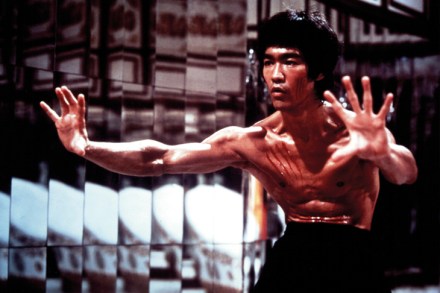
Bruce Lee: weird, gruesome and oh-so-cool

Every cinema-loving person has a favourite Bruce Lee moment. My own comes towards the end of Enter the Dragon, the film which Lee made just before his death in 1973 at the age of 32, and that would in turn seal his worldwide stardom. There, on one side, stands Lee himself. There, on the other,

Two valuable new books about technology that are a bummer to read

All good non-fiction writing shares certain characteristics: consistent economy, upbeat pace and digestible ideas that logically flow. Tech writers have an additional challenge, however, of combining all this with boring technical detail. How to explain the mechanical stuff without being either too dry or too simple? What’s the reader’s likely level of knowledge? These questions

Cease to strive! Now!

There is a long and noble history of books about doing nothing. In the 5th century bc the sage Lao Tzu argued that the wise man should refrain from action, and Christ’s Sermon on the Mount also told us not to bother ourselves overmuch: ‘Consider the lilies of the field, they toil not.’ For Christ,

Why the Romanovs were doomed

The true tragedy of the last Romanovs was a failure of imagination. Both during his last disastrous months in office and throughout the slowly unfolding catastrophe of his imprisonment, Nicholas II failed to conceive of how quickly the world around him could change, or just how desperate and ruthless the revolutionaries could be. A similar

Has Tibet finally lost out to China?

Blessings from Beijing will inform readers who know little about Tibet, and those who know a great deal will discover more. Both groups will be surprised. The newcomers especially will be disabused of any belief that Tibetans were always non-violent, deeply spiritual and unworldly. Tibetanists and advanced students will learn that, decades after the Chinese

The electrifying genius of Nikola Tesla

Nikola Tesla, the man who made alternating current work, wrote to J. Pierpont Morgan, the industrialist and banker. It was 1902 and Tesla was broke. ‘Am I backed by the greatest financier of all time? And shall I lose great triumphs and an immense fortune because I need a sum of money? Are you going

Death-defying acts and the dark side of the circus

In 2013 Tessa Fontaine joined up with the World of Wonders, a circus sideshow that travels around the United States each year displaying sword-swallowers, human-headed spiders, snake-charmers and fire-eaters to a marvelling/cynical public. Sideshows, as Fontaine writes, ‘are where people come to see public displays of their private fears’, and to probe their disgust reflexes

The short step from good manners to lofty imperialism

In the gap between what we feel ourselves to be and what we imagine we might in different circumstances become, lies civility. Keith Thomas’s marvellous new book addresses the subject of ideal behaviour. It shows the way that early modern England formed notions of civilisation and proper conduct, in contrast to what was termed ‘the

American Histories, by John Edgar Wideman, reviewed

This new collection of John Edgar Wideman’s short stories comes across the pond as one of four handsomely packaged volumes from Canongate. Little known in this country, he towers large in his native States; a MacArthur Genius fellow, a PEN/Faulkner Award winner twice, winner of the Prix Femina Etranger last year, endorsed by Richard Ford