Philip Hoare

Albrecht Dürer’s genius for self-promotion

From our UK edition

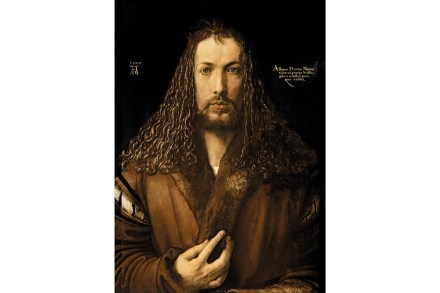
Albrecht Dürer, one of the most narcissistic artists that ever lived (and it’s a crowded field), would have loved this book. It lays out methodically, with academic brilliance, the marketplace, techno-aware basis of the ‘Dürer Renaissance’ and the artist’s rise to immortal fame. With a glorious accumulation of detail, assiduous research and – as she acknowledges before her exciting journey begins – the benefit of ‘magnificent institutional support’, Ulinka Rublack, a history professor at Cambridge University, delivers a deluxe book, with chapter and verse to support her grand subtitle: ‘Art and Society at the Dawn of a Global World’.
A Blakean heaven or hell: fish with coloured lanterns and teeth like primeval beasts

From our UK edition

Sometime in the early 1940s, when he was living in exile in LA, Thomas Mann picked up a copy of the National Geographic. Leafing through it, he found an article whose strapline was a Jules Verne novel in summary: ‘Half a Mile Down: Strange Creatures, Beautiful and Grotesque as Figments of Fancy, Reveal Themselves at Windows of the Bathysphere.’ Next to dark, exotic images of what appeared to be alien life from the abyssal depths of the sea was an account of how the author, a scientist named William Beebe, had become the 20th century’s first aquanaut in exploits so sensational that live radio broadcasts were made of his dives, as though he were taking a walk on the moon.

We should learn to love sharks, not demonise them

From our UK edition

Such a sublime, terrible beauty, the shark. Glidingly filled with our awe, as if those glassy eyes marked us out as a bite-sized snack from the start. Evolutionarily pre-lapsarian — they’ve been around for 450 million years — sharks are wreathed in a symbolic cruelty, theirs and ours. In one of the most vivid scenes in Moby-Dick, the whalers slice into sharks attempting to prey upon their prized whale catch; yet even as the fishes’ entrails spill out, the dying animals are so ferocious that they eat their own innards. It’s a terrifying, almost Jungian image of consumption that seems to echo the reality of their fate. William McKeever’s book seeks to dispel these fearful dreams.

When will the slaughter end?

Nick Pyenson, curator of fossil marine mammals at the Smithsonian Institute in Washington, is quick to tell us he’s not a ‘whale hugger’. ‘I didn’t fall asleep snuggling stuffed whales or decorate my room with posters of humpbacks suspended in prismatic light.’ Pyenson sees whales through their ancestral bones, and their contemporary entrails, digging up their past or scrying their future. Spying on Whales begins its surveillance in the fossil-rich site of Cerro Ballena (‘Whale Hill’) in the Atacama desert. Here, in the Miocene layers, he uncovers an entire pod of ancient, stranded whales, stilled in the moment of their deep-time death. It’s an Indiana Jones moment.

Pirates of the Southern Ocean

From our UK edition

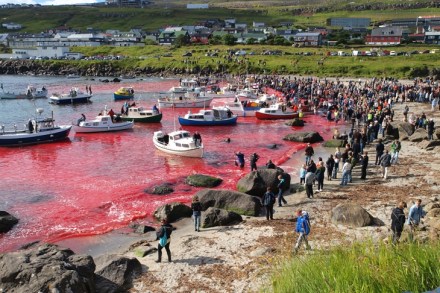
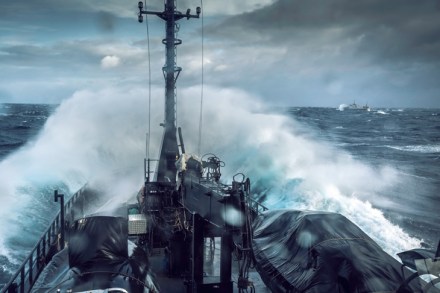
Sea Shepherd is a radical protest group made famous — or notorious — by the American cable TV series Whale Wars and by the support of numerous Hollywood celebrities and rock stars. Having previously concentrated on obstructing whale-hunting from Japan to the Faroe Islands, it now focuses on other devastating acts of marine plunder. In Catching Thunder, written with Sea Shepherd’s active co-operation, the Norwegian journalists Eskil Engdal and Kjetil Sæter tell the story of a 10,000-mile sea chase, lasting 110 days, in which the organisation sought to bring to justice a Spanish vessel illegally trawling for highly endangered toothfish in the Southern Ocean.

Not so cold-blooded

From our UK edition

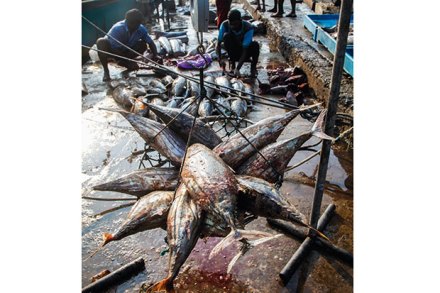
The recent furore over a freakshow ice rink in Japan, with hapless fishes embedded beneath the skaters’ feet, was inexplicable to some. The fish were dead already, weren’t they, bought from the market? What’s the difference between eating them and gliding over their artlessly strewn bodies, posed as if in a frozen shoal like the porpoises Virginia Woolf’s Orlando glimpses in an iced-up Thames? The difference is us. In a world sensitive to every nuance of use and consumption, fishes, like the sea in which most of them swim, are the new frontier.

Where did the joke end?

From our UK edition

Lord Berners, by Peter Dickinson Lord Berners spent his life with his reputation preceding him.  Lovingly fictionalised as ‘Lord Merlin’, he of the multicolour dyed pigeons in Nancy Mitford’s The Pursuit of Love and Love in a Cold Climate, less sympathetically rendered as ‘Titty’ in Harold Nicolson’s Some People, Sir Gerald Hugh Tyrwitt-Wilson, 14th Baron Berners (1883-1950), suffered forever from a status imposed from outside. As a composer, painter, novelist, poet and parodist, Berners’s dilemma was diagnosed accurately by Harold Acton: ‘Had he been less versatile he would have been less charming but more profound’.

Out of depth

From our UK edition

Leviathan or, The Whale, by Philip Hoare On the beautiful jacket of this book, a whale disappears from view. Its blue flukes are all that are left behind as its body slips away unseen. That tail-only view has become what we know of the whale. It is the picture of our ignorance. We don’t know how long whales live. We don’t really know how many there are. We don’t know where they live. We don’t know what their clicks and creaks mean. Nor what damage the three or four centuries of hunting has done to their social networks, or to their understanding of their oceanic world. We know next to nothing about them. Philip Hoare’s new and voluminous book about them is, in that way, a long exploration of an absence. That isn’t how it was. Whales used to be to hand.