Stephen Bayley

Stephen Bayley is an honorary fellow of the RIBA, a trustee of the Royal Fine Arts Commission Trust and the co-founder of London’s design museum.

Only prigs and bores could object to the incongruity of Portmeirion

From our UK edition

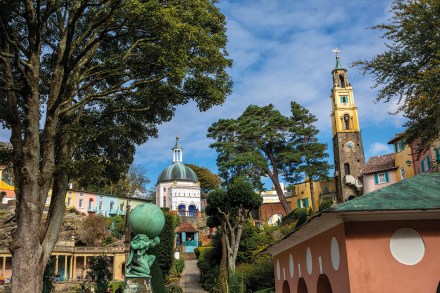
The only answer to the question ‘What connects Brian Epstein, Frank Lloyd Wright, Portofino and Stevenage?’ is ‘Portmeirion’, a conceptualised village on the north Wales coast. You could call it a folly, except it is living, not dead; and it exerts a lasting fascination. Traditional modernists deplore its flamboyant historicism – ‘retro-kitsch whimsy’ – but Jan Morris, a neighbour, said that only prigs and bores are truly hostile. Portmeirion needs a lot of explaining, as Sarah Baylis does in this first independent study of an enchanting project. It is well-researched, but not an academic reference book nor a continuous narrative. Instead, it is an eclectic album of comment and recollection, and thus perfectly sympathetic to its subject.

Trump’s presidential library is predictably crass

Maybe a tad prematurely for a term that ends only in 2029, the Trump Organisation has released a short video on Truth Social revealing, with a dizzying CGI fly-throughs, proposals for the Donald J. Trump presidential library. Any great memorial should be both surprising and inevitable. The Donald J. Trump presidential library is neither, being woefully predictable in its crassness and feeble as a design It’s not about Making America Literate Again (too late for that): there’s not a book in sight. I could not even see a reference to Trump’s own great contribution to world literature: The Art of the Deal. By contrast, the Ptolemies’ great library in Alexandria had perhaps 700,000 papyrus rolls. But that was there-and-then and POTUS 47 is nothing if not here-and-now.

Carlo Scarpa’s artful management of light and space

From our UK edition

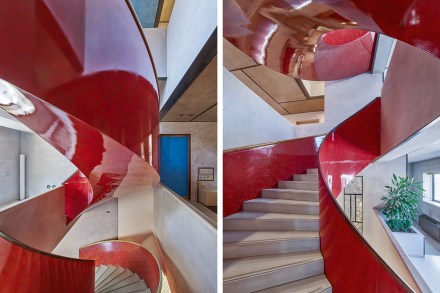
If Carlo Scarpa were as well known as Le Corbusier, modernism might not be so reviled. This architetto poeta grew up in Vicenza, whose 21 buildings by Palladio surely had a formative influence on his fast- evolving artistic intelligence. Scarpa studied building design at university, but, instinctively disobedient, never bothered with a licence to practise as an architect. So connected was he to his native territory that when Frank Lloyd Wright first visited Venice in 1951 he insisted on Scarpa being his guide. Most of Scarpa’s working life was spent in the Veneto, but he died in 1978, aged 72, in Sendai, Japan, after falling down a flight of concrete stairs. This added his own distinctive chapter to the story of curious deaths of great architects.

How London became the best place in the world to eat out

From our UK edition

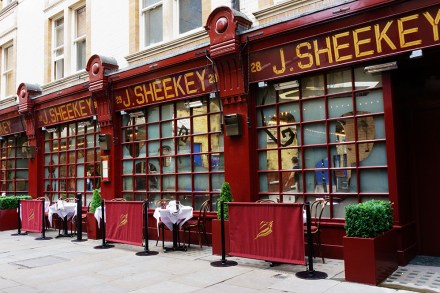
London has become the best place in the world to eat out. Of course, there are a thousand other cities with marvellous food, but for organic vitality, ethnic variety and nose-to-tail creativity, London is unmatched. New York and Paris are parochial by comparison. Two new books locate the source of this revolution of taste and aspiration in the 1980s and 1990s. But, like the Zen paradox, this is both true and untrue. Waves of immigrants immediately raised postwar expectations. It is estimated that 80 per cent of the ‘Indian’ restaurants which dominate high streets are in fact Bangladeshi and that most of the owners arrived from Sylhet immediately after Partition. The Empire struck back.

The Great British Railways trains are an abomination

From our UK edition

Transport Secretary, Heidi Alexander, has revealed new train designs for the nationalised Great British Railways. By next spring, a train looking like a nursery school project will be arriving at a station near you. According to Alexander, the Union Jack-based design supposedly ‘represents a new railway, casting off the frustrations of the past and focused entirely on delivering a proper public service for passengers.’ As far as its appearance is concerned, it would have been better if it was not so much on time, as cancelled entirely. The design is an advertisement of failure The physicist Wolfgang Pauli once rejected a student’s thesis, saying ‘It’s not even wrong’. He meant that to be wrong would at least put it in the proximate region of being right.

Successful modern design follows no rules

From our UK edition

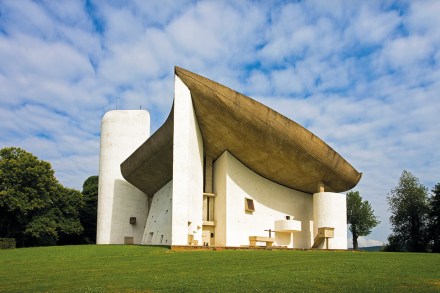
It is more than 40 years since Tom Wolfe said to me, in a Chinese restaurant on Manhattan’s Lexington Avenue, that ‘Modern’ had become an historical style label. He meant it was not, as the high modernists believed, the inevitable conclusion to all artistic progress, but had a beginning and an end as nearly precise as, say, Baroque or Rococo. And I should write a book about it, he added. This was a brilliant suggestion which I flubbed. I wrote about design instead. But ‘modern’ and ‘design’ are inextricably linked. Franco Albini’s handrails for the Milan metro? Raymond Loewy’s Studebaker Avanti? Charles Eames’s chair, which he designed for Billy Wilder? Ubiquitous Apples? All are frequently cited as masterpieces of modern design.

The mixed messages of today’s architecture – retro utopias or dizzy towers?

From our UK edition

Only when history is decarbonised and decolonised will we understand how architecture should advance. For the time being, the art and science of building design are additionally hobbled by ‘systemic’ gender bias and ‘western-centric’ chauvinism.  If the dreary fugue of DEI rhetoric and the baffling clichés of archispeak make you want to scream, this book may not be for you. But get beyond the annoying tone – which combines dire waffle with apocalyptic prophecy – and Owen Hopkins has an important subject. The ‘Manifesto House’, he tells us, is evidence of a ‘deep and all-encompassing vision’ enjoyed by its designers. And these visions project themselves into the future, the place we are all going to live.

The must-have novelties nobody needed

From our UK edition

Many reviewers start work with a peek at the book’s index. Here you find Gladys Goose Lamp, Choo Choo Chain and Dynamite Candles – novelty gifts (the ‘executive toys’ of the title) that made a small fortune for their creators. You might therefore think this a very slight book – so slight that its value could be dispersed by the mildest of zephyrs. But no. With unhesitating commitment it reveals the frailty and vanity of the long-gone culture it describes. Thus, fascinating.  Can anything better illustrate the sense of doom gathering in the 1980s than an executive toy created for bored Concorde passengers? They say an era is at its end when its illusions are exhausted: BA001 LHR-JFK, playing with a fluid puzzle after several glasses of the Chateau Palmer ’70 at Mach 2.

Resolute, dignified and intelligent: Elizabeth II inspired loyalty from the start

From our UK edition

It was George VI who first called his extended family ‘the Firm’. Today, with so many injuries and key players on the bench, it might better be known as ‘the Team’ – and one struggling to avoid relegation. It’s what you might call a reign in pain. So it’s a good time for Alexander Larman to publish this appreciative, but not sycophantic, conclusion to his royal trilogy. Its predecessors were The Crown in Crisis (2020) and The Windsors at War, published last year. The latest volume concerns the period between VE Day in 1945 and the coronation of the late Queen Elizabeth in 1953 when, in Larman’s telling, the royal family successfully rebranded itself after more than a decade of crises, both internal and external.

The eccentric genius behind Big Ben

From our UK edition

One test of great architecture is whether it, and the city it stands in, can be recognised from its silhouette alone. There is Spavento’s campanile – or bell tower – in Venice by St Marco's Basilica and Giotto’s by the Duomo in Florence. London has a campanile too, perhaps more recognisable than its Italian precedents. Designed by Augustus Welby Northmore Pugin, the clock tower of Parliament houses the bell known as Big Ben. New Year’s Eve 2023 marks 100 years since its bongs were broadcast to the nation for the first time. A century on from that televised spectacle, the eery, throbbing noise of Big Ben remains one of the most familiar and evocative of sounds.  'There! Out it boomed. First a warning, musical; then the hour irrevocable,’ wrote Virginia Woolf in Mrs Dalloway.

Is Thomas Heatherwick the best person to preach about modern architecture?

From our UK edition

It needs a big personality to answer a big question: why is so much new building so very bad; why are our cities so ugly? Thomas Heatherwick is that big personality. He is the Jamie Oliver of architecture and design: personable, blokeish, smart, tele-genic, extremely successful, nearly demented with ambition, and, one suspects, inclined to petulance if crossed. He is a visionary with several blind spots. To extend the Oliver comparison, there are times when Heatherwick serves up a delicious dish with his thumbs stuck in the bowl. His flair comes with flaws. As a designer, his Boris Bus for London was charming, but functional problems led to its withdrawal from service. His ‘B of the Bang’ sculpture in Manchester has been dismantled.

Architecture for all occasions

From our UK edition

Architecture is a public art, but public intellectuals tend to engage with more abstract stuff. The style-wars ructions excited by our new King nearly 40 years ago have been settled by gravity, but intelligent discussion about what makes a great building is still a rarity, especially in the Ministry of Levelling Up, where there is muddle. On the one hand, ‘generic’ is anathematised; on the other, ‘design codes’ and building regulations which stifle the original thinking necessary to good design are encouraged. Perhaps the Ministry should put in a therapeutic bulk order for Hugh Pearman’s About Architecture. ‘If these be the times, then this must be the man,’ as Andrew Marvell said of Oliver Cromwell. Pearman was the architecture critic of the Sunday Times for 30 years.

The story of architecture in 100 buildings

From our UK edition

One recent estimate claims there are 4.732 billion buildings on Earth, but it’s difficult to establish a credible methodology to count them. Is Manhattan’s Rockefeller Center, created out of swaggering pride and ambition, in the same category as a shanty hut in an Algerian bidonville? Unless you live in a desert, buildings are unavoidable, making architecture not just a necessity for survival but the art form most pregnant with meaning. When I was a boy I wanted to be an architect. Not because I was interested in drain schedules, load paths, wrangling with local authorities or designing kitchen extensions but because architecture seemed the most powerful expression of style. We know and judge cultures by their monuments, not their facility for credit default swaps.

Why are heritage enthusiasts so stubbornly hidebound?

From our UK edition

Even if notions of beauty are treacherously fugitive, and even if interpretations of history are nowadays subject to revision by class, gender and race, there can be no civilised argument against the preservation and enjoyment of great architecture and art from the past. But ‘heritage’ is not quite that simple. There’s something else going on. A la recherche of what precisely? Our troubled world accommodates, even embraces, heritage tomatoes and heritage paint. The former reaches back into agricultural history to find an uncontaminated source of perfect taste; the latter, chalk-dense, impure colours popularised by Farrow & Ball, elevates ordinary cottage woodwork to gentility. And these two poles of misplaced desire define the heritage sensibility.

Must we now despise colonial architecture too?

From our UK edition

Here’s a thing. A disturbing book about disturbing cities. And it’s full of loaded questions. Like Hezbollah, the publisher uses the silhouette of an automatic weapon as its logo. This is a trigger warning. Jonathan Swift wrote: All poets and philosphers who find  Some favourite system to their minds  In every way to make it fit  Will force all Nature to submit. So I give you Owen Hatherley, an architectural critic of the left, adept in the predictable tropes of Guardian-sprache, who exists in a world, as he often tells us, defined by concepts of colonial domination, exploitation and ocean-going misery. As Lionel Trilling observed, leftish people are always glum because things are never quite as perfect as they wish them. Rightish people have more fun.

Enjoy your beloved car while you can

From our UK edition

Remember ashtrays in cars? Soon cars will themselves become objects of wet-eyed nostalgic reverie. A thrilling era of propelling ourselves, while gassing others, via a series of explosions more or less constrained by gears, steering devices and friction materials, is coming to an end. Enjoy that very loud Porsche while you can. It will soon be illegal. The great fascination of the car resides not in engineering or technology but in semantics and emotions. A friend has a disgraceful anecdote from his untidy youth to explain the grip cold metal has on hot hearts. A brief fling with a married woman whose husband travelled a lot found him one cold morning, late for a lecture, with a ratty old Citroen that would not start. She cheerfully said: ‘Take his Jaguar.

Stylish and useful: why the Anglepoise remains a design classic

From our UK edition

The tide of survival bias has retreated and left the Anglepoise a design classic. Its contemporaries from the mid-1930s, a BSA Scout and de Havilland Dragonfly, for example, have become quaint antiquities. Almost unmodified since 1934, it is that rarest of things: a design beyond fashion. And it has totemic qualities. For my generation, the possession of an Anglepoise as much as a set of David Mellor cutlery or even a chicken brick was a ticket to the modern world where perfect products made you happy. Or so the theory went. To understand that modern world, now deceased, you need to appreciate basic analogue systems such as the rivet and the spring. The rivet is a bonding technique that made petrol tankers and submarines possible.

The country house is dead: that’s why we love it so

From our UK edition

The true English disease is Downton Syndrome. Symptoms include a yearning for a past of chivalry, grandeur and unambiguously stratified social order, where Johnny Foreigner had no place unless perhaps as butler in the pantry or mistress in the bedroom. And the focus of the disease is the country house, Britain’s best contribution to the world history of architecture. Except often the architect was Johnny Foreigner. The typologies are well understood: from great halls with their Tudor feasts to Italianate palazzi, with Alexander Pope scribbling in the garden; thence to disturbing Victorian horrors corrupting their inhabitants (q.v.

How we did the locomotion: A Brief History of Motion, by Tom Standage, reviewed

From our UK edition

Audi will make no more fuel engines after 2035. So that’s the end of the Age of Combustion, signalled by a puff of immaculately catalysed smoke from polished chrome exhausts designed by fanatics in Ingolstadt. But some say the age of motion itself will have shuddered to a halt before then. A trope of the New Yorker is a cartoon showing cavemen inventing the wheel, a companion to the other trope of desert island castaways. The adventure promised by the wheel and the limitations of boring stationary solitude are ineffably linked. Since Homo erectus left Africa 1.75 million years ago, without wheels, moving our bodies through space has been a defining characteristic of civilisation. The urge to travel may be, as the biochemist Charles Pasternak says, very nearly innate.

The disgraceful decision to remove Liverpool’s heritage status

From our UK edition

Unesco has cancelled the ‘World Heritage Status’ of the Necropolis at Memphis and the Giza Pyramid because a Radisson Blu hotel has been built in neighbouring Cairo. That’s not true, but for a similarly absurd reason Liverpool has been de-listed from heritage Valhalla by word-mincing bureaucrats. Not many Liverpudlians will care about this imbecilic and ignorant decision – Liverpool is the capital of itself and does not look to London, still less to Paris or Brussels. The tragedy here is not Merseyside’s status, but Unesco’s blindness. In recent years, Liverpool has demonstrated exactly the mixture of respect for the past and optimism for the future that all great cities need.