Jason Burke

Stray shells and suicide bombers in Kabul’s finest hotel

From our UK edition

No one who flies into Afghanistan’s capital is left indifferent. In one of the many deftly drawn scenes in The Finest Hotel in Kabul, Lyse Doucet describes a snowy Hindu Kush on the skyline, the packed homes of the poor on the brown hills, a steep corkscrew descent carried out while firing flares, ‘bursting outward with white-hot fire’ to avoid missiles. Once safely on the ground, she decides to make her way to Kabul’s Intercontinental Hotel, drawn by ‘better telephone and telex links, food worth eating and a certain faded splendour’.

Centuries of cross-currents between Christianity and Islam

From our UK edition

Among the many colourful and captivating characters who people Elizabeth Drayson’s authoritative, fascinating account of 1,300 years of shared Islamic and European history is Abbas ibn Firnas, born around 810 in what is now southern Spain but was then the Muslim-ruled emirate of Cordoba. An innovative scientist who is remembered as the father of aeronautics and optics, he attempted an Icarus-like experiment in early flight which did not go well. Luckily, he survived to conduct important work on corrective reading glasses. The there is Adelard of Bath, born around 270 years later in the south-west English city. Also a scientist, he made long journeys throughout the Middle East and the eastern Mediterranean in an effort to learn from Arab scholars.

A century of western meddling in Iran

From our UK edition

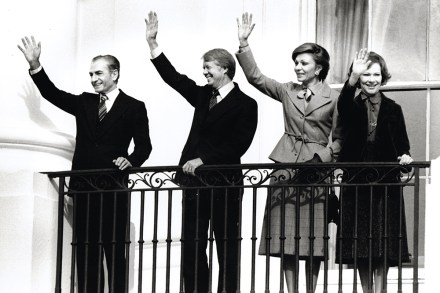
On 22 June this year, seven B2 Stealth bombers flew on a 37-hour round trip from bases in the US to drop 14 30,000lb bombs on two nuclear facilities in Iran. A third was attacked with cruise missiles fired from a submarine, possibly in the Persian Gulf. Few can say with any certainty how much damage was done to the Iranian nuclear programme, which Tehran insists is only for peaceful purposes, but it is likely to have been considerable. Whether this will slow or accelerate Iran’s effort to build a bomb is unclear. This massive demonstration of American firepower brought the brief 12-day war between Iran and Israel to a rapid close. Iran came off considerably worse than its adversary in the conflict, though you would not know it from the rhetoric of Ali Khamenei, the Supreme Leader.

Truly magnificent: the splendour of Suleiman I

From our UK edition

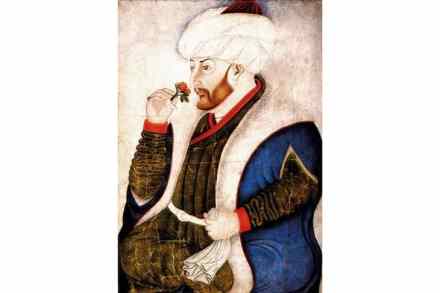
In this luminous, erudite book, Christopher de Bellaigue tells the story of the early years of Suleiman the Magnificent, the best known and most powerful of the Ottoman sultans.It is far from a standard narrative history. Drawing on sources in English, French, Italian and German, de Bellaigue has written a gripping account that evokes an epic poem, saga or ‘book of kings’ rather than a familiar biographical plod. It is as ‘immersive’ as the blurb claims, conjuring the world of the eastern Mediterranean, Anatolia and south-eastern Europe in the early 16th century with the limpid clarity of the many gems that stud its pages. The maps alone are worth the price of entry. De Bellaigue has done this in a variety of ways, all audacious, all largely successful.

The best of journeys: Justin Marozzi’s monumental trek through the history of the Muslim world

From our UK edition

This impressively clever, careful, and often beautiful book is the best sort of journey. It takes us through 15 cities that represent Islamic civilisation, but also through 15 centuries of Islamic history. Our voyage takes us through the core of the Middle East, but also to Fez in what is now Morocco and to Samarkand, in what is now Uzbekistan. We are introduced to very attractive characters such as Akbar, the tolerant and cultured warrior-poet who was Mughal emperor in the 16th century, and Harun al-Rashid, who turned Baghdad into a cultural and commercial centre so rich and powerful that its fame resonates more than a millennium later.

The man and the myth | 17 April 2019

From our UK edition

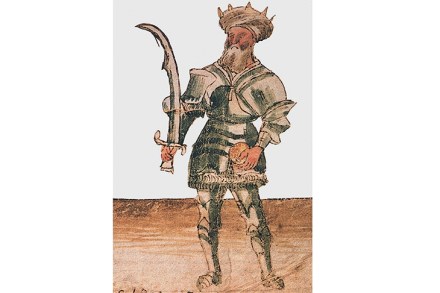
I can only remember one page of any of the dozens of Ladybird histories that I read avidly as a child: an illustration of a scene from the Third Crusade, when Richard the Lionheart, at the head of his Christian army,  met Saladin, the leader of the Muslim forces, outside the port city of Acre in 1191. The picture does not show the battle but the two men comparing swords, like top level sportsmen discussing preferred bats or rackets. They were standing before a tent, broadly medieval in appearance. On the ground lay an iron bar, evidently chopped in half with a single blow from the great broadsword between King Richard’s mailed fists. A silk scarf floated in the air and Saladin, slender, saturnine and subtle, was preparing to slice it in half with his razor-sharp scimitar.

The scramble for the Middle East: Britain and America fall out

One of the many pleasures offered by Lords of the Desert, which narrates the rivalry between Britain and the United States in the Middle East from the end of the second world war through to 1967, is the quotations that are liberally strewn across its pages. They have been culled from memoirs or official documents unearthed in British or US archives and testify to the research that has gone into this dense but consistently fascinating account. Some reveal the deep complacency of influential individuals. Ralph Brewster, an American senator who undertook a round- the-world tour in August 1943 to investigate the progress of the war and report to President Franklin D.

lords of the desert

Lines in the sand

One of the many pleasures offered by Lords of the Desert, which narrates the rivalry between Britain and the United States in the Middle East from the end of the second world war through to 1967, is the quotations that are liberally strewn across its pages. They have been culled from memoirs or official documents unearthed in British or US archives and testify to the research that has gone into this dense but consistently fascinating account. Some reveal the deep complacency of influential individuals. Ralph Brewster, an American senator who undertook a round- the-world tour in August 1943 to investigate the progress of the war and report to President Franklin D.

Blind into battle

Early every morning through the spring of 2002, US troops at Bagram airfield on the Shomali plains north of Kabul assembled on a makeshift parade ground. After the daily briefing, an officer announced the number of days since 9/11, read a short obituary of a victim of the attack and reminded the troops of their mission: to capture or kill those responsible for the worst terrorist strike ever in the US. Only a year previously, Bagram had been captured by the Taliban, who then exercised nominal control over 80 per cent of Afghanistan. Reduced to bombed-out buildings and a potholed, unusable airstrip, it was of limited strategic importance. Within weeks of the US-led invasion the runway was in constant use. Helicopters rotored throughout the night.