Honor Clerk

The dilemmas and difficulties of artists through the ages

From our UK edition

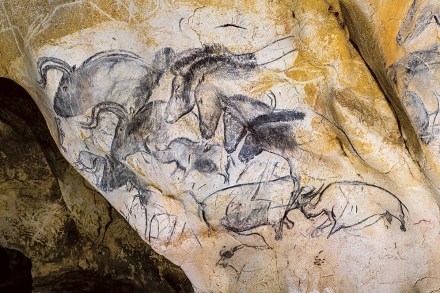
Walter Neurath, refugee from Nazism, public educator and the founder of Thames & Hudson, would have loved this book. In Lachlan Goudie the publisher has found a born guide, a painter himself and the son of a painter, perfectly equipped to explain how artists have created their masterpieces, from the cave paintings of Chauvet to the machine-learned extravaganzas of AI. Some ten years ago Goudie’s television series The Story of Scottish Art introduced viewers to a similarly broad sweep of art history, and if this book doesn’t make it to the screen then it ought to. Here, too, Goudie uses his own practice to convey the dilemmas and difficulties that artists of every era have confronted in the mastery of their materials.
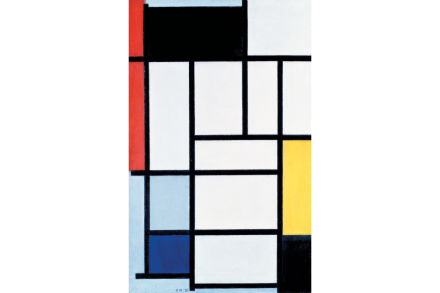
The stark, frugal world of Piet Mondrian

From our UK edition

In September 1940 the Dutch abstract artist Piet Mondrian arrived in New York, a refugee from war and the London Blitz. He was 68, a well known figure in modern art circles in Europe but as yet little appreciated on the other side of the Atlantic. His visas, his travel and his accommodation had been sorted out for him by well-wishers in Britain and he was welcomed in America by Harry Holtzman, an artist some 40 years his junior. On the evening of his arrival, Holtzman entertained the stiff, fastidious, well-dressed Mondrian to dinner in his apartment and introduced him, via the phonograph, to boogie-woogie. He recalled: Mondrian’s response was immediate, he clapped his hands together with obvious pleasure. He sat in complete absorption to the music, saying, ‘Enormous! Enormous!

Tales with a twist: Safe Enough and Other Stories, by Lee Child, reviewed

From our UK edition

Lee Child has sold more than 200 million books. He reckons his royalties at about a dollar per book. He doesn’t write short stories to make money. He contributes to anthologies, largely pro bono. ‘Fabergé eggs they ain’t,’ he says, in the introduction to this collection of 20 stories, but they are real gems nonetheless. With no global readership to worry about and no commercial interests involved, Child was free to have fun. And fun he has with the short story form, shooting from the hip – ‘no need’, as he says, ‘to save anything for Chapter 17’. The trademark economy of style is faultless, each cop, hitman, fixer or judge fully fleshed out in just a few words; the scaffolding for each narrative constructed with the absolute minimum of material.

The force of nature that drove Claude Monet

From our UK edition

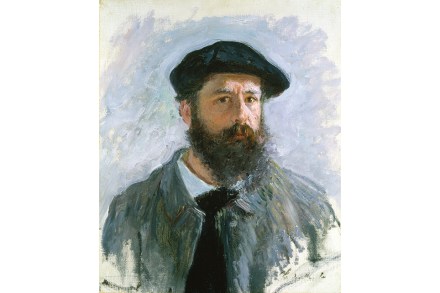
There have been some really good biographies of artists over recent years and what distinguishes the best of them is their sense of context and a lucid prose free from the jargon of the art historian. In the end, of course, any work of art has to be able to stand by itself, but for Jackie Wullschläger her appreciation of Monet’s paintings has been immeasurably deepened by her sense of the man behind them. ‘My approach,’ she writes, ‘stems from the belief that painters transform the raw material of experience into art’, and that material, both the familiar external events and, more illuminatingly, the inner man, is what she gives us here.

Jim Ede and the glories of Kettle’s Yard

From our UK edition

Jim Ede started early. At the age of 12 he used £8 of his hard-won savings to buy a Queen Anne desk. No bicycle, air pistol or football for him: this solid piece of old furniture was the thing, the first step in a long life of acquiring objects that lived, breathed and spoke to him. To call him a compulsive collector is to understate the passion that over the years saw the desk followed by an avalanche of stuff, from porcelain and glasses to pebbles and feathers, textiles and above all paintings, drawings and sculpture. Each acquisition admired, loved, cherished and shared for its uniqueness – what Gerard Manley Hopkins would have called its ‘instress’.

Heavenly beauty: Doppelmayr’s Atlas Coelestis

From our UK edition

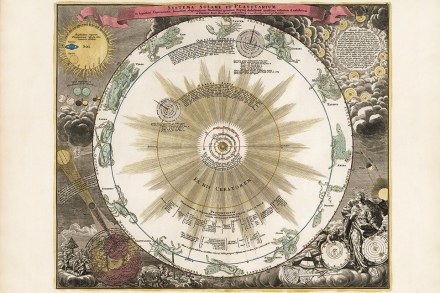
It seems something of a disservice to a work of this seriousness to say how beautiful it is, but that is what will first strike the reader. Open this book and if you can prise yourself away from its wonderful marbled end papers, with their swirls and drifts of deepest blue, brilliant flashes of rusty orange, rivulets of ochre, inky spheres and floating masses of fiery red, you will find yourself taken back to the Enlightenment world of Johann Gabriel Doppelmayr’s Celestial Atlas and an age in which Europe’s polymaths were as interested in the discoveries of science as they were in the literary and artistic culture of the day. The Atlas Coelestis, published in 1742, is an extraordinary work consisting of 30 plates illustrating everything that was known of the cosmos at the time.

You’d never guess from her art how passionate Gwen John was

From our UK edition

‘Dearest Gwen,’ writes Celia Paul, born 1959, to Gwen John, died 1939, ‘I know this letter to you is an artifice. I know you are dead and that I’m alive... But I do feel mysteriously connected to you.’ And well she might, because the parallels between the lives of the two painters are legion. To take the most obvious: both were students at the Slade, both had relationships with much older artists and both came to be seen, for a time at least, through the prism of their association with men. Gwen John was the older sister of the once more famous Augustus and model and lover of the French sculptor Auguste Rodin; Celia Paul, the lover, model and mother of a son of the painter Lucian Freud.

Pink for boys, blue for girls and a worldwide mania for mauve

From our UK edition

It would seem, if recent publications are anything to go by, that we have an insatiable appetite for this subject. A quick search of books on colour throws up six titles in just the past three years, a further half dozen published as a set in February this year, another volume in a series by the Sorbonne academic Michel Pastoureau and now these two. For James Fox, Cambridge academic and television art historian, a fascination with colour came when, as a six-year-old, he saw a squashed iridescent insect, and one gets the feeling that this book has been quietly simmering at the back of his mind ever since. ‘Read it, if you like,’ the author enjoins us at the outset, ‘as a cultural history of colour; though I think of it as a history of the world, according to colour.

From light into darkness: the genius of Goya

From our UK edition

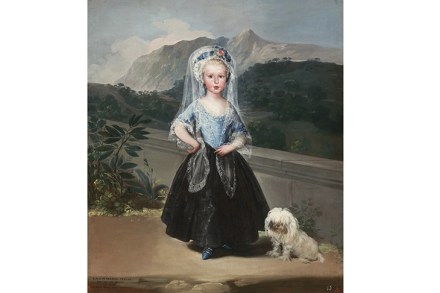
The great Spanish artist Francisco Goya was born in Zaragoza in 1746, the son of a gilder whose livelihood was doomed by the new fashion for marble. The young Goya first studied in his home town before graduating to Madrid, rising through academy and court circles and navigating his way through the reigns of three Bourbon kings and the intervening rule of Joseph Bonaparte before retiring to Bordeaux in his late seventies. From early commissions for religious frescoes, altarpieces and tapestry cartoons for royal palaces, he went on to paint celebrations of everyday Spain en fête and to establish a portrait practice encompassing all the leading figures of the wildly fluctuating political scene in the capital.

How long is long enough to look at a work of art?

From our UK edition

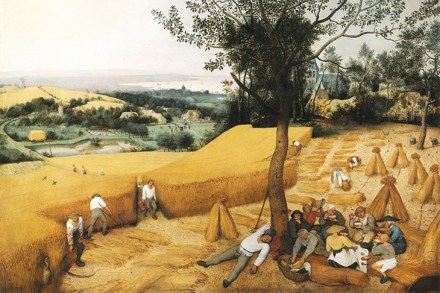
There is a vogue at the moment for books which use art as a vehicle for examining the writer’s wider life and interests. Toby Ferris will certainly not have seen this as in any way an autobiography, but what it essentially does is use a quest for the 42 surviving paintings by Pieter Bruegel the Elder as a starting point for an exploration of anything and everything, from the death of a friend to art history, family history, philosophy, anthropology, mathematics, music and paragliding. The result of this — what Ferris calls his Bruegel Project — is an intricately plotted book that is by turns stimulating, moving and sometimes mildly pretentious.

The genius of Reynolds Stone: a private man in a public world

From our UK edition

You may not know the name of Reynolds Stone, but it is almost impossible that you haven’t come across his designs. If you’re familiar with the masthead of the Economist or remember the clock on the top of the front page of the Times; if you’ve seen the colophon on a book published by the Folio Society or Hamish Hamilton or owned a Penguin edition of Shakespeare; if you’ve borrowed something from the London Library; if you had a £5 note in your wallet in the 1960s; if you’ve walked over the memorial to Winston Churchill on the floor of Westminster Abbey or if you own a passport with the royal coat of arms on the front, then you’ve been in close contact with the work of this wood engraver, typographer, letter-cutter and watercolourist.

Free of Lucian Freud — Celia Paul’s road to fulfilment

From our UK edition

I was looking the other day at a video of the artist Celia Paul in conversation with the curator of her recent exhibition at the Huntington Library in California. The image projected there of a reserved and quietly-spoken woman, hesitant, diffident and patently ill at ease in the spotlight, left me very unprepared for the raw honesty and openness of this memoir. Two early stories give an idea of what lies ahead. The first is of her five-year-old self, the youngest so far in a family of four daughters of a missionary father in India, making herself seriously ill with jealousy on the arrival of a fifth sister.

Picturing paradise: the healing power of art

From our UK edition

Some 35 years ago I visited the National Gallery of Sicily in Palermo on the hunt for the ‘Virgin Annunciate’ by Antonello da Messina, the painter of the beautiful ‘St Jerome in his Study’ in the National Gallery in London. It was hard enough to persuade anyone that the gallery was meant to be open, and what staff there seemed to be about (a couple of deeply suspicious museum guards) had clearly dedicated their lives to saving the gallery’s electricity, rationing us in a succession of deserted rooms to a few seconds in front of any one painting, before plunging the room into darkness, and hustling us into the next. Museum guards in Siena must be made of more pliant stuff, because Hisham Matar was able to enjoy his month in the city at a very different pace.

Seas of ink-and-wash

From our UK edition

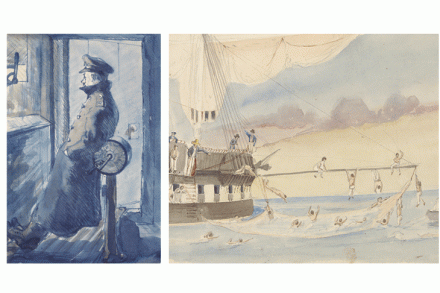
Working in the Public Record Office some years ago, I ordered up the logbook of the badly damaged HMS Scylla on her return to Britain after D-Day. There was something very moving in seeing the bare navigational details noted in my uncle’s familiar hand. But then can anything be so immediate a point of contact with the past as a ship’s log as, watch by watch, the location, the wind and the weather are recorded with relentless discipline? Is there a more eloquent message than the odd water stain during a ‘fresh gale’? And if this is telling, what of the journals and diaries, sketchbooks and maps that give a graphic dimension to the mere facts?

A short step from cradle to grave

From our UK edition

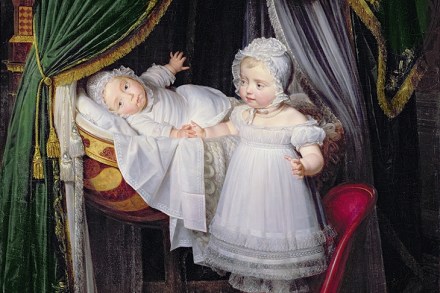
Between 1300 and 1900 few things were more dangerous than giving birth. For poor and rich, the mortality rate was high. If the birth itself didn’t kill you, then puerperal fever very well might. Privacy was non-existent. If you were Marie de Medici, there was such a press of people in the lying-in chamber that you couldn’t get from the birthing chair to your bed — and that was not counting the 200 more in the ante-room.  Still worse, though, than giving birth was being born. In 16th- and 17th-century England, 20 per cent of children died before the age of five. If you managed to survive your arrival and four months of swaddled immobility, there was still every chance you might be burned, trodden on, eaten by animals in your home or squashed by your mother in bed.

Obscure object of desire | 16 August 2018

It is always interesting to see what art historians get up to when none of the rest of us is looking. It is hard to know what the inspiration for The Mummy’s Foot and the Big Toe can possibly have been, but if this very short book offers the kind of approach that will go down well in the enclosed world of the academic conference, Alan Krell might find the common reader a tougher nut to crack. Having said that, however, those with a taste for such things will probably find plenty to enjoy in a book that ranges from the bare foot as symbol of freedom to the foot as ‘fetish and fancy, object of desire and of abjection, and vehicle for the comic, the absurd and the empowering’ in the context of literature, art, sport and film.

The sorrow and the pity

From our UK edition

In 1971 the late Linda Nochlin burst onto the public scene with her groundbreaking essay, ‘Why Have There Been No Great Women Artists?’ Unlike other apologists, she made no claim that there were, in fact, great overlooked women artists but shifted the ground of the question to ask why circumstances made it impossible for women to be great artists. If it might seem an obvious question now, that is in part because she made it so, and almost 50 years later she has brought the same clear-eyed approach to the representation of misère in 19th-century art.

Figures in a landscape | 25 January 2018

From our UK edition

Martin Caiger-Smith’s huge monograph on Antony Gormley slides out of its slipcase appropriately enough like a block of cast iron. In its beautiful rust-coloured linen covers it looks a bit like a block of cast iron, too. Open it to the endpapers, ‘Bodies in Space’, and black splatters across a white ground. Turn a couple of thick, silky pages and a frail human figure, photographed from behind, is silhouetted on a rocky precipice facing an abyss of roiling water, cloud and spray. Keep turning and the developing story of Gormley’s life’s work reveals itself in image after remarkable image.

August Auguste

From our UK edition

In 1959 the formidable interviewer John Freeman took the Face to Face crew to the 81-year-old Augustus John’s studio. The beetling brow, piercing eye and a succession of roll-ups stuck to his lower lip offer almost a caricature of the undimmed rascality of the old devil. Like all the films in that remarkable series, it offers a glimpse into a world that we thought television was invented too late to record. But how much more extraordinary it is to watch, in a three-minute film made in 1915, another elderly artist — the 74-year-old Pierre-Auguste Renoir, crippled with arthritis, working at his easel.

Spectator Books of the Year: An impassioned celebration of Velázquez

From our UK edition

The Vanishing Man (Chatto, £18.99) by Laura Cumming is a moving memorial, written in the wake of the death of the author’s father. An impassioned celebration of Velázquez and a snapshot of the snobberies of the art world in the mid-19th century, it’s a cracking good story to boot. By contrast, a slow read rather than a page-turner, Ann Wroe’s Six Facets of Light (Cape, £25) is a compendium of art, literature and science that takes you from Fra Angelico and Eric Ravilious, Milton and Gerard Manley Hopkins to Einstein, Newton and Clerk Maxwell. A book for winter.