Mark Cocker

Will we ever stop predicting the end of civilisation?

From our UK edition

In the sphere of British environmentalism, Paul Kingsnorth is admired as a maverick in thought and deed. Starting out as a journalist with the Ecologist magazine, he co-founded the Dark Mountain Project, an online portal devoted to stories about the more-than-human world in a time of ecological collapse. On resigning from both, he retreated as a self-proclaimed ‘recovering environmentalist’ to an Irish smallholding, where he has embraced the Romanian Orthodox church. Against the Machine, his tenth book, is billed as a summary of his intensifying disillusionment with events in the past 30 years. It is a serious work leavened with sardonic humour and is by turns rich in unsettling ideas and deeply pessimistic.

Global fish stocks have been perilous for decades – so why is still so little being done?

From our UK edition

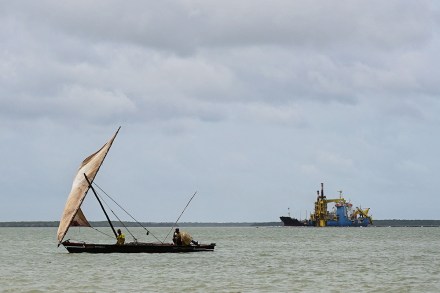
The great American activist Aldo Leopold once argued that to be a modern environmentalist was to suffer a world of wounds as you endured the losses inflicted on one cherished organism after another. No one, then, can suffer more anguish than the campaigner for the world’s fishes. In this wide-ranging, heartfelt, meticulously assembled account of our oceans Rose George shows why. She tells us that there are four million fishing vessels worldwide, the most appallingly efficient belonging to China, the EU, Taiwan, Japan, Russia and the USA. It is primarily these giant industrial regimes that have driven four-fifths of the planet’s fishes to the edge of sustainable limits. Much of this damage was done decades ago. Even in the 1970s the North Atlantic fisheries were declining.

Bats have suffered too long from the ‘Dracula effect’

From our UK edition

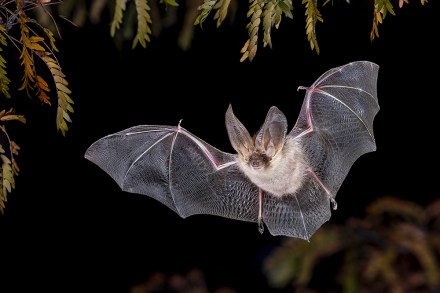
Perhaps it is not surprising that bats, which sleep by day, feed by night and swoop through the darkness as erratically as moths, are among the least understood group of mammals. Yet one of the most poorly appreciated facts about them is their global success. They have a near universal presence across six continents and are amazingly diverse, with 1,500 species, representing almost a quarter of all mammals. We can blame our negative attitude towards them on a certain Victorian novelist. The representative of a British environmental group once recalled how they frequently received questions such as: ‘Do all bats drink blood?’ Here, fortunately, is the book to counter Dracula and to present us with a perfect PR campaign for bats.

Man’s fraught relationship with nature extends back to prehistory

From our UK edition

It is now almost a prerequisite of any dispute among environmentalists to recall a judgment offered by the literary critic Raymond Williams – that ‘nature’ is perhaps the most complex word in the English language. Attempts to unravel its meaning are fraught with challenge. Does it signify just the living elements of the biosphere, or does it include inanimate parts, such as mountains and rivers? The extreme heat of the Sun at its core makes it the place least hospitable to life – yet it is equally the source of the whole process. Perhaps the greatest of all associated questions is whether humans are subsumed within, or inexorably separated from, the Sun’s operations. Jeremy Mynott’s book does an exceptional job of teasing out most of nature’s multiple meanings.

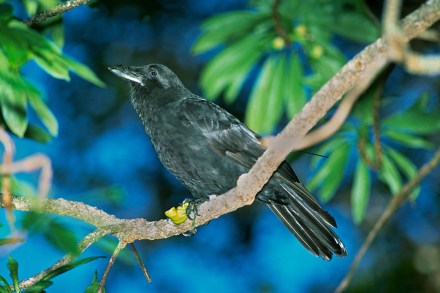
The sad history of the Hawaiian crow

From our UK edition

Over a 40-year career, Sophie Osborn has evolved from a greenhorn volunteer for nature, doing mundane tasks in the wilds of Wyoming, to the manager of a captive-release programme for California condors in Arizona. This post placed her at the heart of perhaps the most sophisticated operation for a threatened bird anywhere in the world. Yet Osborn was as passionate in her first role as in her later one. She describes her professional arc in Feather Trails, using three bird species as separate motifs to order her story as a play in three acts. The structure not only offers a way of organising an autobiography; it supplies a sequence of lenses through which to explore the challenges faced by all those acting for birds.

The Karakachan sheepdog is a match for any bear – but not for modern society

From our UK edition

Kapka Kassabova is celebrated for her poetic accounts of rural communities dwelling at the margins of modernity, but also along a border zone in the southern extremity of her native Bulgaria. In her previous book, Elixir, her chosen people were the Muslim Pomaks of the Rhodope Mountains, with their ancient herbalist traditions. In Anima, she explores the world of transhumance pastoralists, known in Bulgarian as the Karakachan and in Greek as the Sarakatsani. It is not so long ago that the Greek component of this extraordinary sheep-herding tribe acquired cultural cachet in this country. American and English anthropologists hurried off to study and write about them (notably J.K. Campbell in Honour, Family and Patronage, 1964).

Tom Cruise and the art of falconry

From our UK edition

Last week, the Hollywood team making the latest Mission Impossible film was desperate to clear Trafalgar Square of its superabundant pigeons for a scene involving its star, Tom Cruise. But it was not an ultrasonic laser in Ethan Hunt’s high-tech kitbag that did the trick. What you apparently need to rid central London of its pesky birds is an artform dating back 3,000 years. The producers had to resort to falconers to get the job done. These devotees of an ancient art, who have also performed sterling service recently for administrators at St Paul’s Cathedral and the Palace of Westminster, let loose a ‘cast’ of red-tailed hawks, complete with bells and jesses, and sent the pigeons packing.

Do we really want to bring back the wolf?

From our UK edition

Near our house on the Derbyshire-Staffordshire border is a place called Wolf Edge. It is a raven-haunted slope set to the sounds of curlew song in high spring and I visit it regularly, not least because I imagine that within the deep peat soil there is some remembrance of the site’s eponymous predator, and the thought thrills me. A similar emotion appears to have gripped Derek Gow, and has led him to locate, over several decades, as many references to British and Irish wolves as possible.

Life is a far richer, more complicated affair than we imagined

From our UK edition

In 1982, the philosopher Karl Popper suggested that ‘science may be described as the art of systematic simplification’. In this mind-stretching book, Philip Ball seems to wish to prove Popper’s statement both wrong and correct. On the one hand, Ball is a clarifier supreme. It is hard to imagine a more concise, coherent, if also challenging, single volume written on the discoveries made in the life sciences over the past 70 years. The author is a former editor of Nature and has been privy to the flow of cutting-edge results coming from the world’s leading research programmes over the past decades. How Life Works has a sense of up-to-the-minute authority. Yet Ball is also deeply alive to the human story within his project, leavening technical matters with wit and humour.

The world is ablaze – yet climate chaos still takes us by surprise

From our UK edition

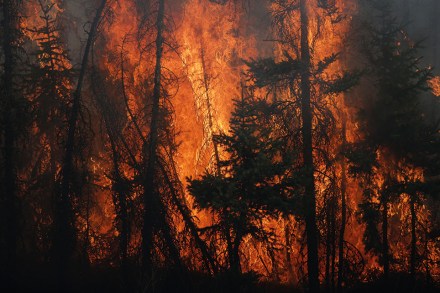
In the light of recent fire emergencies on the Greek islands and in the wider Mediterranean, this book has just acquired even more relevance. It centres on another catastrophe in May 2016, a Canadian inferno nicknamed the ‘Beast’, which has become the most expensive natural disaster in the country’s history. Within three weeks, Fort McMurray’s blaze had incinerated an area the size of Cumbria Within five days of its discovery, the blaze had forced the mass evacuation of 90,000 residents from the city of Fort McMurray in Alberta Province. In just three weeks, egged on by an El Niño cycle as well as fierce winds and record temperatures across America’s subarctic belt, it had incinerated an area equal to the county of Cumbria.

Living trees that predate the dinosaurs

From our UK edition

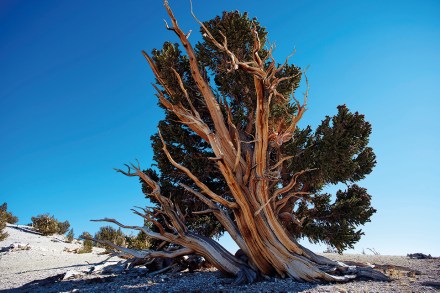
It is perhaps easy to understand why some of the Earth’s largest trees, with roots spreading deep into the underworld as their upper limbs ascend to heaven, are charged with symbolic importance. Yet the origins of our fixation are perhaps surprising. To give one example, the Buddha was said to have attained enlightenment beneath the spreading limbs of a bodi, or pipal tree. That same specimen still reputedly flourishes at Bodh Gaya in Nepal. Even earlier, the first temple of Jerusalem was constructed from timbers King Solomon obtained specifically from the cedars of Lebanon, whose own sacred status recedes into the mists of prehistory. Elderflora – a name coined by Jared Farmer for these venerable old masters – suggests that little has changed since Solomon’s time.

Healing herbs in abundance in an unspoilt corner of central Europe

From our UK edition

The only thing I’m uncertain about in this uplifting and beautifully written book is its subtitle. Granted, the landscape Kapka Kassabova invokes does sound like ‘a place that struck you dumb with its majesty’, but we are not in some Shangri-La beyond the reach of mortals. The valley in question is a two-hour drive from a modern European capital. Elixir is set on the banks of the Mesta River (known as the Nestos in Greece), where its life-giving waters meet the forests and mountains of the western Rhodope range in Bulgaria. Mesta’s montane flora has provided wild crops and herbal medicines for centuries This is the author’s country of origin; but she left it 30 years ago and is unflinching in her judgment of its recent past, which she divides into three phases.

Finally, the Sherpas are heroes of their own story

From our UK edition

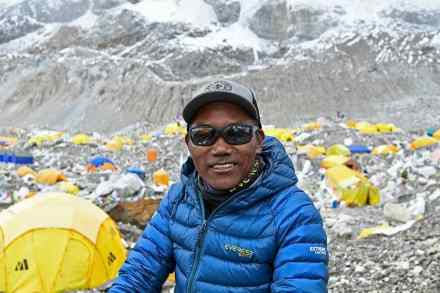
John Keay has for many years been a key historian and prolific contributor to the romance attaching to the highest mountains on Earth. His latest book is described as a summation of that lifetime’s contribution, offering an overview of the Himālaya – the Sanskrit version (‘Abode of Snow’) that Keay bids us use – both as a physical place and as a realm of intellectual inquiry. The book opens with a bang. Its first theme is the astonishing mountain-making forces that created the region. Specifically, Keay gives us the prolonged intellectual skirmishes among geologists as they tried to piece together the formative processes.

The catastrophe that allowed mammals to reign supreme

From our UK edition

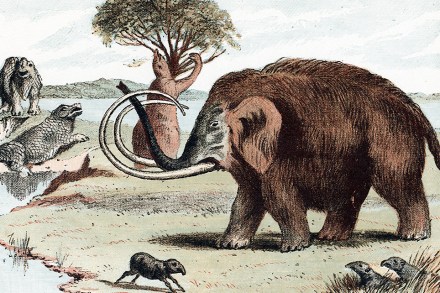
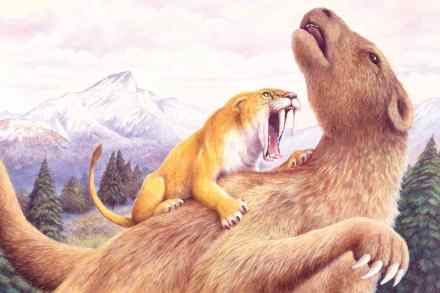
Humans are so comfortable with their self-declared dominance over the rest of life, appointing themselves titular head of an entire geological age in the ‘Anthropocene’, that we forget how we are party to a much wider evolutionary alliance: the mammals. Steve Brusatte announces that mammals reign supreme upon this planet. One thinks especially of their place as climax predators in almost all regions – the lions, tigers, wolves and bears for example – or the sheer weight of numbers of the megafauna in the African savanna, the herds of wildebeest, antelopes and zebras. Mammals are more widely spread over the planetary surface than all higher organisms, with the possible exception of birds.

Adapt or die: what the natural world can teach us about climate change

From our UK edition

Climate change may be the central challenge of our century, but almost all attention has focused on its consequences for one organism: Homo sapiens. In an original, wide-ranging and carefully researched book, the American biologist Thor Hanson addresses its implications for the rest of life. Rather than overwhelming us with a sense of catastrophe, he adopts a balanced approach. He doesn’t baulk at pointing out that plants and animals are showing signs of stress — indeed one of his conclusions is that climate change isn’t imminent: the consequences are everywhere right now. But his book documents how many species, from butterflies to butterflyfish, are showing remarkable resilience.

Beavers, not concrete barriers, can save Britain from floods

From our UK edition

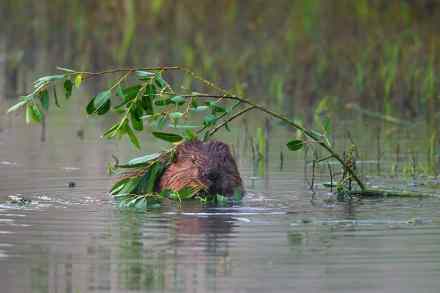
As the start date of COP26 draws closer, and just when we are assailed by daily proof of climate chaos, it is easy to think that this is the only threat to the global environment. It is not. Systemic biological loss assails the world and, while it is closely related to the issues of climate, it is a standalone matter with many separate antecedents. The English in particular should know all about it. On what is called the Biological Intactness Index we are judged to be the seventh most degraded national environment on Earth. Species loss here originates from many causes, but primarily from 80 years of intensive agriculture. This is the main theme of Karen Lloyd’s Abundance, but it is also about how we can reverse these losses.

Richard Dawkins delights in his own invective

From our UK edition

The late Derek Ratcliffe, arguably Britain’s greatest naturalist since Charles Darwin, once explained how he cultivated a technique for finding golden plovers’ nests. As he walked across the featureless moor, ‘the gaze’, he wrote, had to be ‘concentrated as far ahead as possible, not in one place, but scanning continuously over a wide arc from one side to the other and back’. Should you look down at your feet, or allow yourself to be distracted for a second, chances were that this elusive wader would slip off its eggs and you would never work out whenceit came. Reading Richard Dawkins strikes me as requiring a similar kind of disciplined attention.

A hymn to the hummingbird — one of the most astonishing organisms on Earth

From our UK edition

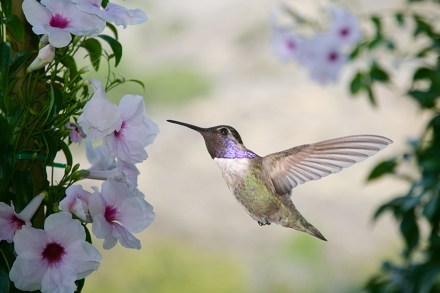
Along with coral reefs and their fish, tropical butterflies and birds of paradise, hummingbirds must be among the most beautiful organisms on Earth. Yet for anyone who has never seen one in the flesh, it is difficult to convey the psychological effects of a first encounter. For beauty is only half the hummingbird story. Their impact is doubled somehow by the minuscule size of the creatures. How could anything so small, you wonder, embody so much life force? Even in ordinary flight the wings beat at 80 times a second, and in certain display modes this can rise to 200. The old name — ‘humbird’ — better expresses the electric fizz which those limbs create. However this lifestyle comes at a cost.

Bird migration is no longer a mystery — but it will always seem a miracle

From our UK edition

Bird migration was once one of those unassailable mysteries that had baffled humankind since Aristotle. A strange hypothesis, genuinely advanced in the early modern period, was that birds flew to the Moon for winter, and barely more credible was a notion, which haunted the patron saint of British naturalists Gilbert White, that swallows buried themselves in mud. A modern understanding really began in the 20th century, when ornithologists started to place numbered metal rings on birds’ legs. Scott Weidensaul is one of many researchers worldwide who have helped to map this avian story. He then captured the findings in his Pulitzer-nominated Living on the Wind (2003). Yet he was also aware that these research methods had limitations.

Where time stands still: a Himalayan pilgrimage

From our UK edition

The region of Dolpo in Nepal forms part of a border zone between that country and China in the central Himalayas. It is essentially a high-altitude desert encircled by towering snow-capped peaks and has long been celebrated in the West as a real-life version of Shangri-La. Part of the image flows from the restricted access permitted to outsiders, and also from the lives of its inhabitants, who might belong politically to Nepal but culturally show allegiance to the former theocracy presided over by the Dalai Lama. Dolpo is one of the last places on Earth where a vestige of the traditional Buddhist society of Tibet still survives.