Andrew Taylor

Whitehall farce: Clown Town, by Mick Herron, reviewed

From our UK edition

It’s good to be back in the unspeakable awfulness of Slough House, the decaying London office block in which the security service’s rejects do battle not only with the nation’s enemies but also with each other. Clown Town is Mick Herron’s ninth novel in the series, though he has explored different aspects of Slough House’s skewed universe in seven other books. It follows on from its series predecessor, Bad Actors. The office is looking underpopulated these days. River Cartwright, the nearest thing the series has to a juvenile lead, is recovering from life-threatening injuries sustained in the line of duty and hoping against hope that they will not mean the end of his career as a spook.

The boy who would be king: The Pretender, by Jo Harkin, reviewed

From our UK edition

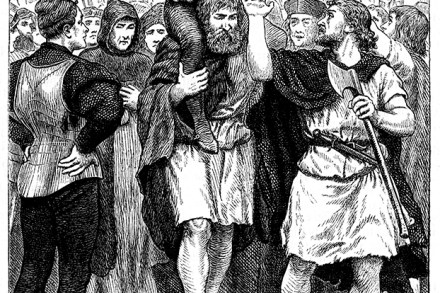
Cock’s bones! This is a most wonderly historical novel, the very reverse of a wind-egg. It tells the story of Lambert Simnel, the youthful figurehead of a Plantagenet uprising against Henry VII in 1487. The historical Simnel is an elusive figure, and most of what little we know comes through Tudor propagandists. Jo Harkin fills the gap in the record with enormous brio, channelling this bloody epilogue to the Wars of the Roses through a hapless adolescent who usually has his mind on other things. Simnel is a pretender in more ways than one. Even he doesn’t know who he really is. The son of an Oxfordshire farmer? A Yorkist bastard, retained by the sinister Lord Lovell as a form of dynastic insurance? The 17th Earl of Warwick and the rightful Edward VI?

The nanny’s tale

From our UK edition

Jill Dawson has a taste for murder. One of her earlier novels, the Orange shortlisted Fred and Edie, fictionalised the 1922 Bywaters and Thompson murder case. More recently, The Crime Writer cunningly blended an English episode from the life of Patricia Highsmith with elements of one of Highsmith’s own crime novels. Now Dawson has turned to the Lucan case, which has rarely been far from the tabloid headlines since 1974. One November evening, an intruder bludgeoned to death the Lucan children’s nanny, Sandra Rivett, in the basement kitchen of their Belgravia home and viciously attacked Lady Lucan herself. Lord Lucan disappeared in murky circumstances and has never been found. At the inquest, he was named as Sandra Rivett’s murderer.

The spy who came back from retirement: Karla’s Choice, by Nick Harkaway, reviewed

From our UK edition

Publishing is a business. Authors are its brands and books its products. When, as sometimes happens, one of the bigger brands inconveniently dies or retires, there’s an understandable desire to keep the brand going and to attach its lucrative name to new products. And why not? If it’s done well, everyone benefits – publishers, readers and authors’ estates. In the past 60 years, there have been few bigger brands than the late John le Carré, so it’s no surprise to find a posthumous outing with the words ‘A John le Carré novel’ plastered over the cover. Its author, Le Carré’s youngest son Nick Harkaway, is a well-established novelist in his own right, albeit in a different genre. He served his apprenticeship by completing his father’s last book, Silverview (2021).

Turf wars in Las Vegas: City in Ruins, by Don Winslow, reviewed

From our UK edition

So you’d like to borrow half-a-billion dollars? It’s a tribute to the epic ambitions of this novel that the reader swallows questions like this without blinking. In a sense that’s fair enough because City in Ruins is the third book of a trilogy loosely modelled on the great poems of the classical world, particularly the Iliad and the Aeneid. Don Winslow is probably best known in this country as the author of the widely praised Cartel trilogy, about the US Drug Enforcement Agency’s ‘War of Drugs’. The Danny Ryan trilogy, by contrast, deals with the life and times of a Rhode Island longshoreman who evolves first into a gangster-with-a-heart and finally into a more or less legitimate businessman with a tendency to backslide. He’s a decent man who sometimes does bad things.

The Scarlet Pimpernel of the Vatican: My Father’s House, by Joseph O’Connor, reviewed

From our UK edition

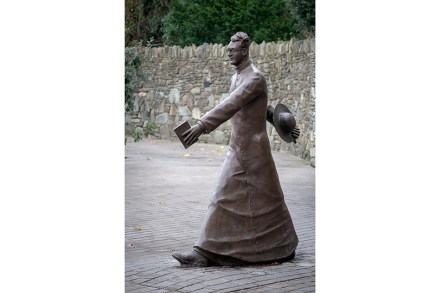
One of Joseph O’Connor’s strengths is his magpie-like approach to history: he plunders it for stories that he can rework as fiction. His new novel is based on the exploits of Monsignor Hugh O’Flaherty, a senior official at the Vatican, who, together with colleagues, was responsible for saving the lives of 6,500 Allied soldiers and Jews after the Nazis occupied Rome in 1943. It is by any standards an extraordinary tale. O Flaherty’s organisation called itself the Choir; the prisoners it sheltered were known as Books, and their hiding places, scattered across Rome, as Shelves.

Heavies in a new light

From our UK edition

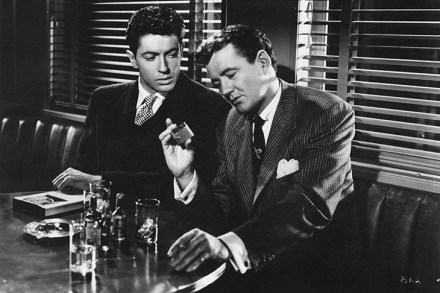
Let’s hear it for the heavies, the unsung heroes of noir crime fiction on page and screen. The genre would collapse without them. Without the threatened or actual violence they so selflessly provide, the streets would not be mean and a private eye’s career would be only slightly less risky than an estate agent’s. Yet we rarely glimpse the private lives of these men (heavies are almost invariably male), or explore their hinterland of secret traumas and guilty pleasures. Alan Trotter, then, gets bonus points for originality, from his choice of title onwards: this novel is all about the muscle who supply the heavy weaponry of the criminal world.

Why are crime writers so weird?

From our UK edition

What a weird lot crime writers are. I don’t come to this conclusion lightly, since I’m a crime writer myself, but on the evidence of this magisterial but wickedly entertaining book the conclusion is inescapable. As you turn the pages, the evidence mounts up. One crime writer has been considered a serious candidate for sainthood and another has been convicted of murder. Wilkie Collins simultaneously maintained two mistresses and their children but never bothered to marry either. Mary Roberts Rinehart, an early 20th-century queen of American suspense fiction, narrowly escaped being murdered by her chef because she wouldn’t promote him to butler. Agatha Christie famously engineered her own disappearance, and Dorothy L.

For Glasgow – with love and squalor: The Second Cut, by Louise Welsh, reviewed

From our UK edition

Never, never kill the dog. It’s rule one in the crime writer’s manual. Cats are bad enough, as I can testify, having once had the temerity to behead a cat — in a novel, I mean —and then crucify the mutilated corpse upside down on a church door. As a general rule, if you kill a domestic pet in your crime story you should expect a hostile postbag of epic proportions. But rules are meant to be broken. Which is why it’s a pleasure to find in Louise Welsh’s latest novel a stinking, maggot-swarming Jack Russell entombed in a chest with a tightly fitting lid. She’s an author whose stock-in-trade is the unexpected, which is also demonstrated by the variety of her fiction.

Fiction’s most famous Rifleman returns — and it’s miraculous he’s still alive

From our UK edition

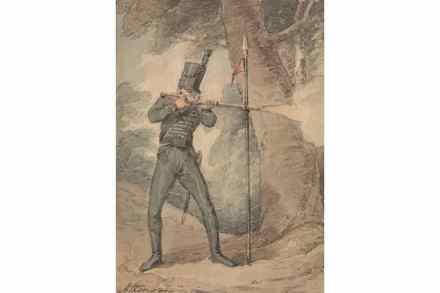
It has been 15 years since the last Richard Sharpe novel, and it’s a pleasure to report that fiction’s most famous Rifleman is still thriving, miraculous as that may seem after his long and suicidally dangerous career. Sharpe, a foundling child from the East End of London, brings street fighting skills to the business of soldiering. He has risen slowly and painfully through the ranks, campaigning in India during the 1790s and in Spain during the Peninsular war. At the start of this book, he has just saved the day at Waterloo with a typical combination of tactical skill, reckless courage and unorthodox thinking (in this case shooting the Prince of Orange, a British ally but a disastrous general).

Glasgow gangsters: 1979, by Val McDermid, reviewed

From our UK edition

Like a basking shark, Val McDermid once remarked, a crime series needs to keep moving or die. The same could be said of crime writers themselves, who work in a genre that has an inbuilt tendency to encourage repetition, often with dreary results in the long term. McDermid herself, however, has a refreshing habit of rarely treading water for long. Over the past 34 years, she’s published four very different crime series, a clutch of standalones, two books for children, a modern reworking of Northanger Abbey, and several non-fiction titles. And now comes 1979, the first in a planned five-book series set at ten-year intervals up to the present. It’s the story of Allie Burns, a young woman from a working-class Fife family who has a job as a reporter on a Glasgow tabloid.

Older and grumpier: A Song for the Dark Times, by Ian Rankin, reviewed

From our UK edition

By my reckoning, this is the 24th outing for John Rebus, Scotland’s best known retired police officer. One of the many pleasures of the series is that Rebus ages in real time. COPD now makes climbing stairs an increasing problem, so he and his dog Brillo are in the throes of moving to a downstairs flat. DCI Siobhan Clarke, his former colleague, has turned up to lend a hand. She’s distracted by the murder of a wealthy Saudi student, who soon turns out not to be wealthy at all. Nevertheless, he had recently promised to invest £10 million in a real-estate development 250 miles from Edinburgh near the north coast of Scotland.

Oxford skulduggery: The Sandpit, by Nicholas Shakespeare, reviewed

From our UK edition

Melancholy pervades this novel: a sense of glasses considerably more than half empty, with the levels sinking fast. This is largely due to its central character, John Dyer, a former journalist in his late fifties, who has returned from years in South America to live in Oxford and write a book about Portugal’s accidental discovery of Brazil. With him comes his 11-year-old son, who attends the Phoenix, a posh prep school based on Oxford’s real-life Dragon School. Gradually, through a series of leisurely flashbacks, we learn that the love of Dyer’s life has died, his wife has left him, journalism has lost its soul and Brazil is going to pot. (Only at the end did I learn that The Sandpit is a sequel to an earlier novel, The Dancer Upstairs.

Let’s swap murders: Amanda Craig’s The Golden Rule reviewed

From our UK edition

It has been three years since Amanda Craig’s previous novel, The Lie of the Land, the story of a foundering marriage set among the gathering shadows of Brexit. The Golden Rule is worth the wait. It opens with a nod to Patricia Highsmith’s Strangers on a Train, the classic thriller in which two strangers, meeting by chance on a train, agree to murder each other’s wives. In this case, the genders are reversed, and the strangers are two women, Hannah and Jinni, who meet on the long journey from London to Cornwall. Hannah, the central character, has escaped from her working-class Cornish family via university to London. But life has turned sour. Her husband, an entitled aristocratic sprig named Jake, has left her and their young daughter Maisy for the glamorous Eve.

A choice of classic crime fiction

From our UK edition

A guide to reading in lockdown. My involvement with crime and mystery fiction started when I was four. The first book I remember reading for myself was Hurrah for Little Noddy. As Enid Blyton aficionados will know, this is the second in the series about a self-absorbed wooden doll. It’s a thrilling tale about a massive car heist (those pesky goblins), involving a red herring, a car chase, wrongful arrest (oh poor Noddy), a stupid police officer and the intervention of a gifted amateur (Big Ears’s finest moment). Drop everything and re-read it. Much of Blyton’s prodigious output is crime fiction writ small. I have a theory that its imprint on tender minds is largely responsible for the flourishing condition of British crime fiction over the past 40-odd years.

Brexit has at least inspired John le Carré — his thriller on the subject is a cracker

From our UK edition

Since 1903, when Erskine Childers warned of the rising tide of German militarism that preceded the first world war in The Riddle of the Sands, spy fiction has enthralled and chilled its readers by holding a cloudy mirror to the murkier corners of international politics. During the Cold War, John le Carré’s novels were hugely influential in shaping popular perceptions about the private manoeuvres behind the public antics. His books have continued to explore the dark places of the world we live in, their subject matter evolving with the headlines. Agent Running in the Field — an intentionally ambiguous title, no doubt — is le Carré’s 25th novel. The first and most important thing to say is that it’s a cracker.

Light and dark | 1 August 2019

From our UK edition

Few biographies are quite as impressive as Yukio Mishima’s. One of Japan’s most famous authors, he wrote 80 plays and 25 novels, starred in movies, directed theatre and produced his own film. He was nominated three times for the Nobel Prize in Literature. He founded a right-wing militia to defend the emperor from Marxists and, in 1970, committed ritual suicide, aged 45, after the failure of his coup to overturn the constitution. Life for Sale is one of his lesser-known achievements. Though it’s littered with corpses, it seems almost humdrum when compared with its creator’s CV. Originally written for Japanese Playboy and published in 1968, this is, I think, the first time it has appeared in English. Hanio is young, solvent and single.

Three’s a crowd | 6 June 2019

From our UK edition

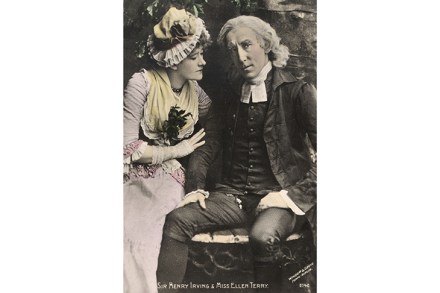
‘I am very, very pleased,’ murmured Queen Victoria in 1895, when she dubbed Henry Irving, Britain’s first theatrical knight. He and Ellen Terry, who so often played opposite him, were international celebrities. Bram Stoker was their intimate friend and associate. He managed Irving’s Lyceum Theatre for 27 years and spent much of his career in their shadow. More than 100 years after his death, however, Stoker’s name is almost certainly more widely known than theirs, solely because of his most famous creation, Dracula (who is believed to have been partly modelled on his employer). In Shadowplay, Joseph O’Connor focuses on the three-cornered relationship between Stoker and the two actors.

Goodbye to Berlin | 28 March 2019

From our UK edition

Philip Kerr’s first Bernie Gunther novel, March Violets, was published 30 years ago. From the start, the format was a winner: take a cynical, wisecracking private eye modelled on Philip Marlowe and Sam Spade and transplant him to Nazi Germany. Metropolis is the 14th in the series and unfortunately, since the untimely death of its author last year, presumably the final instalment. Thirty years is also the rough fictional timespan of Bernie’s career. Emerging from the trenches of the first world war, he has served for 11 years as a homicide detective in Kripo (Berlin’s criminal police). He’s a tough, morally ambivalent but essentially sympathetic character. Naturally — it goes with the format — women find him remarkably attractive.

The root of all evil

From our UK edition

The love of money, says St Paul, is the root of all evil. The Snakes makes much the same point. The novel is Sadie Jones’s fourth, and the first to be set in the present. It’s the story of Bea and Dan, a nice young couple who are struggling to make the repayments on their mortgage. She’s a psychotherapist with an outsize social conscience; he’s a trainee estate agent who yearns to be an artist. Desperate for a break, they decide to spend their meagre savings on a three month unpaid holiday in Europe. The first stop is in Burgundy, at the rundown hotel run by Bea’s brother, Alex, who has recently returned from three months drying out in the Priory.