Steven Poole

The AI apocalypse is the least of our worries

From our UK edition

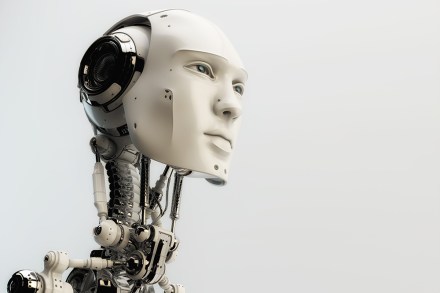
What is your p(doom)? This is the pseudo-scientific manner in which some people express the strength of their belief that an artificial superintelligence running on computers will, in the coming decades, kill all humans. If your p(doom) is 0.1, you think it 10 per cent likely. If your p(doom) is 0.9, you’re very confident it will happen. Well, maybe ‘confident’ isn’t the word. Those who have a high p(doom) and seem otherwise intelligent argue that there’s no point in having children or planning much for the future because we are all going to die. One of the most prominent doomers, a combative autodidact and the author of Harry Potter fan-fiction named Eliezer Yudkowsky, was recently asked what advice he would give to young people. He replied: ‘Don’t expect a long life.
A surprising number of scientists believe in little green men

From our UK edition

In 1928, a young physicist and engineer named Karl Jansky began working at Bell Telephone Laboratories, tasked with investigating any sources of static that could interfere with long-distance radio communication. Cobbling together a system of antennae on a merry-go-round, he successfully found that thunderstorms were annoying in just this way. But there was a small bit of noise left over, and he kept scanning the sky to locate the culprit. To his surprise, he eventually found it was coming from Sagittarius in the centre of the Milky Way. He christened it ‘star-noise’. We now know that he had correctly identified the emanations from a supermassive black hole; and, quite by accident, he had invented the new science of radio astronomy.

The balance of power between humans and machines

From our UK edition

The twin poles of the modern imaginarium about technology and society can be represented by two masterpieces of popular culture. In James Cameron’s film The Terminator (1984) and its sequels, a global computer system called Skynet becomes sentient and proceeds to try to exterminate the human race by means of time-travelling Austrian bodybuilders. In Iain M. Banks’s ‘Culture’ novels, by contrast (beginning with Consider Phlebas, 1987), a space-faring humanlike species has created superintelligent machines, known as Minds, which automate all the labour of production, leaving people free to pursue artistic activities and extreme sports.

A brief history of flat earthers

In 2020, an American pilot and daredevil named “Mad Mike” Hughes launched himself in a homemade steam-powered rocket, hoping to achieve enough altitude to prove to himself that the Earth was flat. Unfortunately, the rocket crashed and Mad Mike was no more. “I’m not going to take anyone else’s word for it, or NASA, or especially Elon Musk with SpaceX,” he had once explained in an interview. “I’m going to build my own rocket right here and I’m going to see it with my own eyes what shape this world we live on is.” In this way he became a martyr to the modern conspiracy theorist’s mantra: “Do your own research!

Flat earthers

Who laughed at Christopher Columbus when he said the world was round?

From our UK edition

In 2020, an American pilot and daredevil named ‘Mad Mike’ Hughes launched himself in a homemade steam-powered rocket, hoping to achieve enough altitude to prove to himself that the Earth was flat. Unfortunately, the rocket crashed and Mad Mike was no more. ‘I’m not going to take anyone else’s word for it, or Nasa, or especially Elon Musk with SpaceX,’ he had once explained in an interview. ‘I’m going to build my own rocket right here and I’m going to see it with my own eyes what shape this world we live on is.’ In this way he became a martyr to the modern conspiracy theorist’s mantra: ‘Do your own research!

Why Anaximander deserves to be called ‘the first scientist’

From our UK edition

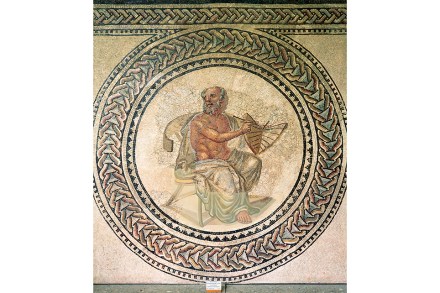
It’s a daring thing to write a whole book about a man while confessing early on that ‘we know almost nothing of his readings, life, character, appearance or voyages’, and of whose writings only a three-line fragment survives. Luckily, as with many ancient authors, the works of the 6th-century BC philosopher Anaximander are described in subsequent treatises, and a resourceful writer can infer much from this evidence about what might have been ‘the first great scientific revolution in human history’.

Slavoj Zizek: the philosopher who annoys all the right people

From our UK edition

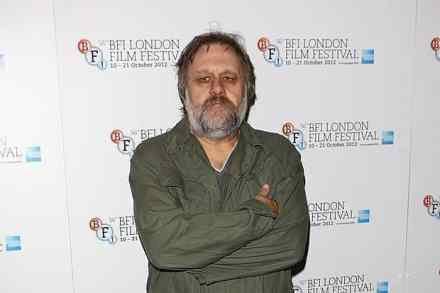
Slavoj Zizek is a Slovenian graphomaniac who infuriates some of the world’s most annoying people, and might for this reason alone be cherished. He once enjoyed a high degree of pop-philosophical notoriety, being blamed by pundits who had clearly never read his books for the scourge of pomo relativism that threatened to undermine the ‘moral clarity’ of those who deemed it an excellent wheeze to invade Iraq. Such was his leftish celebrity a decade ago that he shared a stage with Julian Assange and was forced to deny rumours that he was having an affair with Lady Gaga. ‘My friends said, “You’re stupid. You should have said: No comment”.

The best and coolest decade: nostalgia for the 1990s

From our UK edition

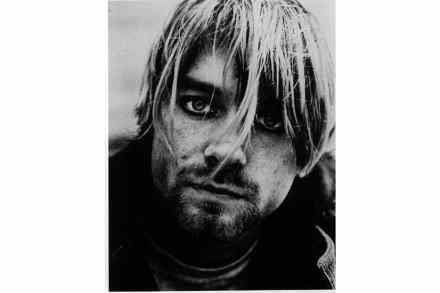
The long 1990s began with the Pixies album Surfer Rosa in 1989 and ended with the invasion of Iraq in 2003. Or perhaps the short 1990s began with Nirvana’s Nevermind in 1991 and ended with The Matrix in 1999. Or perhaps the 1990s never really ended for those of us who have lived blissfully ever since in a mental version of Portlandia — the place where, according to that sitcom’s theme tune, ‘the spirit of the Nineties lives on’. Or perhaps the 1990s did end at some point in the new millennium, if only so that the 1990s revival could commence straight afterwards.

The AI future looks positively rosy

From our UK edition

In the future, men enjoying illicit private pleasures with their intelligent sexbots might be surprised to find that even women made from latex and circuitry can learn to talk back and say no. Or, alternatively, that their ‘love dolls’ — in the current marketing-speak — have been hacked by anarchist feminist programmers. Please enjoy the next, cyborg-mediated stage of the war of the sexes. Some men, of course, still believe that women are inherently no good with computers, a dumb prejudice that Jeanette Winterson ably rebuts in this collection of interlinked essays, with stories from early computing history and several outbursts of amusing ire.

Four German-speaking philosophers in search of a theme

From our UK edition

How do you write a group biography of people who never actually formed a group? Such is the challenge Wolfram Eilenberger sets himself in a book about the philosophers Martin Heidegger, Ludwig Wittgenstein, Walter Benjamin and — the surprisingly unstarry fourth subject — Ernst Cassirer, an urbane and now nearly forgotten neo-Kantian who might have deserved the made-up title of ‘symbologist’, thus far reserved for the heroes of Dan Brown’s novels. What these men have in common is that they spoke German and were philosophically active during the 1920s, but that is about it.

Who will take on the behemoths of Big Tech?

From our UK edition

With Britain having gone through its third general election in four years, the halcyon days of Cleggmania in the 2010 campaign seem like an impossibly innocent time. Particularly since Sir Nick Clegg, once the shining, soft-haired hope of sensible centrists, now works as a PR man for Facebook. His job is to explain to the unwashed masses why Facebook’s refusal to do anything about false political adverts is actually good for democracy.

Could AI enslave humanity before it destroys it entirely?

From our UK edition

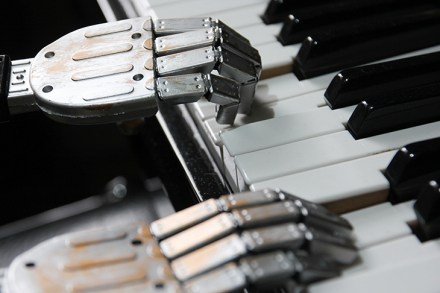
Depending on how you count, we are in the midst of the second or third AI hype-bubble since the 1960s, but the absolute current state of the art in machine cognition is still just about being better than humans at playing chess or being about as good as human beings at analysing some medical scans. It was recently revealed that many thousands of humans were secretly hired to check recordings of people interacting with the ‘intelligent assistants’ on their iPhones or other such devices: much of what is trumpeted as ‘AI’ is still, in fact, dependent on invisible human labour in the digital sweatshop.

Distress signals

From our UK edition

It’s an increasingly common lament that computers have ruined everything, and a longing for the days before Google and Twitter, when everything was somehow more organic and authentic, is on the rise. As someone who can remember writing early reviews on an electric typewriter and then going to the library to fax them to a literary journal, I’m partial to this kind of unplugged nostalgia myself. But it can get out of hand. So it does in this book — ambitiously titled to evoke John Berger’s classic of art criticism, Ways of Seeing — which explains that computers have wrecked music along with everything else.

Muzak, not Mozart

From our UK edition

What is creativity? Marcus du Sautoy, a mathematician and Oxford professor for the public understanding of science, offers this pert definition in his introduction: ‘Creativity is the drive to come up with something that is new and surprising and that has value.’ This, he argues, is possible in mathematics (he himself invented a new kind of symmetrical object) as well as the arts in general, or what he describes as ‘the outpourings of what I call the human code’. The question he sets himself in this book is: can Artificial Intelligence do as well, or even better?

From Access to Youth

From our UK edition

The mid-term elections in the US, when Democrats took over Congress, were hailed as a victory for ‘progressives’, while David Cameron once claimed to be a ‘progressive conservative’. Well, progress towards what exactly? ‘It is certainly significant that nearly all political tendencies now wish to be described as progressive,’ wrote the cultural critic Raymond Williams, ‘but it is more frequently now a persuasive than a descriptive term.’ Quite. That is taken from the seminal 1976 lexicon of political terms, Keywords:  A Vocabulary of Culture and Society, in which Williams traced the tangled history of words from ‘anarchism’ to ‘welfare’.

The power of the poppy

From our UK edition

America has for years been struggling with a shortage of the drugs it uses to execute people, yet it was only in August, in Nebraska, that the first judicial killing using opioids was performed. Aside from moral questions about the death penalty itself, the resistance for so long to this obvious solution denotes a particularly sadistic puritanism, as though it’s an unacceptable risk that even the last moments of a condemned man should be at all pleasant. Opium and its derivatives and synthetic imitators constitute a miracle class of drug: nothing else is as good for pain relief, as Lucy Inglis’s bright and anecdote-packed history shows.

There will be blood | 13 September 2018

From our UK edition

For the past few decades, admirers of video-games have every couple of years mounted a new attempt to persuade the wider arts-loving public of the form’s merits. Look, they say, games are not all about shooting people in the face! They are a dynamic fusion of animation, architecture, intellectual challenge, music and drama! They can be political and subversive! This is true, and yet somehow it never catches on. Will a new exhibition at the V&A enjoy any greater success? You walk through a series of large black rooms with giant screens that appear to be floating through the air. Along the walls are ranged game designers’ working notebooks, and concept art for the characters and landscapes, beautifully rendered in inks and watercolours.

Every man in his humour

Since the 17th century, a ‘humourist’ has been a witty person, and especially someone skilled in literary comedy. In 1871, the Athenaeum said that Swift had been ‘an inimitable humourist’. But in modern usage the term seems to describe a specifically American job title: someone who specialises in writing short prose pieces whose only purpose is to be funny. The current king of humourists is David Sedaris, and his books are essentially scripts for his sell-out reading tours. But is he funny? On a line-by-line basis, he sure can be. He helps push someone’s broken-down car, ‘and remembered after the first few yards what a complete pain in the ass it is to help someone in need’.

The soldier savant

From our UK edition

Descartes is most generally known these days for being the guy who was sure he existed because he was thinking. But before he devoted himself to metaphysical meditations, he had spent a decade as a soldier-scholar travelling the hotspots of Europe. How might a greater understanding of this period affect our view of the great man? This is a fascinating if dry kind of pre-intellectual biography, which hopes to hint at how the philosophy grew out of the action. René Descartes was born to a family of minor nobility in 1596, and educated by Jesuits. He studied some mathematics in Paris and then acquired a degree in law, after which he ‘set out to study the art of war’.

Wonders will never cease

From our UK edition

Different people find different things impressive. Some claim, for instance, to experience a sense of wonder at the fact of being alive. But one has nothing to compare it to, so why find it surprising? Another sensibility will find joy in the observation of E.M. Cioran, the sardonic Romanian philosopher who wrote: ‘It is not worth the bother of killing yourself, since you always kill yourself too late.’ Between these two poles, this book offers a charming compendium of the astonishments that may be experienced in a human life. It is, if you like, a miscellany of the sorts of things at which a secular reader may experience some analogue to religious awe. (Religion is mentioned late on, mainly for its social benefits.