Anna Aslanyan

The typo that spelled death in the Soviet Union

From our UK edition

‘As anyone who has gleefully spotted a typo in a prestigious publication, felt a flicker of schadenfreude at a pompous critic’s downfall, or secretly enjoyed a literary scandal knows, it is possible to love books while delighting in their disasters.’ The sentiment expressed in Rogues, Widows and Orphans is familiar to this reviewer. Rebecca Lee, who has been an editor for two decades, knows very well how words ‘get good’ (to quote the title of her earlier book) and what happens when they go wrong. Her new work ‘offers a lick of every flavour of ick lit’, leaving the reader craving more. Errors and omissions in print have consequences for everyone involved.

An unheroic hero: Ginster, by Siegfried Kracauer, reviewed

From our UK edition

Siegfried Kracauer (1889-1966) made his name as a film theorist. His critical writings have long been available in English, and now his fiction is finally getting its due. The first of his two novels – published in Germany in 1928, five years before Kracauer fled the rise of Nazism – uses as its title his journalistic pseudonym. The protagonist inherits other autobiographical details, too, starting from the opening sentence: ‘When the war broke out, Ginster, a young man of 25, found himself in the provincial capital of M.’ Germany’s descent into the Great War is sketched in vividly cubist images. One character ‘consisted of three spheres stacked on top of one another to form the outline of a bowling pin’; another’s ‘figure possessed the amiability of a rectangle’.

Collateral damage: Vulture, by Phoebe Greenwood, reviewed

From our UK edition

Sarah Byrne is covering her first war and, after a slow start, things are finally picking up. Sweating in her flak jacket and undersized helmet, the twentysomething British freelancer is aiming for a scoop. One of her contacts might be persuaded to arrange a visit to ‘terror tunnels’, the headquarters of a Palestinian network whose activities Israel cites as justification for bombing Gaza City. Fed up with ‘monkey journalism’, Sarah wants to move on from recycling press releases to proper reporting. At the same time, she keeps asking herself what she is doing here. Do these people dragging bodies from under the rubble of their houses need yet another ‘misery merchant’ pestering them with trite questions?

Modernisation has sent Russia spinning back to the Stone Age

From our UK edition

When Howard Amos first came to Russia, in 2007, it was a country you visited with interest, even enthusiasm. Modernisation, potentially a progressive development, was on the cards; America was getting ready to ‘reset’ US-Russian relations; foreigners were able to volunteer at Russian orphanages. That was what Amos did, working with disadvantaged children in Pskov Region. In the 2010s, he returned to Russia as a journalist and reported from places high and low. He draws on his experiences in this book’s 17 essays, centred on topics ranging from politics to poetry, religion to rural affairs. Inevitably, war is a recurring theme. One of Amos’s interviewees, Sergei, works for a German organisation set up to give fallen soldiers marked graves.

Citizens of nowhere: This Strange Eventful History, by Claire Messud, reviewed

From our UK edition

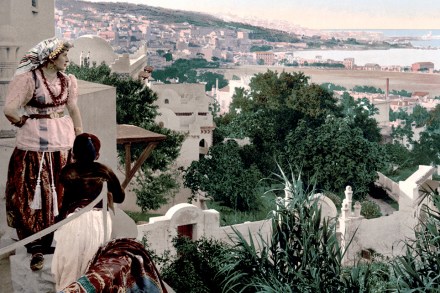
Any personal history is hard to fictionalise, not least because the story needs to be both universal and unique. Claire Messud manages to find the right balance in her latest novel, reconstructing her family’s past in vivid episodes that open a multitude of windows on to the world. Continents and decades chase one another as the narrative traces the movements of the Cassar family. Hailing from Algeria, for much of the book they are citizens of nowhere. Their tribulations begin in 1940, when Lucienne and her children, François and Denise, flee Greece (where their father, Gaston, has been posted as the French naval attaché) to wait out the war in the relative safety of an Algerian hinterland.

A middle-aged man in crisis: How to Make a Bomb, by Rupert Thomson, reviewed

From our UK edition

Philip Notman is going through what looks like a midlife crisis. Travelling home from an academic conference, he feels sick and disoriented to the point where he is barely able to function. Back in London, he can’t quite explain to his wife Anya, or indeed to himself, what’s ailing him. Is it just me, he wonders, or is everything unbearably toxic? Instead of working on his next book during a sabbatical, he sets off on a journey in search of a remedy. Rupert Thomson’s new novel has no full stops. In their place are paragraph breaks, with sentences abandoned on the page, increasing the sense of dislocation: Everything sick, he thought Everything in pain Starting from the title, the atmosphere grows increasingly ominous.

Always carry a little book with you, and preserve it with great care, said Leonardo da Vinci

From our UK edition

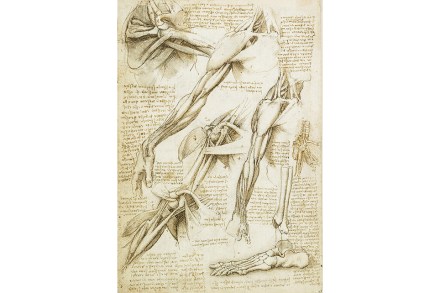
In 1299, Amatino Manucci, a Florentine helping to run a merchant’s business in Provence, kept at least seven ledgers and notebooks, each serving a specific purpose. One covered the firm’s trade in wool and cloth, another in wheat, barley and other victuals, and so on. It wasn’t just figures Manucci worked with. It was also financial concepts, quite advanced by the standards of that time: accounting entities and periods, profit and depreciation – notions that heralded the invention of accounting as we know it. ‘If you’ve ever tapped numbers into an Excel grid,’ Roland Allen writes in his engaging popular history, ‘you have Manucci and his contemporaries to thank – or blame.

Wallowing in misery: Tremor, by Teju Cole, reviewed

From our UK edition

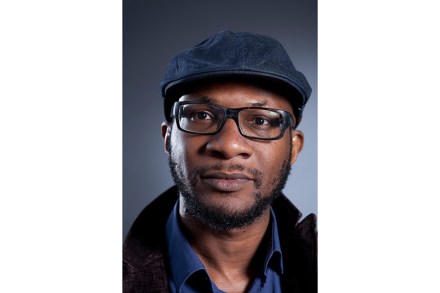
Tunde can’t explain why he grows addicted to screen depictions of ‘inexhaustible brutality’ The protagonist of Teju Cole’s latest novel is a composite of his earlier creations, which in their turn are partial self-portraits. An artist roaming around with his camera, Tunde photographs hedges and trinkets, contemplates colour and listens to Malian music. Having left his native Nigeria three decades earlier, aged 17, by 2020 he is settled in New England. Meanwhile, Lagos has become ‘a reality of his life so large and at the same time so intimate, so intense and so various’, a feeling that increases whenever he returns to the city in person or in his imagination.

Love in the shadow of the Nazi threat

From our UK edition

The 1930s saw Walter Benjamin write The Work of Art in the Age of Mechanical Reproduction, Marlene Dietrich rise to fame in The Blue Angel and Pablo Picasso paint ‘Guernica’. If history books mention these events, it’s usually as footnotes to the main European narrative of the pre-war decade. To shift the rise of Nazism, the Spanish Civil War, the Great Terror and other landmarks to the background, one could turn to the cultural history, or the micro-history. In his new book, the German art historian Florian Illies combines both genres to reconstruct the 1930s. Snippets from period documents, including private letters and diaries of notable figures of European and American culture, are distilled into short (between a couple of lines and a few paragraphs) episodes.

Lovable oddballs: Jimi Hendrix Live in Lviv, by Andrey Kurkov, reviewed

From our UK edition

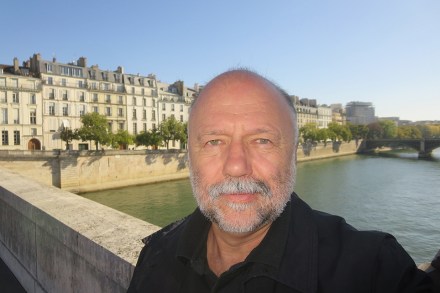
The year is 2011, and in Lviv, a city straddling the East and the West, ‘no fog had been thick enough to impede the last 20 years of Ukrainian capitalism’. On the anniversary of Jimi Hendrix’s death, a group of ageing hippies perform a bizarre ritual by a grave marked with his name. Alik and his friends, who have been gathering here since the 1970s to worship the musician, are now living in ‘a “double” past: another age and another country’. They know ‘time can’t be rewound like an old VHS tape’, and yet Alik keeps reminiscing about their Soviet days – a time when, despite everything, the whole town could hear their ‘strange music that the regional party committee didn’t recognise, with strange but, thank God, incomprehensible foreign lyrics’.

Michael Frayn remembers old friends – and the spy who duped him

From our UK edition

Tell me who you go with, and I’ll tell you who you are. Guided by this principle, Michael Frayn devotes his new memoir to his friends, embracing the chance to pay tribute to those who shaped him. The octogenarian warns in the foreword that his choice of protagonists is ‘pretty capricious’ – a comment on the arbitrary nature of both memory and creativity – and yet the way he treats them is anything but fickle. He remembers every one of them with fondness, never slipping into sentimentality or idealisation. These sober recollections are interlaced with the irony familiar from Frayn’s novels, while his playwright’s genius occasionally flashes in such lines as ‘Two legs – a very reasonable number’.

The crime which inspired Crime and Punishment

From our UK edition

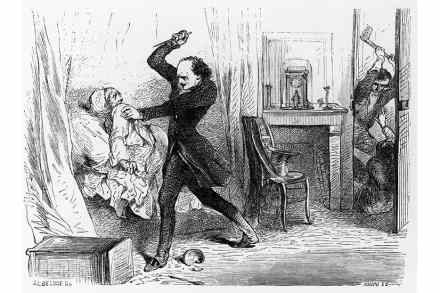
‘Whether I am a trembling creature or whether I have the right…’ The much quoted words of Rodion Raskolnikov, the protagonist of Crime and Punishment, encapsulate the novel’s main question. Fyodor Dostoevsky first pitched the idea of ‘the psychological account of a crime’ to a publisher in 1865. Three decades earlier, a real-life murderer, Pierre François Lacenaire, waiting for his execution in a French prison, wrote: ‘Only I can decide whether I have done wrong or right to society.’ As Kevin Birmingham shows in his new book, this is but one detail of Lacenaire’s story mirrored in Dostoevsky’s masterpiece; moreover, Dostoevsky’s reflections on the case influenced the way he understood the nature of evil.

Borges: the man and the brand

From our UK edition

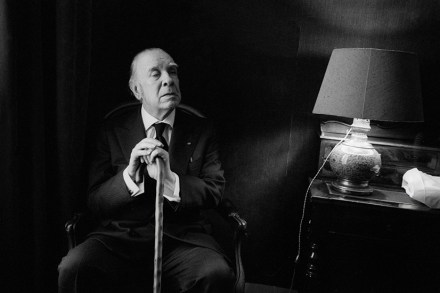
‘The story that Jay Parini recounts in Borges and Me is untrue,’ a recent letter in the TLS claimed, ‘and it should be understood as fiction.’ The author, Maria Kodama, Borges’s widow and literary executor, has also told the press that she ‘will have to act in some way or other’ should the book come out in Argentina. Borges memoirs have long exceeded the master’s oeuvre by what must amount to the library of Babel in volume. The author of one classic of the genre, Norman Thomas di Giovanni, Borges’s translator and collaborator, told me a decade ago: ‘I’m not going to lie to you now and say, you know, we were so close Borges cried every time he saw me.

The brutality of the Gulag was totally dehumanising

From our UK edition

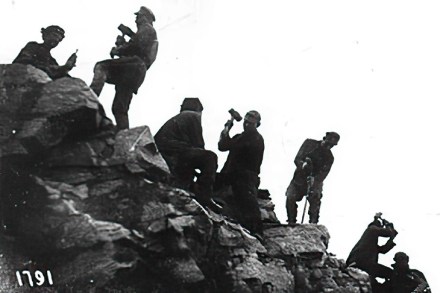
‘It was a gray mass of people in rags, lying motionless with bloodless, pale faces, cropped hair, with a shifty, gloomy look.’ Julius Margolin’s first encounter with Soviet prisoners takes place in August 1940 on the way to a labour camp in the north of Russia. Four years later, waiting at another transit point, he sees ‘semi-cripples, former, present and future invalids’, ‘bony shadows with hands and feet like sticks, in smelly tatters and dirty rags’. He has another year of horror ahead. A Polish Jew stranded in the USSR at the beginning of the second world war, Margolin refused to take Soviet citizenship and as a result was sentenced to five years of forced labour.

Gothic horror, German-style

From our UK edition

Many of our favourite folk tales have lost much of their original Gothic horror in later versions. By contrast, Daniel Kehlmann’s retelling of the legend of Ulenspiegel, moved to the 17th century, is full of nightmares. Worse than imaginary fears awaiting travellers in the forest are real ones: hunger, cold, war, plague, torture ‘more refined and dreadful than anything the great painters of the inferno had dreamed’. These descriptions invite comparisons with Charles de Coster’s famous 1867 novel; but if in the latter the hero fights for freedom, here he juggles many things, sometimes literally. Tyll the folklore character becomes an itinerant entertainer and court jester able to provoke and amuse, using his fool’s licence to the full.

Reasons for remembering things: the refugee’s last resort

From our UK edition

A family memoir is a dangerous thing to write: one has to balance between keeping one’s subjects happy and the reader engaged. The Bosnian–American author Aleksandar Hemon, now in his mid-fifties,  takes the risk the better to recollect his past. While no two generations can completely avoid the proverbial gap, he ‘never (until fairly recently) felt guilty about that discontinuity’. The first half of his new book, My Parents, comes across as an attempt to address this guilt.

Out of sight, out of mind | 8 August 2019

From our UK edition

Yoko Ogawa’s new novel takes us to a Japanese island where things keep disappearing: ribbons, birds, musical instruments, fruit. People, too, are at the mercy of the Memory Police, an efficient lot hunting for those who can’t shake off their memories. Each disappearance involves not just getting rid of the physical object, but also of every trace of it in everyone’s mind. The unnamed narrator’s mother is among the disappeared, but things she collected remain in the house where the daughter still lives, writing novels about people losing something. ‘Everyone likes that sort of thing,’ she says of her books, as if to imply that every island has the writers it deserves.

Writing as exorcism

From our UK edition

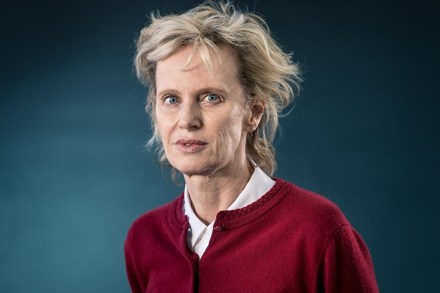
Why are people interested in their past? One possible reason is that you can interact with it, recruiting it as an agent of the present and the future. Siri Hustvedt’s novel, masked as a memoir, suggests you should rely not so much on your recollection of particular events as on your ability to interpret them, which can produce something truer than bare facts. ‘Yes, it is a memoir,’ the narrator says, ‘but memory is not fixed… memory and imagination are a single faculty.’  The outcome of Hustvedt’s attempts to commit the past to the page depends on memory acting as her editor. The book is centred on one year in the heroine’s life, beginning in 1978, when the 23-year-old S.H.

A serious tease

From our UK edition

Is there anything one can never laugh about? A question inevitably hanging over humour writing, it’s best answered by the masters of the genre who, rather than inventing jokes (a skill many possess), notice life’s winks and chuckles and tease them out of their surrounding matter, even if the latter happens to be of grave concern. Teffi was one of those writers. Born in 1872 in St Petersburg, by her early twenties Nadezhda Lokhvitskaya was a housewife with three children stranded in a provincial town; by her early thirties she was back in the capital, a literary celebrity writing for various publications under a snappy pseudonym, her witticisms quoted ‘in the streets, in trams, in clubs, in living rooms, at student gatherings’.

Stolen youth, stolen homeland

‘No testimony from this time must ever be forgotten,’ the great Lithuanian poet Tomas Venclova says in his afterword to Dalia Grinkeviciute’s memoir. The author was 14 in 1941, when the Soviets deported her with her mother and brother from their native Kaunas, Lithuania’s second largest city. In 1949, the women escaped from Siberia and went into hiding. Grinkeviciute began writing about her ordeal, but soon, facing another arrest, she buried the unfinished manuscript in a garden. More prisons and camps followed before she eventually returned home in 1956. Found in 1991 after her death, the memoir was published and became part of the school curriculum in Lithuania.