Culture

Culture

The good, the bad and the ugly in books, exhibitions, cinema, TV, dance, music, podcasts and theatre.

Flimsy and pretentious sketches: Caryl Churchill’s Glass. Kill. Bluebeard. Imp. reviewed

Theatre

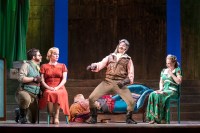
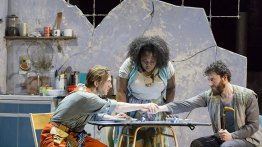
Caryl Churchill is back at the Royal Court with a weird collection of sketches. The first is set on a mantelpiece where a clock, a vase, a statuette and a plastic dog discuss their lives. These ornaments morph into human teenagers. One is a lad who wants to die after being raped by his father. His girlfriend tries to comfort him but she’s harassed by two nasty bullies. These four youngsters have perhaps created alter egos as household ornaments in order to block out their nightmarish lives. Somewhat opaque. In sketch two, a young chap seated on a cloud summarises the storyline of Aeschylus’s Oresteia in a glib and knowing manner. He treats every act of violence as an amusing in-joke. This monologue will mean little to those unfamiliar with the original.

If you ever want to sleep again, step away from Joker

Cinema

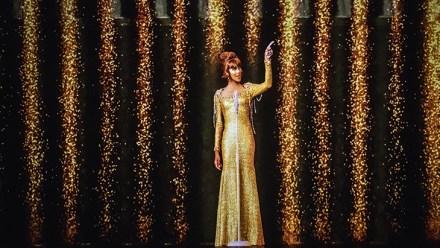
Judy is in cinemas this week and so is Joker and if you have to choose between the two, then it’s Judy every time. I would even add: step away from Joker. Step away, and step away now, if you know what’s good for you. It may be a masterpiece or it may be irresponsible trash — there is some controversy here — but either way it is so bleak and so dark and so upsetting the words ‘bleak’ and ‘dark’ and ‘upsetting’ don’t really cover it, and you may never be able to sleep again. Strange as it may be, the film about the wounded Hollywood chanteuse driven to an early and tragic death is, in fact, the far sunnier proposition.

A solid costume drama but Dame Helen has been miscast: Catherine the Great reviewed

Television

It’s possibly not a great sign of a Britain at ease with itself that the historical character most likely to show up in a TV drama now seems to be Oswald Mosley. But the week after his starring role in Peaky Blinders ended, there he was again, right at the beginning of BBC1’s next Sunday-night drama. World on Fire opened with Mosley addressing a 1939 Manchester rally, where he duly whipped up his supporters and reminded the rest of us of the dangers of extremism. Luckily, there were two people in the hall brave enough to protest: salt-of-the-earth northern lass Lois Bennett and her much posher and therefore much stiffer boyfriend Harry Chase.

Did Radio 2 really need to give us four days of the Beatles to celebrate Abbey Road?

Radio

This Changeling Self, Radio 4’s lead drama this week, clearly ought to have gone out in August. It’s set — and was recorded — at the Edinburgh Festival and would have been a gift to marketing. ‘I love the festival!’ coos She. ‘All these millions of conversations, listen, listen, oh and stories, lots of stories, the different ways of telling…!’ No one in the real world speaks like this. But it’s just about OK, because she isn’t quite real either. She is a Fairy Queen, come to Edinburgh to spirit away a young pianist named Tam, as in Tamlin, who is a bit wet but really rather nice. The story is a modern retelling by Linda Marshall Griffiths of an old Scottish ballad that couldn’t be better suited to radio.

Joyce DiDonato seduces you within the first 10 minutes: Royal Opera’s Agrippina reviewed

Music

‘Laws bow down before the desire to rule…’ Centuries before ‘proroguing’ had entered British breakfast-table vocabulary there was Handel’s Agrippina, and centuries before that there was the woman herself. Sister of Caligula, wife of Claudius (who she may or may not have poisoned) and mother of Nero (by whom she was eventually executed), Agrippina was a true political animal: instigator, manipulator, machinatrix and far more. It’s a heady story in prose, so add a bit of poetic licence and a score by the 24-year-old Handel and you have a spicy blend of politics, satire and sex — Succession with a Roman accent.

The poetry of sewers

Arts feature

‘Welcome,’ says our guide Stuart Bellehewe, with an imperious sweep of his arm, ‘to the cathedral of shit.’ Before us rises Abbey Mills Pumping Station in all its grade II*-listed glory. It arose on east London’s marshes in 1868, giving Victorians a fecally fixated premonition of postmodernism’s fetish for mashing up architectural styles. Observe, urges Stuart, the Russian Orthodox-style cupola surmounting the cathedral, clearly quoting church design. Savour, he urges, the gothic Venetian design of the arched windows and of the corkscrew twist incorporated into the rainwater downpipes. The steeply pitched mansard roofs evoke Flemish designs; brass and copper florets on the doorways are derived from Celtic art. Until 1940, there was more.

How did BBC’s Late Night Line-Up get its name?

Mind your language

The title of the television review and discussion programme Late Night Line-Up is a curious one. I’d be interested if anyone knows how it was chosen. After the throaty sax notes of Gerry Mulligan’s Blue Boy, Joan Bakewell would leggily engage earnest folk in chatter long after the pubs had closed. Did the guests smoke? I can’t remember, but it was all very b&w. BBC iPlayer has a small selection on show, including a discussion of two Man Alive documentaries on homosexuality with Maureen Duffy, then writing a novel set in the Gateways club in Chelsea, popular with lesbians, Michael Schofield, fresh from his researches for The Sexual Behaviour of Young People, and an anonymous woman doctor. The presenter was Michael Dean.

One for pauper-gawpers: Faith, Hope and Charity at the National reviewed

Theatre

Tony Hawks’s musical, Midlife Cowboy, has transferred from Edinburgh to the Pleasance, Islington. At press night, the comedy elite showed up (Andy Hamilton, Angus Deayton, Caroline Quentin, Alistair McGowan) to see Hawks playing a songwriter, Stuart, whose marriage is on the rocks. To revive his love life, Stuart puts his wife in charge of the country-and-western club they jointly own, and the story follows the travails of their in-house band as they seek glory in a local talent contest. The cast, led by Hawks, are skilful musicians with oodles of charm but the narrative is short of high stakes and surprises. The script might be punchier. Sample gag: Stuart reacts to a proposal he mistrusts. ‘I’m like a native American. I have reservations.

You may not wish to kiss the ground when you finally leave the cinema, but I did: The Goldfinch reviewed

Cinema

The Goldfinch is an adaptation of the Pulitzer Prize-winning novel by Donna Tartt that centres on a great work of art, unlike this film, which isn’t. A great work of art, that is. This is more a flat, forgettable, colour-by-numbers job, plus it is long (150 minutes, for the love of God) and drags so listlessly it seems even longer. It’s a film with nothing to say, and boy does it take its time not saying it. This had all its ducks in a row, credentials-wise. The director is John Crowley (Brooklyn), the screenplay is by Peter Straughan (Tinker, Tailor, Soldier, Spy) and the cinematographer is Roger Deakins, who could make your colonoscopy look beautiful, for heaven’s sake.

More Grace Kelly than Grace Jones: Welsh National Opera’s Carmen reviewed

Opera

How do you take your Carmen? Sun-drenched exotic fantasy with a side order of castanets, or cool and gritty, sour with violence and politics? Jo Davies’s new production for Welsh National Opera seems unable to make up its mind. Sternly rejecting colour and fantasy, it then fails to commit to an alternative, leaving both its heroine and audience stranded in an unlovely theatrical no-man’s land. Programme notes place us in contemporary Brazil, in a favela painted in unvarying textures of brown and steel. But there’s little in the action to confirm this. Who are the soldiers that guard the compound with desultory inefficiency, and what is their relationship to the women they wolf-whistle and the children who run riot around their feet?

Gloriously un-PC: Ronan Bennett’s Top Boy reviewed

Television

Sir Lenny Henry, the former comedian, is wont to complain to anyone who’ll listen that there isn’t enough ‘diversity’ on TV. Really, he should watch Top Boy (Netflix). Apart from the odd token walk-on whitey — skanky crack addicts, nasty immigration officers — it’s wall-to-wall BAME casting opportunities. The protagonist, Dushane (Ashley Walters), is black. So are all his friends, family and associates (his mandem, as they are colloquially known). So, mostly, is the urban music soundtrack, the work of various grime artists curated by the show’s co-producer, Canadian rapper Drake. What Sir Lenny might find not ooookaaaaay, I suppose, is that pretty much all the characters are ruthless, murderous, drug-dealing gangland thugs.

In praise of cultural elitism

More from Arts

At present we have a series of ‘culture wars’ over a wide range of issues — race, gender, sexuality, power and privilege. But the one culture war we don’t have any more is over culture. Yes, we fight about the ideological messages of literary texts, but not about matters of personal taste. We scrutinise and interrogate works of art for their latent — or blatant — sexism and racism. Often what matters is what the work in question says about marginalised groups — not what it says about us as cultured individuals. It hasn’t always been so. There was a time when we judged people, labelled them, loved them or hated them because of their taste in literature, art and even pop music.

Radio 4’s The Art of Innovation is a series that — for once — deserves the label ‘landmark’

Radio

Radio 4, how do I love thee? Rather as one loves the flocked wallpaper that came with the house. It isn’t what one would have chosen — but it is home. Yes, even when plangent piano music indicates a meaningful drama is about to begin. Yes, even when said drama is a woefully wooden effort about Amy ‘a typical modern 18-year-old — who happens to be trans’. Sample quote: ‘You’ve had me for 18 years, now I want me for me!’ Sound effect: peevishly slammed door (mine). New trans dramas are, of course, welcome, but Woman’s Hour drama is often a bit miss and miss.

The untold story of Judy Garland

Arts feature

Judy Garland is now a myth, a paradigm and a warning: don’t let your daughter on the stage! It’s the cognitive dissonance that is thrilling and awful, like a child that dies: Dorothy kicked off her ruby slippers and turned to Benzedrine. It is a narrative that erases Garland as surely as the drugs ever did. When I think of Garland, I don’t think of the chaos, born at MGM Studios where they drugged her to make her slender and biddable. They called her the ‘little hunchback’ and because she was schooled with Elizabeth Taylor and Ava Gardner she believed it. I marvel at the music. She was extraordinary, not because of her illness, but despite it.

The rare gifts of Peter Doig

Exhibitions

‘My basic intention,’ the late Patrick Caulfield once told me, ‘is to create some attractive place to be, maybe even on the edge of fantasy — warm, glowing, but often, by use, rather seedy.’ He frequently succeeded, as you can see from a beautifully mounted little exhibition at the Waddington Custot Gallery. It is a reminder of what a witty and inventive artist Caulfield (1936–2005) could be. Four screen prints from 1971, ‘Interior: Morning, Noon, Evening and Night’, give a virtuoso display of the visual legerdemain he could work using the simplest of props. These all have the same basic design: a window frame, consisting of thick, black lines, with a lampshade dangling in front of it.

Painful, funny — and with a brilliant twist: The Farewell reviewed

Cinema

The Farewell is a quiet film that builds and builds and builds into a wonderful exploration of belonging, loss, family love, crab vs lobster, and hiding feelings, even though it may be tough to hide yours and you’ll shed a tear or two. I know I did. It is written and directed by Lulu Wang, who was born in Beijing but emigrated with her family to America when she was six, and it is loosely a memoir. The film opens in Changchun, a city in China’s northeast, with an elderly woman being diagnosed with stage four lung cancer and given maybe three months to live. This is Nai Nai (Zhao Shuzhen), or ‘Grandma’, and she doesn’t know she is going to die because her family have chosen not to tell her, as appears to be the Chinese custom.

Is it time to give up on the Ibsen adaptations?

Theatre

Pub quiz question: what do John Osborne, Brian Friel and Patrick Marber have in common? The answer is they’ve all written their own versions of Hedda Gabler. Although none of them, it should be noted, to any particular critical acclaim. Is it time to give up on the Hedda adaptations altogether and just stick to the original? Or maybe opt for a different tack: why not let a woman have a go? Step forward, Cordelia Lynn, a 30-year-old playwright with three London productions under her belt. Having updated Chekhov’s Three Sisters for the Almeida this spring, she now turns her attention to Ibsen.

Abba, Twitter vs Instagram, and papal selfies: the modern face of the Catholic Church

Television

As a lifelong Catholic, I’ve often thought that two of the Church’s chief characteristics are a) how weird it is when you think about it; and b) how weird it is that so few people in it think how weird it is when you think about it. Happily, if a little smugly, I have to say that nothing in the first episode of Inside the Vatican (BBC2, Friday) caused me to revise this theory. There was a time, of course, when allowing TV cameras to film your institution was a risky strategy, as St Paul’s cathedral and the Royal Opera House can testify after those fly-on-the-wall series of the 1990s showed us their dirty laundry with some glee.

What’s the point of the Today programme?

Radio

What else is there to write about in the week that John Humphrys, that titan of the BBC airwaves, retires from his duties on the Today programme? Love or hate his terrier-like style of interviewing — baiting and occasionally biting his victims metaphorically on air — there’s no denying his stature as a news broadcaster or his influence on that staple of the Radio 4 schedule. He will surely be missed, much as Sue MacGregor, Brian Redhead, Jim Naughtie et al are missed, their presence in our lives determined by that early-morning slot, the first voice we might hear each day, the voice that brings news of never-to-be-forgotten events, the voice that infuriates and intrigues in equal measure.

How refreshing to see a show about prejudice that barely mentions white people

Theatre

Lynette Linton opens her stewardship of the Bush with a drama about racial and sexual bigotry. Four British women decide to start a girl band but only one of them, Yomi, happens to be straight. The script mixes confessional monologues with bitchy interactions over kitchen suppers. Beth, whose parents are West Indian, once dreamed of living in suburban bliss with ‘a little concrete garage for my car’. She named her imaginary children ‘Pauline, Graham and Amanda’. But when she embraced black culture she threw out her Dostoevsky novels and her Dire Straits albums and invested in jazz-funk records and the works of Toni Morrison instead. Anyone with a lifelong allergy to Dostoevsky or Dire Straits will applaud this wise decision.

Simon Rattle’s Messiaen is improving with age

Music

Two flutes, a clarinet and a bassoon breathe a chord on the edge of silence. As they fade, the sound quietly intensifies, morphing into the metallic buzz of cor anglais and muted horn. The third of Arnold Schoenberg’s Five Orchestral Pieces of 1909 doesn’t have a conventional melody, and there’s even less in the way of rhythmic or harmonic activity. It’s entirely about those minutely graded shifts in timbre. And having rendered this idea with such poetry, Schoenberg, being Schoenberg, duly slapped it with a label as clunky as his music was subtle: klangfarbenmelodie, literally, ‘sound-colour melody’. Apologies: it’s too easy to poke fun at Schoenberg.

The many faces of William ‘Slasher’ Blake

Arts feature

‘Imagination is my world.’ So wrote William Blake. His was a world of ‘historical inventions’. Nelson and Lucifer, Pitt and the Great Red Dragon, chimney sweeps and cherubim, the Surrey Hills and Jerusalem in ruins, the alms houses of Mile End and the vast abyss of Satan’s bosom.  He saw the fires of the Gordon Riots and the serpent in the Garden of Eden. His subjects were Milton and Merlin, Dante and Job, ‘Elegy Written in a Country Churchyard’ and the Book of Revelation. He held infinity in the palm of his hand, yet worked through the night to write and grave all that was on his mind. ‘I have very little of Mr Blake’s company,’ said Catherine Blake with the indulgent sigh of all wives of Great Men.