Culture

Culture

The good, the bad and the ugly in books, exhibitions, cinema, TV, dance, music, podcasts and theatre.

A 90-minute slog up to a dazzling peak: ‘Master Harold’… and the boys reviewed

Theatre

Athol Fugard likes to dump his characters in settings with no dramatic thrust or tension. A prison yard is a favourite. He specialises in bored, talkative characters who squirt the time away swapping memories and indulging in bursts of creative play-acting. It’s dull to watch but good fun to perform. Thesps love to step out of character and road-test a range of fictional personalities. ‘Master Harold’… and the boys is classic Fugard. We’re in an empty restaurant in South Africa in 1950. Lunch service has ended. Two waiters twiddle away the afternoon discussing sex, ballroom dancing and beating women (as if this were a standard feature of male behaviour). Enter the boss’s school-age son, Hally, whom both waiters know well.

A triumph: ENO’s Mask of Orpheus reviewed

ENO’s Mask of Orpheus is a triumph. It’s also unintelligible. Even David Pountney, who produced the original ENO staging in 1986, admitted to me in the interval that he didn’t have a clue what Harrison Birtwistle’s opera was about. But who cares when, visually and musically, you’re being socked between the eyes? Mask makes sense in the same way an earthquake makes sense. Fittingly we begin with total nonsense: Orpheus, in the bath, attempting to reform language. This is Orpheus the Man, in red velour and gelled-up hair, looking like Rod Stewart. An unlikely charmer of fishes and trees, it has to be said. But soon enough another Orpheus pops up: Orpheus the Myth, looking even worse, like Rod Stewart’s drunk dad.

Why Lucian Freud hated having his picture taken

More from Arts

One of Lucian Freud’s firmly fixed views about himself was ‘I’m not at all introspective’. This was, like many opinions we hold about ourselves, both true and not true. Perhaps it was more that he did not want to look within: his gaze was directed outwards. Lucian had trained himself to see everything — animate and inanimate — without preconceptions (one of his anxieties was that his own feelings would leak into a picture and spoil it). But looking at oneself and at another person are processes that are fundamentally dissimilar, both practically and psychologically. This puts his self-portraits, which are on show in an exhibition at the Royal Academy next week, in a separate category to the rest of his work.

The enduring allure of ‘er indoors

Arts feature

‘She’s only a bird in a gilded cage, a beautiful sight to see. You may think she’s happy and free from care; she’s not though she seems to be.’ When the British lyricist Arthur J. Lamb first offered the lyrics of ‘A Bird in a Gilded Cage’ to the Tin Pan Alley tunesmith Harry Von Tilzer, he was told to go back home and clean them up. Lamb had made the subject of his song a rich man’s mistress; for mass-market appeal she needed to be married. In its revised version ‘A Bird in a Gilded Cage’ shot to the top of the 1900 sheet-music charts. For some strange reason the idea of the kept woman, married or unmarried, continues to exert a fascination on both sexes.

The beauties of the universe are revealed in the paintings of Pieter de Hooch

Exhibitions

In the early 1660s, Pieter de Hooch was living in an area of what we would now call urban overspill surrounding the commercial boom town of Amsterdam. It wasn’t the best of neighbourhoods. Nearby was a little street nicknamed ‘whorehouse alley’ (het hoerenpad). Tanners plied their trade thereabouts, which involved soaking hides in urine. But smells and sounds are not necessarily recorded in pictures, and in this 17th-century version of affordable housing, De Hooch painted images of utter domestic tranquillity. One such picture, ‘A Mother’s Duty’ (c.1658–60), is among the star exhibits in a delightful little exhibition of De Hooch’s work at the Museum Prinsenhof, Delft.

The joy of Malcolm Arnold’s optimistic, hummable tunes

Classical

Never meet your heroes, they say. But if you grew up with classical music in the 1980s, there was fat chance of that. Stravinsky, Britten, Shostakovich, Walton: you’d just missed them. Which is why, in 2001, and finding myself duty-managing an 80th birthday concert for Sir Malcolm Arnold, I inched past his minders and delivered a few trite, polite but entirely sincere words of gratitude and admiration. No response: Sir Malcolm stared blankly ahead. Then he gripped my hand, and started shaking. And kept shaking, faster and faster, his grip tightening like a vice. Raising his head slightly, and pumping my hand with increasing force, he growled: ‘I’m not letting go until you call me Sir.

The beauty of Soviet anti-religious propaganda

More from Arts

Deep in the guts of Russian library stacks exists what remains — little acknowledged or discussed — of a dead and buried atheist dream. The dream first took shape among Russian radicals of the mid-19th century, to whom the prospect of mass atheism seemed the key to Russia’s salvation. When Lenin seized power in 1917, the Bolsheviks integrated it into their vision of heaven on earth. To the extent that people in the West have heard of this atheist dream, it has come to them mainly through the voices of its enemies. In 1983, Ronald Reagan put Lenin’s rejection of religion at the heart of Soviet unfreedom in his ‘Evil Empire’ speech.

The Disney sequel that no one wanted is finally here – what a relief! Maleficent: Mistress of Evil reviewed

Cinema

Maleficent: Mistress of Evil is the sequel to the 2014 film Maleficent, and it will certainly come as a relief to all those who, in the interim, have been worried that Disney might let a potential franchise go unexploited. Did that keep you awake at night, as it did me? Well, now we can all sleep easy, knowing that the sequel no one was clamouring for (yet may still make a ton of money even though it’s crap) is finally here. Phew. So, once upon a second time, Angelina Jolie reprises her role as the evil fairy in the giant horn wig who cursed Sleeping Beauty. The first film was, in effect, an origins story. It wasn’t an especially good origins story, but at least it had a point, as it asked: how did Maleficent become so dark and wicked and twisted. Whereas this time out?

A hoot from start to finish: The Man in the White Suit reviewed

Theatre

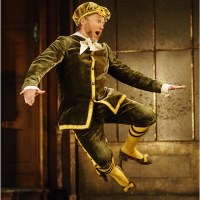
The Man in the White Suit, famously, is a yarn about yarn. A brilliant young boffin stumbles across an everlasting polymer thread but when he tries to profit from his discovery he faces unexpected ruin. There are only three beats in the story — breakthrough, triumph, disaster — so it needs to be elaborated with some skill. Writer/director Sean Foley does a superb job of making the gaps unnoticeable. He aims for the farcical texture of a pantomime and he opens the story in a cheery northern pub where working-class men and women sit around as equals, sharing pints of ale. Rather a fanciful view of 1950s England but never mind. We move to the factory where Sidney, a clumsy Cambridge graduate, muddles his way through various madcap experiments.

Without Joe Grundy The Archers feels lost

Radio

There was something really creepy about listening to the ten-minute countryside podcast released last weekend by Radio 4 supposedly transporting us to Marneys Field in Ambridge. Two worlds colliding. The fake countryside of Borsetshire was transfigured — no longer pretending to exist but existing, as if to make us all pretend we believe in it for real. We can hear David in the distance calling in the cows, just like an episode of The Archers. But those birds cheeping furiously; that tractor rushing past. The wind, the thunder, the sudden downpour. They could all have come from a nature documentary.

Should we be playing the surveillance state for laughs? Celebrity Hunted reviewed

Television

One of the many great things about The Capture was that we could never be sure whether the British authorities’ capacity for virtually blanket surveillance was a nightmare vision of the future or a nightmare portrait of the present. Celebrity Hunted, though, suggests a third possibility: that virtually blanket surveillance is simply proof of how marvellous the authorities are, and so untroubling that it can be played for laughs. This third series is, once again, part of Channel 4’s annual Stand Up to Cancer season, and features four teams of two, whose job is to go on the run for a fortnight and avoid capture by intelligence experts equipped with the latest snooping technology.

At their best the Psychedelic Furs are fantastic

Music

It’s amazing what the movies can do. In 1986, the John Hughes teen flick Pretty in Pink — the one where poor girl Molly Ringwald and rich kid Andrew McCarthy get it together despite their friends’ disapproval — took its title from a Psychedelic Furs song, which featured heavily in the film. Whoosh! Suddenly they were proper stars. Or rather they were for a year or so. They reformed in 2000, but were just another band on the nostalgia circuit. Then along came another movie, the 2017 arthouse hit Call Me By Your Name, which featured their 1982 single ‘Love My Way’. Since then, the venues have grown again, the reviewers returned and the notices have been glowing. There are even whispers of another album.

Manon can be magnificent, this one was merely meh

More from Arts

Manon: minx or martyr? There are two ways to play Kenneth MacMillan’s courtesan. Is Manon an ingénue, a guileless country girl, pimped by her own brother and corrupted by Monsieur G.M.? Or is she a pleasure hunter, a man-manipulator, a schemer out for all she can get? In the Royal Ballet’s revival of Kenneth MacMillan’s Manon, Sarah Lamb is somewhere in the unsatisfactory middle. Primrose innocence in the first act, half-hearted harlot in the second, shorn urchin in the third. Ryoichi Hirano, as Manon’s brother Lescaut, knows what he’s about. Hirano has a nice line in matadors and caped scoundrels. Every duplicitous turn, every dismissive flick of the wrist, speaks of mercenary betrayal. His Lescaut is superbly disturbing.

Pilferer, paedophile and true great: Gauguin Portraits at the National Gallery reviewed

Arts feature

On 25 November 1895, Camille Pissarro wrote to his son Lucien. He described how he had bumped into his erstwhile protégé, Paul Gauguin, who had explained to him how artists in the future would ‘find salvation by replenishing themselves’ from the works of remote peoples and places. Pissarro was not convinced. Gauguin, he grumbled, was always ‘poaching’ from someone. Once it had been Pissarro and his fellow impressionists, now it was the native peoples of Oceania. Plus ça change… Over the succeeding century and a quarter, Gauguin (1848–1903) has frequently been condemned.

You’ll be blubbing over a wooden boulder at David Nash’s show at Towner Art Gallery

Exhibitions

Call me soppy, but when the credits rolled on ‘Wooden Boulder’, a film made by earth artist David Nash over 25 years, I was blinking back tears. Funny what the mind will make human. Within a few minutes I started to think of Nash’s boulder, hewn from a storm-struck oak in the Ffestiniog valley in Wales, as ‘the hero of our story’. A hefty hero, weighing half a tonne, but buoyant. In October 1978, Nash launched the boulder into the Bronturnor stream near his studio at Capel Rhiw in the slate-mining village of Blaenau Ffestiniog in Snowdonia. For 25 years, switching from crackling film to high-def digital, Nash filmed the boulder, through snow, rain, heat and gloom of night, as it made its way downstream. Mired, moored, marooned on an inland sea.

Why Roy Cohn is not one of the world’s most evil men

High life

New York   The Roy Cohn documentary Bully. Coward. Victim: the Story of Roy Cohn was successfully screened at the Lincoln Center last week to a full house. Cohn was once Donald Trump’s lawyer, and after the screening the event turned into an anti-Trump show. Had I known this would happen, I would have stayed away, but what is a poor little Greek boy trying to make it in the movies to do? As a young man, Cohn was an aide to Senator McCarthy. He made his name by ensuring that Joel and Ethel Rosenberg, who spied for the Soviet Union, were sent to the electric chair. And here’s the problem with the documentary: the treacherous Rosenbergs emerge as heroic victims, while my friend Roy Cohn comes out of it looking worse than Satan. There is something very wrong here.

How the BBC can achieve real diversity

Columns

Exciting news from the BBC, where every employee has just received a flyer from the Director-General, Lord Hall, informing them about the creation of a new post — Director of Creative Diversity. Should they all apply? Certainly, when I found out about it, I thought I might throw my hat in the ring. I’d immediately employ some heterosexual weathermen and maybe a white presenter or reporter on the London regional news programmes — and then make Dominic Cummings the head of current affairs, if he has any spare time. That would introduce a little diversity into New Broadcasting House, I think.

Pure, undiluted genius: Succession reviewed

Television

I have never ever watched a TV series I have enjoyed more than Succession (Now TV). There’s stuff I’d put in the same league, maybe — Fauda, Babylon Berlin, Band of Brothers, Utopia, Gomorrah, Breaking Bad, The Sopranos, and so on — but absolutely nothing beats it. It is, quite simply, a work of pure, undiluted genius. Which wasn’t what I expected when my friend Toby recommended it to me a few weeks ago. ‘It’s about this media dynasty, a bit like the Murdochs. And the kids spend their whole time scheming and competing as to which one is eventually going to take over the company from the bullying patriarch Logan Roy,’ he said. This all sounded a bit grown-up, earnest and worthy to me.

Only fitfully funny: Chris Morris’s The Day Shall Come reviewed

Cinema

The Day Shall Come is a second feature from British satirist Chris Morris and like the first, Four Lions, it is a ‘comedy of terrors’, you could say. But this time, rather than a group of hapless home-grown Muslim suicide bombers we’ve decamped to America and it’s the FBI that will do anything to get their man even if that man is harmless and insists that God speaks to him through a duck. It is funny, fitfully, but it asks us to laugh at someone I wasn’t sure we should be laughing at, plus it is repetitive and acts like we didn’t get the joke the first time, when we did. Or, at least, I did. You may be slower-witted, of course.

Imagine ZZ Top stuck in a lift with Gary Numan: Sturgill Simpson’s Sound & Fury reviewed

More from Arts

Grade: A– The outlaw country genre has shifted a little over the decades since Waylon and Willie, with each proponent trying to out-badass each other, the guitars getting louder, the lyrics either more obtuse or (in the case of David Allan Coe) more obscene. This takes it all one stage further. I don’t think Sound & Fury would go down too well at the Grand Ole Opry: it is more Seattle than Nashville, 40 minutes of howling rawk guitar, ferocious boogies and cheap synths. It sounds, at times, like ZZ Top stuck in a lift with Gary Numan. Grunge, blues, heavy metal, all rendered darkly as if Mark Lanegan were somewhere in the mix.

I was born to be on this Bob Dylan podcast, says Geoff Dyer

Podcasts will soon be like porn. Every interest, desire or idle flicker of curiosity will have been anticipated and catered for. Whatever you’re into there’ll be a podcast devoted to it, waiting to make itself heard. That’s easy for me to say because I’ve already found my perfect match: Is It Rolling, Bob? in which ‘Actors Kerry Shale and Lucas Hare talk to interesting people about Dylan’. Since nothing is more interesting than Dylan it follows that there is nothing more interesting than this podcast. I was alerted to it by my friend the writer Rob Doyle who had heard about it from his dad. (My friends, increasingly, are the children of my contemporaries; is this what Bob meant by staying for ever young?

More misogynistic than the original: ENO’s Orpheus in the Underworld reviewed

Opera

It’s Act Three of Emma Rice’s new production of Offenbach’s Orpheus in the Underworld, and Eurydice (Mary Bevan) is trapped in the backroom of a Soho peep show. But that doesn’t really matter because Jupiter (Willard White), a cigar-toking love walrus in a silk bathrobe, has transformed himself into a fly and is about to ravish her, once he’s worked out the practicalities of doing so while three millimetres long. Eurydice’s more than game. ‘Zzzz, zzz,’ she sings, draping herself lasciviously over the mattress. ‘Zzzz, zzz,’ buzzes Jupiter, wings popping erect. Rice’s puppeteer darts about with a toy fly on a string, dressed in a black catsuit and (the killer detail) a beatnik beret.

Circus routine rather than theatre: Noises Off reviewed

Theatre

Michael Frayn’s backstage comedy, Noises Off, is the theatre’s answer to Trooping the Colour. Everyone agrees that it’s an amazing display of synchronised choreography but does anyone actually want to see it? Yes, to judge by the press-night crowd at the Garrick. The joint was packed. The show opens at the dress rehearsal of a bedroom farce where an incompetent actress, Dotty Otley, is listening to advice from an exhausted but infinitely patient director. She worries that she hasn’t got her lines right. A lot of them ‘had a very familiar ring’, the director assures her. The gentle wit of these passages is soon overtaken by physical antics as the production encounters endless technical snags. Cues are missed. Props go astray.

Sebastiao Salgado – master of monochrome, chronicler of the depths of human barbarity

Arts feature

Occasionally, we encounter an image that seems so ludicrously out of kilter with the modern world that we can only flounder in antiquity for appropriate descriptions. We see a black and white photograph that shows a swarm of tiny figures, ant-like in their relentless pursuit of some mysterious purpose around the edges of a dark, cavernous maw, and we say it’s biblical, epic, ancient. We invoke the building of the pyramids, the Tower of Babel or Dante’s Inferno. Our artistic sensibilities might point us towards the darker paintings of Jan Brueghel the Elder or the apocalyptic waxwork tableaux of Gaetano Zumbo. What we seldom imagine is a 1980s Brazilian gold mine.

A cast of Antony Gormley? Or a pair of giant conkers? Gormley’s RA show reviewed

Exhibitions

While Sir Joshua Reynolds, on his plinth, was looking the other way, a little girl last Saturday morning was trying to prise a littler sculpture from the pavement of the Royal Academy’s courtyard. For all its tininess — from a distance the sculpture’s curvy lumps, 12 x 28 x 17cm, resemble horse droppings a security guard might dig into their rose bed — she couldn’t shift it. ‘Iron Baby’ (1999) is a solid iron cast made by Sir Antony Gormley of his six-day- old daughter abased before the Enlightenment temple of art, buttocks facing Piccadilly in eloquent critique. But for the Instagramming hordes, you might step over her heedlessly on the way to the exhibition, a survey of Gormley’s works from the late 1970s to today.