Culture

Culture

The good, the bad and the ugly in books, exhibitions, cinema, TV, dance, music, podcasts and theatre.

Unlike the Tarantino, this has humanity, sympathy and generosity: Pain and Glory reviewed

Cinema

Pedro Almodovar can sometimes be overly flamboyant if not out-and-out nuts — let us never talk about I’m So Excited! ever again — but his latest film, Pain and Glory, is wonderfully restrained and all the better for it. Partly autobiographical, it’s about ageing, and the reckoning that always comes with that — when you know you’ve had most of your life, how do you keep living it? — as told with the kind of humanity and sympathy and generosity you don’t ever see in a Tarantino film, say. (Are we still arguing about the Tarantino film or have we moved on?) The film stars Antonio Banderas as Salvador Mallo, who is clearly meant to represent Almodovar, now approaching 70, at some level.

Why this première felt important: James MacMillan’s Fifth Symphony reviewed

Music

All symphonies were sacred symphonies, once. Haydn began each day’s composition with a prayer, and ended every score with the words ‘Laus Deo’. ‘These thoughts cheered me up,’ he told his biographer Albert Dies. Haydn, like Mozart, was a lifelong Catholic, and the Swiss theologian Hans Küng has suggested that the daring, exuberance and glorious wholeness that characterises even Mozart’s secular music comes from a specifically Catholic understanding of the universe: of salvation perceived not as an object of struggle, but as an unshakable, all-embracing certainty. Sir James MacMillan’s Fifth Symphony concerns itself with the Holy Spirit, but he struggled to find an English phrase that did the job, so its title is Le grand inconnu.

Will you last beyond the madeleine? Radio 4’s In Search of Lost Time reviewed

Radio

The madeleine upon which Proust’s seven-volume epic In Search of Lost Time pivots makes its significant appearance after just 18 minutes in the new Radio 4 adaptation — with which, if you’re not obsessed with the Ashes or holed up with the family in some dank seaside cottage, you can while away this bank holiday weekend. It’s always a surprise to realise that the most significant cake ever baked (after Alfred’s burnt tarts) makes its fictional appearance so soon, almost before Proust’s characters, Swann, Gilberte and the Guermantes, have taken shape in your mind.

Tony Slattery is still a miraculously gifted comedian

Theatre

Some of the marketing efforts by amateur impresarios up in Edinburgh are extraordinary. I was handed a leaflet for a poetry show called Don’t Bother. I didn’t. Tony Slattery appears in Slattery Will Get You Nowhere (a good pun that advertises the content), in which the ageing comic takes the audience back to the 1990s. In those days he was a handsome, clever, charismatic wag who suffered from an excess of self-regard. Now he’s a grizzled, ramshackle presence, jowly and ill-shaven, like a forgetful pensioner on his way to the day centre. He starts his show with a lot of banter about wine but he doesn’t drink on stage. Alongside him sits a friendly interviewer who guides him through the rougher bridleways of his anecdotes.

Shooting star | 15 August 2019

Arts feature

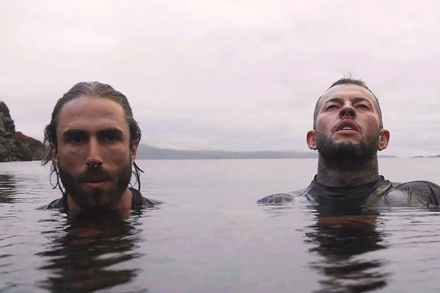
Only one thing makes Frank Skinner nervous. ‘Water. Water scares me. I don’t get nervous on stage. Just in swimming pools. I didn’t learn to swim until 2013. Avoiding water is easier if you live in Birmingham.’ The stand-up comedian’s image is plastered across the centre of Edinburgh on six-foot placards to advertise the dates of his national tour. ‘SOLD OUT’ is blazoned across the top. This seems a weird strategy — promoting a product that’s no longer available — and I ask him about it when we meet at a quietly expensive hotel near Bristo Square. ‘I’ve sold out the Edinburgh run but there are tickets available for the tour... The quick-sellers are hard to predict.’ He tells me he loves performing stand-up.

The joys of scavenging the Thames

‘It’s very hard for you to really live in the day,’ says Ruth, ‘because you don’t know by evening you may have a letter from an agency saying you’ve got to go tomorrow.’ She arrived in the UK in 1937, aged 15, sent here by her Jewish family to escape the Nazis. Now 98, she was talking to Nikki Tapper, a presenter for BBC West Midlands, at a community centre in Birmingham, which since 2015 has committed itself to be a city of sanctuary.

British jazz

Notes on...

Jazz died in 1959. At least, that’s what New Orleans trumpeter Nicholas Payton wrote in 2011 as part of a series of tweets that riled jazz lovers the world over. It later transpired that he meant jazz the word (which, he reckoned, was ‘a label forced upon musicians’) rather than jazz the genre. Semantics aside, Payton struck a chord. He fired up what many people for many decades have assumed to be an ever-shrinking band of jazz aficionados. In fact, there has been an increasingly cool end to the jazz catalogue in America for at least the past 20 years. Pianist Robert Glasper and saxophonist Kamasi Washington are two figureheads of this stateside jazz renaissance, which is characterised by a liberal use of synthesisers and drum machines.

Rave revolution

Television

Jeremy Deller’s Everybody in the Place: an Incomplete History of Britain 1984-1992 (BBC4) began with some footage of kids queuing up outside a warehouse rave in Stoke-on-Trent in 1991. It was at once banal and extraordinary: everyone was white; nobody was overweight; none of the clothes were designer, expensive or branded; nobody wore facial hair. This was the England of my late youth and I remember it vividly. But it feels so remote from the present that it might just as well have been a lithograph of extravagantly side-burned men in stiff woollens captioned: ‘The Camp before Balaklava’. Deller is probably a bit more left-wing than me — how could he not be?

Bright, and batty

More from Arts

The Bright Stream is a ballet about a collective farm. Forget everything you know about collectivism — the failed harvests, the famines — this is Soviet agriculture without mud or hunger. The Bright Stream, which opened in Leningrad in 1935, was Dmitri Shostakovich’s attempt to write a ‘socialist realist’ ballet. Our heroine is Zina (Daria Khoklova), the Bright Stream Collective’s Morale Officer. The curtain rises on a scene of sunny, saturated bounty: hay stooks, horns of plenty, pumpkins as big as cartwheels. Tractors soar across the backcloth like three flying ducks. This is collectivism in white tights and Liberty print. The plot is batty.

Best of the Fringe

Theatre

Clive Anderson’s show about Macbeth, ‘the greatest drama ever written’, offers us an hour of polished comedy loosely themed around the Scottish play. Shakespeare’s material is still topical, he says, ‘a clever Scot with a rampantly ambitious wife, like Michael Gove and Sarah Vine’. He prefers Macbeth to Hamlet which is ‘about some bloke who can’t make up his mind, like a three-and-a-half-hour interview with Jeremy Corbyn’. The act’s centrepiece is Anderson’s memory of his infamous encounter with the Bee Gees who stormed out of his TV chat show in 1996. He’d been encouraged to mock pop stars by Sting who enjoyed being teased about his stage name. ‘Sting is a minor skin-wound,’ Anderson told him.

Missing the beat

Music

It was as though Damien Hirst had confessed a secret passion for Victorian watercolours, or Lars von Trier had admitted his life’s ambition to direct a rom-com. When it was announced that John Eliot Gardiner — pioneer of the early music movement — would conduct West Side Story at the Edinburgh Festival the reactions were extreme. What next? Harnoncourt conducts Hair? Les Arts Florissants sing Phantom? But is the leap from Bach to Bernstein really that big? Both live or die with rhythm, with the dances that pulse and lilt and churn through them. Minuet or mambo — really, what’s in a beat? And then there’s texture.

Eye-frazzlers

More from Arts

The old observatory on Edinburgh’s Calton Hill may be the most favourably positioned art venue in the world. Recently resurrected by a group called Collective, the space, with its panoramic views and Enlightenment history, is an ambitious and imaginative addition to Edinburgh’s art scene. In their Hillside gallery there’s a firing-range warning sign on the screen, a few seconds of stillness and silence, then a sudden machine-gun rattle. The sound is revealed to be a stick, dragged by a child along corrugated iron, and the juxtaposition is the strongest moment in Helen McCrorie’s portentously titled video work, ‘If play is neither inside nor outside, where is it?’ (until 6 October).

In praise of the bands that said no to Greta Thunberg

My faith in rock music has been temporarily restored. According to the manager of The 1975, the execrable essay/song that his band recorded with diminutive doom-monger Greta Thunberg had previously been rejected by other bands. By ‘bigger artists than The 1975’, he says. He means this as a criticism. Like, ‘How dare these artists turn down the opportunity to work with Greta??’. But I think it’s brilliant. Saying No to Greta and her establishment-backed moaning about the man-made cataclysm that will shortly devour humanity yada yada is the most rock’n’roll thing you can do right now. The 1975/Greta hook-up really is the most dreadful dirge. Over ambient piano music Greta intones about the end of the world. Natch.

Rosanna Arquette and the problem with white privilege

American actress Rosanna Arquette has declared her undying shame to the world on social media. It had nothing to do with her excessive earnings or being a gilded member of the Hollywood elite or anything else you normally associate with publicity seeking film stars. Instead, she made a fulsome apology on Twitter for the one thing that no one remotely rational cares about: the colour of her skin. ‘I’m sorry I was born white and privileged’ she said. ‘It disgusts me. And I feel so much shame.’ There are so many levels of absurdity to the philosophy of white privilege, that it's hard to know where to start with this tweet.

Divine comedy | 8 August 2019

Arts feature

The locals probably can’t bear the Edinburgh festival. Their solid, handsome streets are suddenly packed with needy thesps waving and flapping at them from every kerbside. ‘New interactive comedy quiz, starts in five minutes.’ ‘Award-winning monologue about growing up Chinese in Droitwich.’ ‘Stalin the Opera performed by tone-deaf choir.’ There’s a waggish actor who stands on George IV Bridge challenging passers-by not to take a leaflet. ‘When I hand out my next flyer I’m going to jump off the parapet.’ He’s there every day. One of the first shows I sampled was Titania McGrath Mxnifesto (Pleasance Courtyard, until 25 August).

Canine connoisseurs

Exhibitions

Stepping into any art gallery, the last thing you expect to be greeted by is a cacophony of barking and wet noses on your knee. This, however, was the welcome I received at the current exhibition at Southwark Park Galleries. Dog Show is, as the name suggests, about dogs. Not just about dogs, though; each of the works has been chosen by a dog — or, as they put it, a canine curator. ‘We’ve never asked dogs about their opinions on art, even though some dogs see an awful lot of it,’ explains Judith Carlton, director of Southwark Park Galleries. Well yes; it’s most likely true that no one has ever asked dogs for their thoughts on art, but there’s probably a reason for that.

What’s in a name? | 8 August 2019

Exhibitions

Perhaps we should blame Vasari. Ever since the publication of his Lives of the Artists, and to an ever-increasing extent, the world of art has been governed by the star system. In other words, the first question likely to be asked about a painting or sculpture is whodunit? And if the answer turns out to be, not Leonardo da Vinci — as has been suggested in the case of the controversial ‘Salvator Mundi’ — then the price tag becomes enormously smaller. Does this matter? Artist Unknown, a little exhibition at Kettle’s Yard, Cambridge, investigates the case of the anonymous work.

The Boss goes to Bollywood

Cinema

Once upon a time two men sat in a New York bar lamenting the state of Broadway. So they decided to play Fantasy Musical. Several beers down they came up with a weird hybrid: a jukebox musical that injected the songs of Blondie into the plot of Desperately Seeking Susan. Somehow this botched centaur stumbled all the way to the West End, where it joined that throng of musicals that should have stayed on the drawing board. Blinded by the Light is a Bollywood-style musical comedy set in the Pakistani community of Luton that takes as its soundtrack the oeuvre of Bruce Springsteen. No drunk blokes in a bar could ever have conjured up such an implausibility. And yet it is a trueish story, inspired by the memoir of Sarfraz Manzoor.

Golden threads

Music

When it comes to the opening of Wagner’s Das Rheingold, Mark Twain probably put it as well as anyone: ‘Out of darkness and distance and mystery soft rich notes rose upon the stillness, and from his grave the dead magician began to weave his spells about his disciples and steep their souls in his enchantments.’ As at Bayreuth, so in Dalston. At the start of Julia Burbach’s production for Grimeborn, a man stumbles into a back  alley and, rummaging through discarded boxes, finds a pair of headphones. And there it is: that deep, eternal E flat. Don’t some people say they can hear an all-pervading global hum? Wagner’s world is turning, and for good or for evil the old sorcerer is weaving his spell again.

Two sides to every story

Radio

Maybe the equality inspectors at the corporation didn’t get the chance to vet Richard Littlejohn’s series for Radio 2, The Years that Changed Britain Forever, before it was broadcast on Sunday. Maybe the first programme (produced by Jodie Keane) was an accurate reflection of the year it focused on, 1972. But the most striking thing about it was not so much Littlejohn’s thesis, by which he declared that politically, culturally and musically it was a pivotal year in our national history, determining events that followed much later. No, it was his selection of music to accompany his thoughts about how the miners’ strike of 1972 led to the three day week, which led to the general election that destroyed Edward Heath and brought Arthur Scargill to national prominence.

Spartacus in spandex

More from Arts

It’s togas-a-go-go as the Bolshoi bring Yuri Grigorovich’s 1956 ballet Spartacus to the Royal Opera House. Oh dear, I did giggle. This is Spartacus in spandex with gladiatorial G-strings and slave girls dressed for Thracian strip shows. On comes Crassus (Artemy Belyakov) in the Roman empire’s tiniest tunic with a legion of soldiers swinging their shields like Gucci manbags. But what dancing: disciplined, muscular, nakedly heroic. Very Soviet. Denis Rodkin is a mighty Spartacus, all vengeful savagery and outraged buttocks. There isn’t a dancer in the Royal Ballet to match his stamina, his power, his splits and leaps, his reckless stretching beyond possible endurance. True, there is more gurning than acting, but naturalism has never been a hallmark of Russian ballet.

Original Finn

Arts feature

Last year I found myself giving a lecture in Helsinki. When I came to the end, I asked the audience if there were any questions. There followed a period of complete silence, after which a man cleared his throat and explained that, being Finnish, it was extremely difficult for them to speak in public; they preferred to come to the podium afterwards, one by one. The Finns are a quiet people, and Helene Schjerfbeck — who has claims to be the greatest Finnish painter — is a quiet artist. But her pictures, which are on show at the Royal Academy, have qualities that mild-mannered and taciturn individuals sometimes possess: seriousness and intensity. When she does raise her voice, it’s all the more telling. A good example comes early in the exhibition.

Classics of the future

Theatre

Games for Lovers feels like a smart, sexy TV comedy. Martha is still in love with her old flame Logan whose new girlfriend has a huge libido which he can’t hope to satisfy. When Martha starts flat-hunting she answers an advert coincidentally posted by Logan’s best friend, Darren. Thus, perhaps too neatly, the two warring couples are set up for a massive falling out. Darren (played brilliantly by Billy Postlethwaite, with shades of Kevin Kline) is the beating heart of this story. He’s a former nerd who works as a City analyst and uses tricks learned from the internet to bed women. But all his techniques backfire and he becomes the victim of his botched seductions.

Can computers compose?

Music

In 1871, the polymath and computer pioneer Charles Babbage died at his home in Marylebone. The encyclopaedias have it that a urinary tract infection got him. In truth, his final hours were spent in an agony brought on by the performances of itinerant hurdy-gurdy players parked underneath his window. I know how he felt. My flat, too, is drowning in something not quite like music. While my teenage daughter mixes beats using programs like GarageBand and Logic Pro, her younger brother is bopping through Helix Crush and My Singing Monsters — apps that treat composition itself as a kind of e-sport. It was ever thus: or was once 18th-century Swiss watchmakers twigged that musical snuff-boxes might make them a few bob.