Culture

Culture

The good, the bad and the ugly in books, exhibitions, cinema, TV, dance, music, podcasts and theatre.

The most exciting band I have seen for years and years: the Murder Capital reviewed

Music

It’s entirely possible for a band to be quite the most brilliant thing in existence for the briefest of times, and for them to leave almost no trace on the world. The writer Jon Savage has been known to say that Vic Godard and the Subway Sect were the best band in the world for a few months in 1977, but that year’s mythology celebrates the Sex Pistols and the Clash. In the late 1980s, after seeing a handful of extraordinary, incandescent shows, I truly believed the House of Love would dominate rock music for the next decade. The House of Who? Quite. But I wasn’t wrong about how great they were for that short time.

Nothing sings and shimmies like Alvin Ailey

More from Arts

Hit them with your best shot? Or save the best till last? Almost 30 years after Alvin Ailey’s death in 1989, his dance company still ends every night with Revelations, an autobiography in ballet and gospel music.  First danced in 1960, and presented at Olympic opening ceremonies and presidential inaugurations, Revelations remains an electrifying piece. Ailey’s gift was to borrow elements of African, Asian and Native American dance and set them to a score of traditional spirituals and gospel rock. On the strength of this bill — the second of three programmes the troupe is performing at Sadler’s Wells — his successors have yet to make anything that sings and shimmies with anything like Ailey’s inventive energy. The first three acts are slack.

General de Gaulle’s advice to the young Queen Elizabeth

Radio

There were so many ear-catching moments in Peter Hennessy’s series for Radio 4, Winds of Change, adapted from his new book by Libby Spurrier and produced by Simon Elmes. Harold Wilson answering a journalist’s question after a sleepless night while awaiting the results of the 1964 election, quizzical, cheeky and so quick off the mark. When asked if he felt like a prime minister, he replied: ‘Quite honestly, I feel like a drink.’ Later he was waylaid at Euston station having just got off the morning train from Liverpool and was still unsure of the result. (Labour won by just four seats after 13 years of Conservative rule.) At 3.50 that afternoon, Wilson, sitting by the phone in Transport House, at last received a message from the Palace.

With these documentaries, the BBC has lost any claim to impartiality

Television

Because the rise of the Nazis is a topic so rarely mentioned these days, least of all in schools, the BBC has produced a helpful three-part explainer of that title (BBC2, Mondays) showing why the story of Hitler is even more relevant today than it was in the 1930s. Back in the day, the BBC might have been content to strive for an objective take on the subject, perhaps with a voiceover by Samuel West and lots of period footage. But the danger of that approach, the BBC has since realised, is that it runs the risk of viewers making up their own minds what to think. Some of them might not be aware, for example, of the obvious parallels between Hitler, Nigel Farage, Donald Trump, Brexit and, to a lesser extent, Michael Gove.

The rude, ripe tastelessness of John Eliot Gardiner’s Berlioz is the perfect antidote to Haitink’s Instagram Bruckner

Music

Conducting is one of those professions — being monarch is perhaps another — where the less you do, the more everyone loves you. Orchestral players, for example, tend not to complain about being let off early from rehearsals. I prefer my maestros to have their head under the bonnet: loosening, tightening, fixing, replacing. Much of the classical music world, however, fetishises the idea of ‘letting the music speak for itself’. As if ‘the music’ were an objective thing. As if the score were a rendering that could be printed out in 3D, rather than a map to be deciphered and interpreted.

Extremely predictable and extremely dull: Downton Abbey reviewed

Cinema

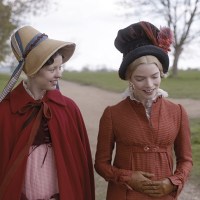
The much-anticipated film version of Downton Abbey has arrived and I suppose you could describe it as the Avengers Assemble of period drama, where everyone turns up and just does it all over again, but minus the throat kicks in this particular instance. Also, it’s critic-proof and the fans will race to see it even though it is, in truth, extremely predictable as well as extremely dull. Lady Mary? Wasn’t she interesting once? Didn’t she kill a Turk with sex? Why is she now so blah? Some throat kicks would have been welcome, actually. More throat kicks and fewer of Carson’s moralistic pep talks might have worked wonders. The film is written by Julian Fellowes and directed by Michael Engler, and we have now reached 1927.

On photography, shrines and Maradona: Geoff Dyer’s Neapolitan pilgrimage

Arts feature

At the Villa Pignatelli in Naples there is an exhibition by Elisa Sighicelli: photographs of bits and pieces of antiquity from, among other places, the city’s Archaeological Museum. Put like that it doesn’t sound so interesting but the results are stunning. Walking through the Archaeological Museum after seeing the exhibition it was difficult to discover the original objects from which Sighicelli’s samples were taken. One instance, a tight crop of fingers pressing into a calf, is from a highly elaborate, much restored and augmented sculpture with so much going on — a naked swirl of bodies, a rearing horse, a sympathetic doggy — it’s hard to imagine how she found it in the first place.

My soulmate Brian Sewell

High life

Romy Somerset is the sweetest, nicest young girl in London. She’s also my goddaughter and I remember, during her christening at Badminton years ago, the present duke’s mother staring at me rather intently while the minister was going on about love, trust and faithfulness. At lunch afterwards I asked Caroline Beaufort: ‘Why the looks?’ ‘I was wondering if you recognised any of those words,’ said a laughing duchess. Well, I do now that I’ve become monogamous on account of ‘force majeure’, but that’s not the point of my story. I am quite annoyed with Romy because she sent me a book that I have been unable to put down, one that has actually interfered with my pursuit of the high life.

Why has figurative painting become fashionable again?

More from Arts

The figure is back. Faces stare, bodies sprawl, fingers swipe, mums clutch, hands loll. The Venice Biennale was full of it. After decades of being pushed to the margins, figurative painting is once again dominating the art world. Peter Doig, Alex Katz, Chris Ofili and Jenny Saville head the sales at auction houses, but there is a whole market of up-and-comers snapping at the heels of these established names. How has this happened? Until quite recently, the figure, like melody in music, was associated with the most reactionary elements within art. The body emerged out of the second world war a wreck, blinking amid the glare and slash of abstract expressionism, pop art and conceptualism.

Is this film saying relationships between teachers and kids are OK? Scarborough reviewed

Cinema

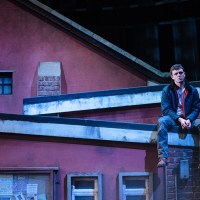
Scarborough is a small British film but it will give you a very big headache. Its subject is teachers who have relationships with pupils and it’s well directed and well performed — Jodhi May is always worth the price of a ticket whatever — but I’m still trying to work out what it has to say. That these relationships are sometimes OK? That they never are? That we shouldn’t judge? God, I hate cinema when it makes you think. And gives you these big headaches. The film is based on the play by Fiona Evans, first staged at the Edinburgh festival and then at the Royal Court in London.

Why did the Soviets not want us to know about the pianist Maria Grinberg?

Music

Only four women pianists have recorded complete cycles of the Beethoven piano sonatas: Maria Grinberg, Annie Fischer, H. J. Lim and Mari Kodama. I’ve written before about the chain-smoking ‘Ashtray Annie’ Fischer: she was a true poet of the piano and her Beethoven sonatas are remarkably penetrating — as, alas, is the sound of her beaten-up Bösendorfer. Lim produced her cycle in a hurry when she was just 24; it’s engaging but breathless. Kodama’s set, just completed, is a bit polite. Which leaves Maria Grinberg (1908–78), whose recordings remain just where the Soviet authorities wanted them. In obscurity. That is shameful — and not because she was the first woman and the first Russian to record all the sonatas.

A decorative pageant that would appeal to civic grandees: The Secret River reviewed

Theatre

The Secret River opens in a fertile corner of New South Wales in the early 1800s. William, a cockney pauper transported to Australia for theft, receives a pardon from the governor and decides to plant a crop on 100 acres of Aboriginal land. His doting wife, Sal, begs him to take her and their young sons back to her beloved London. They make a deal. William must succeed as a farmer within five years or pay for their passage home. He clashes with a tribe of spear-waving Aboriginals who make it clear that they want him off their ancestral turf. Neither side speaks the other’s language. ‘This is mine now. You lot can have the rest,’ says William, pointing vaguely at Australia.

I have no clue what’s going on but can’t wait to find out: BBC1’s The Capture reviewed

Television

How did the police ever solve any crimes before CCTV? That was the question which sprang to mind watching the first episodes of two highly promising new crime dramas this week. It’s also the central question now facing the detective in one of them. Part police officer, part career women, Rachel Carey in The Capture (BBC1, Tuesday) is being fast-tracked through the system to the traditional disapproval of her grizzled, old-school boss DCI Alex Boyd — imaginatively known as Boydy. Fortunately, Rachel (Holliday Grainger) won’t be with his unit for long. Having saved Britain from a deadly terrorist attack while working for special ops, she’s been sent there temporarily to see how she might handle a high-profile murder or kidnapping.

Why 80 per cent of young people in this Macedonian town have turned to posting ‘fake news’

Radio

It’s such a relief to turn on the radio and hear the voice of Neil MacGregor. That reasoned authority, his deep knowledge of history and how things have come to be as they are, his measured common sense and ability to see round an argument or story. He’s like the voice of how things used to be, when the world was not so topsy-turvy and the news reports made sense. His series, As Others See Us, returns to Radio 4 this week (produced by Tom Alban), taking him this time to Singapore, the USA, Australia, Poland and Spain to talk to people there about Britain’s past connections, present woes and future prospects. It’s fascinating, salutary, and more than a little disturbing. Take Singapore, for instance.

Why did Mrs Lowry hate her son’s paintings?

Arts feature

‘I often wonder what artists are for nowadays, what with photography and a thousand and one processes by which you can get representation,’ L.S. Lowry muses in Robert Tyrrell’s 1971 documentary. ‘They’re totally unuseful. Can’t see any use in one. Can you?’ I can: as fodder for biopics. Cinemato-graphers have always been inspired by painting, but the appeal of the artist’s biopic lies less in the representation than the lifestyle: mainly the sex.

Whooshing seedlings and squabbling stems: Ivon Hitchens at Pallant House reviewed

Exhibitions

Set down the secateurs, silence the strimmers. Let it grow, let it grow, let it grow. Ivon Hitchens was a painter of hedgerow and undergrowth, bracken and bramble. Whoosh! go his seedlings, sprouting, bolting, demanding repotting. The first Hitchens you see on the wall outside this exhibition at Pallant House is his lithograph ‘Still Life’ (1938). A squabble of stems break bounds, vault the vase, bid for freedom. I’m a wildflower, get me out of here. ‘I love flowers for painting,’ Hitchens said. ‘Not a carefully arranged bunch such as people ought not to do — but doing a mixed bunch in a natural way.’ If his posies were ever bridal bouquets they have long since been thrown, trampled, sat on by an usher and shoved in an ice bucket to revive.

Needed a shot of Stolichnaya: The Tchaikovsky Project reviewed

More from Arts

Grade: B+ I’m not sure about ‘Projects’. Aren’t those what ageing rockers produce, in a haze of sedatives, when their ego finally outgrows their talent? In classical music, there’s something unseemly about the idea of Maestro X condescending to bestow their attention upon music that is — or should be — bigger than they’ll ever be. Still, the conductor here is the Russian-born Semyon Bychkov, unambiguously one of the good guys, who, after decades spent paying his dues, has recently hit the sweet spot where every note speaks, every gesture ignites, and — crucially — critics actually notice.

I like Brassic but the reason it’s getting such glowing notices is depressing

Television

Brassic (Sky One) feels like the sort of TV comedy drama they last made about 15 years ago but would never get commissioned now, certainly not by the BBC. Almost all of the main characters — apart from love interest Michelle Keegan — are white, male and heterosexual. And it’s set in the kind of Lancashire market town surrounded by rolling sheep country where the opportunities for plausible diversity casting are really quite limited. So how come it has been getting such glowing notices from all the previewers and reviewers? You’ll be depressed when I tell you. Well, it has depressed me anyway. The main character Vinnie — played by Joe Gilgun — is bipolar.

The joys of Radio 4’s Word of Mouth

Radio

I first heard Lemn Sissay talking about his childhood experiences on Radio 4 in 2009. At that time he was still fighting Wigan social services for sight of the official dossier on his years as a child in care, fostered at first and then dumped back in the system and institutionalised in care homes and then a remand home. Eighteen years of his life stored in an Iron Mountain data facility. He’d been asking for his files, the story of his life, since he came of age. It was not easy to forget that programme; the banal cruelties of the system and Sissay’s resolute dignity in talking about them. At 18 he was told that the name he had been given by his foster parents was not his birth name.

Why are so many operas by women adaptations of films by men?

Opera

Opera’s line of corpses — bloodied, battered, dumped in a bag — is a long one. Now it can add one more to the list: the broken, abused body of Bess McNeill. The heroine of Lars Von Trier’s uncompromising 1996 film is a curious creation. Striving against the restrictions of her austere, Presbyterian community on a remote Scottish island, she marries oil-worker and ‘outsider’ Jan. But when an accident on the rig leaves him paralysed, a promise to her husband and a bargain with God leads her into increasingly degrading and dangerous sexual encounters. Savant or innocent, saviour or sacrificial victim — Von Trier leaves it unclear.

Watching Stephen Fry was like being in the presence of a god

Theatre

Stephen Fry lies prone on an empty stage. A red ball rolls in from the wings and bashes him in the face. He stands up and introduces himself as Odysseus, stranded on an island-kingdom as he makes his way home after the Trojan War. The ball had escaped from the hands of a clumsy maidservant who was playing on the beach with a local princess. Now Fry, as Odysseus, begs her help and asks for a petticoat to cover his nakedness. This tale comes from Homer’s Odyssey, Book Six, but Fry doesn’t quote the reference he merely plunges on with the story. Odysseus shows up at the palace of the local warlord, King Alcinous, and tries to explain how he came to be wearing the princess’s undergarments.

‘Bob Dylan? He’s like Confucius’: Cerys Matthews interviewed

Features

‘Baby, It’s Cold Outside’ was a Christmas classic for more than half a century until people suddenly began to worry that it was about yuletide date rape. ‘It was because of the video Tom Jones and I made,’ says Cerys Matthews, in her smoky Welsh lilt. She recorded a cover with Jones in 1999. The video showed the craggy old Welsh crooner slip something in her drink that turns Cerys into a high camp vamp. ‘The song is really innocent and beautiful and fun — it’s got a huge heap of humour and wit and I love it. That song is not our enemy. That woman is a strong woman. She’s there because she wants to be! It’s cold outside. They’re making love. Come on!

Why was Sigmund Freud so obsessed with Egypt?

Exhibitions

Twenty years ago, I visited the ancient Egyptian city of Amarna with a party of American journalists. Even in those days this place, near Asyut on the Middle Nile, was regarded as a dodgy destination for western tourists. As a tribute to the value of an entire CBS television crew as a terrorist target, we were accompanied by a squad of heavily armed, black-clad Egyptian special forces. But the sense of daring adventure was dented when, shortly after arriving at the ruins, we were joined by a couple of intrepid Germans who had come in a taxi. The Germanic world has long been fascinated by Amarna and its ruler, the pharaoh Akhenaten — which is why many of the best finds from the place are in Berlin — and none more so than the founder of psychoanalysis.

Why a whole new generation of young Europeans are turning to old-school reggae

Arts feature

A camera sweeps across the verdant, shimmering beauty of Jamaica before descending on to a raffishly charming wooden house built into the hills. We’re at a music studio where four of the pioneers who gave birth to reggae are congregated to record a new album. ‘It’s tranquil, a real feeling of nature, just birds, trees and the wind,’ says 71-year-old Ken Boothe, whose seductive voice is smooth as rum, just as it was in 1974 when ‘Everything I Own’ stormed the British charts. Boothe is one of the stars of a beguiling new documentary, Inna De Yard, about the rise and fall of roots reggae, which reached its peak in the late 1970s with Bob Marley’s ‘conscious’ lyric-writing and is now witnessing a revival.