Culture

Culture

The good, the bad and the ugly in books, exhibitions, cinema, TV, dance, music, podcasts and theatre.

Mick Hucknall on women, rejection and cultural appropriation

Arts feature

What makes someone become a pop star? Sometimes, it’s true, pop stardom arrives by accident, and its recipient responds not with joy, but horror. More often, though, pop stardom is sought, sometimes to make up for things that are missing in life, and the newly minted star embraces all the benefits fame brings, until those benefits — unlimited sex, unlimited drugs, unlimited drink — become more of a burden than a pleasure. Mick Hucknall appears to fall very much into the latter camp. What was missing was, first, a mother: she left his father when he was an infant, and records became some sort of surrogate as he grew older.

John Flaxman is the missing link between superhero movies and Homer

Exhibitions

As you enter the forecourt of the Royal Academy, you see them. A row of artistic titans, carved in stone, peer down from their alcoves in the higher half of the gallery’s façade. Thanks to the name plaques, they’re easily identified. You can see Pheidias, the genius of the Parthenon; Leonardo and Raphael; Sir Christopher Wren. And then there’s… John Flaxman. Who? That’s a completely legitimate question. If these guys are, so to speak, the Avengers of art history, then Flaxman is the equivalent of Hawkeye. Hell, maybe he’s Agent Coulson. Even on his plinth, he has a mildly apologetic air. Under a bald pate, his hair hangs down in curly curtains. His hand, clutching a chisel, crosses his chest self-deprecatingly.

40 years on, Life of Brian has made the world a darker place

No sacred cows

I went to the Battle of Ideas at the Barbican last weekend, a free speech festival organised by the Brexit party MEP Claire Fox, and listened to an interesting discussion about Life of Brian. The Monty Python film is exactly 40 years old, having been released in the UK on 8 November 1979. The opinion of the panel, made up of comedians and intellectuals, was that its lampooning of rigid, orthodox thinking is more relevant today than ever, since we’re in the midst of a new wave of puritanism, albeit one inspired by left-wing identity politics rather than Christianity. After all, what is ‘hate speech’ if not a type of blasphemy?

Bronze in Batumi

Chess

The hammering downpour before the last round in Batumi was, in retrospect, a precious omen. After all, England’s medal drought in international team competitions has lasted nearly 20 years. This year our rain dances finally took effect, as we brought home the bronze medals from the European Team Championship last week. It’s our second major success of the year, following silver medals in an elite team event in Kazakhstan, in March. England last won gold in Pula, 1997 and the women’s team got the bronze in Leon, 2001.   I’ve played in the Black Sea resort of Batumi three times, and I like it. The Georgians have khachapuri (cheesy bread) to celebrate and the city’s boulevard is glorious in the sunshine.

Woke slogans welded to incompetent grunge: Neil Young’s Colorado reviewed

More from Arts

Grade: B- Horribly woke boilerplate slogans welded inexpertly to the usual incompetent Crazy Horse grunge. Young and his pick-up band of now 50-years standing usually work well together — as on Zuma, Everybody Knows This is Nowhere and even Ragged Glory. But that’s when there were a few decent songs in the mix, stuffed with compelling ideas and interesting imagery. That sort of thing is in terribly short supply here. ‘She Showed Me Love’ staggers along for an unendurable 13 minutes: ‘I saw old white guys trying to kill mother nature.’ Just old white guys? How about you check out the Indonesian and Brazilian loggers for a second? Then the tuneless thud of ‘Shut it Down’ — ‘shut the whole system down!

Why the Royal Court is theatre’s answer to Islamic State

Theatre

The Royal Court is the theatre’s answer to Islamic State, a conspiracy of nihilists fascinated with death, supported by groups of self-flagellating puritans, and committed to inflicting pain on all who stray into its orbit. The latest fatwa from Sloane Square concerns the imminent demise of the Welsh language — an emergency for which there seems to be scant evidence. On Bear Ridge by Ed Thomas proclaims its amateurish origins with stage directions that belong in Pseuds Corner. ‘Spindly winter branches dance on a fading sign,’ is Thomas’s attempt to create a ghostly mood. The setting is a derelict village shop where ‘ancient bluebottles cling to death on sticky brown fly-catching strips’.

The open-hearted loveliness of Hot Chip

Music

Squeeze and Hot Chip are both great British pop groups. But they never defined a scene. Their ambitions extended further than being hailed by a few hundred people in bleeding-edge clubs. Squeeze piggybacked on punk, but they were quite evidently never a punk group, even if they dressed up as one. They were of the street rather than the art school, but they had no interest in gobbing, and Chris Difford was able to turn vignettes of everyday London life into three-minute comic dramas. (Perhaps he had more in common with John Sullivan — another south Londoner whose characters combined humour and pathos in his scripts for Only Fools and Horses — than he did with Joe Strummer.

Scorsese at his most leisurely, meandering and engrossing: The Irishman reviewed

Cinema

The Irishman is Martin Scorsese’s three-and-a-half-hour epic — a mobster-a-thon, you could say — starring Robert De Niro, Al Pacino, Joe Pesci and a light sprinkling of Harvey Keitel (he’s only in a couple of scenes). It’s based on the true, late-life confession of Mafia hitman Frank ‘The Irishman’ Sheeran and, while gangster flicks can often leave me cold and sometimes baffled — he was dispatched to sleep with the fishes for why? — this is magnificently engrossing. I wasn’t bored for a single minute which, given there are 210 of them, has to be a triumph, surely.

Why I love a bit of death on a Sunday night

Radio

There’s nothing like a nice bit of death on a Sunday evening. Radio 4 originally transmit their obituary programme Last Word on Friday afternoons, but I love listening to the repeat. Sunday at 8.30 p.m. is the perfect time — the ending of people’s lives at the ending of the week. The stresses of Monday morning are beginning to appear on your mental horizon, so Last Word is a handy reminder that none of it matters. Triumphs and tragedies come and go, but in the end we all check out. This week provided the usual smorgasbord of mortality. Everyone from Irene Shubik, the TV producer behind Rumpole of the Bailey, to Abu Bakr al-Baghdadi.

God awful: BBC1’s His Dark Materials reviewed

Television

‘Here’s your new Sunday night obsession...’ the BBC announcer purred, overintoned and mini-orgasmed, like she was doing an audition for a Cadbury’s Flake commercial, ‘... a dazzling drama with a stellar cast.’ My hackles rose. Did no one ever mention to her the rule about ‘show not tell’? And my hackles were right. His Dark Materials has indeed become my Sunday night obsession: how can the BBC’s most-expensive-ever drama series possibly look, sound and feel so clunkingly, God-awfully, disappointingly flat? Yes, I know Philip Pullman’s trilogy is an extended, bitter rant against Christianity disguised as children’s entertainment.

How a City lawyer conquered the hardest piano work ever written

Music

Charles-Valentin Alkan played the piano faster than Liszt and louder than Chopin. The dying Pole left instructions that only Alkan was to be trusted with completing his unfinished Études. Alkan cited Liszt and George Sand as his referees in a bid to be made head of piano at the Paris Conservatoire, but was rejected in what he perceived as an anti-Semitic snub. After one last concert in 1849, Alkan locked himself in his apartment for 20-odd years, emerging finally at the dead of night in the Salle Érard to play for a word-of-mouth audience of professional pianists. He was found dead 15 years later on 29 March 1888, supposedly crushed by a falling bookcase from which he was extracting a top-shelf tome from the Talmud.

‘The only place I can’t get my plays on is Britain’: Peter Brook interviewed

Arts feature

‘Everyone of us knows we deserve to be punished,’ says the frail old man before me in a hotel café. ‘You and I for instance. What have we done this morning that is good? What have we done to resist the ruination of our planet? Nothing. It is terrifying!’ Peter Brook fixes me with blue eyes which, while diminished by macular degeneration that means he can make me out only dimly, shine fiercely. But for the genteel surroundings and quilted gilet, he could be Gloucester or Lear on the heath, wildly ardent with insight. ‘Think of Prospero. He’s a bad character, hell-bent on revenge for his brother’s wrong, a colonialist who dominates Caliban and the rest of the island.

The truth about food photography

Exhibitions

While looking at the photographs of food in this humorous exhibition at the Photographers’ Gallery, I thought of how hopelessly outdated our own snaps will soon look. What seems fresh, clean and wonderfully modern to our eye — an Ottolenghi salad, say, dotted with pomegranate seeds and za’atar — will soon look almost tragic. How we photograph food betrays some of our deepest fantasies about ourselves. What’s more, good taste can quickly sour. Feast for the Eyes brings together food photography from the 19th century up to the present day and reveals just how much our attitudes to food change. At first, photographers emulated the principles of still- life painting, using symbolic gatherings and classical references.

In his new piano concerto Thomas Ades’s inspiration has completely dried up

Music

There’s nothing like a good piano concerto and, sad to relate, Thomas Adès’s long-awaited first proper attempt at the genre is nothing like a good piano concerto. Not in the version we heard at its UK première in the Royal Festival Hall, anyway. What a disappointment! Perhaps Adès can rescue it, but he’d have to hack away at the score as ruthlessly as Bruckner dismantling his Third Symphony. That work wasn’t necessarily improved by its revisions but, honestly, almost anything would be an improvement on the first two movements of the 21-minute concerto performed by Kirill Gerstein and the LPO conducted by the composer. You knew there was something wrong after ten seconds.

Scooby Doo with better CGI: Doctor Sleep reviewed

Cinema

Wheeeere’s Johnny? Nearly 40 years ago Jack Nicholson went berserk in a snowbound Rockies hotel, smashing an axe through a bathroom door behind which a pop-eyed Shelley Duvall cowered in terror. It is one of cinema’s truly iconic scenes, once voted the most petrifying in movie history. Now award yourself points if you remember that the family in The Shining were called Torrance. They had a son, Danny, a psychic little boy haunted by apparitions as he pedalled on his trike along the corridor’s hallucinogenic carpets. Danny has now grown up into Dan Torrance and assumed the form of Ewan McGregor who stars in the sort-of-sequel Doctor Sleep.

Patently insincere: Kanye’s Jesus is King reviewed

More from Arts

Grade: B– Kanye West has found Jesus Christ. Lucky old Christ. If I were Christ I’d have hidden out a while longer, frankly, but there we are. The most lauded (mysteriously) performer in the world right now wishes us to believe that he has been reborn, as a kind of cross between Billy Graham and the Revd Ian Paisley. The man who previously requested his girlfriend to perform oral sex upon him so that he didn’t get ‘spunk on his mink’ is now instructing people not to have premarital sex. The man who recently described himself as ‘beyond all doubt’ the greatest artist in the entire history of the world is now suffused with humility, as befitting a Christian proselytiser. You can believe this latest schtick if you want; I don’t.

BBC wildlife documentaries are just a chance to tell us all off

Television

Older readers may remember a time when landmark BBC wildlife documentary series were joyous celebrations of the miraculous fecundity of the planet we’re lucky enough to find ourselves living on. Well, not any longer. In our more censorious age, they’ve become another chance to essentially tell us all off. So it was that Seven Worlds, One Planet (BBC1, Sunday) began with Sir David Attenborough presenting the usual highlights package of the wonders to come, with each episode focusing on a different continent. But then he put on his special serious voice to add the dark warning that ‘This may be the most critical moment for life on Earth since the continents formed.’ (Quite a long time, I think you’ll agree.

A last dose of vitamin D before the clocks go back: Royal Ballet’s triple bill reviewed

More from Arts

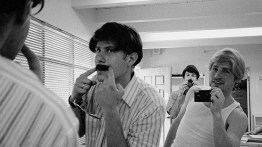
Were those gerberas in Francesca Hayward’s bouquet on opening night? Gentlemen admirers take note: no woman, ballerina or otherwise, has ever welcomed a bunch of gerberas. Hayward deserved better for her adorable Dorabella in Enigma Variations. In white flounces and gathered bloomers she lighted the stage with sprightly sweetness in Frederick Ashton’s one-act ballet set to music by Edward Elgar. The moment: Edwardian. The mood: lamentation in the drawing room. The look: tweed, knickerbockers, pipes, monocles, moustaches held on with glue. Julia Trevelyan Oman’s designs set us at a country-house party — William Morris wallpaper, parlour games, cold tea — in a palette of somnolent drabness.

A surefire international hit: Lungs reviewed

Theatre

No power on earth can stop Lungs from becoming an international hit. Duncan Macmillan’s slick two-handed comedy reunites Matt Smith and Claire Foy from The Crown. It’s short (90 mins), it has a minimalist set (‘arty’), and it makes no intellectual demands on the crowd (phew!). Best of all, it parrots all the ecological prejudices currently supported by today’s urban bourgeoisie. Matt and Claire play a broody couple who fear that having a child will destroy the planet and kill billions of their fellow earthlings. Their voluble anxieties persist for 40 minutes and become a little tiresome for those blessed with long memories.

How did Richard Herring become the comedy podcast king?

Arts feature

What does it mean to be a successful comic? Richard Herring isn’t sure. He’s been a ‘professional funnyman’ for nearly 30 years, yet — as he’s the first to admit — he’s largely unknown beyond the circuit. Even then he has doubts. ‘I’m never in those top-100 stand-up lists,’ he says, when we meet in Soho ahead of his new tour. He admits his old shows have largely been forgotten and he hasn’t been to an awards ceremony for decades. As promo strategies go, it’s a curious one. But then Herring is an odd one. In the late 1990s, he was part of a new wave of Oxbridge-educated fame-hungry young comics who exploded on to television.

A Halloween short story: by The Woman in Black’s Susan Hill

Features

‘This is a true story…’ Right. Only this time, it really is. There are no wails, whistling winds or taps on window panes, so you may find it a trifle prosaic, but because my tale has none of the traditional accoutrements that may make it all the more chilling. Stay with me. In June this year we had two cars, a Vauxhall Antara and a Volkswagen Tiguan, and it was in the Antara that we set off to the Cotswolds, from where my partner would continue to London for an event requiring evening clothes — which she had left behind in the house. By wondrous chance, we were passing a shopping centre, into which she dashed for a substitute outfit, taking her phone because she was expecting an important call. She returned to the car sans phone.

Witty, clear-eyed and free of self-pity: Slowthai at Brixton Academy reviewed

Music

Those who cherish the notion that the current prime minister really is ‘electoral Viagra’ should have paid a visit to Brixton last Friday evening to see what actual young people think about him. Before Slowthai — the young rapper from Northampton who ignored complaints about the toxification of political discourse by brandishing a dummy of Johnson’s severed head at this year’s Mercury Prize ceremony — even took to the stage, the 5,000 or so kids took up a chant of their own volition: ‘Fuck Boris! Fuck Boris!’ The Britain of Slowthai and his fans is not one in which anything can be overcome with a bit of Dunkirk spirit.

The best Terminator film since the first: Terminator Six reviewed

Cinema

The first Terminator film, which came out in 1984, was a high-concept sci-fi serial killer thriller. You can just imagine its director, James Cameron, pitching it to the suits: ‘Arnold Schwarzenegger arrives from the future. He’s naked. We haven’t decided why, but he’s definitely going to be naked. And there’s only one thing on his mind, which is to tear some chick to pieces.’ Yet as sequel followed sequel, it became clear that this franchise about a dystopian war between humans and machines was really a metaphor for the war taking place within Hollywood itself. The machines won. Cinematically speaking, we now inhabit that post-apocalyptic landscape so often glimpsed in Terminator films. The grim perma-dusk is streaked with laser gunfire.

If we do get a good Anglo-American trade deal, we should thank Trump’s mother

Television

In an uncharacteristic fit of almost-robustness, Culture Secretary Nicky Morgan has said she is ‘open-minded’ about scrapping the BBC licence fee and replacing it with a Netflix-style subscription service. Good idea. What would we actually miss if we didn’t subscribe? Not an awful lot in my view. Some people cite David Attenborough’s nature documentaries but I certainly wouldn’t now that they have become so obtrusively propagandistic. The problem with the BBC isn’t — and never has been — lack of talented filmmakers, wildlife camera crews, presenters, actors, writers or production teams. It’s that, from news to drama, the BBC’s woke politics now subsume and corrupt its entire output.

Can giving voice to the horrors of the past re-traumatise?

Radio

It is 50 years since Ronald Blythe published Akenfield, his melancholy portrait of a Suffolk village on the cusp of dramatic change. Akenfield was actually a composite of two real villages, Charsfield and Debach, and Blythe’s oral history was a patchwork created from about 50 conversations — with figures including a pig-farming colonel, the over-stretched blacksmith and a rural dean who reported residents being ‘blunted and crushed by toil’. It was an unsparing vision of rural poverty, yet also a homage to disappearing ways of life and the virtues of small communities. Last Saturday’s Akenfield Now, on Radio 4, followed local sixth-former Anna Davies as she surveyed the landscape afresh.