Culture

Culture

The good, the bad and the ugly in books, exhibitions, cinema, TV, dance, music, podcasts and theatre.

Even I, a bitter and cynical middle-aged woman, felt stirred: Sylvie’s Love reviewed

Film

Sylvie’s Love is an exquisitely styled, swooning, old-school, period Hollywood romance and while it has been described as ‘glib’ in some quarters, it’s Christmas, we’ve had a rotten year, and it may be just what the doctor ordered. And if it is glib — I’m not convinced it is, actually; it may even be quite groundbreaking — it is, at least, adorably and cheeringly so. (My heart was warmed.) It is written and directed by Eugene Ashe, and opens in Harlem in the summer of 1957 with Sylvie, played by a luminous Tessa Thompson. She works in her father’s record store but is obsessed by television and dreams of becoming a TV producer.

Alan Rusbridger on the joys of four-hand piano

Classical

One of the few social activities not yet prohibited under lockdown laws is four-handed piano playing. I don’t mean sitting side-by-side at one keyboard. That would risk infection and, if snitched on, the possibility of sharing a prison cell with Piers Corbyn. No, the four hands must be divided equally across two pianos, and the instruments must be end-to-end. Safely isolated in this manner — perhaps three or four metres apart — the ivories can be tickled for as long as you want. I’ve been a devoted four-hand piano player all my life — due entirely to the limitations of the two I was born with.

A round-up of horror podcasts

Radio

Good evening! Come shivering on in through the garden side door, my friends, and distance yourselves in a semi-legal fashion around the flickering flames of my recently installed firepit while I guide you through the best horror listening for the depths of this December dark and drear. The Magnus Archives is an unslagoffably enthusiastic anthology series stuffed with monsters, ghouls and redundant adjectives. If you can get over the Alan Partridge touches (‘I didn’t move… I just stood there… sipping my tea… not even noticing it was still far too hot to drink comfortably’), this show features the scariest story I have heard this month, ‘Lost Johns’ Cave’.

‘You can’t have opinions any more’: Rick Wakeman interviewed

Music

‘Classic rock’ is a rather fusty old oxymoron, but then the term ‘classic’ is applied these days to chocolate bars and that most in-demand of consumer undurable, lavatory paper, so I suppose one shouldn’t complain. Covid-19 will probably be remembered as a ‘classic virus’ one day not too soon, when there are other more baleful new-wave viruses with spiky hair pogoing around. ‘Classic rock’, meanwhile, is a term applied to the sort of chest-beating rawk that people of my generation admire: the Who, Bad Company, Blue Oyster Cult insisting, in timely fashion, that we should embrace death, and Lynyrd Skynyrd informing us, with unforeseen irony, that they can fly, free as a bird.

A romcom with very little com: BBC1’s Black Narcissus reviewed

Television

In Black Narcissus, based on the novel by Rumer Godden, five nuns set off for a remote Himalayan palace in 1934 to set up a convent school. The palace, donated by an Anglophile general, used to be a harem and was still adorned with erotic paintings. It was also where the general’s sister, Srimati, had committed suicide and where, just a few months previously, a male religious order had tried to establish a school too, before retiring defeated for mysteriously undisclosed reasons. The nuns’ main helper in practical matters, a British expat called Mr Dean (Alessandro Nivola), possessed an overwhelming maleness that expressed itself through such attributes as a chiselled jaw, an Indiana Jones hat and a handy way with a spanner. So what could possibly go wrong?

The grumpy genius of Raymond Briggs

More from Arts

Raymond Briggs has often spoken of his annoyance at being associated with Christmas. His Snowman may fly across our screens each Christmas day, but in the book there is no Father Christmas, no sleigh, and certainly no figgy pud. The North Pole scene featuring the jolly elf was written into the story for John Coates’s TV adaptation in 1982 and struck Briggs as rather mawkish at the time. As readers and viewers of Father Christmas know, Briggs’s Papa Noël is anyway rather a grouch at this time of year. As if the cold isn’t enough for him to contend with, there are the chimneys, the tasteless presents, and, oh yes, ‘blooming Christmas’ itself.

Every page of this astonishingly beautiful ode to the citrus is a treat

More from Arts

There’s an episode of Yes Minister called ‘Equal Opportunities’. Minister Jim Hacker is under pressure to recruit more women to the civil service. The hunt is on for female mandarins. ‘Ah,’ says principal private secretary Bernard. ‘Sort of… satsumas?’ At this time of year, I can’t help thinking of Bernard as I hover in the Co-op over nets of tangerines, mandarins, clementines, satsumas and ‘easy peelers’, whatever they are. ’Tis the season for citrus. For oranges at the bottom of stockings, for Buck’s Fizz on Christmas morning, for smoked salmon blinis with slices of lemon, for Milanese panettone with candied parings of peel, and for J.C.

Hear the greatest Parsifal of our time sing like a Muppet: Jonas Kaufmann’s Christmas album reviewed

Opera

In classical music circles, Christmas arrives with the overture to Handel’s Messiah. Or so they’ll tell you. In truth, festivities kick off when you hear a ping from your phone and glance down at your inbox: OMG — you have to hear this! There follows, as tonic follows dominant, a link to YouTube and the 2014 Christmas in Vienna Medley — the occasion, still barely fathomable to anyone who believes that we share a common European culture, when a quartet of opera singers in full evening dress, and shimmying on the spot like a vicar at a Sunday School disco, attempted to cover George Michael’s ‘Last Christmas’. But not this year. Oh no.

The legend of Marlene Dietrich

Arts feature

How to sum up the legend of Marlene Dietrich? She was an actor, a singer, a style icon, even a war hero. A retrospective is under way at the BFI, where more than a dozen of her films are being shown throughout this month. Many admirers saw only the shimmering legs and forgot the sharp intellect, the wartime gallantry. But it would be wrong to deny that body image was central to her success. It was with this in mind that the critic Robin Wood christened Dietrich ‘the Venus de Marlene’. Like the statue alluded to, Dietrich is a monument of Western culture, her image cast not in stone, but in light (that marble of the modern world, made possible by the newly invented movie camera).

What’s an art form that feels unpopular and pointless, but isn’t?

More from Arts

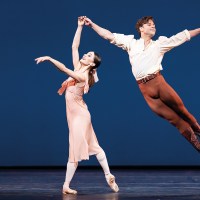
How did the universe begin? Did the great god Bumba vomit us up, as the Kuba believe? Or did we emerge, as the Navajo think, from a cloud of coloured mist? Or do we listen to the ancient Egyptians who thought the curtain opened on a giant cobra slithering across the oceans? Perhaps it starts with a computer screen: Milky Way wallpaper, a folder labelled ‘History_Of_Universe’ and a sharp intake of breath. That’s how one of the great video artworks of the 21st century begins anyway. This summer New York’s Museum of Modern Art uploaded Camille Henrot’s ‘Grosse Fatigue’ (2013) to its YouTube channel. It gives you the birth of the world in 13 minutes. This is a show to bust through those Covid blues. Who needs Pfizer when you have Michael Clark?

Buttercup the cow was so convincing I felt quite moved: Jack and the Beanstalk reviewed

Cinema

This pantomime was filmed by ‘legendary Blue Peter presenter’ Peter Duncan in his back garden over the summer. It was intended for online release only but it’s also gone into cinemas because this is the world we now live in. Oh no it isn’t. Oh yes it is. Oh no it isn’t. Seriously, it is. Why are you arguing like this? Stop it. As many theatres are still closed, and as most pantomimes have been cancelled, it makes sense to show it in cinemas and for cinemas to have something to show. During normal times the Christmas period is The Favourite and Portrait of a Lady and, while we’re at it, have David Copperfield and Little Women too.

Netflix’s Barbarians taught me those Romans had it coming

Television

Of all the times and places to have been on the wrong side of history, I can’t imagine many worse than to have been a Roman legionnaire in the Battle of the Teutoburg Forest in the year 9 AD. It was the Romans’ Isandlwana — a devastating defeat inflicted by native forces on what was theoretically the world’s most sophisticated, best trained, and almost insuperable military power. Over the years since I first learned about arrogant, tricked, doomed Roman commander Varus and his three legions (about 20,000 men, almost none of whom got out alive), I’ve often mused pityingly on how it must have felt: trapped in the gloomy forest, hemmed in by a bog, waiting to be slaughtered by hammer, axe or javelin by the hairy, painted, blood-crazed Germanic barbarians.

Like eating 58 luxury chocolates: The Flying Lovers of Vitebsk reviewed

Theatre

The Flying Lovers of Vitebsk begins with a phone conversation between a pretentious art critic and a man called Marc. This turns out to be Marc Chagall, the expressionist painter, who was born in Vitebsk in Belarus in 1887. It would have been helpful to include his name in the title. Emma Rice, the director, relies on her usual blend of dances, songs and pretty lighting to tell her tale. She has very low expectations of her audience. The sad characters cry. The happy characters laugh. The amorous characters dance rapturously. Everyone sings a lot. The script consists mainly of plot points written in clunky, airless prose. ‘It was the best exhibition I’ve ever had,’ announces Marc after an early success in Berlin.

The world’s greatest podcast: Dan Carlin’s Hardcore History reviewed

Radio

It’s well known that you should never meet your heroes because they will only disappoint you. Less commonly said, but equally true, is that you should never google your favourite podcast hosts, because their face will not match their voice. I have just finished looking at photos of Dan Carlin, the host and sole narrator of Hardcore History — the world’s greatest podcast — and I find myself disappointed. He’s a perfectly nice-looking man: bald, medium build, squarish of face. But he doesn’t look like I want him to. Why do we think we can imagine someone’s face just from the sound of their voice? It’s a mysterious but enduring illusion, like the image you have of a place before you visit, which you never quite forget.

How we became a nation of choirs and carollers

Arts feature

Between the ages of 15 and 17 I had a secret. Every Monday night I’d gulp down dinner before rushing out to the scrubby patch of ground just past the playing fields, where a car would be waiting. Hours later — long after the ceremonial nightly locking of the boarding house — I’d sneak back, knocking softly on a window to be let in. I’d love to say that it was alcohol or drugs that lured me out. It wasn’t even boys — or, at least, not like that. My weekly assignation was with Joseph and Johann, Henry, Ben and Ralph. My addiction? Choral music.

Absorbing and beautifully designed: Jane Eyre reviewed

Theatre

Blackeyed Theatre is another victim of the virus. Its production of Jane Eyre was midway through a UK tour, and due to visit China for a month, when the pandemic shot its plans to bits. Last month the show was revived on stage and committed to film. Kelsey Short (Jane) leads a team of just five actors who tell the story as Charlotte Brontë wrote it. The costumes, hairstyles and habits of speech seem authentically Victorian. The director, Adrian McDougall, has rejected the fashionable habit of presenting Jane as a rad-fem freedom fighter surrounded by grotesque male oppressors. His version reminds us how sympathetic the novel is towards men. Mr Rochester (Ben Warwick) is a romantic enigma, a dashing, grizzled buccaneer who is also decent, honourable and kind-hearted.

The genius of I’m Sorry I Haven’t a Clue

Radio

I’m Sorry I Haven’t a Clue has just been voted the greatest radio comedy of all time by Radio Times, ahead of Hancock’s Half Hour and the brilliant Round the Horne. The first two episodes of series 73 (can you believe it?) are also the last Tim Brooke-Taylor recorded before losing his life to coronavirus earlier this year. Brooke-Taylor was part of the original cast of the self-styled ‘antidote to panel games’, which first aired in 1972 with Bill Oddie, Jo Kendall and the show’s deviser Graeme Garden as fellow performers (Barry Cryer joined during the first series and Willie Rushton two years later).

A hard watch, but ultimately a rewarding one: County Lines reviewed

Cinema

County Lines is the kind of social realism that the British do so well, if not too well. In other words, a hard watch. In fact, at times it’s so unbearable you might find yourself pressing pause because you’ve suddenly remembered the fridge needs a clean, say. Or the hall: couldn’t it do with a tidy-up? But this tale of a young boy caught up in transporting drugs has to be tough. And there is sympathy, tenderness and hope, too. As for the kid, who is a sort of modern-day Billy from Kes, you will certainly take him to heart. The film is written and directed by Henry Blake, a one-time actor who was a youth worker in London for 11 years.

Watch Andrew Marr stare at places where stuff happened: New Elizabethans reviewed

Television

Congratulations, everyone! It turns out we’re much better than those bigoted old Brits of the 1950s. After all, they were ‘class-obsessed, overwhelmingly white and Christian, and deeply conservative about the role of women’ — whereas we ‘accept difference and diversity in a way that would have been almost unthinkable in 1953’. This was the reassuring message in the first episode of New Elizabethans by Andrew Marr, where Marr surveyed Britain’s changing social attitudes since the Queen came to the throne, and liked what he saw. These days, needless to say, the ‘great man theory’ of history has rather fallen out of fashion — so instead Marr brought us a sort of ‘great activist’ version.

Make Status Quo sound like Stockhausen: AC/DC’s Power Up reviewed

The Listener

Grade: C The fear is this: you’re wearing a leather jacket and hipster jeans and think you look cool, but you can’t fasten either item of clothing and your teeth have fallen out. Instead you are simply an undignified granddad and everybody knows it. Hell, I’ve been there, over the years, until kindly women intervened. Apparently no women have intervened with guitarist Angus Young. He’s still wearing his short-trousered schoolboy outfit, gurning like a man who has just discovered a kidney stone, at the age of 65. No matter how desperately, inelegantly, you cling to your youth, there’s always Angus to make you look kind of measured.

Meet the front man of ‘the most revolting band in the world’

Arts feature

Corey Taylor, the singer of Slipknot, laughs when I observe that he is disappointingly well adjusted. He had just been explaining that he does his own cleaning at home, that he ‘hates seeing privilege and entitlement’, that he can get from place to place without needing his hand held (you might scoff, but many musicians get infantilised by a life of indulging and being indulged). ‘I have a very healthy ego,’ he says. ‘But I also know to keep it in check as much as I can, because I don’t want to be that dude.’ Which is not to say Slipknot’s career has been free of incident. Far from it. Though they have released only six studio albums over the past 21 years — the last three all US No.

Skilful and riveting: The Poltergeist at the Southwark Playhouse reviewed

Theatre

Sasha is angry. He’s a gay artist on his way to his niece’s birthday party and he keeps popping codeine pills to get him through the dull ceremony ahead. His devoted boyfriend, Chet, hasn’t realised that Sasha’s drug habit is a full-blown addiction but Sasha is highly secretive. He shows us two sides of his nature at once. Outside, he’s a friendly smiling uncle who dutifully attends family celebrations. Inside he’s spitting with rage at his brother’s cosy life and its trite domestic rituals. When he greets his pregnant sister-in-law he grins politely while fuming to himself: ‘There’s a billion family photos here. If I spat anywhere I’d hit one.

A salmagundi of tedium: The White Pube podcast reviewed

Radio

The White Pube started life as an influential art blog, written by Zarina Muhammad and Gabrielle de la Puente. The name announced iconoclastic intent, playing on the White Cube gallery — which certainly deserves mockery (like a city law firm, it has outposts in Hong Kong and Manhattan). But The White Pube podcast is as inanely conventional as the gallery it makes fun of. Each episode is an hour-long salvo by the hosts, or ‘art critic baby gods’, and as with their exhibition reviews — rated with emojis, not stars — conversation is appealingly informal and spontaneous. But they have little of interest to say, especially about their ostensible subject. Three episodes into this art criticism podcast, hardly an artwork has featured.

Maggi Hambling’s Wollstonecraft statue is hideous but fitting

More from Arts

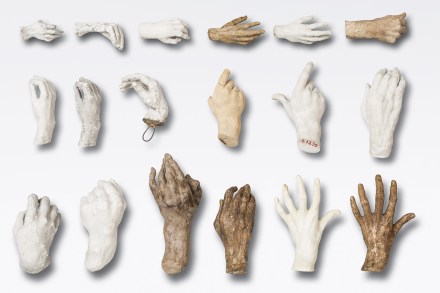
Frankly, it is rather hideous — but also quite wonderful, shimmering against the weak blue of a late November sky. The new statue ‘for’ Mary Wollstonecraft (1759-97), the radical writer, journalist, teacher and novelist, had drawn quite a crowd to Newington Green in north London when I went to see it. They were gathered round it, puzzled and questioning, trying to work out what to think of the tiny figure on top, the garish silvery finish, the heaving bulbous mass below. The memorial, designed by the sculptor Maggi Hambling, has been vilified since its unveiling a few weeks ago by critics who have focused on the nude female figure, bothered by the beautifully styled tits and perhaps perturbed by the very obvious bush of pubic hair.

The grotesque unevenness of Mozart’s Requiem

Classical

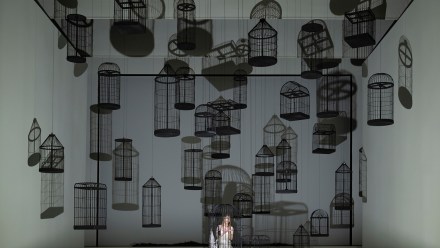
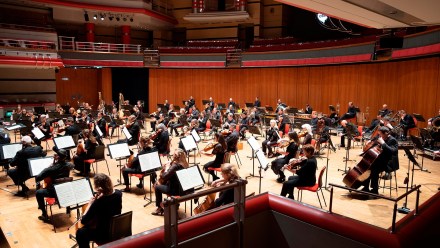
It is amazing what fine performances you can get beamed to your computer these days. Slightly less amazing is the packaging these events come in, when they do. ENO relayed free a concert of Mozart’s Requiem, but it was preceded by a snatch of Strictly, with a row of muscular young guys ripping off their shirts, before we entered the Coliseum for a heavily pregnant Danielle de Niese hyping the event we were about to see and hear. She is delightful, but I wish she hadn’t been compelled to tell us that, despite his hard life, Mozart was sending us a message of hope that everyone, however ignorant of classical music, can be moved by. It’s just not true.