Culture

Culture

The good, the bad and the ugly in books, exhibitions, cinema, TV, dance, music, podcasts and theatre.

Finally a lockdown drama that will endure: James Graham’s Bubble reviewed

Theatre

Theatres can open if they want to. That’s the current position. The only factor keeping a playhouse dark is a lack of guts or imagination on the part of its leadership. A small pub in Vauxhall, The Eagle, is mounting new plays in its garden space to raise everyone’s morale. Punters must wear masks and sit in bubbles. ‘We’re adhering to the government guidelines,’ announced the artistic director before the start, ‘which are changing all the time.’ The show is a feelgood musical about drifters and dreamers in their twenties trying to make it in New York. Waverley wants to be an actress but her plans are blown off course by a tempting job offer from a law firm. What to do?

Entertaining – but there’s one abomination: National Gallery’s Sin reviewed

Exhibitions

Obviously, we’re living through an era of censorious puritanism. Granted, the contemporary creeds are different from those of the 16th century. But the imperious self--righteousness is much the same — which gives the entertaining little exhibition at the National Gallery entitled Sin an unexpectedly contemporary edge. Personally, I’ve always thought that the doctrine of original sin has a great deal of explanatory power (it explains why history can’t ‘end’ and plenty of things will always go wrong — because that’s the way people are). Arguably, the medieval list of deadly failings — anger, pride, sloth, etc — provides a better summary of human nature than many later attempts.

How democracy can subvert itself: Bunga Bunga reviewed

Radio

Italy has long captivated romantics from rainy, dreary, orderly northern Europe. Goethe, Stendhal, Keats and Shelley all flocked to Italy in search of the ideal society. There they found what they thought was a utopia. ‘There is,’ Byron marvelled in a letter home from Ravenna, ‘no law or government at all, and it is wonderful how well things go on without them.’ Well, Silvio Berlusconi has made some of Europe’s wisest men sound like chumps. If the notorious career — chronicled in the podcast Bunga Bunga — of the longest-serving prime minister of Italy since Mussolini and its sometime richest man has done one good thing, it’s to have dispelled for good our quixotic fantasies about his troubled nation.

The mix of slapstick and sermonising is certainly original: In Bad Taste reviewed

Theatre

In Bad Taste is a slapstick comedy about five female terrorists who murder the governor of the Bank of England. They chop him to pieces, cook him in a casserole and devour the lot. Their plan is to ‘eat the rich’, literally, and to trigger a worldwide revolution. After this grimly hilarious opening the script takes a sharp U-turn when one of the women makes a speech denouncing misogynists. The others agree to drop the revolt against the wealthy and to hunt down nasty men instead. Each woman suggests a candidate for execution: a male colleague who works too sluggishly, a father-in-law who makes judgmental comments, a drunkard who gropes barmaids. The killing begins. Nine victims are axed to death and their bodies cannibalised. The police launch a manhunt.

There’s a magic to hearing music in such small audiences: Divine Comedy reviewed

Pop

Three shows in a week! Why, it was just like the first week of March. There was, however, little of that last-days-of-Weimar giddiness about these. How could there be, when there were 300-odd people dotted around Barbican Hall’s 2,000 seats, and 50 or so of us at Oslo — normally a packed, standing-only club — sat on stools, unable even to waggle a hip? One felt sad for Working Men’s Club, a young quartet from Yorkshire whose first album — released earlier this month — had critics cheering. They should have been swanning around the country, heading off to Europe, maybe popping across the Atlantic, to play in New York and LA at least. Instead, their tour was three half-hour shows in one evening in a single London club.

Enough plotlines to power several seasons of The West Wing: BBC1’s Roadkill reviewed

Television

Like many a political thriller before it, BBC1’s Roadkill began with a politician emerging into the daylight to face a bank of clicking cameras and bellowing journalists. In this case, the politician was Peter Laurence (Hugh Laurie), the Tory minister for transport, who’d just won a libel case against a newspaper that had accused him of using his cabinet position for personal profit. Exactly what he’s supposed to have done, we don’t yet know — although it does seem pretty clear that whatever it was, he did it. Certainly his own lawyer thinks so, as does the journalist who wrote the story but had to retract it in court when she couldn’t fully stand it up.

You’re not going to get a better spin on bromance – brobably: The Climb reviewed

Cinema

The Climb is, essentially, a bickering bromance as two longtime pals bicker bromantically down the years, and it doesn’t sound like a film you’d especially wish to see and it didn’t sound like a film I’d especially wish to see. Bromances are bad enough, so God save us from a bickering one. But it’s actually quite the marvel: original, sometimes absurdist, touching, funny, and it also takes male friendship seriously, which is a novelty. So you do wish to see it. You just didn’t know till now. It was written by Michael Angelo Covino and Kyle Marvin, directed by Covino, produced by Covino and Marvin (among others) and stars Covino and Marvin who play characters called Mike and Kyle.

Skyscraper squats and a lesson from India: the future of British architecture

Arts feature

Not long ago, if you asked discreetly in the right Hackney pub, you would be put in touch with a character called Syd the Squatbroker. For as little as £150, he would gain access to the roof of an abandoned council tower block with a set of fireman’s keys. Then Syd (nom de guerre of a carpenter from Harlow) would abseil down to a window, gain entry and open an empty flat. Sometimes he would cut through heavy steel squat guards using oxyacetylene cutting gear. Latter-day squatbrokers aren’t yet abseiling down the Shard or Canary Wharf’s glass and steel phalluses to liberate underused office spaces and thereby help solve London’s housing crisis, but you’d think they must be tempted. Post-Covid, home working is becoming permanent.

A high-end car-boot sale of the unconscious: Colnaghi’s Dreamsongs reviewed

Exhibitions

In 1772 the 15-year-old Mozart wrote a one-act opera set, like The Magic Flute, in a dream world. Il sogno di Scipione was based on an account in Cicero’s Republic of a dream experienced by the Roman general Scipio Aemilianus while serving in North Africa in 148 BC. In the dream the younger Scipio is visited by his adoptive grandfather Scipio Africanus, who foretells his destruction of Carthage, dishes out advice on dealing with populist politics and shows him ‘the stars such as we have never seen them from this earth’. Scipio’s is a recurring dream: it inspired Dante’s vision of Heaven and Hell and it returns to haunt us in Colnaghi’s latest exhibition Dreamsongs.

Is AppleTV’s Tehran the new Fauda?

Television

If you love Fauda — and of course you do — you’re in for a long wait for season four, which isn’t due to arrive on Netflix till 2022. That’s why I had such high hopes for Tehran, which is written by one of Fauda’s co-authors Moshe Zonder. What, after all, could there possibly be not to like about a hot female Mossad agent struggling to survive after a botched mission in the hostile Iranian capital, where all Israelis are seen as emissaries of ‘Little Satan’? It starts promisingly, once you’ve got over the technical difficulties of signing up to Apple TV. (For some reason, my characters now speak with English subtitles but in German. The other options it gives me are all the Latin languages but not English.

The jackboot zealotry of ushers is ruining theatre

Theatre

Southwark Playhouse has revived an American show, The Last Five Years, whose run was cancelled in March. In advance, I received an email outlining the theatre’s new rules, which appeared to exceed the minimum legal requirements. At the venue, I found that the main entrance had become the exit while the side door had become the main entrance. What for? Perhaps an unsubtle reminder that ‘everything’s changed now, pal, so get used to it’. The queue on the pavement moved at a turtle’s pace because the usher gave each playgoer a homily about the new regime before allowing them to pass through Checkpoint Charlie. Inside it was like an army hospital. Sentries in the corridors regulated our access to the loos.

A silly, bouncy delight: Glyndebourne’s In the Market for Love reviewed

Classical

Offenbach at Glyndebourne! Short of Die Soldaten with a picnic break or a period-instrument revival of Jerry Springer: The Opera, it’s hard to imagine a less probable operatic outcome— even this year. I mean, Offenbach: the saucy skewerer of middle-class pretension; the dazzling, vulgar arriviste of 19th-century opera. It couldn’t have been more incongruous had the sideburned showman himself razzed up, bass thumping, in a pimped Renault 5 and started pulling skids on the ha-ha. He’s never been staged at Glyndebourne, and it’s not hard to guess why. The last time I saw an Offenbach one-acter done in the UK, it was Croquefer, a medieval farce that climaxes with the entire cast succumbing to projectile diarrhoea. Try turning that into a range of luxury gifts.

The Royal Ballet’s return was joyous – but the presenter was gushing and witless

Dance

Mothballed since March when it danced a farewell Swan Lake, the Royal Ballet made a triumphant and joyous return to Covent Garden last Friday, performing a string of ancient and modern works before an invited audience of 400. Meanwhile, around the country (and the world) ballet-starved viewers paid £16 to watch a Vimeo livestream. Jonathan Lo and the 83-strong orchestra, enjoying added elbow room in the stalls, set the tone for an emotional evening with the Sleeping Beauty overture — the ballet that famously reopened the Opera House after the second world war. It was a natural and poignant choice, but director Kevin O’Hare hadn’t succumbed to ancestor worship.

Like a weird episode of Downton – with less sexual chemistry: Rebecca reviewed

Cinema

Rebecca is a new adaptation of Daphne du Maurier’s gothic, twisted, never-out-of-print tale of sexual jealousy. It’s directed by Ben Wheatley, with a script by Jane Goldman, and stars Lily James, Armie Hammer and Kristin Scott Thomas. High hopes? Me too. But though it’s perfectly watchable, it’s not at all daring. Would the second Mrs de Winter be more fully formed and less of a pallid, round-shouldered meek little thing? Would sinister Mrs Danvers have more substance? Would it be a modern interpretation for modern times? No, is the short answer. And also it just isn’t sexy enough. Meanwhile, I forgot to start this with: ‘Last night I dreamt I went to Manderley again…’ as it’s how every other review will begin, I’m sure.

Why the Royal Academy is wrong to consider selling their precious Michelangelo

Arts feature

How much does a Michelangelo cost? It is, as they say, a good question, meaning: nobody really knows. The reason for this odd state of affairs is that almost none of them have ever been bought and sold on the open market, which is how the prices of most things are established. It’s hard to think of many examples of his sculptures being traded in that way over the past 500 years. Strangely, the main exception is the ‘Taddei Tondo’, otherwise known as ‘Virgin and Child with the Infant St John’, which, reportedly, some members of the Royal Academy are suggesting the RA should sell. If that were to happen, which I very much hope it does not, we might learn the answer to the conundrum. Probably it would be a very large sum indeed.

Why great speeches are made for stage and screen

More from Arts

Curious thing, writer’s block. If you believe it exists. Terry Pratchett didn’t. ‘There’s no such thing,’ he said. ‘It was invented by people in California who couldn’t write.’ He had a point. Writers write, period. But there is a syndrome in my house known as Not Starting Anything New Through Fear Of It Being Not Very Good. Less catchy than ‘writer’s block’, but arguably a more accurate description of the condition. My Covid-induced version of the above involved endlessly ‘honing’ an already completed play about my mother to devastatingly little effect and musing on the oldest creative question of all: is there a formula for writing success, and if so what is it?

A night of angry pipsqueaks: Young Vic’s 50th birthday gala reviewed

Theatre

When Kwame Kwei-Armah took over the Young Vic a ‘Black Lives Matter’ sign was strapped to the front of the building. One of BLM’s aims is the overthrow of capitalism and it’s widely assumed in theatreland that Kwame, who is great fun to meet, has embraced this goal by adjusting the Young Vic’s pay structures so that he earns no more than the bar staff and the cleaners. Happily the pay cut seems not to have affected his mood, and last weekend he was fizzing with anticipation as he hosted the Young Vic’s 50th birthday gala. ‘We’re in the house. Make some noise,’ he cried. ‘Shake off the cobwebs!’ He introduced a medley of performances by ‘artists, thinkers, academics and musicians’.

Gripping high gothic psychological horror: Saint Maud reviewed

Cinema

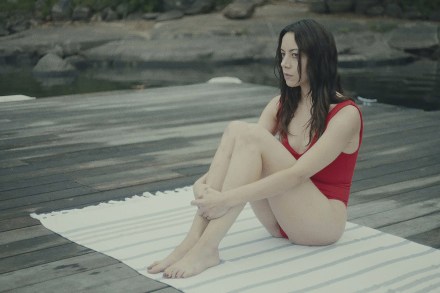
Saint Maud is a first feature from writer-director Rose Glass and it’s being billed as a horror film. But it’s not your common-or-garden horror film. There are no chases through woods. No one watches a doorknob being twisted from inside the room. Also, there are no maypoles. (Always bad news, maypoles.) Instead, it’s more of a character study, as well as a study of religious fervour, told in the high gothic style, grippingly, with wonderful originality and no dilly-dallying. Eighty minutes, and that’s it. (Sorkin, Nolan, Scorsese, Tarantino… please take note.) The film stars the terrific Morfydd Clark who, I think, you cast when you can’t get Molly Windsor who, in turn, you cast when you can’t get Morfydd Clark.

Alan Partridge should replace Jenni Murray on Woman’s Hour

Radio

In the week Jenni Murray left Woman’s Hour, I was listening to Alan Partridge on his new podcast, From the Oasthouse, and imagining what he might have been like as her successor. As I chuckled through half a dozen episodes of awkward Norfolk frippery, it occurred to me that, short of taking him on, the BBC could do wonders for its reputation in the wake of Murray’s departure by taking a leaf out of the Partridge playbook. Partridge, played by Steve Coogan since 1991, has moved with the times. Although he hasn’t changed, his horizons have, and he is doing his best to retain his cringe-inducing record.

Funny, tender and properly horrible: Channel 4’s Adult Material reviewed

Television

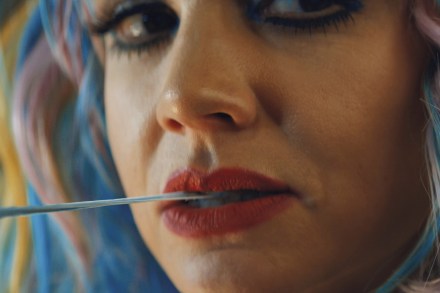
A woman is eating a pie in her car as it gets an automatic wash. Careful to keep the pie out of shot, she then films herself on her phone pretending to have an orgasm, posts the clip online and drives to work. Once there, she’s constantly distracted by thoughts of domestic chores (‘Whites tonight, colours in the morning, hang them out before the school run’) — which mightn’t be so unusual, except that her work consists of having sex. But if the early scenes in Channel 4’s new porn-industry drama Adult Material suggested a cheeky, essentially light-hearted twist on female life-juggling, this soon proved deceptive.

Why did Balakirev’s beautiful, inventive works go out of fashion?

Classical

Anyone who invited the Russian composer Mily Balakirev to dinner had to be jolly careful about the fish they served. How had it died? Balakirev — mentor of Mussorgsky and Rimsky-Korsakov and regarded as the founder of the Russian nationalist school of music — would want to know. If the fish had perished on a hook, then he wouldn’t touch it. But if it had been clubbed on the head, fine. The many eccentricities of Balakirev (1837–1910) were regarded with amusement, horror and dismay by his contemporaries. Though, to be fair, the fish thing wasn’t a mad obsession of his own. Formerly an atheist, in his thirties he converted to an ultra-strict Russian Orthodox sect with firm views on the proper way to kill fish.

Spectacular and mind-expanding: Tantra at the British Museum reviewed

Exhibitions

A great temple of the goddess Tara can be found at Tarapith in West Bengal. But her true abode, in the view of many devotees, is not this sacred structure itself but the adjacent, eerily smoking cremation ground. There she can be glimpsed in the shadows at midnight, it is believed, drinking the blood of the goats sacrificed to her during the day. Many holy men and women live in that grisly spot too, adorned with dreadlocks, smeared with ash, and dwelling in huts decorated with lines of skulls painted crimson. As a domestic setting this wouldn’t suit everybody. But the varieties of religious experience (to borrow the title of a celebrated work by William James) are many and extremely diverse.

Enjoyable but hardly classic Alan Bennett: The Outside Dog & The Hand of God reviewed

Theatre

The season of Alan Bennett’s Talking Heads continues at the Bridge. In The Hand of God we meet Celia, a posh antiques dealer, who befriends old maids in the hope of acquiring their valuables cheaply. Like everyone in her trade she uses play-acting and mind games to give her the advantage while haggling. If her enemy falters, she pounces. A man visits her shop and becomes visibly excited by a framed drawing which Celia hoped to flog for £30. Spotting his eagerness, she trebles the price. He pays up and hurries out. Later she learns that the drawing was by an old master whose style she failed to recognise. Millions have slipped through her fingers. Kristin Scott Thomas is well cast as this suburban snake in the grass. All the visuals are beautifully judged.

I don’t know when I’ve been more moved: Ora Singers at Tate Modern reviewed

Music

It’s the breath I miss most. The moment when a shuffling group of men and women in scruffy concert blacks breathe in as one and become an ensemble. Now that our breath is diseased, shrunk from, masked, now that performances are digitally distanced and filtered, smoothed and flattened out on screens, there’s something dangerously poignant about that physical swell of inhalation and exhalation that sets the air in motion at the front of a concert hall. Which is why, when I heard that 40 singers would be coming together in Tate Modern’s Turbine Hall to sing Thomas Tallis’s Spem in alium, I twitched with need to be there.

One zinger after another – but it’ll leave you cold: Trial of the Chicago 7 reviewed

Cinema

Aaron Sorkin’s The Trial of the Chicago 7 — don’t worry, you haven’t missed six earlier films — is a courtroom drama based on true events featuring a stellar cast: Mark Rylance, Frank Langella, Sacha Baron Cohen, Eddie Redmayne, Jeremy Strong. You may be wondering: hang on, no Michael Keaton? But he tips up too! What, no Joseph Gordon-Levitt? Don’t worry. He’s here. But while the performances are ace and the script is one of those Sorkin scripts where the dialogue is one zinger after another — zinger ping pong, I call it — it will leave you cold emotionally. This is a film to admire, in some respects, but it will never make you feel. I wasn’t bothered who did or didn’t go to prison in the end.