Culture

Culture

The good, the bad and the ugly in books, exhibitions, cinema, TV, dance, music, podcasts and theatre.

I could have directed it better: Steve McQueen’s Small Axe reviewed

Television

Unlike with every other BBC period drama series these days, I didn’t have to sit through Small Axe: Mangrove grumbling about the implausible and anachronistic diversity casting. Mangrove was the West Indian-owned restaurant in Notting Hill which, in 1970, became the subject for a landmark Old Bailey trial involving nine of its habitués on trumped-up charges of riot and affray. Though it gets much better once we’re actually in court, the first hour’s build-up is awfully slow. I fear writer/director Steve McQueen is to blame.

Meet the woman who designed Britain’s revolutionary road signs

Arts feature

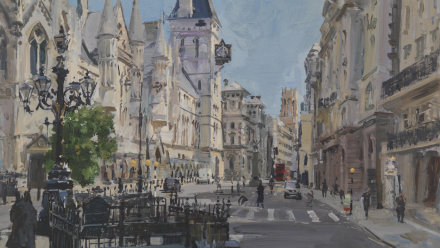
‘Design. Humanity’s best friend,’ proclaims a row of posters outside the Design Museum. ‘It’s the alarm that woke you up… The card you tapped on the bus… And the words you’re reading right now. So embedded in our lives we almost forget it’s there.’ It is one of the ironies of good design that the better it is, the less we notice it. This is especially true when we really need it: when lost in an airport five minutes before the gate closes or battling helplessly down the wrong road. In these instances, the woman we invariably have to thank for helping us to find our bearings is currently the subject of an overdue tribute at the Design Museum.

Turn it up and feel the walls shake: John Wilson’s Respighi reviewed

The Listener

Grade: A The strings rear up, there’s a flash of steel from the trumpets, and ten seconds into Respighi’s Feste Romane, you can already tell that things are about to get physical. It’s the heft of the sound that floors you — the gut punch of a 100-piece orchestra darting through Respighi’s Technicolor sonorities with the silken grace of a puma. The percussion sizzles and stings, the strings have a Mantovani shimmer. It’s sensuous, it’s lurid, it’s almost hyper-real: imagine if Fellini had written his own film scores. Orchestra nerds have fantasised for years about gathering the best freelance players in London into one super-orchestra.

Enjoyably bad-tempered: The Lock In with Jeremy Paxman reviewed

Radio

‘I used to be Mr Nasty! That was good! Mr Nasty was easy!’ Jeremy Paxman bellows at Michael Palin on his new podcast. Now Paxman wants to know: ‘Have you got any recommendations as to how you become the nicest man in Britain?’ ‘I’m a very angry, cross person half the time!’ Michael Palin protests, pleasantly. The Lock In with Jeremy Paxman is Paxman’s attempt at a more convivial register — ‘just interesting people, over a pint, with me’ — in contrast to the tone he deployed famously on Newsnight for 25 years: that of the professional curmudgeon. Luckily Paxman is still a hopeless grouch and cannot easily sustain common standards of politeness even over the course of a half-hour interview.

Like much jazz, it might have benefited from being less solemn: BBC4’s Ronnie’s reviewed

Television

Ronnie’s: Ronnie Scott and His World-Famous Jazz Club was like the TV equivalent of an authorised biography: impressively thorough, often illuminating, certainly long — and perhaps a bit too reverent for its own good. The programme began with some of today’s jazz musicians testifying to just how great the club is. From there, we cut to the story of Scott himself, with his Jewish East End background and his early love of the saxophone. By 16, he was accomplished enough to cross the frontier from East End to West, and played in various swing bands. But then he and his fellow 1940s hipsters discovered bebop, a reaction against commercialised swing that preferred its audiences to listen earnestly rather than merely dance.

A coherent evening of real opera: GSMD’s Triple Bill reviewed

Opera

Covid has been many things to the arts — most of them unprintable. A plague, a scourge, a disaster from which many institutions and artists won’t recover, it has also been a great equaliser. Suddenly there’s space to be heard, silence to be filled. In a digital world no one cares about the size of your stage. All you need is a laptop and a good idea and you’re competing alongside the Met or the Royal Opera. In the case of the Virtual Opera Project it was a shed and a homemade green-screen. Oh, and a cast, chorus and creative team of well over 100. And did I mention the London Philharmonic Orchestra?

As an essay in cheap comedy the show is a great success: Emilia reviewed

Theatre

Emilia is a period piece about Emilia Bassano who may have been the ‘dark lady’ of Shakespeare’s sonnets. The writer, Morgan Lloyd Malcolm, declines to turn the subject into a history play and instead creates a larky sketch show with snippets of literary gossip. Our heroine enters as a frightened teenager contemplating the horrors of courtship: ‘Men sniff at me like dogs.’ Marriage, she shudders, will crush her, mind and body. ‘As I grow, I must shrink.’ She’s also a poet who needs a publisher but she’s thwarted by institutional sexism in the book trade. ‘Women’s poetry?’ screeches a male reader. ‘The most dangerous rubbish I’ve ever seen.

The journalists who scripted the golden age of Hollywood

Arts feature

When talkies appeared in 1927, Hollywood went searching for talkers to write them. It turned to men like Herman J. Mankiewicz: to journalists. The greatest screenwriters of the golden age were journalists first; unlike novelists, they thrived in Hollywood — at least professionally. Good films and good journalism need brevity; novels don’t. Reading about F. Scott Fitzgerald struggling at MGM, 12 years after The Great Gatsby, is brutal, like trying to watch a man learn to walk. The film Mank, by David Fincher, tells the story of how Mankiewicz and Orson Welles created Citizen Kane — for which they shared an Oscar for the screenplay in 1942 — and how they bickered over the credit.

Racists will love it: National Theatre’s Death of England – Delroy reviewed

Theatre

Death of England: Delroy is a companion piece to Death of England, which ran in February at the NT and examined the white working classes. Here the focus is on a successful black Briton, Delroy, who votes Tory and feels at home in multicultural society. The charismatic Michael Balogun plays him as a complex, shrewd and humane figure. He likes to mock white people who judge others according to superficialities like accent and pronunciation. And he recalls his horrified excitement when a white girl at school calmly placed her finger inside his boxer shorts. Delroy has plenty of white pals including his girlfriend, Carly, who is expecting their child. The only antisocial voice in his life belongs to his mother, a Jamaican bigot, who objects to Carly’s ethnicity.

In defence of the tyrannical male maestro

Classical

Praising the grand old maestri of the podium isn’t a good look, as they say on Twitter. Conductors such as Herbert von Karajan, Leonard Bernstein and Georg Solti used to be lauded for the thrilling energy and sumptuous sound of their performances and recordings. These days if anyone mentions their names it’s only to list their crimes: tyrannising long-suffering orchestral players, commanding colossal fees, and in many cases looking on any female musician who comes within groping distance as fair game. The second of these alleged crimes I’m not so sure about. Earning lots of money is only a sign of moral turpitude if the money was dishonestly obtained. But there was nothing immoral about the sky-high earnings of Karajan.

Boldly going where hundreds have gone before: Brave New Planet podcast reviewed

Radio

Since technology is developing at such light-speed pace, why does it feel so strangely slow? There is a sense that driverless cars, green energy and of course certain vaccines are, for all their breakneck pace, still taking for ever to arrive. Watching the future emerge is like watching slow-motion footage of a high-speed train. We know it’s going quickly — but can we not just fast-forward? Perhaps it’s merely our heightened expectations, our diminished boredom thresholds. Some of our most distinguished thinkers and entrepreneurs have warned that an all-powerful artificial intelligence, badly calibrated, might represent the greatest threat to the long-term survival of humanity.

Did any of this actually happen? The Crown, season four, reviewed

Television

‘We have to stop it now!’ says Princess Margaret (Helena Bonham Carter), smoking another cigarette, obviously. She’s talking about the impending royal wedding between her nephew Charles and a pretty but gauche young thing called Lady Diana Spencer. Spoiler alert: none of the family will listen. Yes, The Crown is back on Netflix for its fourth season, and naturally I skipped straight to the episode that will be of most interest to everyone: the royal engagement and its aftermath. Why is this subject so grimly, pruriently, enduringly fascinating?

A gripping portrait: Billie reviewed

Cinema

This documentary about Billie Holiday is transfixing. Not just because it’s about Billie Holiday — I am not into jazz yet her version of ‘Strange Fruit’ is obviously incredible — but for the previously unheard audio tapes recorded by Linda Lipnack Kuehl in the 1970s with the people who knew her. This includes, for instance, Billie’s cousin, John Fagan, who chucklingly says he pimped her out as a child — ‘girls started young’ — and that women who ‘step out of line’ like to be knocked about and are proud of having a black eye as it shows ‘someone loves them’.

I’ve heard worse things — the death rattle of a close relative, for example: Kylie’s Disco reviewed

The Listener

Grade: B– Uh-oh. Might have to be careful here, pull my punches a little bit. The editor is a big fan of the caterwauling Aussie. We have enormous editorial freedom at The Spectator, but one needs to exercise a little discretion. Last time I reviewed a Kylie album he was very kind about my writing, but I could see a deep sadness in his eyes. He also adores Mariah Carey. Conservatives are weird about music. Luckily — luckily, luckily, luckily — this is a lot better than her previous effort, Golden, which had been an attempt at a country album. She was about as believable a country singer as, I dunno, Sir Patrick Vallance or Fiona Bruce. This is back to the music she grew up with, as you might have guessed from the title.

Antony Gormley: why sculpture is far superior to painting

Arts feature

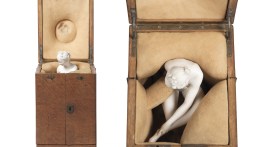
Antony Gormley: In the beginning was the thing! The reason I chose sculpture as a vocation was to escape words, to communicate in a physical way. It was a means of confronting the way things were, of getting to know them in material terms. The origins of making physical objects go back to before the advent of Homo sapiens, earlier even than the appearance of our Neanderthal cousins. Sculpture emerges from material culture. At the beginning there was an urge to make objects and you could argue that making them was the catalyst for the emergence of the modern mind.

Unobtrusively filmed, powerfully performed but still unsatisfying: LSO’s Bluebeard reviewed

Classical

The timing couldn’t be better. Just as the gates clang shut on another national lockdown, trapping us all indefinitely with our nearest and dearest, the London Symphony Orchestra serves up an opera that’s pure domestic horror — a story about what happens when we lock all the doors, close the curtains tightly, and turn and look our beloved square in the eye. Bluebeard’s Castle, Bartok’s only opera, is a single-breath sort of piece. Barely an hour long, just two singers on stage throughout, it’s a conversation that starts with love and ends with — well, it’s not quite clear. Torture? Murder? Imprisonment? Bigamy? Truth, certainly.

The shocking story of Charles and Mary Lamb: Slightly Foxed podcast reviewed

Radio

The Slightly Foxed podcast, like the quarterly and old bookshop of the same name, is almost muskily lovely. It’s the sort of thing you can imagine listening to with a dog at your feet and whisky by your side in a draughty Mitfordesque folly. Ordinarily, you might attribute its homeliness to the fact that it is recorded around a kitchen table. But with the hosts now socially distanced across the country, and it feeling just as cosy, you realise that the atmosphere must derive from something else. In the latest episode, Philippa, Hazel and Gail were joined down the line by biographer Felicity James to discuss the early 19th-century writers Charles and Mary Lamb.

Tranquil, silky and serene: Birmingham Royal Ballet’s Lazuli Sky reviewed

Dance

When Carlos Acosta was named artistic director of Birmingham Royal Ballet in January of this year, he announced ambitious plans for his inaugural season, but the pandemic swiftly derailed these. Lazuli Sky, recently performed for live audiences in Birmingham and London, is his first commission to come to fruition, and while the programme has been scaled down from its original incarnation — with fewer dancers, musicians and audience members — it lives up to the panache of the company’s usual mixed bills and even manages to pull off a world première by Will Tuckett, a lodestar of contemporary British ballet.

Every scene Sophia Loren isn’t in feels like a wasted one: The Life Ahead reviewed

Cinema

The Life Ahead stars Sophia Loren, and if there is one reason to see The Life Ahead it is this: Sophia Loren. And if you need a second reason, it is this: Sophia Loren. Also, it is the third, fourth, fifth, sixth and seventh reason. And probably the eighth. She is magnificent, truly. Directed by Edoardo Ponti, Loren’s son, the film is based on the 1975 novel The Life Before Us by Romain Gary. It was filmed in 1977 as Madame Rosa, starring Simone Signoret, and won the Oscar for best foreign film. Here, the action has been transposed from France to Italy and the port city of Bari which is, from what we see of it, rough and poverty-stricken rather than picturesque. And our Madame Rosa is Loren, in her first proper film role for 11 years.

Is The Undoing properly great or just a run-of-mill thriller with a brilliant casting director?

Television

There must be some people somewhere who vaguely know their own spouses — but if so, they don’t tend to appear in domestic-based thrillers. Last week when Sky Atlantic’s The Undoing began, Jonathan and Grace Fraser (Hugh Grant and Nicole Kidman) seemed to have the happiest of middle-aged marriages. They still laughed at each other’s jokes. They still kept each other fully informed about the kind of day they’d had at work: he as a kindly child oncologist, she as an unfailingly wise therapist. Not only did they still have sex, but when they did, it wasn’t always in bed. True, they weren’t wholly without their problems. Their loving son Henry, for example, sometimes didn’t clean up after making smoothies.

One of the greatest of all outsider artists: Alfred Wallis at Kettle’s Yard reviewed

Exhibitions

Alfred Wallis (1855-1942) should be an inspiration to all late starters. It was not until he had passed the age of 70 that, after his wife of many years had died and having previously worked as a sailor, fisherman and rag and bone merchant, he decided to take up art. ‘Aw! I dono how to pass away time,’ he explained to a shopkeeper in his native town of St Ives. ‘I think I’ll do a bit a paintin’ — think I’ll draw a bit.’ Three years later, his work was spotted by the leading British modernists Ben Nicholson and Christopher Wood. By and by, Wallis’s pictures were being exhibited in London, and Nicholson presented one to the Museum of Modern Art, New York.

One of the few genuine British visionaries at work today: Richard Dawson at the Barbican reviewed

Pop

How hard must it be to make music that sounds like no one else? And how unrewarding, often, as well? Music consumption has been refined by streaming services to encourage listeners towards songs that sound like ones you already like; pop songwriters, driven by those same algorithms, strive to write songs whose entire purpose is to deliver something familiar within the first 30 seconds. Richard Dawson, a partially sighted and portly Geordie with lank, greying hair, who walked on to the Barbican’s stage wearing a vintage Newcastle United tracksuit top and blinking as if he’d expected the room to be empty, makes music that sounds like no one else, even with the sparsest of accompaniment.

Has Spitting Image ever been funny?

Television

Thank you, Spitting Image, for the nostalgia trip! Your new series on BritBox has rekindled with almost Proustian fidelity those feelings I used to get every single time I watched the show back in my lost 1980s youth: the bathos; the disappointment; the frustration; the despair; the perpetual astonishment that puppet caricatures full of such satirical promise should so unfailingly and relentlessly be let down by such a leaden, insight-free script. Yes, we all remember the puppets: Margaret Thatcher in her chalk-stripe business suit; Norman Tebbit in his leathers; the hacks represented by wolves. But can anyone recall a single line from any episode that made them laugh, ever? I can’t.

A new opera that deserves more than one outing: Royal Opera’s New Dark Age reviewed

Opera

It’s quite a title sequence. Puccini swells on the soundtrack and words flash before your eyes. ‘Ecstatic!’ ‘Spellbound!’ ‘Passionate!’ ‘Dazzled!’ Champagne fizzes, ballerinas pirouette; for some reason Bryn Terfel hovers in the roof of the Floral Hall. The Royal Opera House is back in the game, bringing the uplift of live music-drama to an opera-starved Britain, and if you’re watching it online, the only remaining question is whether the offering on stage can possibly live up to the energy, colour and sheer affirmation of the Royal Opera’s on-screen intro. Don’t be silly. What we get is New Dark Age — a double bill that takes its name from its second half, the latest creation of director Katie Mitchell.

You won’t be able to look away: Shirley reviewed

Cinema

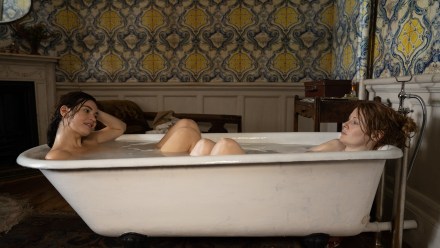
This week, two electrifying performances in two excellent films rather than two mediocre performances in the one mediocre film — see: Rebecca — so things are looking up. Firstly, Mogul Mowgli, starring Riz Ahmed, directed by Bassam Tariq and co-written by the pair. Ahmed plays Zed, a British-Pakistani rapper who has lived in New York for two years and is on the brink of stardom when he returns home to his family in London. It’s intended as a brief visit but then he is struck down by an autoimmune disease that is never named but is something like multiple sclerosis. The point is, I think, even his body doesn’t recognise him any more.