Culture

Culture

The good, the bad and the ugly in books, exhibitions, cinema, TV, dance, music, podcasts and theatre.

The triumph of bedroom pop

Arts feature

I must have been about 16 when I got my first Portastudio. The compact home recording unit had first been introduced by Japanese electronics firm Teac in 1979, offering unprecedented multitrack dubbing to the bed-bound amateur musician. For a little less than $1,000, you could record four separate tracks of instrumentation — as much as the Beatles had when making Sgt. Pepper — on an ordinary cassette tape. By the time I got my teenage hands on a four-track machine of my own, that price had come down by an order of magnitude. It was a chunky little unit in pigeon blue with just two microphone sockets and a small handful of mixing dials for volume control and stereo panning.

Contains nothing you couldn’t get from Wikipedia or YouTube: Netflix’s Pelé reviewed

Film

Pelé is a two-hour documentary about the great Brazilian footballer — the greatest footballer ever, some would say — who played in four World Cups (a record) and was one of the first global sporting superstars. But while there is plenty of footage showing his astonishing talent, if you’re interested in what made him tick, or what his life was like off the pitch, or how adulation might ultimately mess with your head, then move on, nothing to see here. Or, to put it another way, if, like me, you’re the sort of person who goes straight to ‘Personal life’ whenever you look someone up on Wikipedia, it’s as if that section has been excised. However, if you are not that sort of person, you may come away more satisfied and less bored.

Perfect English songs in fresh new colours: Roderick Williams sings Butterworth

Classical

Another week, another online concert; and since orchestral music seems likely to be confined to screens and stereos for a while longer, one might as well try and experience something new. But not too new — I’ve pretty much had it up to here with the present. The Hallé orchestra is currently streaming a collection of Shropshire Lad songs by George Butterworth, conducted by Sir Mark Elder and sung by the baritone Roderick Williams in orchestral versions of his own creation. That seems ideal: music by the most perfect of English classical songwriters, in fresh and unfamiliar new colours. And time spent with an artist as likeable and intelligent as Williams is never wasted.

Even Adrian Lester’s sweetness, grace and nobility can’t rescue Almeida’s Hymn

Theatre

The Almeida is fighting back against lockdown with a sprawling family drama about two long-lost siblings. Adrian Lester plays Gilbert Jones, a successful entrepreneur, who runs a clothing business and a stationery shop in London. At his dad’s funeral he meets his half-brother, Benny (Danny Sapani), who was brought up in care but is now married with kids. The two bros become pals. They meet for salads at coffee shops where they swap news about each other’s families. They visit the gym and do stretching exercises while discussing their diets and their problems finding spaces to park. Benny, who appears to be a fitness coach, takes charge of these low-energy workouts. He holds up a scarlet cushion and Gilbert punches it feebly.

Why I’m obsessed with this podcast’s merciless little romps: Browned Off reviewed

Radio

Everything is too long these days, isn’t it? Every series is at least two episodes too long, podcasts go on for hours, you have to scroll through pages of someone’s barely disguised eating disorder mania to get to the recipe on their blog, and every documentary on Netflix is four hours long, forcing me to go to Wikipedia halfway through just to finally find out what happened — and I cannot even slightly deal with Adam Curtis any more. Podcasts also now have these excruciating intros before they start talking about actual things.

Bloodlands is well worth watching – just don’t expect Line of Duty

Television

To begin on a cheerful note, it’s certainly been a good week for fans of slow-burn British crime dramas with one-word titles in which an anguished middle-aged cop investigates murders from the 1990s while also battling police bureaucracy. Bloodlands has been described in several newspapers as the latest exhilaratingly twisty thriller from Jed Mercurio, creator of Line of Duty. But, as Adam Curtis would say, this is an illusion. For one thing, while it was made by Mercurio’s new production company, it’s written by newcomer Chris Brandon. For another, so far at least, there’s little in the way of either exhilaration or twistiness.

‘I like upsetting people’: Steven Wilson interviewed

Music

Steven Wilson is going about becoming a pop musician entirely the wrong way. For one thing, he’s into his fifties, not typically the point in life at which budding chart-botherers launch their assault on hearts and minds. For another, in an age in which pop stardom and identity politics have become entwined — in cultural discourse, at least, even if not necessarily in your teenager’s listening habits — he has everything going against him. ‘I come from a very well-adjusted family. I’m heterosexual. I’m white.’ Of course, Wilson doesn’t really expect to be competing against Stormzy and Dua Lipa and Cardi B.

Horrible – but in a very fun way: I Care a Lot reviewed

Film

I Care a Lot is a deliciously dark comic thriller that You’ll Enjoy a Lot. It’s heartless. It’s vicious. It’s savage. It’ll make you dread old age even more than you already do, if that’s possible. It’s horrible in so many ways — cruel? Did I mention it’s also cruel? — yet it is also smart, stylish and such a fun watch. Written and directed by J. Blakeson (The Disappearance of Alice Creed), the film stars Rosamund Pike as Marla Grayson, who runs a business ripping off old people. Or, to put it more formally, she is a court-appointed legal guardian for elderly wards — or ‘marks’, as she calls them — whose assets she then seizes perfectly legally.

Our love affair with the Anglo-Saxons

Arts feature

On 5 July 2009, an unemployed 54-year-old metal detectorist called Terry Herbert was walking through a Staffordshire field when his detector started to beep and didn’t stop. Herbert guessed almost immediately that he’d found gold. What he didn’t realise was that he had made Britain’s greatest archaeological discovery since the second world war. Three hundred sword-hilt fittings, many of them spectacular examples of Anglo-Saxon metalwork; a mysterious gold-and-garnet headdress, apparently for a priest; miniature sculptures of horses, fish, snakes, eagles and boars.

Epic prog rock without the widdly-woo solos: Mogwai at the Tramway reviewed

Pop

You very possibly know the music of the Glaswegian band Mogwai, even if you don’t think you do. You might well have not listened to a note of their ten studio albums, their three live albums, or their four compilations. You may never have seen one of their pulverisingly loud live shows, or heard them on BBC 6 Music, their natural home. But you may well have heard them on TV, either as background music, or on one of their commissioned soundtracks — seven of them now, including the current Sky Atlantic mob series ZeroZeroZero.

The two composers who defined British cinema also wrote inspired operas

Opera

It’s my new lockdown ritual. Switch on the telly, cue up the menu and scroll down to where the vintage movies gather — Film 4, or the excellent Talking Pictures TV. Then search through their early-hours offerings, and press ‘record’ more or less at random. Gainsborough costume flicks; Rattigan adaptations; anything with John Mills in a submarine — it’s all good. Then, next day, trawl through the catch to see what’s surfaced, and who wrote the music. On a good night you might get Vaughan Williams in 49th Parallel, Richard Rodney Bennett in Billy Liar or — bewilderingly — the fire-breathing serialist Elisabeth Lutyens, keeping herself in cigarettes and brandy with scores for The Skull or Dr Terror’s House of Horror.

The funniest current affairs show since Brass Eye: Into the Grey Zone reviewed

Radio

It was something a friend said to me about The Revenant, Leonardo diCaprio’s bloody-minded and brutal Oscar vehicle: ‘The problem with the film is once you start laughing, you can’t stop. And for me, that moment was the second time he fell off a cliff.’ I thought about this a lot listening to Into the Grey Zone, a new podcast hoping to educate its audience about the new forms of constant pseudo-warfare that modern states engage in. This is the world of nerve poisoning in Salisbury, airspace incursions over Taiwan, cyberattacks, mass disinformation and remote interference. None of these things can be considered open warfare but taken together, the podcast implies, they do not suggest we are in a state of perfect peace.

Why is the smoky, febrile art of Marcelle Hanselaar so little known?

More from Arts

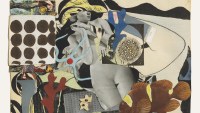
I first became aware of the work of Marcelle Hanselaar in a mixed exhibition at the Millinery Works in Islington. All I remember now about the show, and my review, is that I said she could teach Paula Rego to suck eggs. From the mischievous energy packed into her small figurative paintings I assumed she was young enough to be Rego’s granddaughter. That was in 2003; she was pushing 60. Born in Rotterdam in 1945, Hanselaar is essentially self-taught. She dropped out of art school in The Hague — it was the 1960s — and ran away to Amsterdam; what she learned about painting she picked up from the artists she lived with.

Impossibly exciting: Sky Atlantic’s ZeroZeroZero reviewed

Television

ZeroZeroZero is the impossibly exciting new drugs series from Roberto Saviano — the author who gave us perhaps my all-time favourite TV drama Gomorrah. What I love about Gomorrah is its utter ruthlessness and total artistic integrity. It’s set amid the warring drugs factions of the Neopolitan mafia (the Camorra) and never at any point do you feel that authenticity is being sacrificed for reasons of marketability or politically correct sensitivities or narrative arc. Not without reason has it been called the series ‘where characters die before they become characters’. Saviano himself has paid a terrible price for his honesty.

These rediscovered drawings by Hokusai are extraordinary

Arts feature

Lost boys, lost women, lost civilisations, lost causes — the romantic ring of the word ‘lost’ is media gold. So when the British Museum announced last autumn that it had acquired 103 ‘lost’ drawings by Hokusai, one was tempted to take it with a large pinch of salt. How do 103 drawings by Japan’s most famous artist simply disappear? The answer is, surprisingly easily. Hokusai’s works have never commanded the sorts of prices a draughtsman of his calibre would be expected to fetch, not even in Japan. His art was designed to be affordable: in his day, you could buy a print of ‘The Great Wave’ for the price of a double portion of noodles — and still stretch, if you were lucky, to a side order of ‘A High Wind of Yeijiri’.

This is cinema as car ad, says Geoff Dyer: News of the World reviewed

Film

It’s a premise with plenty of previous. Children whose parents were murdered by Indians on the frontier of the American west are abducted and then adopted by the tribe. Their plight is appalling — female captives were raped as a matter of course — but sometimes the hostages forget their mother tongue and come to relish the nomadic life of the plains. Another round of trauma follows when the adopted guardians are in turn massacred and the orphans are returned to the alien captivity of civilisation. The famous abduction of Cynthia Ann Parker by Comanches in 1836 and the prolonged attempts to find her — followed by her attempts to escape from her rescuers — served as source material for John Ford’s The Searchers.

Predictable, repetitive and exploitative: Run Hide Fight reviewed

Film

In this line of business you receive many emails from PRs ‘reaching out’ about their particular film, which I really must see, as it wowed a festival in Bulgaria. But the other day, a PR reached out to boast excitedly about a film because it had been savaged, which was a first. ‘The film has absolutely enraged Hollywood critics,’ this person wrote, with obvious pride, before quoting the following from reviews: ‘insanely poor taste’, ‘wildly misjudged’, ‘tone deaf’, ‘gross’. What’s more, this person continued, while critics hate it — it has a critics’ score of 25 per cent at Rotten Tomatoes, the review- aggregator site — audiences are loving it (93 per cent).

It’s not easy running a stately home: Duchess podcast reviewed

Radio

The Duchess of Rutland, Emma Manners (née Watkins), grew up on a farm in the Welsh Borders before becoming proprietress of Belvoir Castle in Leicestershire. ‘On so many levels I was ill-equipped for the job,’ she reflects in her new podcast, Duchess. ‘I so remember opening a door and hearing the butlers downstairs saying: “Have we broken her yet?”… I felt like a ball they were bouncing.’ Thirty years after coming to Belvoir — pronounced ‘Beaver’ — the Duchess is ready to talk candidly about the difficulties she and other women have faced as custodians of stately homes.

Incoherent and conspiracy-fuelled: Adam Curtis’s Can’t Get You Out of My Head reviewed

Television

‘History,’ wrote Edward Gibbon, ‘is, indeed, little more than the register of the crimes, follies, and misfortunes of mankind.’ In this respect, though, history has nothing on the work of Adam Curtis, whose latest documentary Can’t Get You Out of My Head has now arrived on BBC iPlayer — all six episodes and eight and a half hours of it. Anybody who’s seen Curtis’s previous series (including The Century of the Self, The Power of Nightmares and The Trap) will know what to expect. Once again, he mixes terrific news footage, short clips of more or less anything, mood-inducing songs and a lordly commentary to remind us just how hopeless — in both senses — human beings are.

Perfect to fall asleep to: Good Grief reviewed

Theatre

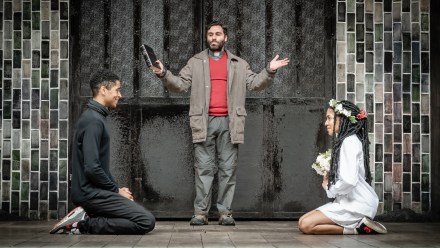
Good Grief is a new drama starring Sian Clifford who shot to fame as the older sister in Fleabag. The script by Lorien Haynes is described by the producers as ‘sharp, funny, brutal, irreverent and quintessentially British’. The action begins after a funeral where a handsome young Asian guy named Adam, chats to a fellow mourner, Cat, who looks about ten years older than him. Cat has set up Adam with a blind date that he didn’t enjoy. ‘I was peeling her off me,’ he says, ungallantly. But Adam’s sexuality is rather a puzzle. His wife, Liv, has died and he boasts to Cat about Liv’s endless romantic conquests. At parties Liv would spend ages telling Adam which men she’d recently seduced.

Makes me nostalgic for an era when music was more than a click away: Teenage Superstars reviewed

Pop

In Teenage Superstars, a long and slightly exhausting documentary about the Scottish indie scene of the 1980s and ’90s, there was a moment when a man revelling in the name of Stephen Pastel — his real name is Stephen McRobbie, and he must be pushing 60 now — was described as ‘the mayor of the Scottish underground’. Such a position — even one, as this, necessarily unelected — would be all but impossible to occupy today. With the internet and democratisation of music — its creation, its distribution, its consumption — has come the fallowing of what were once its most fertile fields: the local scenes created and inhabited by small numbers of interconnected people and encouraged by confident tastemakers — such as Pastel.

Internet users are the new surrealists, and they keep changing the world

As 2021 continues to progress at a dizzying rate, one of the recurring social phenomenon we’re seeing is the surreal eruption of online activism in the real world. From the recent explosion of GameStop share prices – hiked up by amateur investors co-ordinating online – to the large-scale protests and riots in Washington following the 2020 Presidential election, the communities in cyberspace continue to spill out into the real world. The question is: why are these kinds of actions becoming an increasingly unsettling occurrence in the usual running of society? In the lexicon of web-design, the term UX, user experience, is often used to describe how an individual may interact with a product, specifically a webpage.

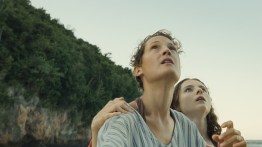
The Icelandic version was better – and had better knits: Rams reviewed

Film

Rams is an average film with a better film trying to get out, and you may already have seen that better film. It’s the Icelandic one, of the same name, released in 2015, on which this Australian version is based. That was played as a spare, stark, bitterly dark comedy set amid ice and blizzards and featuring men with unkempt beards, whereas this is sunnier and more kempt and therefore significantly blander. You may even, at various points, feel as though you’ve been trapped in an overlong episode of All Creatures Great and Small (nothing against All Creatures Great and Small, but two hours of it?).

From ancient Greece to TikTok: a short history of the sea shanty

Arts feature

Many things are now normal that would have seemed unlikely a year ago. But even in this strange new world the sudden rise of the sea shanty is, perhaps, strangest of all. It all started in December when Nathan Evans, a postman from North Lanarkshire, posted a video of himself online — a lone figure filmed in no-frills close-up, hoodie high under the chin, beanie pulled down to the eyes — singing the 19th-century whaling song ‘Wellerman’. A trickle of views became a storm, thousands turning to millions (now billions) and just like that sea shanties went from kitsch, Last Night of the Proms novelty to global phenomenon. The song went viral — the centre of a new internet craze: #ShantyTok. Fast forward a few months and Evans, whose song went to No.

Gripping – if you skip the non-stop Yentobbing: Dancing Nation reviewed

Dance

Thank God for the fast-forward button. Sadler’s Wells had planned a tentative return to live performance last month but the renewed lockdown forced a rethink and the programme was niftily reconfigured for the small screen. The result, Dancing Nation, is a generous serving of old, new and borrowed work from 15 UK dance-makers. Unfortunately the BBC’s three hour-long iPlayer films pad out the dance content with interviews and mission statements plus non-stop Yentobbing from the inevitable talking head. Brenda Emmanus, one-time frontwoman of BBC’s The Clothes Show, speaks fluent presenterese, emphasising every other word and greeting each number with kindergarten delight: ‘What a treat we have for you!

The music we need right now: James MacMillan’s Christmas Oratorio reviewed

Classical

The two most depressing words in contemporary classical music? That’s easy: holy minimalism. I know, I know. Lots of people love the stuff, and I wish them joy. But the notion that one simply jettisons the whole western tradition of struggle, of purpose, of wholehearted emotional argument — and that the greatest and most crucial of human questions can be answered by a mush of soothing stylistic mannerisms — well, I’ve tried and so far I just can’t do it. I can’t simply tune in and drop out amid a haze of Yankee Candle harmonies. I hear those static choral clusters and watery melismas, and it feels like being suffocated in velvet. Silently, the spirit begins to scream.