Culture

Culture

The good, the bad and the ugly in books, exhibitions, cinema, TV, dance, music, podcasts and theatre.

Modernism’s back, baby: Huddersfield Contemporary Music Festival reviewed

Classical

It’s not everyone’s idea of fun, a trip to Huddersfield in the depths of November. But as any veteran of Huddersfield Contemporary Music Festival knows, it usually pays off. Sure, none of the venues has a bar; the programming is as carefully curated as a b2b trade show, the main hall about as cosy as a care home. And true, calling all this a ‘festival’ sometimes feels like wishful thinking. And yes, you are in Huddersfield. (In November.) But HCMF remains one of the few places in this country where you can get a high-quality hit of musical modernism — and always freshly served piping hot straight from the continent’s finest compositional kitchens.

‘I am not able to answer your question’: an irascible Paolo Sorrentino interviewed

Arts feature

Loving the films of the Italian auteur Paolo Sorrentino, I thought he’d be easy to chat to. But a maestro is a maestro, as I was reminded when I interviewed him in London last week. Masked and communicating through a translator, I semaphored my admiration for his new film The Hand of God, starting with its spectacular opening shot. Like a bird, the camera flies over the sea, then focuses on a vintage car tooling along the promenade, before panning over the city again. But he rejected my praise: ‘It’s not complicated. It’s a normal shot by helicopter.’ He’s right, of course, that his new classic coming-of-age story represents a departure towards simplicity.

Brought me to tears: Tortoise Media’s Sweet Bobby podcast reviewed

Radio

Eleven years ago, Kirat Assi received a message on Facebook from a man named Bobby. There was a family connection — he was the elder brother of her second cousin’s boyfriend, who had recently passed away. Bobby wanted a shoulder to cry on, someone to speak to as he processed the grief of losing a sibling. Kirat obliged. They grew closer. When he had work worries, health problems, when his marriage began to break down, he told her everything. Eventually, they became lovers. Except Bobby didn’t really exist. What started as a simple message turned into a decade of deception and coercive control at the hands of a master manipulator.

An amazing technical achievement: Life of Pi at Wyndham’s Theatre reviewed

Theatre

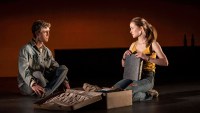
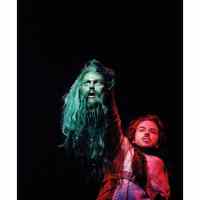
Yann Martel’s novel Life of Pi is a complicated organism. The action starts in southern India where we meet a precocious teenager, Piscine, who tells his parents that he wants to be known as Pi. The family own a failing zoo and they buy a Bengal tiger to attract fresh customers. The new arrival promptly rips the head off Pi’s pet goat and eats it. Next they take a ship to Canada, with the zoo stowed in the luggage hold, but the vessel hits stormy weather. The beasts break out of their cages and start to eat each other. And when the ship sinks, Pi finds himself on a life raft alongside an orangutan, a zebra with a broken leg, and the Bengal tiger. These spectacular scenes are tricky enough for a novelist to describe but to put them on stage seems an act of madness.

A show of ample and eerie majesty: British Museum’s Peru: A Journey in Time reviewed

Exhibitions

Growing up on a farm outside Lima, I was aware that indigenous Peruvians did not understand time in the same way that their white countrymen did. On our visits to the highlands, we would encounter a very different mode of thinking. Ask an Andean villager where the next settlement was and you’d be told, ‘aquisito no más’ — just over here. Whether ‘aquisito’ meant around the next bend or four days’ schlep across the mountains was, for aboriginal people, a meaningless question. They were not ruled, as their European-descended neighbours were, by clocks. You’d sometimes see Quechua-speaking herdsmen sitting motionless for so long that they seemed to have switched off and become part of the landscape.

Reprehensible – but fun: Orpheus Chamber Orchestra’s Complete DG Recordings reviewed

The Listener

 Grade: B It must have been an interesting day in the Orpheus Chamber Orchestra’s press office when Blair Tindall’s memoir Mozart in the Jungle hit the bookshops in 2005. ‘He sat in the desk chair, pushed aside the first oboe part of Rossini’s Italian Girl in Algiers and tapped a pile of cocaine on the glass’ runs a typical anecdote. Even in 2005, it wasn’t really what anyone expected to hear from a former member of Orpheus — a youthful, conductor-less New York outfit who used to pose for album covers dressed in spotless white.

More mesmerising than it should be – Disney+’s The Beatles: Get Back reviewed

Television

My late friend Alexander Nekrassov loathed the Beatles, which I used to think was a wantonly contrary position akin to hating kittens or blue skies or Christmas carols. What could there possibly be not to like, love and admire about the band that gave us ‘Eleanor Rigby’, ‘A Day In the Life’ and ‘Strawberry Fields Forever’? Since then I’ve encountered so many Beatles sceptics that it has given me pause for thought.

Nostalgic, episodic and Joanna Hogg-ish: Hand of God reviewed

Cinema

Hand of God is the latest film from Paolo Sorrentino, the Italian filmmaker who won an Oscar with The Great Beauty, made the political thriller Il Divo and, for television, created the wonderfully crazed The Young Pope and The New Pope. (Jude Law, who knew he had it in him? Not I.) But this time it’s personal as it’s about his life as a teenager growing up in 1980s Naples. It’s mostly anecdotal and episodic and quite Joanna Hogg-ish but this isn’t to say it is without event. Midway through there is a pivotal moment, a shocking tragedy, but I don’t wish to say what it is as that would be a spoiler. I knew what it was because I’d read a Venice film festival review which had annoyingly put it in the first paragraph. (Thank you, the Guardian.

In defence of the earworm

Classical

That strain again… it’s the morning after the concert and one tune is still there, playing in the head upon waking, running around and around on an unbreakable loop over breakfast. I’ve never liked the term ‘earworm’. It suggests an alien parasite, an aural violation, when in fact some part of the musical brain is clearly in love with this scrap of melody, and getting a microgram of a dopamine hit every time it presses ‘repeat’. It’s consensual, even pleasurable. Why fight it? There’s an Arthur C. Clarke story about a scientist obsessed by the finale of Sibelius’s Second Symphony.

When will the Nineties revival end?

Radio

We’ve been living through a nostalgia for the 1990s that has lasted longer than the decade itself. That was back when music was cool, the only Batman movie wasn’t a fascistic fantasy of surveillance and control, and dresses over jeans looked good. Podcasts and documentary series have really dug into the decade to reinvestigate and reappraise everything that went down in those ten years. I’ve listened to a podcast that takes the top hits of the decade one by one and defends each song, I’ve watched specials on why every maligned woman of the era (Lorena Bobbitt or Tonya Harding or Monica Lewinsky) was good actually and the only bad thing here is patriarchy actually.

The National has become the graveyard of talent: Manor, at the Lyttelton, reviewed

Theatre

Somewhere in the wilds of England a stately home is collapsing. Rising floodwaters threaten the foundations. Storms break over the leaking roofs. Inside, an argument rages between a snooty moron, Lady Diana, and her drunken Marxist husband who used to be rock star. This is the chaotic opening of Moira Buffini’s country-house drama Manor. The angry husband picks up a hunting rifle and blasts ornaments to smithereens. Then he chases his wife to the top of a staircase where she hits him with a candlestick. Once the fight ends, more commotion erupts as various groups of evacuees rush in through the front doors. Two women arrive from south London. They’re soaking. A daft local priest shows up, followed by a white supremacist with a broken ankle.

Ignore the wall text and focus on the magnificent paintings: Tate Britain’s Hogarth and Europe reviewed

Exhibitions

There are, perhaps, two types of exhibition visitor. Those who read the texts on the walls and those who don’t. Personally, I instinctively tend towards the latter group, which is no doubt often my loss. In the case of Hogarth and Europe at Tate Britain, however, ignoring all the verbiage would be a huge advantage. This concentrates with anxious obsessiveness on the topics of empire and slavery (with a little condemnation of sexism on the side) and has infuriated several of my colleagues: ‘wokeish drivel’ (Sunday Times), ‘non-aperçus — which range from the crass to the asinine’ (New Statesman), ‘some quite drastic misreadings’ (Observer). Well, I’m not going to dissent from any of those judgments.

A soulful man with a blistering voice: Sipho, at Studio 9294, reviewed

Pop

When I were a lad — back when you could buy the entire back catalogue of the Fall for thruppence and still have change to get into a New Order show on the way home — record labels mattered. Well, a cohort of independent labels mattered, because their imprints stood for something. There was Creation, with its dedication to a twin axis of 1977 and 1967 as the only years that counted; 4AD, with its arty sleeves and its wafty, diaphanous music; there was Factory, somewhere between an elaborate practical joke and home to the most forward-thinking musicians in the country. You don’t get many labels like that any longer. The new economics of the music industry militate against the model of the record label as an aesthetic statement, rather than purveyor of vulgar commerce.

Meet climber, photographer and filmmaker extraordinaire Jimmy Chin

Arts feature

‘Why did you want to climb Everest?’ reporters quizzed mountaineer George Mallory in 1922. That the question even needed asking shows mountaineering is fundamentally different from other pursuits. No journalist would ever ask a footballer why they kick a ball around. But mountaineering is gruelling and you’re way more likely to perish from it than to make a fortune. So why would anyone climb any mountain, let alone Everest? Mallory’s rationale was short and sweet: ‘Because it’s there.’ And what about Jimmy Chin? Why does he climb? Chin, 48, is part Bear Grylls, part David Attenborough.

Worth seeing for Lady Gaga but little else: House of Gucci reviewed

Cinema

Ridley Scott’s House of Gucci has been much anticipated. The cast is stellar. It’s based on a luscious, true story (so juicy) featuring vicious family infighting and culminating in a murder. I was thinking Succession, but with luxury leather goods and the hiring of a hit man. It can’t miss, I was thinking. Except it can. Not entirely. It has its moments. But the middle act drags (it’s two hours and 40 minutes long) and also the decision to have the English-speaking cast a-speak-a in Italian accents may not have been the wisest one. There were many times I thought Gino D’Acampo was in the room-a. This stars Lady Gaga and she really stars.

Guilt-free hilarity: Vanya and Sonia and Masha and Spike at Charing Cross Theatre reviewed

Theatre

World-class sex bomb Janie Dee stars in a fabulously silly revival of the American comedy Vanya and Sonia and Masha and Spike. She plays a movie diva, Masha, who loves to flaunt her wealth in front of her mousy sister and bookish brother. Striding into the family home with her long hair flying and her scarlet lips curling, she narrows her eyes and flings shafts of desire in all directions. Then she arches her neck and tosses back her head to give her bust an extra half-inch of uplift. A stunning display. The show is about three middle-aged siblings whose over-intellectual parents named them after characters in Chekhov plays. Vanya is a hopeless dreamer.

His final paintings are like Jackson Pollocks: RA’s Late Constable reviewed

Exhibitions

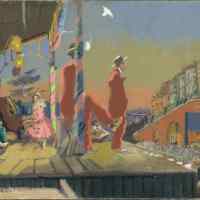
On 13 July 1815, John Constable wrote to his fiancée, Maria Bicknell, about this and that. Interspersed with a discussion of the fine weather and the lack of village gossip, he added a disclaimer on the subject posterity would most like to hear about: his art. ‘You know that I do not like to talk of what I am about in painting (I am such a conjuror).’ Perhaps by that he meant he did not like to give away how he did his tricks. As Late Constable, the magnificent exhibition currently at the Royal Academy, makes clear, he was a true magician with paintbrush and palette. Before your eye he performs astonishing transformations. Take, for example, the little oil sketch ‘Rainstorm over the Sea’, c.1824–8. It’s a picture of a sudden squall.

Cheap schlock has now become expensive schlock: Adele’s 30 reviewed

The Listener

Grade: C The problem I have is that I thought she was pretty awful before — when she was just fat and from Tottenham. Now that she has been marinated in SoCal for six years, she seems to have become even worse: a kind of Meghan Markle with a larynx. It was cheap schlock all the way back then; it’s expensive schlock now — that’s the only difference. This is her divorce album, her ‘Hollywood’ album, her mature album, her BRAVE album according to her adoring… critics is obviously the wrong word. OK, it starts off with words — ‘I’ll be taking flowers to the cemetery of my heart’ — on the song ‘Strangers By Nature’. If that doesn’t make you blush embarrassedly for her, then what will?

40 per cent sublime, 60 per cent ridiculous: ENO’s The Valkyrie reviewed

Classical

It’s the final scene of The Valkyrie and Wotan is wearing cords. They’re a sensible choice for a hard-working deity: practical but with a certain retro flair. Slumbering under a red puffer jacket lies his daughter Brünnhilde, and as Wagner’s music yearns and flickers, the Lord of Ravens shuffles slowly around on all fours, methodically attaching the carabiners for the climactic flying effect. First one, then another. Then another. Four more to go! Possibly we’re not meant to be seeing this. Possibly it was meant to be obscured by the ‘large final fire effect’ that a slip in the programme tells us has been cut (‘despite extensive planning’) at the last minute.

The quiet radicalism of the Chieftains

Pop

Pop quiz time: which act was named Melody Maker Group of the Year in 1975? The answer is not, as you might expect, some testosterone-fuelled blues-rock outfit or a hip gang of proto-punk gunslingers, but a gaggle of semi-professional Irish musicians who performed trad tunes sitting down, dressed for church in cardigans, sensible shoes, shirts and ties. The Chieftains were so far from rock and roll they met it coming back the other way. On the cover of Irish Heartbeat, a later collaboration with Van Morrison, they could be mistaken for a loose affiliation of farmers, minor office clerks and earnest ornithologists waiting for a bus outside the town hall. It was a brilliant disguise. The Chieftains wore their radicalism lightly, but radical they were.

It’s amazing how little insight Paul McCartney has into the Beatles’ genius

Radio

The Paul people are out in force these days. A New Yorker profile, a book and a new documentary have put the Beatles, and particularly Paul, back in the papers. Not that they, or he, ever left. I should admit a bias. I have the same first name as John, and being a man of straightforward loyalties I took him as my favourite early on. Even now I find him the most interesting of the four: vain, sardonic, nasty, boyish, thoughtful, wounded; bright-eyed and pugilistic and blessed with an undermining cleverness that left him bored by whatever he came across. The even-tempered Paul just doesn’t entrance me in quite the same way.

The forgotten story of the pioneering surgeon who healed disfigured airmen

Arts feature

‘You’re inside an incinerator. The cockpit is on fire. You are burning. You can see bits of your body melting off. And you are struggling to get out.’ This is Andrew Doyle, the creator of Titania McGrath, describing to me the experience of an RAF pilot trying to escape from a stricken plane during the second world war. He explains that the injured airmen were treated by a New Zealand surgeon, Archibald McIndoe, who developed new methods for repairing skin damage at a specialist burns unit in the 1940s. And this is the subject that Doyle has chosen for a new musical. It may seem an odd departure for the anti-woke satirist but his passion for musical theatre is long-standing. He has written more than half a dozen song-and-dance shows with various collaborators.

Benedict Cumberbatch is spectacular: The Power of the Dog reviewed

Film

Jane Campion’s The Power of the Dog could also be called The Power of Benedict Cumberbatch, as he’s so spectacular. He plays a ruggedly masculine cowboy with an inner life that isn’t written, but that we somehow still see. It is also clearly Campion’s best film since The Piano or my own favourite, An Angel at My Table (as for Bright Star, we said we’d never talk of it again — why did you even bring it up? We all have our off days). https://www.youtube.com/watch?v=LRDPo0CHrko If Cumberbatch doesn’t win every award going, I’ll eat my hat, but probably not his ten-gallon one The film is based on the 1967 novel by Thomas Savage that was praised to the skies when published but sold very few copies, unfathomably.

A gem that should be released online: Park Theatre’s Abigail’s Party reviewed

Theatre

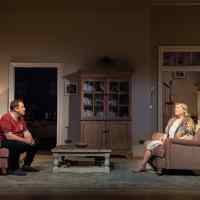
Mike Leigh’s classic, Abigail’s Party, has been revived under the direction of Vivienne Garnett. The script is a guilty secret for middle-class types who like to sneer at those beneath them but who can’t express their shameful feelings openly so they watch Mike Leigh instead. The only sympathetic character, Susan, is a well-bred gal who arrives at the party with a bottle of red wine which Beverly puts in the fridge. Red wine in the fridge! How hilarious. Offered a gin or a Bacardi and Coke, Susan asks for a sherry, which Beverly doesn’t stock. A drinks cabinet with nothing but gin and Bacardi! What a bunch of barbarians. Next they’ll be saying ‘lounge’ instead of ‘sitting-room’.

Some jolly TV artifice and a rare moment of authenticity: C4’s Miriam and Alan – Lost in Scotland reviewed

Television

Thanks to Covid, the days are gone — or at least suspended — when a TV travel programme meant a thespian in a Panama hat wandering around souks and bravely trying some funny foreign food. Instead, we now have shows in which the presenters, often operating in pairs, drive around picturesque parts of Britain cranking up the bantz, with plenty of aerial shots of their car bowling along an abnormally empty road. Take Miriam and Alan: Lost in Scotland — by my reckoning approximately Exhibit P. The premise here is that Alan Cumming and Miriam Margolyes are seeking to reconnect with their proud Caledonian roots, which is why the first stop was a Glasgow front door behind which Miriam’s father lived as a boy in 1901.

The astonishing stories behind today’s culture wars: Radio 4’s Things Fell Apart reviewed

Radio

Martin McNamara, the writer of Mosley Must Fall, a play on Radio 4 this week, must have had a jolt when he opened the papers to find old Oswald back in the news. Oxford University is said to have accepted £6 million from a trust set up by the fascist leader’s son, the racing driver Max, using funds passed down through the family. Cries of ‘Rhodes Must Fall’ have been echoing down the High in Oxford for many years now. If Mosley must fall, too, then this play may prove particularly timely. Although set in Whitechapel, east London, in 1936, the story consciously teeters over live issues, including immigration, the polarisation of society and the threat of violent protest.