Culture

Culture

The good, the bad and the ugly in books, exhibitions, cinema, TV, dance, music, podcasts and theatre.

A booster shot of sunlight: Unsuk Chin’s new violin concerto reviewed

Classical

Sir Simon Rattle and the London Symphony Orchestra began the year with a world première. Unsuk Chin’s Second Violin Concerto opened with the soloist, Leonidas Kavakos, completely alone in front of a silent orchestra, playing phrases that rocked back and forth until, suddenly, they were striking sparks. As well they might; Kavakos, after all, is the reason that the concerto exists — the violinist whose ‘burningly intense’ (the composer’s words) artistry has prompted Chin to break her self-imposed rule of writing only one concerto for any given instrument. She explained in the programme notes that ‘the solo violin part forms the foundation of the whole score, the soloist triggering all of the orchestra’s actions and impulses.

A cut above TV’s usual #MeToo fare: BBC1’s Rules of the Game reviewed

Television

As you may have noticed, it’s something of a golden age for TV shows about how invisible middle-aged women are — except perhaps, in all those TV shows about how invisible middle-aged women are. At first sight, Rules of the Game — a crime drama set in a northern sportswear company — seemed a fairly standard example. The company in question, Fly Dynamic, has a management style that some might consider a little sleazy, run as it is by a group of men who’ve never met a 16-year-old girl they didn’t want to ply with booze and drugs. Meanwhile their neglected wives amuse themselves as best they can with cheese evenings.

I won’t ever look at cows the same way again: Andrea Arnold’s Cow reviewed

Cinema

The latest film from Andrea Arnold (Red Road, Fish Tank, American Honey) is a feature-length documentary about a cow, starring a cow, with almost nothing else in it, apart from this cow. It feels like a test. Can I watch a cow for 93 minutes? What does this cow do that’s so interesting? I see cows all the time from the train and they just sort of lounge about, ruminating, don’t they? But this wants you to look, really look, at what it is to be a cow. And you do and you will invest. (Oh, Luma.) Arnold spent four years, off and on, filming Luma, a cow at a dairy farm in Kent. Luma looms from the dark background of one of the film’s stills like a Rembrandt. You’d look, really look, if she were hanging in the Rijksmuseum, Arnold seems to be saying.

One of the best nights of my life: Hampstead Theatre’s Peggy For You reviewed

Theatre

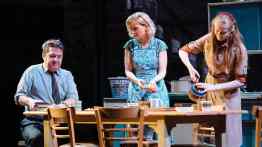
Hampstead Theatre has revived a play about Peggy Ramsay, the legendary West End agent who shaped the careers of Joe Orton, Robert Bolt, David Hare and others. We first meet her on the phone to a dramatist whose new script is good but, warns Peggy, it must not be produced because it will damage his career. She hates ‘fine writing’ and she knows how easily a scribbler can be corrupted by praise, awards and cash. Peggy is one of those rare creatures whom everyone wants to please and whose faults are considered charming oddities. Some might find her maddeningly fey but this show, directed by Richard Wilson, is part of the fan club. She has clients scattered across Yorkshire and she assumes that they must be next-door neighbours.

Ethereal and allusive, all nuance and no schmaltz: Helen Frankenthaler, at Dulwich Gallery, reviewed

Exhibitions

In 1950 the 21-year-old painter Helen Frankenthaler, fresh out of college, went to an exhibition at New York’s Betty Parson’s Gallery that changed her whole perspective on art. ‘It was as if I suddenly went to a foreign country,’ she later recalled. ‘I wanted to live in this land; I had to live there, and master the language.’ The language was in fact American and the discoverer of the new land was Jackson Pollock. After seeing his drip paintings Frankenthaler ditched her easel and, too impatient to bother with primer, applied oil paint straight on to canvas on the floor. The oil sank into the canvas, isolating the pigment on the surface; when thinned with turps, the paint acquired the transparency of watercolour.

Lovely and wistful: Neil Young and Crazy Horse’s Barn reviewed

The Listener

 Grade: A I have persisted in buying everything Neil Young releases since I first heard On the Beach as a callow but pretentious 13-year-old. To tell you the truth, the past 27 years have somewhat tested this commitment. There has been a fatal laziness in the songwriting, lyrically and melodically, since 1994’s Sleeps with Angels and the preaching has become ever more tiresome. But I continued forking out in the increasingly forlorn hope that he’d turn out something if not wonderful, then at least reminiscent of wonderful things past. And for lo, the grizzled old troubadour has done exactly that. This is a subtler incarnation of Crazy Horse, helped incalculably by the presence of Nils Lofgren on flowery bar-room piano and sweet guitar.

‘Oculus Quest is really the way’: film-maker Apichatpong Weerasethakul interviewed

Arts feature

There always comes a moment in the films of Apichatpong Weerasethakul where you’re forced to scoop your brain up from the floor. In his last, Cemetery of Splendour, this occurs at the point where the sky is invaded by a colossal blimpish amoeba. You stare. Blink. Adjust eyes. It slowly dawns that you’re peering into a crystal-clear lake, cloudy heavens and whirring mitochondria in blissful, cosmic coexistence. Man, however, is weak. And the first time I was introduced to his films, one of the most significant, sensual, startling, transcendent bodies of work by any director this century, I fell asleep. ‘Amazing,’ beams Weerasethakul over Zoom. ‘Even I slept in my films sometimes.

Boringly postmodern and an ideological fantasy: Slavoj Žižek reviews Matrix Resurrections

The first thing that strikes the eye in the multitude of reviews of Matrix Resurrections is how easily the movie’s plot (especially its ending) has been interpreted as a metaphor for our socio-economic situation. Leftist pessimists read it as an insight into how, to put it bluntly, there is no hope for humanity: we cannot survive outside the Matrix (the network of corporate capital that controls us), freedom is impossible. Then there are social-democratic pragmatic 'realists' who see in the movie a vision of some kind of progressive alliance between humans and machines, sixty years after the destructive Machine Wars. In these wars 'scarcity among the Machines led to a civil war that saw a faction of Machines and programs defect and join human society.

The debt I owe to cannabis

Boris Johnson, Dominic Raab and Jeremy Hunt have all admitted that they tried cannabis as young adults. Neither the admission nor the THC psychoactive component of the drug, which makes you high, seem to have done them much harm in their pathways to successful careers in parliament. But a new governmental war on drugs is afoot which some fear may lead to unexpected consequences, and not just for those who ply their trade on street corners or draw up on Deliveroo-type scooters to supply cannabis as if it were a takeaway curry. I wouldn’t bet on everyone getting caught up in judicial dragnets, though; I imagine that middle-class consumers will still largely avoid censure and that the police and the Crown Prosecution Services will continue to target working-class suppliers.

Vital, damning docudrama about the Sacklers: Disney+’s Dopesick reviewed

Television

One of my first jobs in journalism was as the arts correspondent of the Daily Telegraph. I’d hop on my motorbike in my greasy leathers (which I used to wear around the office, much to my then editor Max Hastings’s consternation) and zoom off to all manner of exhibition and gallery openings, many of them somehow related to the name Sackler. The Sackler family at the time were the world’s greatest arts philanthropists, with galleries and museums and rooms named after them from New York, London and Paris to the Far East. Like almost everyone, I had no idea of the source of their apparently limitless wealth. But I knew for sure that the Sacklers were a good thing, for art is beautiful and philanthropy admirable, right? That, though, was another time and another world.

Is Gauguin redeemable? No. Would he have wanted to be redeemed? Absolutely not

More from Arts

‘This is not a book,’ is the first line of Paul Gauguin’s final memoir, Avant et Après, written on Hiva Oa in the Marquesas Islands in 1903 a couple of months before his death aged 54 from syphilitic heart disease. In his dedication to the critic André Fontainas he describes the manuscript as ‘born of solitude and savagery — idle tales of a naughty child who sometimes reflects and is always a lover of the beautiful’. Fontainas failed to find a publisher as Gauguin had hoped, and although a facsimile appeared in 1918 it wasn’t until 1923 that the artist’s eldest son Émile had the memoir published in an English translation.

Musical conservatives ought to love identity politics

Classical

It’s 2022 and classical music is, again, dead. It’d be surprising if it wasn’t. In 2014 the New Yorker published a timeline by the industry analyst Andy Doe showing the precise chronology of the decline and fall. Ageing audiences in the 21st century, the gramophone in the 20th, the dangerous new technology of the pianoforte in the 1840s: all, in their time, were considered proof that the rot was terminal. Doe traced the root of the problem back to a papal bull in 1324, giving new potency to Charles Rosen’s remark that ‘the death of classical music is perhaps its oldest continuing tradition’. Anyway, the fatal blow this time is the Great Awokening.

Stephen Graham drives this terrific, relentless, one-take film: Boiling Point reviewed

Cinema

Boiling Point is a single-take drama set during a busy service at a London restaurant and it has to be the most stressful film of the year. I realise it’s early days, but if a more stressful film comes along I would be most surprised. If this film were a recipe, the first instruction would read: ‘Nerves, shred.’ Followed by: ‘Put in pressure cooker and whack the temperature up.’ It is brilliantly executed but also one of those films you can find compelling and engrossing while praying for it to be over. It stars Stephen Graham, that little powerhouse of a fella, who now serves as a kitemark, surely. (Has he ever been in anything bad? Did you see him in Time?

Artless, crude and thuggish: Bridge Theatre’s Book of Dust reviewed

Theatre

Philip Pullman’s The Book of Dust has been adapted at the Bridge. The yarn is set in Oxford, and the surrounding countryside, and the whole of the first act is devoted to exposition because Pullman’s fantasy world is impenetrably complicated. The chief character, a dim-witted child, wanders around the place and listens while terms like ‘magisterium’, ‘alethiometer’ and ‘daemon’ are explained to him. Meanwhile we’re introduced to Pullman’s range of human personalities. He can do two: first, the ooh-arr yokel who is thick but kind, and secondly, the posh academic who is clever but evil. These archetypes give rise to a total of 32 characters who are represented by 16 actors. A lot of simplification was needed here.

In praise of understudies

Arts feature

The actor Ronald Fraser was famous for two things: his comic timing and his liking for a drink. On one occasion in the 1960s, he was happily sitting three sheets to the wind in a local hostelry, when he remembered that he was supposed to be on stage at a matinee. After walking unsteadily to the theatre, he stood in the wings and heard someone else in his role: the understudy, holding the audience in the palm of his hand. His name was Donald Sutherland, and he was revealing the quality that took him from bit parts on the London stage to worldwide stardom. The importance of understudies and covers has been elevated to new heights by the Covid pandemic. Leading men and ladies are dropping out the world over.

How crazy was Louis Wain?

More from Arts

Before Tom Kitten, before Felix the Cat, before Thomas ‘Tom’ Cat, Sylvester James Pussycat Sr, Top Cat and Fat Freddy’s Cat, there were the cats of Louis Wain. The Wain cat came in a variety of breeds and colours: black and white, tabby, marmalade, white and blue (sky blue rather than Persian). But it always had the same disconcerting look in its wide, glassy eyes with the dilated pupils. It looked bombed out of its tiny mind. The original Wain cat was a black-and-white kitten called Peter belonging to a young late-Victorian magazine illustrator and his sick wife. In 1884 the 24-year-old Louis Wain had married his sisters’ governess, Emily Richardson, only for his new wife to fall ill with breast cancer.

The Nutcracker wasn’t always considered quite such a box of delights

Dance

E.T.A. Hoffmann’s tale of a young man turned into a novelty kitchen gadget by an evil rodent isn’t obvious dance material, and yet here we are, up to our plastic tiaras in sugar plums. Four Nutcrackers in London alone and an average of 200 productions, amateur and professional, across the Atlantic. How? Why? Sharp pens greeted the 1892 St Petersburg première — ‘it’s a pity that so much fine music is expended on nonsense’ — and within two decades it was little more than a box of delights to be raided by directors and choreographers, blithely borrowing anything they fancied from Lev Ivanov’s choreography or Tchaikovsky’s ravishing, bittersweet score, regardless of context or key signatures.

The genius of Tchaikovsky’s Nutcracker score

Classical

By all accounts, Tchaikovsky struggled to compose The Nutcracker. It wasn’t his idea of an effective ballet scenario, and he was unimpressed with the choreographer Marius Petipa’s prettified storyline. Mid-composition, he learned of the death of his younger sister Alexandra. ‘Even more than yesterday, I feel absolutely incapable of depicting the Kingdom of Sweets in music,’ he wrote. But inspiration can be counterintuitive. On a good day, Tchaikovsky could write as fluently as any Victorian serial novelist, churning out forgettable piano pieces (as he put it) ‘like batches of pancakes’. Projects like The Nutcracker put him through purgatory but the result, with hindsight, was nothing less than the sound of Christmas.

The art of the Christmas card

More from Arts

It’s the thin end of the wedge, the slippery slope, the beginning of the end of a civilised Christmas. It is the first week of December and I still haven’t started my cards. My friend Charlotte was at it in October. She signed up for a lino-cutting class, cut holly boughs and robin redbreasts and printed her own cards. She sent me photos of the fruits (berries?) of her labours and very merry they were, too. Usually, I am a Charlotte. By November, I have made cards, addressed envelopes, applied thumbs to 80 stamps. But after an illness in the autumn, I’m feeling as uncreative as a turkey. Could I cheat and send emails with a pious little homily about how, for the sake of the planet, I’m forgoing paper cards this year?

Truly godawful: Ed Sheeran’s =

The Listener

 Grade: C= My wife’s ill with Covid and demanding inexhaustible libations and difficult meals, which she will leave uneaten. The dog thinks it deserves a walk in the filthy sleet. The kitchen is a tip and the bins need emptying. I have a headache, a runny nose and the ghost of a ticklish cough. Can things get worse? Yes, yes they can. It’s The Spectator on the phone. Can you please review Ed Sheeran’s new album? As in: look, you’re feeling rough and put upon at the moment. So can we come round and smash your spectacles and rub human excrement in your hair? And all this a few weeks after they foisted on me the woke caterwauling exoskeleton that is Adele. Oh, he seems a nice enough bloke, Ed.

Entirely gripping: The Lost Daughter reviewed

Cinema

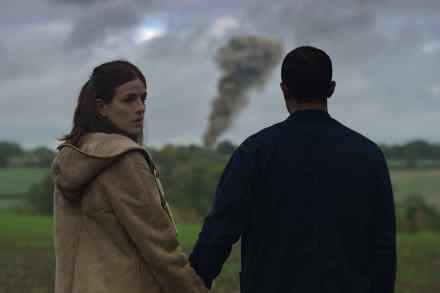
The Lost Daughter is an adaptation of the Elena Ferrante novel about motherhood that says, quite ferociously: it’s complicated. And: mothers aren’t necessarily motherly, and can feel ambivalence. You’d think it was unfilmable, particularly as the central character describes herself as someone even she doesn’t understand but, directed by Maggie Gyllenhaal — it’s her directorial debut — and starring Olivia Colman, this film is entirely gripping. No ambivalence on that count. https://www.youtube.com/watch?v=xNq9YOfL0Zs Colman could play a bedside table and somehow bring depth, feeling, an internal landscape It is carried by Colman who is tremendous, and is being tipped as a potential Oscar winner, if that matters.

Tells us more about today than the early 1960s: BBC1’s A Very British Scandal reviewed

Television

For people who like a good upper-class scandal (or ‘people’, as they’re also known), 1963 was definitely a vintage year. Even before the Profumo affair came along, the divorce of the Duke and Duchess of Argyll offered plenty to enjoy, with its courtroom tales of her 80-odd lovers and that famous Polaroid of her pleasuring a titillatingly anonymous man while still wearing her pearls. All of which presented something of a problem for BBC1’s three-part dramatisation, A Very British Scandal — and not just because it had to pretend not to be titillated itself.

In praise of seasonal chart fodder

Pop

Christmas: the most vulnerable time of the year. I heard ‘A Winter’s Tale’ by David Essex on the radio the other day and, oh boy. It was Noël Coward who wrote, in Private Lives, that smart little line about the strange potency of cheap music. It is a truism never more apparent than at Christmas, when we allow the gaudy and sentimental access to our hearts with only the most cursory of security checks. Songs that would never make it past the bouncers in May are whisked directly into the VIP area come December. A quick google confirms that ‘A Winter’s Tale’ was released in the run-up to Christmas 1982, which means I was nine years old when it was first released.

Clive Rowe is astonishing: Hackney Empire’s Jack and the Beanstalk reviewed

Theatre

Jack and the Beanstalk is a big, sprawling family show that opens with a baffling gesture. A booming voiceover announces that Hackney is being menaced by some unseen threat. Enter an evil monster, Funella Fleshcreep, who wears facial moisturiser made from liquefied avocado. This green-cheeked ogre is challenged by the virtuous characters, Jack Trot and Simple Simon, who must defeat her and deliver Hackney from danger. The show starts to finds its way once Clive Rowe appears as the dairymaid, Dame Trot, who needs to milk a dysfunctional, dried-up cow. There are few performers in Britain who are as versatile as Rowe. He can do broad slapstick as well as stand-up comedy. He can descend into the stalls and weave a spot of improvisational magic with a crowd of strangers.

Radio 4’s Moominland Midwinter restores Moomintroll’s innocence

Radio

Moomins do not like winter. In one of Tove Jansson’s stories, Moomin’s Winter Follies, young Moomintroll bumps his head when the sea ‘goes hard’, prompting Moominmamma and Moominpappa to hurry the family into hibernation. They attempt to follow the tradition of their ancestors by scoffing pine needles and covering the furniture in dust sheets before bedding down on hay, but Moominpappa, for one, is troubled by the prickliness of all this: ‘Who said I must do like my ancestors?’ They briefly abandon the idea and postpone their sleep to try some winter sports, but Moomins are not really built for skiing.

Why? Spielberg’s remake of West Side Story reviewed

Cinema

When you first hear that a remake of West Side Story is on the cards, it’s: God, why? Why would anyone look at West Side Story, which won ten Oscars in 1961, and think: that needs doing again? Who would do that? Steven Spielberg, that’s who, and as it had garnered mostly five-star reviews before I’d had a chance to watch, the question became: how? What wonders might he have brought to a film that was great and beautiful in the first instance? Not much. It is more authentic. The back stories are more substantial. The singing and dance numbers are bigger. There’s a part for Rita Moreno, which is neat. But in being more so it is also peculiarly less so. Plus there is an elephant in the room. Two, actually.