Culture

Culture

The good, the bad and the ugly in books, exhibitions, cinema, TV, dance, music, podcasts and theatre.

Touching, eclectic and exhilarating: Rambert Dance is in great shape

Dance

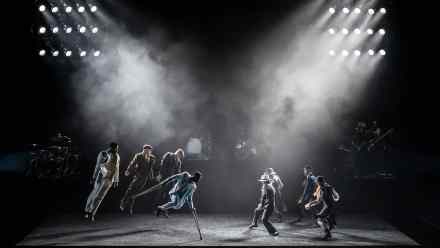
Rambert ages elegantly: it might just rank as the world’s oldest company devoted to modern dance (whatever that term might mean nowadays), but as it approaches its centenary, it’s still in great shape. Lean and hungry, open-minded and light-footed, it’s been lucky over the past 40 years to have enjoyed a stable succession of excellent artistic directors – Richard Alston, Christopher Bruce, Mark Baldwin and now the French-American Benoit Swan Pouffer – as well as policies that have healthily prevented it from becoming fixated on one choreographer or aesthetic. It keeps moving. The current ensemble of 17 dancers makes a crack team, offering a broad range of body types and plenty of strong, fearless personalities.

A brief introduction to Scottish art

Exhibitions

When Nikolaus Pevsner dedicated his 1955 Reith Lectures to ‘The Englishness of English Art’, he left out the Scots. The English art establishment has never bothered with what was going on north of the border, which explains, though doesn’t excuse, the underrepresentation of Scottish art in the Tate’s so-called national collection. This leaves a gap in the story of British art that the Fleming Collection has set out to fill. Since its reinvention as a ‘museum without walls’ by director James Knox – a former publisher of this magazine – the best collection of Scottish art outside a public gallery has gone on the road.

You certainly don’t watch Top Gun for the script

Cinema

Top Gun is back, nearly 40 years after the original, with reprised roles for Tom Cruise (59) and Val Kilmer (62) but nothing for Meg Ryan (60) or Kelly McGillis (64) although I can’t work out why. The first film is iconic and will likely remain that way unless you are stupid enough to rewatch it (I was stupid enough, and it hasn’t dated well; bland and corny). The sequel also hits its marks as if following a guide entitled How To Write a Blockbuster in Not That Many Steps With a Ton of Colossal Planes, but it is better done. Just. Maybe. The deal is: here’s a bad thing. Now go kill it Even if you find Cruise a little creepy, as I do, you can’t deny he has an aura, as if he were the Last Great Movie Star.

Even Nelsons’s miscalculations are fascinating: Leipzig Gewandhaus/Andris Nelsons, at the Barbican, reviewed

Classical

Imagine growing up with a whole orchestra as your plaything. Richard Strauss’s father was the principal horn of the Munich Opera, and doting relatives funded publication of the teenage Richard’s earliest compositions. At the age of 19 he was assistant conductor of the Court Orchestra in Meiningen, and had rather got used to having world-class musicians at his command.

Boldly and brilliantly unoriginal: Kermode and Mayo’s Take reviewed

Radio

Last April Fools’ Day, Mark Kermode and Simon Mayo wound up their award-winning film review show on BBC Radio 5 Live after 21 years on air. A little more than a month later they are back with Kermode and Mayo’s Take, a podcast so similar in flavour and format that you could call it an up-yours to their critics. While Mayo stressed that it was their decision to go their own way – ‘we have decided, and to be clear: that’s no one else has decided’ – he was slightly more candid about his experience in an interview with the Radio Times a few weeks ago. People of my generation have grown up with Kermode and Mayo, and were as surprised as any by their departure. But we needn’t fret.

The jewel-bright, mesmerisingly detailed pictures by Raqib Shaw are a revelation

Exhibitions

Describing the Venice Biennale, like pinning down the city itself, is a practical impossibility. There is just too much of it, tucked away, scattered throughout the maze of alleyways and canals. And the art is no longer confined to the Biennale’s national pavilions in the gardens. It has spread, via dozens of tagalong shows cashing in on the presence of the global art world, to a motley array of disused palaces, warehouses, churches, at least one shop and a hidden garden loggia. A good way to sample it is just to follow your fancy: step through an ancient doorway and find out what is on the other side. That’s how I came across a little show by the Swiss artist Ugo Rondinone in the venerable Scuola Grande di San Giovanni Evangelista.

A gentle soap opera with nudity and book chat: Conversations with Friends reviewed

Television

It’s official: television has a new genre. Its features include leisurely half-hour episodes, plenty of literary chat, several scenes set in libraries, not much humour and lots of close-ups of the thoughtful faces of clever young Irish women. It would also have presented a serious dilemma for teenage boys growing up before the internet, in that there’s not a great deal of exciting incident but there is a reliably high quotient of sex. The genre in question is, of course, the Sally Rooney adaptation – which, having laid the groundwork in 2020 with Normal People, has now cemented its new-genre status with Conversations with Friends.

I’m not sure they ever reached a fourth chord: Spiritualized, at the Roundhouse, reviewed

Pop

Every so often, Jason Pierce drifts into focus. It happened at the end of the 1980s, when his then group Spacemen 3 (motto: ‘Taking drugs to make music to take drugs to’) suddenly and briefly went from being those weirdos from Rugby to one of the defining groups of English alternative rock thanks to their album Sound of Confusion (there’s a whole strain of American psychedelia that is explicitly indebted to their two-chord drone). It happened again a decade or so later, when Spiritualized’s album Ladies and Gentlemen We Are Floating in Space became a big hit, and a staple of Greatest Albums lists. He’s in one of his partial-focus phases at the moment: he’s not going to be popping up on The One Show, but people are taking notice.

The playwright seems curiously detached about rape: The Breach, at Hampstead Theatre, reviewed

Theatre

Hampstead’s latest play is a knotty rape drama by Naomi Wallace set in Kentucky. Four teenagers with weird names meet in a hired basement. Hoke and Frayne are boys. Jude is a girl whose younger brother, Acton, gets bullied at school. Their chat is aggressive, cynical and funny. Jude boasts that she’s already lost her virginity but she’s proud to have slept with just two men: ‘You’ve got to do six or seven to qualify for slut.’ Hoke claims to have groped his 34-year-old aunt when she was drunk, ‘but she never knew it happened so in a way it didn’t’. Great opening dialogue. Wallace’s attitude to sexual assault is curiously detached. She seems to think rape is ‘just one of those things’ Then it all goes haywire.

Quietly devastating: Benediction reviewed

Cinema

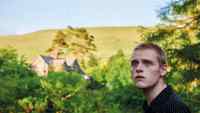
Terence Davies’s Benediction is a biopic of the first world war poet Siegfried Sassoon told with great feeling and tenderness. The result is quietly powerful, quietly devastating and, happily, is not afflicted by the usual clichés that afflict this genre. Sassoon never, for example, crumples what he’s just written and throws it across the room. For this we must be grateful, and are. The film juggles two timelines, with the young Siegfried played by Jack Lowden – once a rising star, it is probably now fair to say he has fully risen; he is wonderful here – and the old Siegfried played by Peter Capaldi.

The nightmare of making films about poets

Arts feature

Television and film are popular mediums. Poetry has never been popular. This is Sam Weller’s father in Pickwick Papers, when he discovers his son writing a valentine, alarmed it might be poetry: Poetry’s unnat’tral; no man ever talked poetry ’cept a beadle on boxin’ day, or Warren’s blackin’, or Rowland’s oil, or some o’ them low fellows; never let yourself down to talk poetry, my boy. In 1994, I made a short film about Kipling. The director, Tony Cash, a man with a first-class Oxford degree in Russian, objected to a two-second reference to Aristotle’s ‘pity and terror’ in my script. ‘If you mention Aristotle, they [the TV audience] will think you’re an arsehole or an idiot.

The best TV spy drama since Smiley’s People: Apple TV+’s Slow Horses reviewed

Television

How thriller writers must miss the Cold War! Early John le Carré and Len Deighton had it easy when trying to create a convincingly menacing enemy: the Soviets, obviously. But their successors are forced to go through all manner of desperate contortions to generate their bad guy McGuffin. They can’t do Muslims because that’s Islamophobic; they can’t do the Chinese because the entertainment industry (like everywhere) is too in thrall to the CCP. So they end up promoting paper tigers like ‘right-wing extremism’, as Mick Herron does in the first of his Slow Horses series. Herron has been rightly hailed as the new Le Carré.

Too affectionate, not enough cruelty: Don Pasquale, at the Royal Opera House, reviewed

Classical

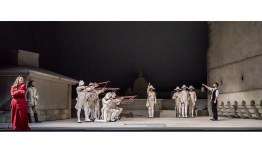
There are many things to enjoy in the Royal Opera’s revival of Donizetti’s Don Pasquale, but perhaps the most surprising is that the director plays it straight. This was my first encounter with Damiano Michieletto’s newish (2019) staging, and the plan was to approach it without preconceptions. (If we’re about to experience, say, a Bold Feminist Re-Imagining, I’d prefer to deduce it from the evidence on stage.) But for an opera premièred in 1843, Don Pasquale is distinctly old-school, with all its commedia dell’arte assumptions intact and whirring away like clockwork. The elderly miser Don Pasquale disinherits his lovelorn nephew and marries a compliant young bride who instantly becomes an abusive shopaholic scold.

Artist, actor, social justice warrior, serial killer: the many faces of Walter Sickert

Arts feature

‘It’s too dark and life is too short,’ was Walter Sickert’s explanation of his decision to leave London in 1898. Separated from his first wife Ellen Cobden and in financial trouble, he did a flit across the Channel to Dieppe. A magnet for artists in the summer season, the town had long been a popular subject for tourist views. ‘I see my line…’ he wrote soon after his arrival. ‘Picturesque work. This place Dieppe, is my only up to now, goldmine.’ The place had already had a transformative effect on his painting.

Two hours of bickering from a couple of doughnut-shaped crybabies: Middle, at the Dorfman Theatre, reviewed

Theatre

‘I fink I doan luv yew any maw.’ A marital bust-up drama at the National Theatre opens with a whining Cockney, Maggie, telling her City whizzkid husband Gary that their relationship is over. Gary and Maggie are aspriring underclass types who’ve achieved bourgeois prosperity: John Lewis kitchen, vintage wine rack and a ceramics collection. They have an eight-year-old daughter at a private school where she learns ballet steps and the piano instead of watching road-rage videos on YouTube like a council-house kid. She’s called Annabelle, by the way, and one wonders if Gary and Maggie style themselves ‘Garfield and Margaret’ at the school gate.

A joy – mostly: Nick Mason’s Saucerful of Secrets, at Usher Hall, reviewed

Pop

Drummers are patient chaps, in the main. Think of Ringo in Peter Jackson’s recent Beatles docuseries, Get Back. Lolling around peaceably for days on end as Lennon and McCartney bash about, looking for clues. Drummers twiddle their thumbs behind their kit while the musos fret over chords and key changes, waiting for the moment when they will be called upon to hit skins with sticks and make a song worth hearing. In 2018, admirably urbane Pink Floyd drummer Nick Mason finally lost patience. The band has effectively been finished since 1994, and following the death of keyboardist Rick Wright in 2008, Mason was caught between Roger Waters and David Gilmour, the two rutting stags of the group’s legacy.

Schlock: Everything Everywhere All At Once reviewed

Cinema

We’re doing multiverses now. Last weekend, a friend dragged me to see Marvel’s latest product, Doctor Strange in the Multiverse of Madness. For two hours I watched characters earnestly talk about their trauma, and then fly around firing jets of coloured magic at each other, and then more pompous trauma talk, like five-year-olds playing at adult emotional life, and then more joyless beams of coloured magic. I left the cinema muttering like a deranged war veteran. ‘Someone needs to be punished for this. We need show trials. We need to make them suffer for what they’ve done.’ My friend spoke, but I could barely hear him. I stared at an empty space roughly 50 metres behind his head. ‘You. You brought me here. You did this.

The perfect pop star: Dua Lipa at the O2 Arena reviewed

Pop

Dua Lipa’s second album, Future Nostalgia, was released at the least promising moment possible: 27 March 2020, the day after the first lockdown came into force in the UK. Just as a pandemic swept the world, she was releasing a maximalist pop album that, surely, was designed for the communal experiences no one was having. But something about it connected: Future Nostalgia was a worldwide hit, the first British album released in 2020 to go platinum, the tenth bestselling record in the world that year. It turned out to be the right album for a wretched year. No wonder her show at the O2 was centred on it – every track was heard, which would normally be overegging the promotional pudding, but, given its consistent excellence, was entirely justifiable.

Angry diatribes and amusing pranks: Donmar Warehouse’s Marys Seacole reviewed

Theatre

The title of the Donmar’s new effort, Marys Seacole, appears to be a misprint and that makes the reader look twice. Good marketing. The show is a blend of Spike Milligan-esque sketches and indignant speeches about race but it starts as a straightforward historical narrative. Mary Seacole enters in Victorian garb and introduces herself as a woman of half-Scots and half-Caribbean heritage who believes that ethnic differences create hierarchies of competence. Her veins, she says, flow with ‘Scotch blood’ and this gives her an entrepreneurial advantage over her ‘indolent’ Caribbean neighbours. Inflammatory stuff. If a white author embraced that supremacist creed, there’d be outrage.

Fascinating exhibitions – clunky editorialising: Breaking the News at the British Library reviewed

Exhibitions

In The Spectator office’s toilets there are framed front covers of the events that didn’t happen: Corbyn beats Boris; ‘Here’s Hillary’; Jeremy Hunt wins the Tory leadership contest. The British Library has something similar at its Breaking the News exhibition. The difference is that these ones actually made it to the newsstand. It’s enough to make any passing journalist break into a sweat. ‘Titanic sinks, no lives lost’, reported the Westminster Gazette in April 1912; ‘King Louis XVI dodges the guillotine’, we are told in the 1793 issue of the London Packet. The Sunday Times’s 1983 Hitler diaries hoax appears in this hall of infamy.

Why I booed Birtwistle

Arts feature

With the passing of Sir Harrison Birtwistle last month we are witness to a changing of the guard in new classical music. For 70-odd years contemporary music in the West was dominated by a highly exclusive atonal mode of thought that produced works that were hostile to the wider music-loving public and written for a small but highly subsidised cultural circle. If it was spontaneous when it began, the atonal idiom – meaning a highly dissonant style – quickly ossified into a kind of luxury backwater of music, so obscure it couldn’t even be questioned, yet endlessly backed by public subsidy which the public could nevertheless never challenge.

Lacks the bite and bracing malevolence of Call My Agent!: Amazon’s Ten Percent reviewed

Television

In theory, it should be a perfect match. John Morton – the man behind the brilliantly assured sitcom W1A which so gleefully skewered the BBC – gets to give us the English version of Call My Agent!: the brilliantly assured French lockdown hit which so gleefully skewered the Parisian showbusiness world. In practice, at least judging from the first two episodes, Ten Percent feels surprisingly uncertain of what kind of programme it wants to be. At first, it looked as if we were in for a straight remake, using the same plots and characters and with the original cast replaced by British lookalikes (except, oddly, that the French agent who looked exactly like Roger Allam is played by Jack Davenport).

Should have been even longer with less gore: The Northman reviewed

Cinema

In Rus, which we now call Ukraine, Amleth (Alexander Skarsgard) begins his pursuit of revenge. A sea captain who later aids him is called Volodymyr. But these incidentals have no relevance to the current war, except in one aspect that I want to come on to. Though the film’s hero is called Amleth, the original of Shakespeare’s Prince Hamlet, you can forget Elsinore. The director Robert Eggers’s world in The Northman is that of the Norse sagas, of corpse-eating ravens, runes, mud, gore, human sacrifice and sudden violence. One of the runes on the title cards between scenes is named after the word for ‘ulcer’. The sun never shines. It is surprising that, in their wet homespuns, everyone isn’t shivering.

Evocative tribute to the orphaned caped crusader: Superheroes, Orphans & Origins at the Foundling Museum reviewed

Exhibitions

Instead of wasting money, like other museums, on extravagant architectural statements, the Foundling Museum in Brunswick Square has sensibly chosen to welcome visitors with a written statement. In 2014 it commissioned the poet Lemn Sissay, who spent his teenage years in a children’s home, to create a memorial in its entrance hall to the many parentless heroes and heroines in fiction. ‘Heathcliff was a foundling… Harry Potter was fostered… Dorothy Gale was adopted… James Bond was fostered…’ The list goes on, running to more than 100 names. Sissay’s mural will trigger a lightbulb moment for any dimwit like me who has failed to notice this narrative trope – and there are further revelations in the show downstairs.

I would be surprised if his next tour included arenas: Louis Tomlinson at Wembley reviewed

Pop

You don’t need to be a historian of pop to realise that having been part of a huge manufactured group is no guarantee of subsequent success. Most boy and girl band stars, after a brief flurry of passion, are forced to descend into the netherworld of panto, reality TV, and ever-diminishing returns from the actual music. The problem seems to be that the wider world doesn’t have the mental space to accept three, four or five people competing for attention. In almost every case, the wider world can only be bothered to embrace one person after the split, and it’s not always the one you expect. Gary Barlow – the talent! – was meant to be the solo star from Take That; it turned out to be Robbie Williams.

‘I came, I saw, I scribbled’: Shane MacGowan on Bob Dylan, angels and his lifelong love of art

Arts feature

We join Shane MacGowan, much like a character from one of his songs, in a world where prosaic, often harsh realities vie with feverish flights of fancy. The former Pogue conducts this interview remotely, ‘sitting on a vastly uncomfortable lime green leather chair, within reach of a grey bucket, in a small but surprisingly unspeakable room. In a corner, Jimi Hendrix is repairing some broken guitar strings, while in the kitchen behind me, Bono is loading the dishwasher and a leprechaun with a gold earring is rolling what he says is a cigarette. On the walls are a selection of my wife’s multidimensional angel paintings and one or two of my drawings. Clint Eastwood is on the telly and Maggie Barry is on the record player.