Culture

Culture

The good, the bad and the ugly in books, exhibitions, cinema, TV, dance, music, podcasts and theatre.

A showstopper is at the heart of this winning show: Dulwich Gallery’s Reframed – The Woman in the Window reviewed

Exhibitions

Themed exhibitions pegged to particular pictures in museum collections tend to be more interesting to the museum’s curators than to the general public. But with Reframed: The Woman in the Window Dulwich Picture Gallery is on to a winner, as not only is the particular picture a showstopper, but the theme opens up a whole can of feminist worms. Whether it’s her pensive pose, her idle fiddling with her necklace or the shy look in her shadowed eyes, Rembrandt’s ‘Girl at a Window’ (1645) is impossible to walk past. Scholars continue to bicker about her status. Serving wench? Kitchen maid? Prostitute? Rembrandt’s lover?

The joy of volcano-chasing

Arts feature

Katia and Maurice Krafft were both born in the 1940s in the Rhine valley, close to the Miocene Kaiser volcano, though they didn’t know each other as children. They met on a park bench when they were students at the University of Strasbourg, and from that moment on, according to their joint obituary in the Bulletin of Volcanology, ‘volcanic eruptions became the common passion to which everything else in their life seemed subordinate’. They married in 1970, formed a crack team of volcano-chasers, équipe volcanique, and set off to get as close as they possibly could to the very edge of every fiery crater, to collect samples and data and just to be there, ecstatic with the enormity of it all, like a pair of mad moths drawn into a candle flame.

Who are these pathologically liberal rozzers? Channel 4’s Night Coppers reviewed

Television

Grizzled police officers of the old school should probably avoid Channel 4’s Night Coppers for reasons of blood pressure. Like most documentary series with close access to the police, this one paints them in a light so favourable as to be almost comically sycophantic. The trouble for those grizzled types is that – the times being as they are – what’s now considered favourable is to make the rozzers who patrol Brighton after dark all seem like that pathologically liberal Dutch cop played by Paul Whitehouse in the late 1990s. https://twitter.com/C4Press/status/1546908729370632192?

Everyone involved should be in prison: Netflix’s Persuasion reviewed

Film

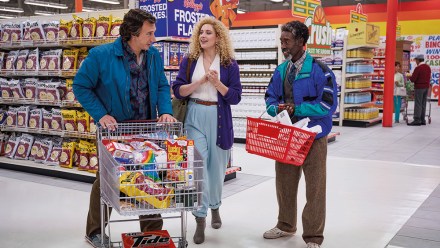
You may already have read early reviews of Netflix’s adaptation of Jane Austen’s Persuasion saying it’s ‘the worst adaptation ever’ as well as ‘mortifying’ and ‘a travesty’, but I know you won’t believe it unless you hear it from me, so here you are: it is truly horrible. I would also add that everyone involved should probably be sent to prison. Not for life, but until we could be confident they’d learned the error of their ways and there was minimal risk of reoffending. A probation officer would possibly be required to keep a close eye, just to make sure. Better safe than sorry. There are ways to adapt Austen for a contemporary audience, but those ways are not this way, and I say this not as a purist.

Hytner hits the bull’s eye: The Southbury Child, at the Bridge Theatre, reviewed

Theatre

The Southbury Child is a comedy drama set in east Devon featuring a distressed vicar, Fr David, with a complex addiction history. Alex Jennings stars with his habitual urbane charm. Is there perhaps a credibility gap there? Jennings seems far too decent, clever and friendly to be a problem drinker who likes nothing better than a fling with a randy wench. And, more crucially, he doesn’t face the fallout from his days of boozing and bedhopping. His dramatic task is unconnected to his personal flaws. https://www.youtube.com/watch?v=z8Nei2P9xeA A little girl has died in controversial circumstances and her parents want balloons at her funeral. No way, says the vicar. The family fight back.

Hearing Percy Bysshe Shelley read aloud was a revelation

Radio

Last week I heard the actor Julian Sands give a virtuoso performance of work by Percy Bysshe Shelley to mark the bicentenary of the radical poet’s death this month. A couple of days later, I listened to a bit more Shelley, this time on the radio, and this time in the voice of Benjamin Zephaniah. Hearing his verses read aloud is so much more intimate than reading them silently. You may be sitting in a crowd, but as Shelley’s words fall into your ears, it’s possible to feel that you’re having a private audience with him. Reading the same poems in an empty room can be comparatively distancing. Zephaniah said something similar when he described his first encounter with the poetry at school.

A bleeding, inch-thick hunk of verismo sirloin: Royal Opera’s Cav and Pag reviewed

Classical

One legacy of lockdown in the classical music world has been the sheer length of the 21-22 season. In a typical year, most orchestras and urban opera companies would be winding down by mid-May. Not this time: after two years of postponements, and with lost income to recoup, seasons are stretching out like the finale of Dvorak’s Cello Concerto. Rumour maintains that audiences are being stretched too thinly, and although it’d be naive to infer anything fundamental from a smattering of vacant seats, it did feel surprising to see empty patches for the first night of the Royal Opera’s Cav and Pag. Absent Kaufmaniacs, disappointed by Jonas’s latest no-show?

An intense slab of religiosity: Nick Cave’s Seven Psalms reviewed

The Listener

 Grade: B There has always been a seriousness and intelligence about Nick Cave quite at odds with that which usually attends to the rancid, tottering, old tart that is rock music, so there should be no surprise that he’s left it completely behind. This is a collection of seven spoken word prayers to that entity with which the Australian has had a long and not always straightforward relationship, God. They are accompanied by minimalist synth and piano compositions – kind of three-note fugues – from collaborator Warren Ellis and none of them clocks in at more than two minutes.

Right play, wrong place: The Fellowship, at Hampstead Theatre, reviewed

Theatre

Roy Williams’s new play is a wonky beast. It has two dense and cumbersome storylines that aren’t properly developed. Dawn is a mother grieving for her eldest son who was murdered by a gang of white boys. Her younger lad is dating a white girl who used to hang out with the killers. It’s a heavy start. But Williams doesn’t explore this web of bereavement and forbidden romance and turns instead to Dawn’s sister, Marcia, a barrister, who is dating a white MP. ‘Giles is one reshuffle away from being a cabinet minister.’ Dawn claims that all white people are die-hard racists who pine for the old days when the N-word was in regular use. She pours scorn on Marcia’s blossoming affair with Giles.

A thrilling, pacy, well-acted drama: Amazon Prime’s The Terminal List reviewed

Television

‘The Terminal List is… a dated and drably made eight-part military thriller that offers little intrigue or excitement,’ says the Guardian’s ‘east coast arts editor’ in a corrosive one-star review. Eh? Can we have been watching the same series? Let me give you an example of this ‘little intrigue or excitement’ and allow you to judge for yourself. Navy Seal Lt Commander James Reece (Chris Pratt) is having an MRI scan to determine whether he has suffered brain damage during a disastrous combat mission in Syria in which almost his entire platoon was wiped out. All his colleagues, superiors and family think he’s going mad because his memories of the mission do not remotely accord with the official version of events.

An intimate, lucid and unforgettable new James MacMillan work

Classical

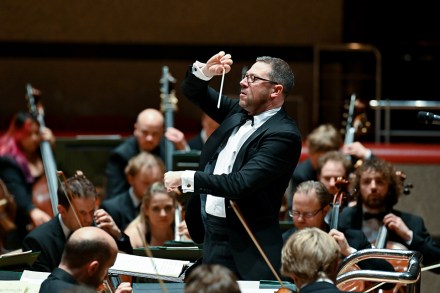
On Tuesday night I was at the world première of a motet by Sir James MacMillan and I don’t think I’ve ever heard a more haunting piece of music. It begins in half-light, with pinpricks from the organ so widely spaced that you could be listening to a forbidding tone row from the Second Viennese School. A four-part choir enters in close harmony and you realise that those apparently unrelated notes hint at austerely beautiful chords encircling the melody. In Carmel’s Shade is one of the smallest but brightest jewels in the MacMillan collection There are moments when we could be listening to Palestrina, to César Franck, to Benjamin Britten – a reminder that MacMillan is fluent in more musical languages than most living composers.

Only traces of their eerie early spirit remain: Kings of Leon, at OVO Hydro, reviewed

Pop

A few years ago, I spoke to Mick Jagger and asked him which of the (relatively) new crop of rock groups he rated. It was a short list, I recall, and not hugely inspiring, but Kings of Leon made the cut. ‘They have a kind of Texas weirdness that you don’t find in a lot of modern rock bands,’ he reckoned. ‘I like their quirkiness, and the fact that you can hear the countryish and blues thing behind them, but it’s not that obvious.’ Aside from the fact that they are from Tennessee, not Texas, it felt like a reasonably astute summation of Kings of Leon’s appeal when they first broke through in the mid-2000s.

At her best when lightly ruffling the surfaces of things: Cornelia Parker, at Tate Britain, reviewed

Exhibitions

Cornelia Parker wasn’t born with a silver spoon in her mouth, but when she was growing up her German godparents sent her a silver spoon or fork every birthday. She seems to have had a thing about silverware ever since. She used to sell it on Portobello Market, and it formed the basis of her first large installation. ‘Thirty Pieces of Silver’ (1988) could be viewed as an elegy to the fish knife and all those other superannuated aids to aspirational dining whose genteel functions are now all but forgotten – salvers, sauceboats, toast racks, sugar tongs and those scalloped silver shells holding coils of butter beaded with condensation from the fridge – if it wasn’t in practice a mass grave.

From Leonardo to Hepworth: the art of surgery

Arts feature

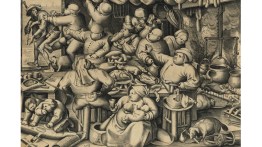
A doctor with wild grey hair and mutton chops holds a scalpel in his bloodied hand. He has paused for a moment, allowing one of his students to take his place and complete the incision. It’s a remarkably clean cut; the young man with the clamp has barely dirtied his shirt cuffs. Even so, the patient’s mother, if that’s who she is, weeps in the corner. She can see nothing but frock coats and a segment of open flesh. The 19th-century Philadelphia-based artist Thomas Eakins did not paint surgery as it was, exactly, but he did capture something of its veiled sterility. There may be no gowns or masks in his earlier medical pictures, but the wool coats and shirts worn by the doctors only do so much to soften the atmosphere of the operating theatre.

A very classy thriller indeed: C4’s The Undeclared War reviewed

Television

The Undeclared War has many of the traditional signifiers of a classy thriller: the assiduous letter-by-letter captioning of every location; the weirdly precise time-checks (‘Sunday 09.47’); above all, the frankly baffling opening scene. In it, a young woman walked around a deserted fairground, broke into a beach hut that turned into a gym and spotted a door in the ceiling which led into a stately home. https://www.youtube.com/watch?v=jIqRL3xIypY Gradually, the fact that the first episode interspersed this with the same woman typing computer code made it clear what was going on: writer/director Peter Kosminsky was making a plucky attempt to solve his main challenge here.

The subtleties of her songbook were lost in this enormodome: Diana Ross at the O2 reviewed

Pop

When Motown first packaged up a roster of artists and songs that could be embraced by a non-black audience, no new act – not Smokey Robinson or Marvin Gaye or Little Stevie Wonder or Martha and the Vandellas or the Temptations – crossed over into the bosom of Middle America as easefully as the Supremes. Or Diana Ross and the Supremes, as with many internal ructions they were later rebranded, Ross being the one with shimmering star quality who stood in the middle and sang the lead. They were signed to Motown 60 years ago and given songs by Holland-Dozier-Holland to sell in floor-length gowns. Those songs have seeped into the marrow of us all and, while the world marvels at the longevity of Sirs Paul, Mick, Rod and Elton, it’s time to hear it for the girls.

Glastonbury has become a singalong event for OAPs

Pop

‘Well, it’s just not Glastonbury, is it?’ said my daughter aggressively, when told that our yurt featured an actual bed, wardrobe with hangers and electric points, and hot showers just around the corner. Our excuse was this was my and my partner’s first Glastonbury and we had a combined age of 125. ‘Anyway, why are you there?’ she said. ‘These are not your people, these are my people.’ Not from what I could see. With headliners such as Diana Ross, the Pet Shop Boys and Sir Paul McCartney, Glastonbury today is more a singalong event for people born in the 1950s (my husband) or 1960s (me) than anyone within shouting distance of GCSEs.

Had the air of a Blue Peter Christmas special: Grange Festival’s The Yeomen of the Guard reviewed

Opera

The Yeomen of the Guard has been called the ‘English Meistersinger’ but the more you think about that, the dafter it gets. It’s not just the very obvious difference in scale and means between Wagner’s five-hour national epic and Gilbert and Sullivan’s sprightly opéra comique. Wagner’s whole drama builds to a collective affirmation of German art. The Yeomen begins by setting up a fantasy of an English golden age – the Tower of London in the 16th century – then systematically cuts it to ribbons.

If you see this show you’ll want to see it again – directed properly: The Glass Menagerie, at the Duke of York’s Theatre, reviewed

Theatre

The Glass Menagerie directed by Jeremy Herrin is a bit of an eyeball-scrambler. The action takes place on a huge black platform flanked by 1930s antiques: a typewriter, a broken piano, a reel-to-reel tape recorder and a smattering of Anglepoise lamps. This cryptic setting suggests that the play is being developed in a Museum of the Great Depression, and the show we are seeing is the latest rehearsal. It’s not clear what purpose is served by this fiddly imposture. And although the act of sabotage doesn’t quite destroy the show, it’s touch and go during the opening 20 minutes. Herrin has shared the role of Tom between two actors. Tom Glynn-Carney is a character who participates in the action and Paul Hilton is a narrator who explains the drama to us.

Paris’s glittering new museums

Arts feature

How do you manage a dictatorship? By producing ‘a succession of miracles’, according to Louis-Napoléon, that ‘dazzle and astonish’. In 1852 he inaugurated his Second Empire regime with a strategy of soft power predicated on the assumption that the loyalty of politically volatile Paris was to be won not by violent repression but by visible magnificence and grand designs. This wasn’t an original idea: it followed the policies of le Roi Soleil and Bonaparte, not to mention the Roman emperors. It worked again for Louis-Napoléon because, as well as such jaw-dropping follies as Charles Garnier’s extravagant opera house, it extended to Haussmann’s lavish investment in socially useful boulevards, sewers, housing and parks.

No genre of storytelling is more formulaic or more exhausted than true crime

Radio

Nothing new under the sun. Or at least it feels that way these days, doesn’t it? The movies are TV shows are comic books are children’s toys. The TV series are podcasts are non-fiction books are magazine articles. The radio shows are real-life stories are Twitter threads are TV series. Even the interesting movies are remakes now. Intellectual property is king, franchises rule the entertainment world and audiences are left to chew the cud from a hundred-stomached cow. Sunrise, sunset and nothing new to offer. So it is with radio, and especially with true crime, the staple crop of narrative radio. No genre of storytelling is more formulaic or more exhausted. No narrative form more consistently fails to deliver what it promises. Yet on it goes.

The hips are electric but you will be willing it to stay put: Baz Luhrmann’s Elvis reviewed

Cinema

Elvis is Baz Luhrmann’s biopic of Elvis Presley and it’s cradle to grave but told at such a gallop you’ll be willing it to stay put even if it’s just for two minutes. You may even be begging: Baz, come on, just hold still. But no, we’re off again. I’ve had fever dreams that have been less delirious. But on the plus side, even if it’s never deep or enlightening, it has a fizzing energy, and because it doesn’t dwell on anything, we don’t dwell on fat, sad Elvis at the end. Which is a relief. https://www.youtube.com/watch?v=Gp2BNHwbwvI Because it doesn’t dwell on anything, we don’t dwell on fat, sad Elvis at the end. Which is a relief The film opens as it means to go on. That is, flashily.

Bloated waffle: Jitney at the Old Vic reviewed

Theatre

The Old Vic’s new show, Jitney, has a mystifying YouTube advert which gives no information about the play or the characters. If the producers paid for the marketing themselves, they’d do a better job. https://www.youtube.com/watch?v=4AZK_C3lqsM The advert fails even to mention that ‘Jitney’ is Pittsburgh slang for ‘taxi’ and that the action is set in a cab firm in the 1970s. The boss, Becker, is a growling despot who dominates his crew of uppity young drivers by glaring at them psychotically. The prattling cabbies hang around the office gossiping about casual sex and petty crime. Or they ogle porno magazines. Or they show off their bedroom technique by thrusting their pelvises towards the viewers in row A.

The sad decline of my one-time favourites

Television

I don’t think it’s my imagination: it really is getting harder and harder to find anything worth watching on TV. But then, why should it be otherwise? Entropy has afflicted every aspect of our culture from holiday flights to the supply chain to the efficacy and integrity of our political and legal system to the quality of pop singles, so we should hardly be surprised if the quality of material on the gogglebox has taken a dive too. One metric of this is the decline in quality of long-running TV series. Game of Thrones was not the exception but the rule. Even the series I sometimes consider to be the best thing ever on TV – Sky’s Gomorrah – became simply unwatchable by its fifth and final season.

The man who changed Indian cinema

Arts feature

At 6ft 4½in tall, Satyajit Ray was head and shoulders above his countrymen. His height was unheard of among Bengalis, ‘a low-lying people in a low-lying land’, as the colonial saying went. With his stature, jawline and baritone voice, he might have been a Bollywood hero. Instead, he chose to tower over the world of art-house cinema, a directorial giant among the likes of Bergman, Kurosawa and Fellini, alongside whom he is credited with inducting cinema into the temple of high culture. His standing was secured with his first film, Pather Panchali, which premièred at New York’s Museum of Modern Art in 1955. India then only churned out musicals which, as Ray later put it, ‘present a synthetic, non-existent society’.