Culture

Culture

The good, the bad and the ugly in books, exhibitions, cinema, TV, dance, music, podcasts and theatre.

If you’re tired of Netflix’s agendas, turn to BritBox’s new Agatha Christie

Television

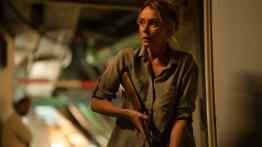
Netflix’s share price has collapsed and a major factor, people are saying, is its relentless pushing of agendas. I think I have the solution. Perhaps it should follow the BritBox model and instead of making dramas it feels that audiences ought to like – e.g. the very creepy-sounding He’s Expecting, a Japanese series about a man who gets pregnant – it should instead capitalise on our growing yearning for a lost age of chocolate-box innocence and relative normality. Why Didn’t They Ask Evans? is a good example.

Muddled, tricksy and cheap: The Corn is Green at the Lyttelton Theatre reviewed

Theatre

The Corn is Green by Emlyn Williams is a sociology essay written in 1938 about a prickly tyrant, Miss Moffat, who tries to civilise Wales by setting up a village school where sooty-faced miners are taught to read and write. Miss Moffat is an unmarried English layabout who has money to burn and time on her hands and so, of course, she wants to ‘help’. You know the type? Director Dominic Cooke treats the script as a period joke and the actors are encouraged to mock their characters mercilessly. Hoots of cheap laughter echo around the theatre. The show is presented very weirdly as a sort of botched technical rehearsal with lots of clunky sound effects and a Writer/Narrator on stage who paces about and shouts directions at the actors.

A fine cast, superbly conducted – just don’t overthink the production: Royal Opera’s Lohengrin reviewed

Opera

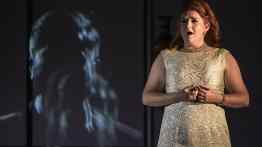
To be a Wagnerite is to enter the theatre in a state of paranoia. Mainstream culture has decided that Wagner was uniquely wicked; that’s just how it is, and it’s futile to retort that we seem comparatively relaxed about, say, Richard Strauss’s membership of the Reichsmusikkammer, or Stravinsky’s post-1945 anti-Semitism. Or that within recent memory Prokofiev’s October Cantata was presented in the UK as a bit of kitschy fun. (Never mind the dead kulaks: enjoy those accordions!) True, Wagner was an immeasurably greater artist, so he should be held to higher standards. No quarrel with that, at least not here and not now.

Fellowes fluffs it: Downton Abbey – A New Era reviewed

Cinema

Downton Abbey: A New Era is the second film spin-off from the TV series and, like the first, it doesn’t have to try especially hard if at all. It could be two hours of Mrs Hughes darning socks or two hours of Mrs Patmore concocting something disgusting (kidney soufflé?) or two hours of Lady Grantham requesting tea in bed and fans would still love it to the tune of whatever the last film made. (Millions.) That said, I have always had a bit of a soft spot for it. As the theme music starts up and we get that first sweeping vista of the estate, it feels reassuring and familiar, like putting on a pair of old slippers. On the other hand, old slippers can become highly embarrassing in time, so there is also that.

This Trump satire is too soft on Sleepy Joe and Cackling Kamala: The 47th at the Old Vic reviewed

Theatre

Trump is said to be a gift for bad satirists and a problem for good ones. He dominates Mike Bartlett’s new play, The 47th, which predicts that the 2024 presidential election will be a run-off between Trump and Kamala Harris. Bertie Carvel’s Orangeman is a subtle and highly amusing spoof that never descends into exaggeration or grotesquery. The visuals are convincing: the sandy blond wig, the baggy golfing outfits, the spare tyre around the midriff. Excellent design work. And Bartlett captures the repetitive lullaby pulse of Trump’s rhetoric. Like a lot of liberals, he seems to admire Trump and this show reflects a perverse fascination with its target. The script is understandably soft on Sleepy Joe and his faltering brainpower.

A wonderfully unguarded podcast about the last bohemians

Radio

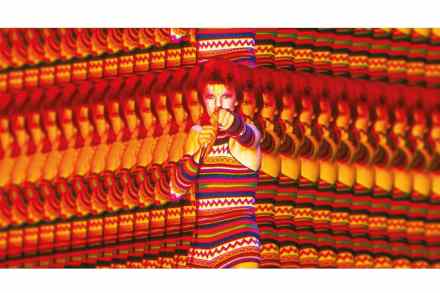
Ordinarily, if a podcast purports to be revelatory, you can assume it is anything but. There’s a glut of programmes at the moment featuring interviewer and interviewee locked in passionate heart-to-hearts in which a few, carefully selected beans are spilled to no real consequence or effect. The Last Bohemians makes no claim to shatter the earth with secrets, but the guests are so unguarded that the episodes possess that longed-for bite. Maggi Hambling reels off a to-do list she made at art school while she was seeking to lose her virginity: ‘Older man, younger man, black man, woman’. Dana Gillespie, singer and former flame of David Bowie, describes undoing her top button to be photographed in the cleavage-obsessed press of her youth.

A hoot: The Unbearable Weight of Massive Talent reviewed

Cinema

The Unbearable Weight of Massive Talent stars Nicolas Cage playing a version of Nicolas Cage, in a parody of Nicolas Cage and the many, many films of Nicolas Cage. This couldn’t, you will have already surmised, be more Nicolas Cage, and if you are wondering how much Nicolas Cage is too much Nicolas Cage you could say any amount of Nicolas Cage is always too much Nicolas Cage. But that’s exactly what this film is playing with and it’s a hoot. Cage fans will want to fill their boots. My own face hurt by the end It is directed by Tom Gormican, who co-wrote the film with Kevin Etten, and Nicolas Cage plays ‘Nick Cage’, a Hollywood movie star famed for his unique, unhinged intensity – why does that sound familiar?

The exquisite pottery of Richard Batterham

Exhibitions

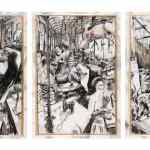
Richard Batterham died last September at the age of 85. He had worked in his pottery in the village of Durweston near Blandford Forum in Dorset for 60 years continuously. It was, in its own way, an heroic life. Batterham took an astonishingly pure, austere approach to his work. Quite simply, he undertook every part of the process of making himself. He made his own stoneware clay bodies, arguing that those who used bought-in clay missed out on the beginning of the whole process and were mistaken to think that they could just inject their artistry at a later stage. He threw his pots on an archaic kick-wheel. He did not decorate them, save by working the clay itself by incision, flutings and chatterings, to shape the piece and catch and display the glaze.

Humour, sweetness and sincerity: Father John Misty’s Chloë and the Next Twentieth Century reviewed

The Listener

 Grade: A– In which Josh Tillman reimagines the whole back catalogue of 20th-century American pop music (except for rock), tilting heavily in favour of the 1930s-1950s. Lush strings, polite jazz and sometimes cocktail piano, big band stuff etc., plus the expected Tillman mordant humour and some unexpected sweetness and sincerity. There’s the country torch of Patsy Cline on ‘Kiss Me (I Loved You)’, the cabaret samba of ‘Olvidado (Otro Momento)’, Rodgers’ and Hart’s ‘My Funny Valentine’ homage on ‘Funny Girl’, and what we’re told is an attempt to kind of rewrite Fred Neil’s ‘Everybody’s Talkin’’ on ‘Goodbye Mr Blue’. The problem?

Disney’s rococo roots

Arts feature

Extensive research went into the writing of this piece. First, I lay on the sofa watching Disney’s Cinderella. Then, Beauty and the Beast. Then, because I’m assiduous about these things, Frozen. The singalong version. I wish I could tell you that the sofa was a rococo number with ormolu mounts and a pink satin seat, but that would upholster the truth. My excuse – who needs one? – was the Wallace Collection’s delightful exhibition Inspiring Walt Disney: The Animation of French Decorative Arts. It’s not often that I leave a show smiling, humming and near enough twirling my way through the West End. Bibbidi-bobbidi-boo.

A vital piece of theatre: Royal Court’s For Black Boys reviewed

The psychiatrist and political philosopher Franz Fanon published the book Black Skin, White Masks in 1952. With chapter titles such as 'The Black Man and Language', 'The Black Man and The White Woman', and 'The Black Man and Psychopathology', the book remains a rigorous and unflinching dissection of the psychology of race from a black perspective. The play For Black Boys Who Have Considered Suicide When The Hue Gets Too Heavy takes inspiration from Ntozake Shange’s 1976 theatre piece, For Colored Girls Who Have Considered Suicide/When the Rainbow Is Enuf. Fanon is however, an equally important reference when thinking about the staging of this work at the Royal Court.

Exquisite and deranged: two glass exhibitions reviewed

Exhibitions

A ‘Ghost Shop’ has appeared between Domino’s Pizza and Shoe Zone on Sunderland High Street. Look through the laminated window glass and you’ll see more glass: glass shop fittings, a glass cheese plant, a glass pedal bin spilling disposable glass cups, glass chocolate wrappers and glass betting slips littering the floor. Ryan Gander likes the fact that there’s no explanation of his see-through betting shop: ‘If you tell everyone it’s a contemporary art project, they’d run away.’ Gander is one of four artists commissioned by Sunderland’s National Glass Centre to make works inspired by the history of the north-east.

The awfulness of the Red Hot Chili Peppers has always felt weirdly personal

Pop

Squaring up to the prospect of a new Red Hot Chili Peppers album, I’m reminded of a vintage quote by Nick Cave: ‘I’m forever near a stereo saying, “What… is this garbage?” And the answer is always the Red Hot Chili Peppers.’ I can empathise. I don’t habitually harbour animus against artists I dislike, but something about the sheer scale of the Red Hot Chili Peppers’ awfulness has always felt weirdly personal. Despite the kind of success that looks mightily impressive in a Wikipedia stat dump – 100 million record sales, multiple Grammy wins, numerous number ones – the Californian rock band have always been tricky to tolerate, let alone love. The reasons for this are manifold.

The beauty of gasholders

Arts feature

On 25 October 1960, a Boeing pilot aiming for Heathrow accidentally landed at an RAF base, only realising his error when the runway turned out to be alarmingly short. Disaster was averted, but the near-miss caused some embarrassment, and the minister of aviation had to answer questions in the House. What had confused the pilot, it emerged, was the advice from air traffic control to start his descent ‘in line with the gasholder’. He had picked the wrong one. Ever since, the gasholders near Heathrow and RAF Northolt have had painted on them, in 50ft-high letters, ‘LH’ and ‘NO’. There is a surprising amount of strange lore about these industrial relics, which once kept the nation’s homes and factories lighted and warm.

Igor Levit deserved his standing ovation; Shostakovich, even more so

Classical

Music and politics don’t mix, runs the platitude. Looks a bit tattered now, doesn’t it? For Soviet musicians, of course, it wasn’t a question of whether you were interested in politics. Politics was unambiguously interested in you. Shostakovich wrote his 24 Preludes and Fugues for piano between 1950 and 1951, in the teeth of Stalin’s postwar crackdown, and in adopting the model of Bach, he seems to have been looking for a safe path forward: music that was politically neutral. He dedicated the Preludes and Fugues to the pianist Tatyana Nikolayeva, whose surprise victory at the 1950 Bach competition in Leipzig had been exploited by state propagandists. Bach himself was a permanent conundrum to the Soviets – that inconvenient fixation with God!

How did he even fool the Duke of Edinburgh? Netflix’s Jimmy Savile – A British Horror Story reviewed

Television

The only impersonation I can do is my Jimmy Savile impersonation. This is not uncommon among people of my generation: if you were a child or a teenager in the 1970s and 1980s, Savile was quite possibly the most famous person in your entire world. His show Jim’ll Fix It was the most popular on TV with weekly audiences of 20 million. From Top of the Pops to his endless chat-show appearances promoting his relentless work for charidee, he was excruciatingly ubiquitous.

Could the Arts Council pay Americans to keep this stuff in America? Daddy and The Fever Syndrome reviewed

Theatre

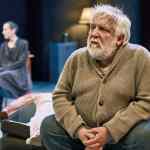
The Fever Syndrome is a dramatised lecture set in a New York brownstone occupied by the super-brainy Myers family. The old man, Prof. Richard, is an IVF expert whose daughter, Dot, wants to defrost her embryos and have a second baby. Cue lots of chat about in vitro technology in the 1970s. Dot’s daughter, Lily, has a hereditary ailment that causes epileptic seizures. This, too, is discussed in further Ted Talk passages. And Prof. Richard suffers from incontinence and Parkinson’s disease so these conditions are aired as well. It’s perfectly riveting for medics. Less so for civilians who may not share the view of the Myers family that everyone in the Myers family is a world-class intellectual. Robert Lindsay stars as Prof.

Shakespearean directors could learn from this: the National Theatre’s Hamlet for 8- to 12-year-olds reviewed

Theatre

The NT has rejigged Hamlet for 8- to 12-year-old children. It’s a decent attempt to cover the highlights at a sprint lasting just 90 minutes. A few gripes. The medieval setting is unclear because the courtiers wear matching red and yellow suits, like Butlins entertainers. Why not military costumes? British kids are used to seeing the royals in uniforms. And a martial emphasis would tell us that Elsinore is a heavily armed dictatorship where family rivalries may spill over into civil war. More swords and bucklers are needed. Before curtain-up, the cast fanned out across the stage to wave at the children and have a chat. This broke the ice and ensured that the little tinkers kept quiet during the show.

Will put you in mind of Lost in Translation: Compartment No. 6 reviewed

Cinema

Compartment No. 6 is set aboard a long train journey across Russia, a country we don’t hear much of these days (I wish!). It has won multiple awards, including the Grand Prix at Cannes, and is by the Finnish filmmaker Juho Kuosmanen, who has said of his films: ‘Basically, they are boring.’ It’s true, this is not eventful, even if the restaurant car does run out of hot food at one point. This is a character-as-plot film and if that isn’t your style it is going to feel like a very long journey indeed. The trip is from Moscow to Murmansk, which is way up north. It is days long and you may even feel it in real time. (But I didn’t, just to be clear.

He is now a family entertainer: Stormzy at the O2 Arena reviewed

Pop

Stormzy occupies a curious place in British pop culture right now. He’s the darling of liberals for all his good deeds – setting up an imprint for black writers within Penguin, and a charity to put black kids through Cambridge. He’s also the figurehead of UK hip hop, which at times has made him a lightning rod for the particular worldview of certain people. ‘Is it asking too much that he show a scintilla of gratitude to the country that offered his mother and him so much? Instead of trashing it,’ wrote, inevitably, Amanda Platell in, inevitably, the Daily Mail, after Stormzy had attacked Theresa May’s government over the Grenfell fire. You don’t see so much of that sort of coverage these days, and a glance around the O2 showed why.

An impeccably rule-observing programme from the BBC: Art That Made Us reviewed

Television

Art That Made Us is an ambitious new series, firmly in the ‘history of something in a load of different objects’ category. That the something in question is Britain duly means that we get the BBC’s usual, and perhaps even very British, mix of deep patriotism on the one hand and deep suspicion of patriotism on the other. The opening episode tackled the era formerly known as the Dark Ages, which the narrator felt duty-bound to remind us yet again was actually a period of great creativity and innovation. (Not that you could blame him.

A spirited attempt to fix a show that’s never really flown: Utopia, Limited reviewed

Classical

Utopia, Limited (1893) is a rare bird, and one that every Gilbert and Sullivan completist simply has to bag. The point of completism, of course, is to acquire an overview: if artists are truly original, everything they created should illuminate the whole. But what if a career tailed off, or ran to seed? It’s just going to be depressing, isn’t it? By the time they began their penultimate opera, Gilbert and Sullivan hadn’t collaborated for three years. In fact, they’d barely spoken. Goaded back into harness, they produced a comedy that really ought to have sparkled and yet somehow… well, put it this way: even the late D’Oyly Carte company waited until 1975 before attempting a revival.

It’s a miracle this exhibition even exists: Audubon’s Birds of America reviewed

Exhibitions

In 2014, an exhibition of watercolours by the renowned avian artist, John James Audubon, opened in New York. The reviews, from the New York Times to the Guardian, were unambiguously enthusiastic, celebrating the painter as a legendary genius who ‘exceeded the limits of his era’. Fast forward eight years, and a rather different vibe hangs over the latest outing of his bird portraits, one that reflects both the limits of that era and the limits of the man. Visitors to the National Museum of Scotland’s Audubon’s Birds of America are welcomed with an acknowledgment that the artist was ‘full of contradiction and controversy’. His charge sheet is substantial.

Don’t read Ulysses; listen to it

Arts feature

Dublin. 16 June 1904. A little after 8 a.m. Two men – both annoying, one stung with grief and ambition – are having an argument. One is pierced by thoughts of his late mother. ‘Pain, that was not yet the pain of love, fretted his heart.’ She has come to him in a dream smelling of wax and rosewood. ‘Dedalus,’ the other calls up to him. ‘Come down, like a good mosey. Breakfast is ready.’ Ireland. 16 June 1982. 6:30 a.m. Radios all over the country emit the words ‘Stately, plump Buck Mulligan’, and don’t stop broadcasting until they have read out every word of Ulysses, down to its last, heart-stopping syllable. There was no abridgement and no explanation: just the text, entire.

Didn’t deserve an Oscar: Coda reviewed

Film

This year the Oscar for best film went to the drama Coda – ‘Child of Deaf Adults’ – but the ceremony will now probably only be remembered for Wsscrfmhw (‘Will Smith Slapping Chris Rock For Mocking His Wife’). And we thought that mix-up over envelopes was exciting! But back to the film, which beat the favourite, The Power of the Dog, although Jane Campion did win best director, making her the third woman ever to do so. That’s three women in 93 years of the awards. If we carry on at that rate, by the turn of the next century it may even be five. Coda is only viewable on Apple TV+, the first streaming service to scoop the big prize.