Culture

Culture

The good, the bad and the ugly in books, exhibitions, cinema, TV, dance, music, podcasts and theatre.

If you want to avoid intrusive anachronisms on TV, you have to go foreign

Television

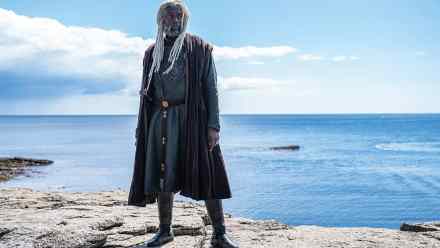
The iron law of TV these days is that if you want to avoid series that are suffocatingly right-on the only way to go is foreign. Any TV emanating from the Anglosphere is guaranteed to be chock-full of intrusive anachronisms. Bridgerton,which reinvents Regency England as a melting pot of diversity, is an extreme example of this, but even previously immune series have been infected. Season five of The Last Kingdom now has a resident black monk, whose ethnicity no one notices, though such a phenomenon, you might think, would have been considered quite remarkable in 10th-century Wessex. Vikings, too, I gather, has allowed its shield wall to collapse and has been overrun by the forces of skinny soy latte.

Why is dance so butch these days?

Dance

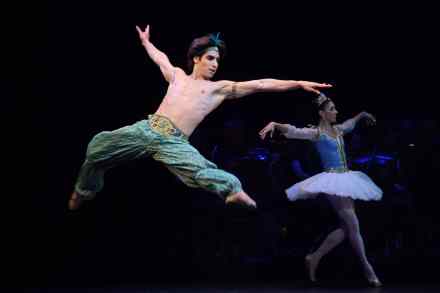
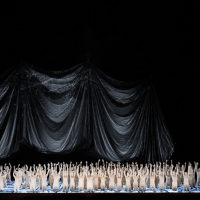
For an art form that once boldly set out to question conventional divisions of gender, ballet now seems to be retreating towards the butch – ironically, just as the rest of the world is moving obsessively to the femme. Scroll back a century or so and Nijinsky cross-dressed at masked balls, danced on pointe and covered himself in petals as le spectre de la rose; in Les Biches, his sister Nijinska shamelessly choreographed all manner of sexual indeterminacy and suggested that girls could also be boys. Then came the Carry On stereotype of limp-wristed ephebes in pink tights with an ominous bulge – every mother’s nightmare in the homophobic post-war era, and perhaps still a source of psychotic contempt among certain sections of society.

No one should be doing indie rock at 43: Band of Horses’s Things Are Great reviewed

The Listener

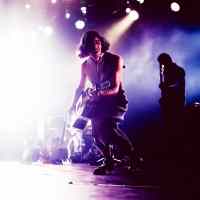
Grade: B That thing, ‘indie rock’, is so well played and produced these days, so pristine and flawless, that it has become almost the antithesis of what it was back at the end of the 1970s, when the term was invented. Then it referred to bands who released stuff on small independent labels because the big labels wouldn’t take them on. Shouty, angsty and angular, or just weird and beloved by the befringed dolorous yoof, in their anoraks or donkey jackets, the whole thing had a pleasing DIY feel to it, even if it sometimes grated. These days ‘indie’ just tends to mean anodyne power pop played by whining blokes who haven’t had a shag for ages. So it is, I think, for Seattle’s Band of Horses.

Raphael – saint or hustler?

Arts feature

For tourists to Rome, the must-see event of 1833 was the exhumation of Raphael from his tomb in the Pantheon. For years the city’s Accademia di San Luca had been claiming possession of the artist’s skull and running a profitable line in souvenirs. That September, the question would be settled. Was the ‘most eminent painter’, lauded in his friend Pietro Bembo’s fulsome epitaph as having ‘lived virtuously 37 virtuous years’, really buried there? And did his skeleton have a head? Hans Christian Andersen was one of 3,000 ticket holders for the six-day lying-in-state. The skeleton was there all right, complete with head, but its dignity, reported Andersen, was somewhat dented by the rattle of bones when it was returned to the tomb.

Pitch-black satire drenched in an atmosphere of compelling unease: ETO’s Golden Cockerel reviewed

Classical

Blame it on Serge Diaghilev. Rimsky-Korsakov died in 1908 and never saw the première of his last opera, The Golden Cockerel. When the great showman finally presented it in Paris in 1914, it was as Le Coq d’Or: a spectacular opera-ballet hybrid, with colourful, folk-inspired designs by Natalia Goncharova that came to define the Ballets Russes in its imperial phase. That was the form in which it came to Britain, where the Evening Standard described it as a ‘farrago of love-making, black magic and ingenuous inconsequence’ before turning to the real news – the costumes.

See this Russian hip hop star before they arrest him: Oxxxymiron’s Beauty & Ugliness reviewed

The Listener

Grade: A+ I was going to review hyperpop chanteuse Charli XCX’s album this week, but it was such boring, meretricious, grandstanding 1980s retread electropop vacuity that I thought, nah, even if it is headed to the top of our ravaged charts. So have this instead. Oxxxymiron is Russia’s No. 1 hip-hop artist. Yes, Russian hip hop is indeed an oxxxymiron, much as would be Serbian reggae or Iranian gospel, but never mind. He’s a youngish Jewish bloke born in Leningrad, with a degree in Middle English from Oxford University, and is hugely popular in his home country. Is it any good, this album released late last year? It’s darker and nastier than US hip hop, full of menace and those icy synths the Russians seem to adore even more than their Iskander missiles.

Why we drink

Radio

‘I like to have a martini,/ Two at the very most./ After three I’m under the table,/ After four I’m under my host.’ I never fully appreciated the brilliance of that spurious quote of Dorothy Parker until I visited Dukes Bar in Mayfair. It used to be the case – it probably still is – that you may order no more than two martinis there owing to their potency. Had she not preferred whisky to gin, Parker might well have banged her fists on that table for a third. After one-and-a-half before dinner, however, this critic would be more inclined to dance on it. Humans may respond to drink in different ways, but we are, in fact, better at processing it than most other primates. In ‘Why do we use intoxicants?

You will feel nothing: The Worst Person in the World reviewed

Cinema

The Worst Person in the World is a Norwegian film that has made a big splash. To date, its star (Renate Reinsve) has won Best Actress at Cannes and it has been nominated for two Oscars (Best Original Screenplay and Best International Feature Film). It has also attracted rave reviews. I can now only conclude: I must be the Hardest to Please Person in the World as I can’t fathom what all the fuss is about. It’s not atrocious. It’s not Batman. But it’s nothing special. And until I read that it is a ‘romantic comedy’ I hadn’t realised it was a comedy at all. Perhaps I am also afflicted with the Worst Sense of Humour in the World?

Fails to dispel the biggest myth of all: Whitechapel Gallery’s A Century of the Artist’s Studio reviewed

Exhibitions

Picture the artist’s studio: if what comes to mind is the romantic image of a male painter at his easel in a grand interior with an admiring audience and a nude model at his elbow, you’re in the wrong century for the Whitechapel Gallery. Its new exhibition, A Century of the Artist’s Studio, runs from 1920 to 2020, and there’s precious little romance about it. To be honest, the studio was never that romantic; Gustave Courbet’s ‘The Artist’s Studio’ (1855), the main source of the stereotype, was itself a send-up. The Whitechapel’s show sets out to complete Courbet’s work, dismantling the myth cliché by cliché.

Comes so close to greatness but succumbs to prejudice: Royal Opera’s Peter Grimes reviewed

Opera

No question, the Royal Opera is on a roll. Just look at the cast list alone for Deborah Warner’s new production of Britten’s Peter Grimes. Allan Clayton sings Grimes, Bryn Terfel is Captain Balstrode, and John Tomlinson is Swallow, with Mark Elder conducting. Even before you get to a supporting cast that includes premium names such as James Gilchrist, Jennifer France and Catherine Wyn-Rogers, you’ve basically got the three pre-eminent British male singers of their respective generations, singing their boots off in the greatest of all British operas under the baton of the conductor who (it’s naive, but let’s dream) really ought to succeed Antonio Pappano when he leaves the Royal Opera in 2024.

It’s years since I saw anything as nasty as this: Cock at the Ambassadors Theatre reviewed

Theatre

Cock was written by Mike Bartlett in 2009 while he was in Mexico at a drama conference. The title suggests a cockpit where three characters compete for sexual dominance. W, meaning Woman, is a childminder attracted to a gay man, John, who is thick but handsome and deeply involved with M, or Man. W adores John even though he can’t stand women. ‘They’re like water when you really want beer,’ he says, charmlessly. When they have sex she politely asks him not to treat her genitals ‘like a Travelodge’. After a brief fling, W decides she wants to marry John and raise a family with him in domestic bliss. But John isn’t so sure. He describes his girlfriend to others as ‘tall, manly and with big hands’.

Keith Allen discusses Pinter, Max Bygraves and the sensitivities of contemporary audiences

Arts feature

Keith Allen was cast in his latest show by Lady Antonia Fraser. He explains this odd circumstance when we meet during a break in rehearsals for Pinter’s The Homecoming. ‘I was asked if I wanted to do The Caretaker at the Theatre Royal Bath. And I said, “Yeah, I’d love to.” Then I had a conversation with Antonia Fraser who told me the script was licensed to someone else. She said, “Why not do The Homecoming instead – with you as Max?” And I said, “Yes.”’ Max is the thuggish head of an emotionally damaged Cockney family with criminal connections. His wife has died and he lives with his sons in a household that simmers with pent-up aggression. The plot is a quest to replace the dead mother with a powerful female figure.

A must-see for Westminster obsessives: Riverside Studios’ Bloody Difficult Women reviewed

Theatre

Bloody Difficult Women is a documentary drama by the popular journalist Tim Walker, which looks at the similarities between Gina Miller and Theresa May. It’s well known that Walker detests our current prime minister and he refuses even to allow the Johnson name to sully his script. So although Boris was a key player in the story, he doesn’t appear on stage. Nor does May’s husband, Philip. And her influential advisers, Nick Timothy and Fiona Hill, are omitted too. Their names are mentioned constantly but we never meet them as characters. Slightly frustrating. May herself comes across as weak, secretive and limited. Plainly she was never suited to high office.

Unhurried and accomplished whodunit: ITV’s Holding reviewed

Television

A couple of years ago, I happened to read Graham Norton’s third novel Home Stretch. Rather patronisingly, perhaps, I was surprised by how accomplished it was, especially in its sympathetic but melancholy portrait of life in a West Cork village. Yet, judging from ITV’s new adaptation of his first novel Holding, this was something he’d pulled off before – because, here again, it’s pretty clear both why Norton would want to write kindly about the kind of place he grew up in, and why he would have wanted to leave it. Monday’s first episode efficiently established the rural-Irish setting with shots of fields, cows and wind turbines. We then saw the village policeman P.J.

Felt like being caught on the moors in a storm: Keeley Forsyth, at the Barbican, reviewed

Pop

It took a moment to realise Keeley Forsyth was there. There were already three musicians, faint figures on a dark stage, wreathed in dry ice. And then, to their side, one became aware of a patch of darkness that was a little darker than the rest, and which seemed to be moving. Even when she moved into the slightly less gloomy part of the stage, Forsyth remained hidden: this was a show of startling unease and intensity. ‘Well, she’s spectacular,’ one chap ahead of me said to his friend as they filed down the stairs at the end. ‘Not sure I could manage more than an hour of it, though.

Spot-on in almost every way: Scottish Opera’s A Midsummer Night’s Dream reviewed

Classical

Scottish Opera’s new production of Britten’s A Midsummer Night’s Dream seems to open in midwinter. Snow falls, fairies hurl snowballs and the aurora borealis flickers and arcs across the darkened sky. Meanwhile Britten’s score swoons and sighs, its drowsy clouds of string tone wafting above gently snoring basses to create an atmosphere whose every glimmer evokes perfumed warmth. It should be a contradiction, but it doesn’t feel that way at all.

Fun, good-natured and schmaltzy: Phantom of the Open reviewed

Cinema

Phantom of the Open is a comedy-drama telling a true story that would have to be true as no one would believe it. The subject is Maurice Flitcroft, a crane operator who took up golf at 46 after seeing it on the telly and entered the British Open in 1976, achieving the highest score ever. (‘Does that mean he’s won?’, asked his wife.) Dubbed ‘the world’s worst golfer’, he then hoaxed his way into further Opens, much to the incandescent rage of the snobbish authorities, and you’ll be rooting for him, of course. This is a British underdog film like The Duke – but with some Eddie the Eagle mixed in – and it’s fun and enjoyable and good-natured even if it does play it safe and waltz off into Hallmark schmaltz at the end.

Valuable reassessment of British art: Barbican’s Postwar Modern reviewed

Exhibitions

Notoriously, the past is another country: what’s more, it’s a terrain for which the guidebooks need constantly to be rewritten. That’s one attraction of the new exhibition Postwar Modern at the Barbican. It’s a survey of what might seem all-too-familiar territory: British art in the two decades that followed VE day. Yet it succeeds in revealing numerous half-forgotten or undervalued movements and people, the good, the bad and – most intriguingly – candidates for reassessment. The decades that followed the second world war were marked by dreary austerity, perhaps explaining the tendency for the art to be coloured oatmeal, beige, grey and brown. But this was also a time of dawning hope, increasing prosperity and growing optimism.

Stands alongside Under Milk Wood: Shedding a Skin, at Soho Theatre, reviewed

Theatre

Shedding a Skin opens with an office nightmare. Myah is a mixed-race employee in a predominantly white firm who gets summoned to the boss’s room for a group photo. The only other workers present are black and they greet each other with the ‘black nod’ as she calls it. And the group includes a black cleaner dressed in a suit to ‘bump up the numbers’. She tells the boss that this attempt to promote racial harmony simply instils mistrust and division but she gets sacked for rebelling against the firm’s ‘fakery’. Next, her layabout boyfriend, a musician who lives on a barge, gives her the elbow. Now she’s homeless, jobless and single. A great start.

Astonishing, if unnecessary, grandstanding: Barbara Hannigan’s La voix humaine reviewed

Classical

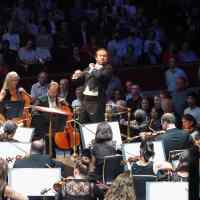
I think it was when she leaned forward and balanced on one leg that Barbara Hannigan jumped the shark. It wasn’t just a question of physical agility, although that was impressive enough. Hannigan performed her on-the-spot acrobatics while singing; the results were projected on to a big screen by three remote-controlled cameras, which zoomed in on her eyes, merged blurry images of her face and occasionally froze, meaningfully, on a particularly arresting posture. She did all this at the same time as conducting the London Symphony Orchestra in Poulenc’s one-woman opera La voix humaine, though that wasn’t really what this was about; at least, not by the time she was on one leg.

What’ll happen next – or what’s happened so far – is anybody’s guess: The Ipcress File reviewed

Television

ITV’s new version of The Ipcress File began with a close-up of a pair of black-rimmed glasses just like those worn by Michael Caine in the 1965 film. They were then put on by their owner (Joe Cole), thus transforming him into Harry Palmer – but also neatly establishing the kind of show we were in for. Sunday’s first episode did a fine job of setting up an impeccably twisty (i.e. confusing) Cold War plot. It spared no effort in its quest to show us that the Britain of 1963 was on the Brink of Social Change. And yet, neither of these things really got in the way of its main aim: to be as cool and stylish as the 1960s films and TV it was paying tribute to.

New Marr is very much the same as the old Marr: LBC’s Tonight With Andrew Marr reviewed

Radio

Andrew Marr got his voice back this week. That may come as a bit of a surprise to everybody who’s been watching and listening to him on the BBC for the past 22 years but it’s the reason he gave when he announced last year that he was leaving. On Monday we heard the new voice. Marr made his debut on LBC. He’s presenting a 6 p.m. show four days a week in an hour nicked off Eddie Mair. Maybe ‘new’ voice is wrong. Not so much new, perhaps, as the old pre-BBC voice. The one he’d been forced to suppress. He called it ‘entirely my own voice’. After my own 51 years as a BBC journalist, I think I know what he means. If I sound a little hesitant it’s because in all those years nobody explicitly told me what to say or how to say it.

A compelling, if flawed, example of the new American noir: Red Rocket reviewed

Cinema

Mikey (Simon Rex) first appears striding down a road in utterly wrecked jeans and shirt. He is carrying nothing and seems to be going nowhere until he walks up the pathway to the house of the wife he abandoned and her venomously disapproving, chain-smoking mother. Sean Baker’s Red Rocket is a movie set in Texas City in Galveston County. It’s basically an oil town and almost all the action in this film takes place on the perimeter of a vast refinery. Everything is very grainy, especially the dark interiors. This is because the film is shot on 16mm film, a medium which, on the big screen, produces a lively, speckled blur. After several attempts, Mikey charms his way back into his home.

Renaissance radical: Carlo Crivelli – Shadows on the Sky at Ikon Gallery reviewed

Exhibitions

‘Camp,’ wrote Susan Sontag, ‘is the paintings of Carlo Crivelli, with their real jewels and trompe-l’oeil insects and cracks in the masonry.’ She didn’t even mention the renaissance painter’s curious cucumber fetish. Nor the unwittingly comedic homoeroticism of his portrait of Saint Roch, one stocking rolled down coquettishly to reveal a decorous inner-thigh wound. Nor the extraordinarily ugly baby Jesus clutching an apple as big as his head while his mother, understandably, averts her eyes. ‘Camp is playful, anti-serious,’ argued Sontag. Sontag wasn’t alone in not taking Crivelli (c.1430–95) seriously.