Culture

Culture

The good, the bad and the ugly in books, exhibitions, cinema, TV, dance, music, podcasts and theatre.

The women’s lips are pursed; the men’s are kissable: Glyn Philpot at Pallant House reviewed

Exhibitions

Of all the photos of artists in the studio, the one of Glyn Philpot being served a martini by his white-jacketed Jamaican model Henry Thomas must be the strangest. Taken to publicise his 1934 exhibition, it would be unthinkable now but in the circles Philpot moved in at the time it might, I suppose, have been viewed as cool. For 20 years Philpot had been London’s leading portraitist, a position he inherited from Sargent. His sitters included admirals – four during the first world war – and King Fuad of Egypt, who commissioned a ‘dignified, decent, usual and rather sumptuous’ portrait from the 38-year-old artist for £3,000 in 1923, the year he was elected an RA. It was not his best work.

A masterclass in evenhandedness: James Graham’s Sherwood reviewed

Television

James Graham has made his considerable name writing political-based dramas of a highly unusual type: non-polemical ones. And this certainly applies to his television work as well as his stage plays. Coalition (about the 2010 Conservative-Lib Dem alliance) and Brexit: The Uncivil War (which gave Dominic Cummings the signal honour of being played by Benedict Cumberbatch) both went so far as to suggest that most politicians try to do the right thing. Even when he abandoned politics to supply the lockdown hit Quiz, Graham’s unfashionable commitment to centrism remained. Rather than taking sides on the ‘coughing major’ scandal, he extended sympathy and understanding to all involved.

It’s wholly impossible to look away: Good Luck to You, Leo Grande reviewed

Cinema

Good Luck to You, Leo Grande stars Emma Thompson as a retired, widowed religious education teacher in her sixties who books sessions with a sex worker (Daryl McCormack) because, for the first time in her life, she would like to experience good sex. Her husband was a roll on, roll off sort of fella, she’s never slept with anyone else and her body, she says, ‘feels like a carcass I’ve been dragging round all these years’. You have to admire her courage. I don’t think I’d even have the courage to book a hotel room for two hours in the afternoon. I’d probably pay for the night so that no one would know. Or would a week be safer? Written by author and comedian Katy Brand, and directed by Sophie Hyde, this is a riveting film and an important one.

Leave Bizet’s Carmen alone

Dance

I’ve always felt uncomfortably ambivalent about the work of Matthew Bourne. Of course, there is no disputing its infectious exuberance or its enormous appeal to a broad public beyond the ballet club. I suppose its eclectic mix of Ashton and MacMillan, camp jokiness, Hollywood movies and Broadway razzmatazz is quirkily unique too – at least sui generis, inasmuch as nobody seems to imitate it with his degree of commercial success. And Bourne’s house designer Lez Brotherston always gets it just right: the shows invariably look great. Yet there’s also a relentless brashness to them, an absence of psychological nuance and aesthetic restraint. I take a deep breath and try to go with its flow; I end up winded and exhausted.

The power of cultural reclamation

Pop

‘Version’ is an old reggae term I’ve always loved. It refers to a stripped-down, rhythm-heavy instrumental mix of a song, traditionally dubbed onto the B-side of a single. On paper the concept sounds throwaway, and often it was. Over time, however, using reverb and a fair degree of ingrained madness, pioneering Jamaican producers such as Lee ‘Scratch’ Perry, King Tubby and U-Roy twisted ‘versions’ into mind-bending shapes. Time-stretched DJs toasted new rhymes over the top, and dub was born, an art form built from borrowed parts and hair-brained ingenuity. The notion that popular music is now obsessed with recycling old content is not necessarily fanciful, but it can be reductive.

Joyously liberating: Tony! [The Tony Blair Rock Opera] reviewed

Theatre

Harry Hill’s latest musical traces Tony Blair’s bizarre career from student pacifist to war-mongering plaything of the United States. With co-writer Steve Brown, Hill has created a ramshackle, hasty-looking production that deliberately conceals the slickness and concentrated energy of its witty lyrics, superb visuals and terrific music. The last thing it wants to seem is sophisticated and it starts off with a parade of New Labour grandees, all grotesquely overblown. John Prescott is a violent northern drunkard who wants to punch everyone in the face – including the Scots because ‘they’re too far north to be proper north’. Robin Cook is a cerebral sex maniac.

The opera that wouldn’t die

Arts feature

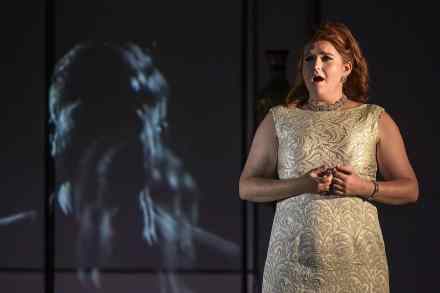
When Erich Wolfgang Korngold completed his third opera, Die tote Stadt, in August 1920, he’d barely turned 23. Yet such was his reputation that what followed was practically a Europe-wide bidding war for rights to the première. The young composer had his pick of companies and conductors (the Vienna State Opera tried and failed). In the end – almost unprecedentedly – Die tote Stadt was launched on the same night in two cities simultaneously. Audiences in Hamburg and Cologne both erupted into applause, but Korngold, who could be in only one place, had chosen Hamburg – where he was so dazed by the response that Richard Strauss, who was present in the audience, had to remind him to go up and take his bow.

I suspect this was a rush job: Like Water for Chocolate reviewed

Dance

How much weight of plot can dance carry? Balanchine famously insisted that there are no mothers-in-law in ballet, and masters such as Fokine, Massine and Ashton largely confined the dimensions of their narratives to the back of a postage stamp. Yet in A Month in the Country Ashton also proved that ballet can communicate delicate nuances of psychology; MacMillan’s Mayerling has a complex historical-political setting that fascinates; and Matthew Bourne has devised a cartoon-ish mode of silent tale-telling that has proved very popular and effective.

Gandhi’s killer is more loveable than his victim: The Father and the Assassin reviewed

Theatre

Dictating to the Estate is a piece of community theatre that explains why Grenfell Tower went up in flames on 14 June 2017. The abandoned block stands, like a cenotaph, a few minutes’ walk from the social club where the show is presented. The local council never cared much for Grenfell’s 120 families. Plans to destroy the tower and expand the estate – with higher rents, of course – had long been under discussion. A one-bedroom flat in west London goes for half a million pounds so there were profits galore to be made. ‘A gold mine for the council,’ said one developer, ‘and they don’t even have to dig for gold.

Nobody paints the sea like Emil Nolde

Exhibitions

In April, ten years after opening its gallery on the beach in Hastings, the Jerwood Foundation gifted the building to the local borough council. Thrown in at the deep end without a permanent collection, Hastings Contemporary, as it is now known, has to sink or swim on the strength of its exhibition programme. How to please local audiences while attracting outsiders? For a seaside gallery, nautical themes are an obvious answer: this summer’s offering is Seafaring, a dip into two centuries of maritime art from Théodore Géricault to Cecily Brown. What’s the worst that can happen? Shipwreck. The show opens with three recent canvases by Brown inspired by romantic paintings of the subject.

It’s taken me days to uncringe: All My Friends Hate Me reviewed

Cinema

All My Friends Hate Me is a film about a university reunion weekend and should you have an upcoming university reunion weekend, I’d duck out if I were you. No good will come of it. This is social anxiety as horror (almost) and you won’t just cringe for the full 90 minutes, you will violently cringe. It may take you days to uncringe. It’s a clever film, and surprising, and compelling. Yet it is also an endurance test. You won’t regret seeing it, but you will be so glad when it’s over. https://www.youtube.com/watch?

Ricky Gervais is an achingly conventional Millennial posing as a naughty maverick

Television

Just how edgy and dangerous is Ricky Gervais? There is no one more edgy and dangerous, we learn from no less an authority than one R. Gervais. He keeps reminding you of this at intervals in his latest stand-up special, for which he was reputedly paid $20 million (to go with the other $20 million Netflix paid him for its predecessor). Every few sketches, he’ll announce to his live audience that this one was so offensive there’s just no way Netflix is going to broadcast it. But Netflix has done just that – and yet, quite incredibly, neither it nor Gervais has been cancelled. Funny that. https://www.youtube.com/watch?

The art of extinction

Arts feature

In one of Italo Calvino’s fables, a single dinosaur survives the extinction of his kind. After a few centuries in hiding, he comes out to discover that the world has changed. The ‘New Ones’ who have taken over the planet are still terrified of dinosaurs; they tell each other terrifying stories about the time when the reptiles ruled the world, or secretly fantasise about being brutalised by them, but they don’t recognise the survivor for what he really is. They no longer know what a dinosaur looks like. The newcomer is given a name – the Ugly One – and invited into their society. Eventually, they find a heap of dinosaur bones in a melting glacier, and take their new comrade to gawp at it.

Harry Styles has entered his imperial phase – but his music still has no distinct identity

Pop

At the turn of this century, looking back on the late 1980s when the Pet Shop Boys could do no wrong and everything they touched turned to platinum, Neil Tennant coined the concept of a musician’s ‘imperial phase’. You can be hugely popular at other times in your career – you can sell just as many records – but the imperial phase is something different. The imperial phase is when an artist isn’t just selling records; it’s when approval of them has reached such a pitch that they can do no wrong. It’s when every magazine and newspaper uses any excuse to run photos of them, when their peers garland them with approval, and they seem to have a golden key that unlocks every day.

On the brink of delivering something special: Sky’s The Midwich Cuckoos reviewed

Television

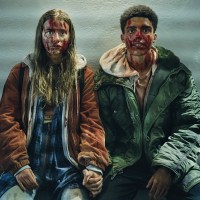
A youngish couple leave London and drive off excitedly to make a fresh start in more rural surroundings. They demonstrate their happiness by laughing all the way to their new town, where a cheery sign on the outskirts reads: ‘Welcome to Midwich’. So what could possibly go wrong? In fact, even for viewers unfamiliar with John Wyndham’s famously spooky 1957 novel, from which Sky Max’s modern-day version of The Midwich Cuckoos has been adapted, it’s clear that something soon will. After all, a pre-credit sequence, set five years later, had shown the same couple cowering in fear before their five-year-old daughter.

A self-regarding take on I’m-not-sure-what: Bergman Island reviewed

Cinema

Bergman Island sounds, on first acquaintance, like a theme-park attraction. Roll up, roll up! Let us speed you through the shed where Max von Sydow is weeping and then plunge you downwards until you come face to face with a priest struggling with his faith. Then you’ll twist hard left – hold on! – to encounter Liv Ullmann suffering from a series of nightmares in which God appears graceless and indifferent. Or is God dead? To be fair, I’d probably go on such a ride. It may be more exciting than this, and over more quickly. That’s possibly too harsh, but this film is certainly most self-regarding. Written and directed by Mia Hansen-Love, it is a meandering, literary, dreamy, inconclusive take on I’m-not-sure-what. It’s not wholly unbeguiling.

A mess: British Museum’s Feminine Power – the Divine to the Demonic reviewed

Exhibitions

The point at which the heart sinks in this exhibition is, unfortunately, right at the outset. That’s where we meet the five commentators that the British Museum has invited to respond to the objects and ideas in the exhibition. But only Mary Beard knows her subject. There’s Bonnie Greer, playwright and critic; Elizabeth Day, podcaster and novelist; Rabia Siddique, humanitarian (that’s a calling, it seems) and barrister; and Deborah Frances-White, podcaster and stand-up comedian. Each presides over part of the exhibition, which is ordered by categories such as Passion and Desire and Magic and Malice. It’s an odd exercise.

Newcomers will need to read the play in advance: Julius Caesar, at the Globe, reviewed

Theatre

Some things are done well in the Globe’s new Julius Caesar. The assassination is a thrilling spectacle. Ketchup pouches concealed inside Caesar’s costume explode bloodily with each dagger blow and the conspirators are doused in dripping scarlet gore. During the assault, Caesar fights back and very nearly survives. Highly realistic. Afterwards, his statue is toppled and rolled off the stage in a subtle echo of Colston’s ducking in Bristol docks. The crowd relished every minute of this pacy, high-energy show even though the visuals are wildly confusing. Brutus (Anna Crichlow) is a lesbian who sports a beige pashmina, a white T-shirt and a fetching gold turban. She looks like the deputy chairperson at a seminar about dolphins.

Nationalise the royal collection!

Arts feature

The royal collection consists of millions of objects whose purpose and ownership are sometimes obscure. Does the collection serve the monarchy, and if so how? Or is the care of the collection, and of the palaces that contain it, the sacred duty of the Queen? Housed throughout the royal palaces, it includes works held by the Queen in trust for the public as well as those owned personally by Elizabeth Windsor, such as valuable paintings by Monet and Paul Nash that were bought by the late Queen Mother and not taxed as part of her estate. This is the sort of confusion that needs to be cleared up to prevent the perception that the royals act in their own narrow interest when it suits them, a necessary step in the post-Prince Andrew era.

Oddly unconvincing: Apple TV+’s The Essex Serpent reviewed

Television

Having now watched it to the end, I would say that Slow Horses (Apple TV+) is by far the best TV drama I’ve seen in at least the last year: superbly acted and directed, ingeniously plotted, refreshingly free of annoyance. Oh, and I’d like to apologise to Mick Herron, author of the original novel series, which I now intend to devour. I’d say his understanding of the intelligence services is at least as jadedly insightful as John le Carré’s and I was quite wrong about his treatment of the ‘far-right’ threat. He gets it totally. The man is a genius. But those hoping that Apple TV+ is going to supplant the increasingly rubbish, excruciatingly modish and content-lite Netflix as the new go-to subscription channel may be in for a disappointment.

The return of the implausibly moreish Borgen

Arts feature

A decade ago the unthinkable happened: a subtitled TV drama about people agreeing with one another went global. On paper it bore the hallmark of a barrel-scraping pitch from Alan Partridge. Somewhere between youth hostelling with Chris Eubank and monkey tennis, he might easily have proposed a new ne plus ultra in implausible entertainment concepts: Danish coalition politics. Yet Borgen caught a thermal and soared. The show took its name (which, correctly pronounced, sounds like a Cockney saying ‘Bolton’) from the so-called fortress in the heart of Copenhagen where state business is conducted. It featured Birgitte Nyborg, a moderate heroine who snuck into Denmark’s highest office through a small centrist crack between left and right.

How I fell in love with the blues

Music

I was never into the blues that much. I listened to a bit of Roy Buchanan and Rory Gallagher but only as accidental overspill from rock. I knew the Rolling Stones’s sound came out of their love of the blues but what they added was more important (to me) than what they took. And then there was Eric Clapton. In common with a discerning portion of the British population, I loathed Clapton after his drunken endorsement of Enoch Powell’s rivers-of-blood speech. Even if I’d somehow let that slide, I could never forgive him for ‘Tears in Heaven’ which was like having a bucket of oversweetened bilge water poured over one’s head.

Claude Vivier ought to be a modern classic. Why isn’t he?

Classical

April is the cruellest month, but May is shaping up quite pleasantly and the daylight streamed in through the east window of St Martin-in-the-Fields at the start of I Fagiolini’s latest concept-concert, Re-Wilding The Waste Land. The centenary of Eliot’s poem is the obvious hook. But whether you’re counting from the Rite of Spring riot in 1913, Schoenberg’s Skandalkonzert the same year, or further back to Strauss’s Salome or Debussy’s Faune, music’s modernist moment occurred some time earlier. Which is helpful, in a way, because it freed the group’s director Robert Hollingworth from the limitations of chronological programming and gave him scope to do something a bit more interesting, and possibly a bit more Eliot-esque.

The cruelty of reality TV was part of the appeal

Radio

Jade Goody appeared on Big Brother in 2002. She was a short, loud, blonde-haired woman who broadcast her every thought and feeling, either in her thick Cockney accent or with her unforgettable face. She became a star. In 2007 she appeared on Celebrity Big Brother, where she made racist comments about her fellow contestant, the Bollywood actress Shilpa Shetty. Effigies of Goody were burned in India; the Sun called her ‘the face of hate’. Hoping to redeem herself, she agreed to appear on Indian Big Brother, where she was told she had cervical cancer with the cameras still rolling. She died less than nine months later. It was a three-act drama that only reality TV could have delivered. Call it 45 minutes of fame.