Culture

Culture

The good, the bad and the ugly in books, exhibitions, cinema, TV, dance, music, podcasts and theatre.

The problem with pop-literary collaborations

Pop

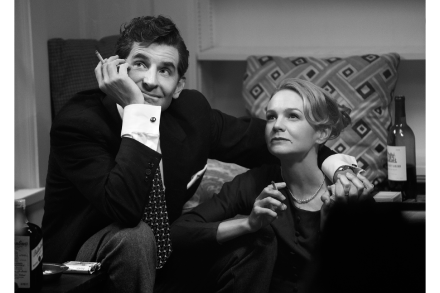
‘We all secretly want to be rock stars,’ the 2022 Booker Prize-winning author Shehan Karunatilaka said recently. By ‘we’ he meant novelists, and he was more or less right. Most authors want to be rock stars, just as many rock stars aspire to bookish credibility. The former crave a whiff of glamour and instant gratification; writing offers precious little of either. Musicians seek gravitas and some wider recognition that they possess the tools to extend their literary genius beyond three verses and a killer chorus. Both parties tend to discover that they do what they do as a day job for a good reason.

As art it was terrible but the pre-teens loved it: Teenage Mutant Ninja Turtles, reviewed  

Cinema

Teenage Mutant Ninja Turtles (TMNT) began as a joke in 1984, a parody of the superhero culture of the time. It was originally a comic book but the stories have since expanded into toys, TV series and films, both animations and acted. The films have grossed more than a billion dollars and are likely to go on grossing down the generations of pre- and early teens. I am telling you all this because I have only just found out and I have never before seen any other TMNT products. The latest – Mutant Mayhem – is an animated film. It is drawn in a style that suggests the animators were angry as they worked, perhaps because it is set, like all the stories, in an extremely dangerous New York City.

An absolute romp framed by dutiful tut-tutting: Semele at Glyndebourne reviewed

Opera

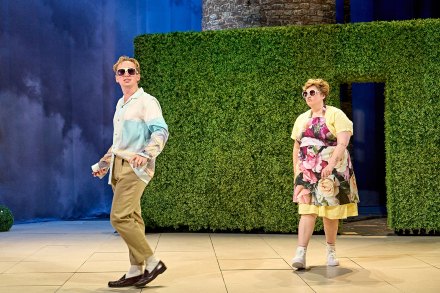
If directors will insist on staging Handel oratorios as if they’re operas, it makes sense to pick Semele, which is practically an opera already. Under George II, opera was banned in London theatres during Lent (too exotick, too irrational), so Handel slipped his best material past the authorities by presenting it in concert format, set to biblical stories. Possibly by 1744 he was getting a bit careless, because there’s nothing remotely biblical about lovely, pouting Semele’s 24/7 shagathons (‘endless pleasure’, apparently) with King of the Gods and all-round studmuffin Jove. Handel’s sometime collaborator Charles Jennens denounced Semele as ‘no oratorio but a bawdy opera’: all the tunes, double the outrage.

‘She had no neutral gear’: Lindy Dufferin remembered

More from Arts

In 1957, when my dear godmother, the Marchioness of Dufferin and Ava (1941-2020), was 16, she began her diary. The granddaughter of the Duke of Rutland and daughter of Loel Guinness, an MP, financier and Battle of Britain pilot, Lindy Dufferin had a gilded childhood. Her entries as a teen are like no other: ‘Randolph Churchill [Winston’s son] was staying the night here… It was most embarrassing because Randolph was very drunk…’ In October 1957, she was in Paris: ‘The Dutchess [sic] of Windsor came… I did a show of Rock & Roll. It was all great fun. Bon Soir!’ But, amid all the luxury, a note of seriousness enters – there was art, too. Clandeboye became a kernel of art, literature and music. Vikram Seth stayed.

The joys of provincial repertory theatre    

Arts feature

Provincial repertory theatre, in which a semi-permanent company of actors performed a varied diet of plays for their community, week-in, week-out, has all but died out in Britain. Local theatres have become venues for visiting productions, one-off events and numerous outreach schemes, but the old continuity – a kind of magic – has gone. I caught the last of it as a child. I was nine years old when in 1979 the brand-new playhouse in my area – the Wolsey Theatre, Ipswich – opened its doors to the public, and for the next four years it would be the centre of my world. If I wasn’t watching shows there (and I saw some half a dozen times), I was dreaming about it, reading scripts or writing to a local photographer for black-and-white photos of the company’s players.

In defence of the Arts Council

I once knew a monster who said she could not read Proust because there were no figures in Proust with whom she could identify... Theodor W. Adorno, 'Aesthetics' (1958-59) Getting an audience to identify themselves in a work – ‘being seen’ – is one of the only reasons why art is commissioned, celebrated or even allowed to exist today. In other words, the 21st century world belongs to Adorno’s monster: we just live in it.  The 20th century’s definition of art, as expressed by another Frankfurt School philosopher Herbert Marcuse, where 'art is committed to that perception of the world which alienates individuals from their functional existence and performance in society—it is committed to an emancipation of sensibility’, is dead.  Art has been put to work.

The future of opera – I hope: WNO’s Candide reviewed

Opera

Bernstein’s Candide is the operetta that ought to work, but never quite does. Voltaire’s featherlight cakewalk through human misery, set to tunes from the West Side Story guy: what’s not to like? And what can be so wrong with its twinkle-toed score that the combined rewriting efforts (and this is not remotely the full list) of Lillian Hellman, Dorothy Parker and Stephen Sondheim have all failed to make it work as theatre? For my money it’s the ending. Voltaire coolly pricks his own bubble and tells us to get on with tending our gardens. Bernstein, the all-American idealist, just can’t, and he kills the whole thing dead with ‘Make Our Garden Grow’, a Hallmark moral drenched in gooey musical uplift. Unless you can solve that, Candide simply can’t be fixed.

A giddy delight: Regina Spektor, at the Royal Festival Hall reviewed

Pop

We’ll get on to the brilliance of Regina Spektor in a moment. But first a question: why are pop music fans treated so abysmally? The afternoon of Spektor’s second sold-out show at the Royal Festival Hall, the venue tweeted that she would be on stage at 7.30 p.m. She actually took to the stage a few minutes past 8 o’clock. Spektor was absolutely magnificent once she did come on. She filled the room with charisma, charm and wit If that were a one-off, so be it. But anyone who goes to a lot of shows is familiar with how malleable the concept of stage-time is in pop music. Lana Del Rey had her Glastonbury set cut short because she was so late coming on – apparently she was having her hair done. It’s maddening. Why can they not meet their call times?

Dense and spectacular – and not pink: Oppenheimer reviewed

Cinema

Oppenheimer is Christopher Nolan’s biopic of J. Robert Oppenheimer, the brilliant quantum physicist and ‘father of the atomic bomb’ who was later haunted by what he’d created. Starring Cillian Murphy, and his cheekbones, the film is dense, ambitious, complex, so very long (three hours) and impressive, even if it does drag by the end. (When a film is so very long, that’s the price you pay.) I could go on and on but, for many, the main selling point will be this: it isn’t Barbie and it isn’t pink. If that’s all the thanks you get for developing the next generation of weapon, I’m glad I never bothered It’s a Nolan film so, of course, it’s not chronological storytelling. I pity his wife.

Finally an entertaining play at the Royal Court: Cuckoo reviewed

Theatre

The boss of the Royal Court, Vicky Featherstone, will soon step down and she’s using her final spell in charge to try an unusual experiment. Can she entertain the punters and make them feel happy rather than forcing them to confront various forms of gloom, misery and despair? The answer is yes. Featherstone can tickle our funny bone if she wishes. Why haven’t trans activists denounced this show and demanded the performer’s cancellation? Cuckoo, by Michael Wynne, is a hilarious kitchen-sink comedy set in Merseyside with an all-female cast. Some critics have likened it to a Carla Lane sitcom and the domestic set-up owes an obvious debt to the Royle Family by Caroline Aherne.

University Challenge deserves Amol Rajan

Television

I wish I could say that Bamber Gascoigne would be turning in his grave at what has happened to University Challenge. But unfortunately, I understand from people who knew the Eton, Cambridge, Yale and Grenadier Guards historian, playwright, critic, polymath millionaire and scion of the upper classes that he chose to compensate for his privilege by embracing progressive causes. So, chances are, the shade of Bamber is thrilled to bits at seeing his old quizmaster’s seat occupied by someone who drops his aitches and pronounces ‘h’ where it should be aspirated and landed a mere 2.2 from hearty, insufficiently medieval Downing. Bambi’s successor Jeremy Paxman probably isn’t too bothered either.

The wonders of 18th-century automata

Exhibitions

At the Paris International Exhibition of 1867, Mark Twain was mesmerised by a life-sized silver swan with ‘a living grace about his movement and a living intelligence in his eyes… swimming about as comfortably and unconcernedly as if he had been born in a morass instead of a jeweller’s shop’. The Silver Swan has been its leading attraction, drawing spellbound visitors to its afternoon performances The jeweller’s shop this mechanical marvel had been born in 100 years earlier was Cox’s Jewelry Museum in London, but its mechanism of 700 components powered by three clockwork motors was the invention of Belgian-born horologist John Joseph Merlin (1735-1803), aka ‘the Ingenious Mechanic’.

The West has much to learn from Hungarian culture

Arts feature

In central Budapest a crew from Hungary’s state TV is filming the unveiling of a new street sign. In honour of his centenary year composer Gyorgy Ligeti now has a road named after him. Contemporary classical music is deemed newsworthy in Hungary. Even more astonishingly – and anyone working in British classical music might want to sit down at this point – the ‘Ligeti 100’ concert at the Budapest Music Centre, dedicated to a clutch of bracing new works, was being filmed for transmission prime time on the Hungarian equivalent of BBC1. Here, we’d be lucky if it got a midnight slot on Radio 3.

Should be called Ken: Barbie reviewed

Cinema

Finally, the Barbie film is here, for which we must be thankful, as the tsunami of pre-publicity meant you probably felt obliged to lock your bathroom door so the trailers didn’t follow you in there. They should have called this Ken but I guess that’s not going to help bring down the patriarchy It’s a film that wants to have it all ways. Let’s parody Barbie but also isn’t she a feminist? There’s of lot of zeitgeist appeasement going on here. But the production values are sensational and there are some excellent jokes, even if Ryan Gosling’s Ken leaves Margot Robbie’s Barbie standing. They should have called this Ken, but I guess that’s not going to help bring down the patriarchy.

Huge, impersonal canvases designed for the walls of billionaires: Tate Modern’s Capturing the Moment reviewed

Exhibitions

‘Photography has arrived at a point where it is capable of liberating painting from all literature, from the anecdote, and even from the subject. So shouldn’t painters profit from their newly acquired liberty, and make use of it to do other things?’ argued Picasso. The inventor of cubism took advantage of his liberty in ‘Buste de Femme’ (1938) to turn Dora Maar into a precursor of Peppa Pig, flaring her nostrils to form a snout. Perhaps he wanted to teach a photographer a lesson about paint by rubbing her nose in it. Picasso didn’t abandon the subject or the anecdote.

Why is this genius playing to a half-empty Royal Albert Hall? Benjamin Grosvenor Prom reviewed

Classical

There were times during last Friday’s First Night of the Proms when it felt as if we’d been transported back to Ohio during the Eisenhower administration. We could have been in Severance Hall, Cleveland, listening to its orchestra under George Szell – and there’s no higher compliment I can pay the BBC Symphony Orchestra, because the irascible maestro drilled his musicians to parade-ground perfection. You could tell the BBC orchestra was at the top of its game from the first snarls of the brass in Sibelius’s Finlandia – a more interesting piece of programming than it sounds. This was the choral version, in which the choir sings of Finland’s refusal to bend under Russian oppression.

Forgettable stuff: The Crown Jewels, at the Garrick, reviewed

Theatre

In the 1990s, the BBC had a popular flat-share comedy, Men Behaving Badly, about a pair of giggling bachelors who were scolded and dominated by their mummy-substitute girl-friends. The author, Simon Nye, has written a historical crime caper about the theft of the crown jewels in 1671, as Charles II prepared to celebrate his tenth year on the throne. The psychological co-ordinates of the play are poorly handled. The thief, Colonel Blood, is an irritating Irish crosspatch who wants to drive the hated English from his homeland. Charles (played by Al Murray) is more attractive, a fun-loving gadabout who enjoys sex, jokes and science and who can’t bear Puritans. So the audience sides with the King and hopes that Blood’s vindictive scheme will fail.

The stuff of nightmares: Retrievals podcast reviewed

Radio

It is the stuff of nightmares, or a queasily dystopian film plot. A woman is undergoing a surgical procedure in a top-rated US clinic. The aim is ‘egg retrieval’, a process which collects eggs from the ovaries for use in IVF. It involves nerves and hope, long needles and pain – except the patient has been promised that the latter will be minimal, thanks to an injection of fentanyl, a powerful opioid. The pain certainly isn’t minimal, however. It’s excruciating. When the woman says how much it hurts, the nurse tops up the dose, and then says the patient has now received the maximum allowed. There might be a touch of reproof in the refusal, if you’re sensitive to such things, and most women are.

An album of not terribly happy ballads: Blur’s The Ballad of Darren reviewed

Pop

Bands that have hung around, or gone away and come back again, occupy an increasingly sizeable percentage of pop’s bandwidth. When it comes to making new music, many are happy not to rock the boat, scraping by on the goodwill accumulated from past endeavours. Others strive to present a moving target, enjoying a more evolved, even argumentative, relationship with the sounds of their glory days. Two new albums tackle this dilemma, with varying degrees of success. Together for the first time since 2015, Blur do a fine job of straddling past and present.

Can ballet survive the culture wars?

Arts feature

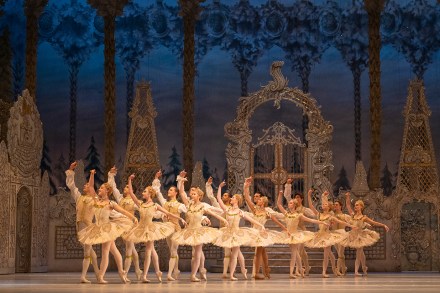
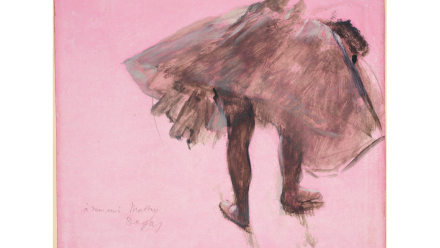
Through several phases of the culture wars, ballet has served as a canary in the coal mine, its intense and exposed physicality highlighting all the issues surrounding sexuality, gender and power that have currently become our unhealthily narcissistic preoccupation. Perhaps the warnings started with the phenomenon of Vaslav Nijinsky. Against the defined masculinity and femininity of the Edwardian era, he stood out as seductively androgynous and effeminate as well as staggeringly charismatic – a godlike hero unashamed to represent le spectre de la rose. Bloomsbury ogled, and rumours about his pederastic relationship with his patron Serge Diaghilev circulated scandalously.

Too in thrall to today’s dogmas: ITV1’s A Spy Among Friends reviewed

Television

In 2014, Ben Macintyre presented a BBC2 documentary based on his book A Spy Among Friends: Kim Philby and the Great Betrayal. The programme managed to shed new light on a familiar but still irresistible story by concentrating on Philby’s relationship with his old chum – and fellow Cambridge man – Nicholas Elliott. Elliott was sent in 1963 by the Secret Intelligence Service (SIS) to question Philby in Beirut where Philby had become the Observer’s foreign correspondent after a long and successful career betraying his countrymen to the Soviets. Elliott did elicit some sort of confession, but a few days later, Philby absconded to Moscow.

A stunning work of art: Mission: Impossible – Dead Reckoning Part One reviewed

Cinema

Blockbuster action movies are designed to stun the audience into submissive acceptance. Complexity, humanity, emotion and beauty are reduced to a few flickering lights in the swirling darkness of death and destruction. This is not a criticism. Great art has sometimes been like that and Mission: Impossible – Dead Reckoning Part One is certainly art, though perhaps not great. Anyway, I, for one, was stunned. The film is certainly art, though perhaps not great, and I, for one, was stunned For context, this is the seventh Mission: Impossible movie. The first was in 1996 so the hero Tom Cruise, aka Ethan Hunt, is now in his sixties.

Kwame Kwei-Armah’s embarrassing update of Love Thy Neighbour: Beneatha’s Place, at the Young Vic, reviewed

Theatre

Beneatha’s Place, set in the 1950s, follows a black couple who encounter racial prejudice when they move to a predominately white suburb. The location is Nigeria but it might as well be the USA because most of the characters, both black and white, are American. (The Young Vic has strong links with America, and a transfer to Broadway may be under discussion.) The script by Kwame Kwei-Armah is inspired by the British sitcom Love Thy Neighbour, which aired five decades ago. This misunderstood show was pretty progressive for the 1970s, and it examined the conflict between two thick white bigots living next door to an intelligent and sophisticated couple from the Caribbean.

Fascinating forgeries: Art and Artifice – Fakes from the Collection, at the Courtauld, reviewed

Exhibitions

In 1998 curators at the Courtauld Institute received an anonymous phone call informing them that 11 drawings in their collection were fakes. The caller intimated that he was an associate of the notorious forger Eric Hebborn, who had claimed in his 1991 memoir, Drawn to Trouble, to have sold the institute a fake Rowlandson. The Sienese turned their training as restorers of Renaissance paintings to more profitable use The Courtauld had, in fact, already rumbled the Rowlandson before Hebborn boasted of putting one over on it; now it looked like it could be more than one. The other ten included three sketches by Tiepolo, three by Guardi and a drawing by Michelangelo.

Was Vera Brittain really this insufferable? Buxton Festival’s The Land of Might-Have-Been reviewed

Opera

‘Ring out your bells for me, ivory keys! Weave out your spell for me, orchestra please!’ It’s lush stuff, the music of Ivor Novello, and when the Buxton International Festival announced a new musical ‘built around’ his songs, the heart took flight. Novello is one of those fringe passions that are, one suspects, a lot less marginal than fashion might suggest. If his great hit operettas of the 1930s and 1940s – The Dancing Years, King’s Rhapsody and the rest – really are unrevivable (and the jury is still out on that), a sympathetic, newly constructed showcase for his finest material in the manner of the Gershwin reboot Crazy For You might be the next best thing.