Culture

Culture

The good, the bad and the ugly in books, exhibitions, cinema, TV, dance, music, podcasts and theatre.

You don’t have to be ‘woke’ to be troubled by the Fitzwilliam Museum’s links to slavery

Exhibitions

What happens when a museum outlives the worldview of its founder? For publicly funded museums with collections amassed during the Empire that no longer reflect the perspectives of a post-imperial multiracial audience, it’s a difficult question. For the Fitzwilliam Museum, there’s an added embarrassment: the £100,000 bequest from Richard, 7th Viscount Fitzwilliam with which it was endowed and built in 1816, was based on an inheritance from the Anglo-Dutch merchant Matthew Decker, Fitzwilliam’s grandfather and a founding director of the South Sea Company that transported more than 50,000 captured Africans across the Atlantic in the first half of the 18th century. Worse, interest on the endowment still contributes to the museum’s funding.

If you can’t get something out of the songs of Shania Twain, you’re a lost cause

Pop

Pop critics routinely make the mistake of assuming the most important acts are the ones copied by the groups they like. So to a generation of writers who grew up listening to 1980s and ’90s indie, the Velvet Underground are the second most important group of all time, after the Beatles. Don’t get me wrong, I love the Velvet Underground, and they are hugely important in rock history. But in reality the second most important group in rock history is Van Halen, because for a decade or so the vast majority of hard-rock bands – who in the 1980s were commercially huge – were trying to imitate them in one way or another.

Menacingly entertaining thriller, despite the clichés: A Lesson reviewed

Cinema

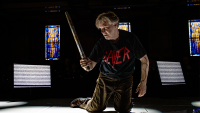
The Lesson is a literary thriller that is occasionally heavy-handed but also menacingly entertaining, plus you get Richard E. Grant in his full pomp. That said, when do you not get Richard E. Grant in his full pomp? Has anyone ever seen him at 50 per cent pomp? Has anyone ever come out of the cinema thinking: ‘I wish Richard E. Grant had given it more?’ The monstrous character is his speciality and he is deliciously, marvellously, full-on monstrous here.  Written by Alex MacKeith and directed by Alice Troughton, The Lesson is very self-aware, always delivering little winks to the audience. It is divided into chapters. It is particularly interested in endings. ‘What makes an ending?’ someone will ask, and by the end you will know.

Cheesy skit: A Mirror, at the Almeida Theatre, reviewed

Theatre

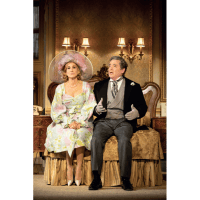
The playwright Sam Holcroft likes to toy with dramatic conventions and to tease her audiences by withholding key information about the characters. This tinkering seems to scare the critics into praising her scripts even though they feel like clumsily written thrillers or botched sci-fi yarns where the rules keep changing. Her technique appeals to high-minded theatres such as the Almeida because it enables A-level drama students to fill their notebooks with impenetrable guff about ‘metatextuality’ and ‘poly-ironic approaches to narrative’. It could be Noises Off by an author who wants to be Brecht or Pirandello Holcroft’s new satire, A Mirror, opens with a bogus wedding that gets disrupted when a gang of cops march on stage and cancel the ceremony. A strange start.

Wagner rewilded: Das Rheingold, at the Royal Opera House, reviewed

Opera

In Northern Ireland Opera’s new Tosca, the curtain rises on a big concrete dish from which a pair of eyes gaze down, impassive. Walls of scaffolding tower on three sides of the stage, creaking as they expand under the heat of the stage lights. Point taken: Cameron Menzies’s production (the sets are by Niall McKeever) is a semi-abstract updating. It’s a fairly standard contemporary approach to Puccini’s Napoleonic thriller, though whether you get the full impact that comes with a more period-specific setting – that sense of individuals being crushed beneath the wheels of history – is another question.

The dazzling classic The Red Shoes has several unfashionable lessons for us today

Arts feature

The Red Shoes, Michael Powell and Emeric Pressburger’s 1948 film about a ballet and its company, is 75 this month, and its birthday is being marked with great fanfare. From October to December, the BFI is putting on a major retrospective of the films of Powell and Pressburger, with an accompanying exhibition and nationwide screenings of The Red Shoes itself. A companion book to The Red Shoes by Pamela Hutchinson – stuffed with insight and background – is being published, as well as a lavish volume, The Cinema of Powell and Pressburger, complete with pictures and essays (almost love letters) about the late filmmakers from artists such as Tilda Swinton and director Joanna Hogg.

Rejoice that Hyperion’s impeccable back catalogue is finally available to stream 

Classical

At the beginning of the 1980s a former ice-cream salesman called Ted Perry drove a London minicab to raise money for his dream project: the world’s most smartly curated classical record label. For the first time these magnificent recordings are arriving on Spotify, Apple Music and other platforms He called it Hyperion, after the Greek sun god, and by the time he died in 2003 it had acquired its own mythology.

Watch three irascible women screaming at each other: Anthropology, at Hampstead Theatre, reviewed

Theatre

Anthropology is a drama about artificial intelligence that starts as an ultra-gloomy soap opera. A suicidal lesbian, Merril, speaks on the phone to her kid sister, Angie, and they discuss Merril’s beautiful ex-girlfriend. After ten minutes, we learn that Angie’s voice belongs to a robot, Digital Angie, created by Merril to replicate the real Angie who vanished a year earlier in unexplained circumstances. Then another surprise. Digital Angie becomes self-aware and turns into a detective who offers to help Merril investigate Angie’s disappearance and to find out if she’s still alive. Angie then turns into a third character who tries to interfere with Merril’s social life.

You’ll have a lump in your throat: BBC Radio 4’s Four Sides of Seamus Heaney reviewed

Radio

It’s now been ten years since Seamus Heaney died, and after a great poet’s death it’s natural, I suppose, that the keg of popular imagination works to distil a lifetime’s writing into a kind of Greatest Hits. His poems ‘Digging’, ‘Blackberry Picking’, ‘Mid-Term Break’ and the masterly sonnet sequence about his mother in ‘Clearances’ sit among the justifiable contenders, but even so there can be concentrations too far. A US presidential speech on any given topic is now unlikely to conclude, it seems, without Joe Biden mistily inserting the lines that Heaney wrote for the chorus in his Sophocles adaptation The Cure At Troy. You’ll recognise them: they’re the ones that end ‘The longed for tidal wave/ Of justice can rise up/ And hope and history rhyme’.

A haunting masterpiece: Northern Ballet’s Adagio Hammerklavier reviewed

Dance

One could soundly advise any choreographer to avoid music so transcendentally great in itself that dance can add nothing except banal images. Only a handful of exceptions sneak past the rule: MacMillan’s setting of Song of the Earth, perhaps, and also Hans van Manen’s Adagio Hammerklavier, his audacious attempt to visualise the infinitely slow movement of Beethoven’s epic piano sonata Op. 106. No individuals stand out; this is an ensemble with a collective identity that rejects the concept of stardom Northern Ballet has honourably revived this haunting masterpiece as part of its autumnal triple bill, and its impact overshadows the two novelties that frame it. What is its secret?

Why I’m addicted to Australian MasterChef

Television

Why is Australian MasterChef so much better than the English version? You’d think, with a population less than a third of ours, the smaller talent pool would make the Antipodean edition look like thin gruel. But a bit like with the cricket and the rugby, size clearly isn’t everything. UK MasterChef now resembles one of those joyless austerity dishes you cobble together from crusty leftovers you found languishing in the fridge. But the Aussie one has had my entire family addicted and yearning for more for the past fortnight. I suppose it’s partly down to the way Australia sees itself.

Mildly pleasant 1980s hard rock: ‘Angry’, by the Rolling Stones, reviewed

Pop

The new Rolling Stones single, supposedly their best in many a decade, is called ‘Angry’. And while on the surface it seems to be about the millionth anguished plea from Mick Jagger to some unseen woman to give him a shag, it reportedly stems from Mick’s mystification as to why everybody is angry these days. I suppose he is forgetting that youth has always been in a more or less perpetual state of pre-rational, pettish fury – a fury which, back in the day Mick was canny enough to take advantage of. You may remember his incandescence at being unable to attain any satisfaction, for example, or at the unwanted ingression of an unidentified person on to the cloud he was occupying.

Someone stop Kenneth Branagh: A Haunting in Venice reviewed

Cinema

A Haunting in Venice is Kenneth Branagh’s third Poirot film (after Murder on the Orient Express and Death on the Nile) and as each one is worse than the last you could say he’s on a losing streak. Why someone with Branagh’s CV would persist, I don’t know. Why someone who has his dignity at heart hasn’t yet rugby tackled him to the ground while shouting ‘STOP!’, I also don’t know. That is the biggest mystery here. The film is directed by Branagh, who yet again casts himself as Poirot even if we all know what Poirot looks like and that’s David Suchet. The first problem is that Hallowe’en Party, the Agatha Christie novel on which this is based, is set in an English village and goes nowhere.

Why is Frans Hals still not considered the equal of Rembrandt?

Arts feature

Who was Frans Hals? We know very little about him. He was baptised in either 1582 or 1583 in Antwerp. He died in 1666 at the age of 83 or 84. Approximately 220 works survive. One discredited narrative claimed Hals was a drunk – an inference probably based on his subject matter. There are several depictions of drinkers. On the other hand, there is his evident industry. Two streets in Haarlem, where he lived his entire life, have been identified, but not the actual houses. He was buried in St Bavo’s church in the Grote Markt, which was originally Catholic but became Protestant. There are two commemorative slabs next to each other in the chancel floor competing for authenticity. Which is appropriate, because there are two Frans Hals – the traditionalist and the innovator. They co-exist.

Lyrical and dreamlike: A World of Private Mystery – British Neo-Romantics, at the Fry Art Gallery, reviewed

Exhibitions

‘My daughter’s moving to Saffron Walden, away from all this,’ said the railway man at Stratford station, gesturing at the tower blocks overlooking the platform. ‘It’s like going back to the 1970s and ’80s.’ For the neo-romantics the pastoral mode was an escape from the grimness of everyday wartime reality Further back, in the case of Saffron Walden’s Fry Art Gallery. Purpose-built by a Victorian banker to house his collection, this gem of a gallery has since been devoted to collecting and showing artists who have lived and worked in north-west Essex, beginning with the group that congregated around Edward Bawden and Eric Ravilious in Great Bardfield from the 1930s.

Lacks any air of mystery, foreboding or darkness: Macbeth, at the Globe, reviewed

Theatre

Macbeth at the Globe wants to put us at our ease and make us feel comfortable with the play’s arcane world of ghouls, hallucinations and murderous prophecies. Abigail Graham’s up-to-the-minute production offers a few nods to history, like the eagle masks worn by the three witches, but for some reason they speak in dense cockney accents and wear biohazard suits. And they’re all men. The Scottish soldiery favour black body armour like SAS recruits or Metropolitan Police officers. And King Duncan, benefitting from equality legislation, has been transformed into an alpha female: ‘Queen Duncan’, as everyone calls her. She strides on to the battlefield in the opening scene sporting a beautiful cream trouser suit and a salon-perfect ash-blonde hairdo.

The best new album I’ve heard this year: Being Dead’s When Horses Would Run reviewed

The Listener

Grade: A– The point of a sudden, abrupt change in the time signature and instrumentation of a song is to surprise the listener and undermine his or her expectations. If, however, you do it in every song, then the point is lost, and the listener finds himself actually waiting for the weirdnessto begin. So it is with Being Dead – and it’s about the only thing I have to carp about, because overall When Horses Would Run is a lovely album, full of often complex but always catchy melodies and imbued with an agreeably surreal sense of humour. The band is comprised of Falcon Bitch, Gumball and Ricky Moto and they come from Austin, Texas. Their shtick is punky surf guitar on top of which those clever tunes are sung as if by a cathedral choir in falsetto.

Subtle, psychologically twisty drama: BBC3’s Bad Behaviour reviewed

Television

Bad Behaviour is a decidedly solemn new Australian drama series with plenty to be solemn about. It was billed in Radio Times as ‘slow-burning’ – which feels a little tactless, given that the opening scene featured a girl in a boarding-school dormitory setting herself on fire (and burning quite quickly). We then cut to the same girl, Alice, ten years later looking surprisingly well as she gave a cello performance in a venue where the catering staff included a fellow ex-pupil called Jo, who greeted her warmly. Perhaps understandably, though, Alice was reluctant to reminisce about the old days at Silver Creek.

Every crumb of Kurtag’s music is a feast: Endgame, at the Proms, reviewed

Classical

The fun starts early in Beckett’s Endgame. Within minutes of opening his mouth, blind bully Hamm decides to starve his servant. ‘I’ll give you just enough to keep you from dying,’ he tells Clov. One biscuit and a half. Which feels positively lavish compared with what composer Gyorgy Kurtag feeds us musically in the first 20 minutes of his operatic adaptation (receiving its British première at the Proms). Crumbs, we get. One single lonely tone, from one instrument, every few seconds, all so spaced out that it almost sounded like the orchestra was on tiptoe, glutes clenched, attempting a heist perhaps, trying to half-inch some notes from somewhere. Every crumb of Kurtag’s music is a feast.

A euphoric meat-and-two-veg programme: Tonhalle-Orchester Zürich/Paavo Jarvi, at the Proms, reviewed

Classical

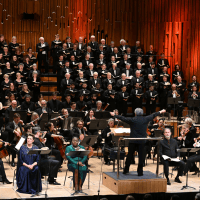
We used to call it a ‘meat and two veg’ programme, back in my concert planning days: the reliable set menu of an overture, a concerto and a symphony. It was an unfortunate term. No artistic planner likes to feel that they’re playing it safe, still less (and sources report that this goes double at the BBC) that they’re giving the public what they want. Traditional formats, familiar warhorses, dead white males: yawn! Then Paavo Jarvi and the Tonhalle-Orchester Zürich rock up at the Proms with a Beethoven overture, a Tchaikovsky concerto and Dvorak’s New World symphony and what do you know? The Royal Albert Hall was packed.

The best drama without any drama that you’ll see: Past Lives reviewed

Cinema

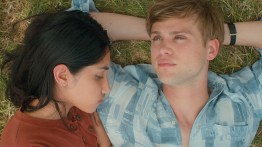
Past Lives is an exquisite film made with great precision and care about what could have been, even if what could have been does not mean it should have been. Forgive me; it’s a hard film to pin down. That it’s exquisitely affecting and made with great precision and care is enough for now. No need to make a song and dance about it. Indeed, as Past Lives so deftly shows, you can have an excellent drama without any of the drama. I think that I may be in love with Greta Lee myself This is a first film from Celine Song, who is Canadian-Korean and otherwise a playwright. It opens with a scene in New York where three people are sitting at a bar and an unseen pair are trying to guess what their stories are, as you do. (‘Is the white guy her husband?

‘People thought I was insane’: Graham Nash on the birth of Crosby, Stills and Nash

Arts feature

Graham Nash always seemed like the reasonable, peace-making one among his famously fractious compadres, David Crosby, Stephen Stills and Neil Young. But he didn’t get to where he is today by being plagued with doubt or false modesty. Even talking remotely over a Zoom connection, he still radiates a kind of unshakeable certainty. ‘I just trust that the universe loves me enough to support what I’m doing,’ he declares. ‘I don’t seek my life, my life happens to me and I’m perfectly content to let it. Look what I’ve done in my life… Pretty nice!’ ‘Joni was the only witness to that sound and it was created in less than a minute’ At 81, Nash is, incredibly, a pre-baby boomer, but mentally he seems about three decades younger.

Doesn’t get better than this: The Threepenny Opera, at Edinburgh International Festival, reviewed

Classical

It’s the Edinburgh International Festival, and Barrie’s back in town. Once, Edinburgh was pretty much the only place that you could see Barrie Kosky directing in the UK; there was a satisfyingly transgressive thrill about an opera director whose priorities were so self-evidently about the whole art form that he’d happily stage Monteverdi as a tango-powered revue. In recent years, Baz the Knife has supplied increasingly rare moments of discovery amid the EIF’s all-you-can-eat buffet of touring orchestras and reheated prestige productions. But he’s not the rare bird he was. In fact, with a Carmen in rep at Covent Garden and a new London Rheingold coming soon after his Dialogues des Carmélites at Glyndebourne and the Proms, he’s starting to look like a fixture.

A 50-quid, hour-and-a-bit troll: Aphex Twin, at Field Day, reviewed

Pop

Forty per cent of London is green space. And what we do with all that grass – all that potential – is pave it with music festivals. This year, Hyde Park hosted Billy Joel and Bruce Springsteen. Gunnersbury Park had Boygenius. Finsbury Park welcomed Pulp and Travis Scott. Field Day is a staple of the season. Always falling on a Saturday in late August, the day is wholly reserved for electronic music. Reams of twentysomethings make the pilgrimage: set off from wherever, change at Bank, District Line to Mile End, 15-minute walk, enter, set aside £7.50 for a can of warm Red Stripe. Everything is very clean: the organisers don’t want Woodstock. The first thing you see upon entry is a stand to buy Alpine’s MusicSafe Pro High Fidelity Earplugs.

Invention and irreverence: Lankum, at The Queen’s Hall, reviewed

Pop

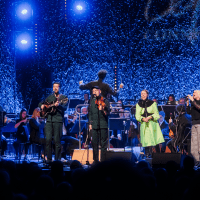
In a few days, Lankum will most likely win the 2023 Mercury Music Prize for their fourth album False Lankum – but don’t let that put you off. Increasingly, the Irish quartet feel like they belong to the lineage of artists who have wreaked radical and lasting change upon British and Irish folk traditions, from Davey Graham, Fairport Convention and Pentangle to Steeleye Span, the Pogues and Lau. The kind of artists who burrow deep into the forest of tradition in order to plant dynamite within the heartwood. At times, we might have been below deck on a ship heading for Ellis Island Appearing at the Edinburgh International Festival (EIF), Lankum played a set spilling over with invention, irreverence and attrition.

The rise of vampirism in Silicon Valley

Radio

The Immortals, which begins on Radio 4 this week, is not for the faint-hearted. While it professes to be about the human quest for longevity and the elusive ‘cure’ for getting older, it focuses largely upon the transferral of blood plasma from healthy young people to reluctantly ageing people, or, as anyone with good sense might put it, the desperate descent from vanity to vampirism. I was on the verge of switching over to something more anodyne when a 46-year-old tech entrepreneur began talking about being injected with plasma from his 17-year-old son.