Culture

Culture

The good, the bad and the ugly in books, exhibitions, cinema, TV, dance, music, podcasts and theatre.

The problem with podcasts

Arts feature

A few months ago, a clip from a podcast went mildly viral online. A lightly dressed woman sits in front of a microphone, explaining her sex life in pedantic detail to an offscreen interviewer. It was strange and unpleasant, which was why people couldn’t stop looking at it. What kind of podcast is this, exactly? Who’s listening to it? The answer was nobody. The woman was a porn actress called Vicky Banxx, and the podcast didn’t exist. Across the world, thousands of people are doing the same thing: plonking themselves down in front of mics, setting up a camera and talking in a genial, conversational style to absolutely no one.

Ugly, mechanical, soulless: Apple TV+’s Hijack reviewed

Television

Idris Elba would have made a perfect James Bond. Not the James Bond that we knew and loved when he was played by wry, capable Sean Connery or playful, tongue-in-cheek Roger Moore. But he definitely ought to have been a shoo-in for the horror show that the Bond franchise has become: dour, humourless, pumped up, ponderous, portentous, joyless… In his latest vehicle, Elba plays high-level negotiator Sam Nelson, an ordinary man yet possessed of a very particular set of skills.

A naked pamphleteering exercise: Idiots Assemble: Spitting Image The Musical, at Phoenix Theatre, reviewed

Theatre

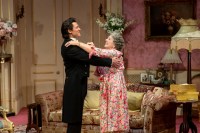
Nothing demonstrates the inanity of profanity like an undercooked comedy. The famous Spitting Image puppets have returned in a political musical that’s more cuddly than cutting. Writers Matt Forde and Al Murray add a lot of swearing to their punchlines without understanding why. The temptation to use the F-bomb is a warning sign from the writer’s internal editor: ‘Delete and try again.’ To enliven bad writing with curse words is to mistake the symptom for the cure. And the show chooses feeble or irrelevant targets. Rishi Sunak appears as a soppy head prefect who plots with Boris to depose King Charles and take over the monarchy.

Still one of the great vocalists: Peter Gabriel, at OVO Hydro Glasgow, reviewed

Pop

Most artists begin an arena show with a bang: emerging from the floor, the gods, on a hoist, everything short of being sprung headfirst from a cannon. Touring for the first time in seven years, Peter Gabriel shrugged off such rote conventions. At 8 p.m. on the dot, he shuffled on alone in a flat cap, for all the world a man with nothing more on his mind than inspecting his spuds down at the allotment. He offered a few words, some avuncular jokes, a self-deprecating jibe at his appearance. I found myself bracing for a PowerPoint presentation, but the message was simple enough not to need one: there are no stars here.

A comedy double act from John Cleese and Justin Welby: the Archbishop Interviews reviewed

Radio

I’m listening to John Cleese talking to Justin Welby in the new series of The Archbishop Interviews when the thought occurs to me that he might unwittingly be comparing himself to Christ. The comedian has just been discussing the failure of the literal-minded to comprehend sarcasm and irony, and the inanity of tabloid headlines, when he circles back to the topic of religion. Though not a believer himself, he is troubled by literal-mindedness in the reading of scripture. ‘Christ taught in parables,’ he notes, ‘and parables are not supposed to be taken literally.’ One can almost feel another headline coming on. Cleese has been waging a war against the wokerati for years.

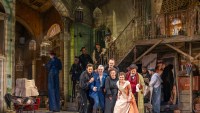
Featherweight fun: La Cenerentola, at Nevill Holt Opera, reviewed

Opera

‘Goodness Triumphant’ is the subtitle of Rossini’s La Cenerentola, and you’d better believe he delivers. It’s the sweetest thing imaginable; true, the stepsisters are awful, but their spite bubbles over in streams of such sunny major-key effervescence that it’s hard to hold it against them. As for their father Don Magnifico, you can’t seriously hiss a villain whose principal ambition is unhindered access to the palace wine cellar. It’s testimony to just how deftly Rossini handles his material that the final scene – in which the now-royal Cinderella asks only that her stepfather address her, for the first time, as ‘daughter’ – can still make you go as gooey as a chocolate fondant.

Free, noisy, fun: Young V&A reviewed

More from Arts

One of the annoying things about too many contemporary museums is that, having ditched old-fashioned closely typed descriptive labels and display cases, they often seem to be pitched at the level of a 12-year-old. So it’s refreshing to go to a museum that really is for 12-year-olds – or, at least, babies to 14-year-olds. Three cheers for the Young V&A, formerly the Museum of Childhood. It’s a combination of museum and playground, with an engaging Alice in Wonderland feel to it.

The joy of kabuki

Arts feature

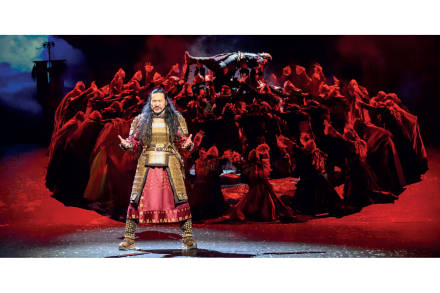
It’s a long climb up the 1,368 steps to the Shinto shrine at Kotohira. Many of the pilgrims are making comfort stops at the countless teahouses that line the route, but other worshippers break their journey at Kanamaru-za, the oldest surviving kabuki theatre in Japan. A middle-aged man in Barbara Cartland war paint, heavy black wig and kimono ought to be ridiculous Kabuki, with its vivid stock characters, juicy plots and sumptuous costumes, has always been the most popular and accessible of the Japanese theatrical traditions. In the early 17th century performances featured both sexes, but in 1629 the ruling shogunate decreed that actresses (many of them prostitutes) were a danger to public morals and the art form became – and remained – an all-male preserve.

Did ChatGPT write this? Indiana Jones and the Dial of Destiny reviewed

Cinema

Indiana Jones and the Dial of Destiny is the fifth and final film in the franchise so it’s Harrison Ford’s last go at cracking the bullwhip as either the world’s greatest archaeologist or the world’s greatest plunderer, depending on where you are coming from. Ford is now 80 but they still make him appear to climb rock faces, jump between buildings, punch underwater eels in the face and gallop a horse through the New York subway – and there is no doubt about it: he could pluck the still-beating heart from your chest if he was of a mind, so steer clear and never grab the stool next to him in Pret. (I wonder if Ford ever beseeched on behalf of his character: ‘Can’t he just do Wordle and watch Homes Under the Hammer for a morning?

Why aren’t Spoon filling stadiums?

Pop

Here’s a mystery for you. Why were Spoon, one of the most dynamic, sharpest rock bands in the world, playing a single night in a north London town hall (capacity 890) while Arctic Monkeys were playing three nights at Arsenal’s ground (capacity 59,000) as part of a UK tour that encompassed eight other stadiums in the UK, plus one arena, one park and Glastonbury? It’s not that Arctic Monkeys aren’t good – no one gets that kind of critical unanimity without being good. It’s just that Spoon are better, and better than almost everyone else. Onstage in London, aided by a genius sound engineer, Spoon were perfection So why aren’t Spoon filling stadiums? First, they rarely come to the UK.

A play that explains why England’s football team are so lousy: Dear England, at the Olivier Theatre, reviewed

Theatre

James Graham’s entertaining new play looks at the England manager’s job. Everyone knows that coaching the national side is just a hobby. The boss picks the squad for a handful of fixtures each year and gives a pep talk at half-time followed by a post-match press conference. He’s spared the bother of speculating in the transfer market and he’s never troubled by verbal monsterings from foreign owners or irascible chairmen. And no salary ought to be paid because the incumbent is assured large earnings as a public speaker. Instead of practising football the team fill up notepads with giddy jottings about their feelings Graham’s play opens in 2016 with the appointment of Gareth Southgate, a dreamy weirdo from Sussex. Southgate was one of the best players Germany ever had.

Electrifying: the Grange Festival’s Queen of Spades reviewed

Opera

In opera, as in so much high-budget entertainment, expectation management is half the battle. With its massive Greek Revival mansion, approached through miles of rolling parkland, The Grange Festival has the grandest setting of any of the summer festivals; and that might have something to do with why the opera served up there has so often felt less than overwhelming. Possibly I’ve been unlucky in my choices at the Grange since it relaunched under the current management in 2017. But many different elements need to fall precisely into place at precisely the right time if an opera is really to catch light, and quite often, under those wide Hampshire skies, that necessary spark has been absent. Not this time.

Time to take your meds, Kanye

Television

No one does agonising quite like Mobeen Azhar. In several BBC documentaries now, he’s set his face to pensive, gone off on an earnest quest to investigate a touchy subject and reached his conclusions only after the most extravagant of brow-furrowing. There is, however, a perhaps unexpected twist: the resulting programmes are rather good, creating the impression – or even reflecting the reality – of a man determined to get to the often dark heart of the matter. For a while, it did look as if the programme’s main appeal might be as a comedy of liberal discomfiture In the past, Azhar has applied his methods to such issues as the long-standing effect of the Satanic Verses controversy and why British Muslims joined Isis.

Joshua Reynolds’s revival

Exhibitions

In front of the banner advertising the RA Summer Exhibition, the swagger statue of Sir Joshua Reynolds (1723-92) by Alfred Drury stands garlanded with flowers. But the Academy he founded won’t be marking his tercentenary with a retrospective, just a small display and a series of artists’ lectures. For an anniversary show, you have to travel to his native Devon. Ever since the Pre-Raphaelites dubbed him ‘Sir Sloshua’, Reynolds has been out of fashion Ever since the Pre-Raphaelites dubbed him ‘Sir Sloshua’, Joshua Reynolds has been out of fashion: blame the outmoded ideals of beauty he promoted in his Discourses and his role as portraitist to the Georgian establishment.

Why the Chester Mystery Plays are more popular than ever

Arts feature

Hang around for long enough at Chester Cross, and theatre is pretty much guaranteed. It’s a Saturday morning in May: a human statue holds his pose, a remote-control buggy zips about advertising the spring sale at MenKind and three connoisseurs of discount cider are making their views known from the bench outside St Peter’s Church. All normal for Chester, and when the Town Crier strides up, crowds gather on the first-floor Rows like the audience at a Tudor playhouse. Oyez! The people of the city seek permission to stage the latest cycle of the city’s medieval Mystery Plays and tradition dictates that the Banns be read in public some six weeks before the first performance. You might wonder what tradition has to say about what comes next.

Wes Anderson’s latest cliché: Asteroid City reviewed

Cinema

After the screening I attended of Wes Anderson’s latest, Asteroid City, I overheard a couple of critics saying how much they loved his films and what a genius he is, and I was minded to interrupt with: ‘What, even though he’s been making exactly the same film for years now?’ Or: ‘What, even though I kept waiting for it to take a shape and it never did?’ But I was too shy, so I’ll let it all out here. The problem with Wes Anderson films, it now occurs to me, is that they are Wes Anderson films, and my patience has run out. Asteroid City is a film set within a play that, in turn, is set within a TV documentary, and if this sounds confusing, it’s probably because it is.

Taut as a drumskin: Dialogues des Carmélites, at Glyndebourne, reviewed

Opera

The three Just Stop Oil protestors were sitting in the stalls, somewhere near the middle of the front row. Someone had shelled out a cool £600 for those tickets – navigating the Glyndebourne website without, somehow, clocking the company’s loudly proclaimed commitment to sustainability (they even produce their own dyes for costumes these days, using plants from the estate) and then arriving at the venue without noticing the hilltop wind turbine, visible for miles around, which makes Glyndebourne probably the only opera house on Earth to be powered entirely by renewable energy. That kind of commitment to protest, coupled to that level of dim-bulb unawareness, commands a certain respect.

Two artists who broke the rules: Soutine | Kossoff, at Hastings Contemporary, reviewed

Exhibitions

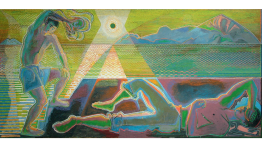
Rules in art exist to be broken but it takes chutzpah, which could explain why so many rule-breakers in modern figurative art were Jewish. Given that they were breaking the law by making figurative art in the first place, they went for broke. Where Soutine’s subjects look small and doll-like, Kossoff’s feel monumental regardless of scale Born a generation apart, Chaïm Soutine (1893-1943) and Leon Kossoff (1926-2019) had much in common. Both were brought up in Jewish working-class families with no pictures on the walls: Soutine the son of a Belarusian tailor; Kossoff, of a Ukrainian immigrant baker in London’s East End. Both were rule-breakers – Soutine because he didn’t have the patience for the rules, Kossoff because he had difficulty following them.

Short of sparkle: Cinderella-in-the-round, at the Royal Albert Hall, reviewed

Dance

Having been unexpectedly delighted by the Royal Ballet’s revival of Christopher Wheeldon’s Corybantic Games at Covent Garden last week, I slapped my wrists for underrating him as a prolific craftsman. After a second exposure to his Cinderella, handsomely mounted by English National Ballet at the Royal Albert Hall, I have reverted to that ho-hum view. Clearly feeling he needed to excavate something different out of a familiar tale and Prokofiev’s score, Wheeldon commissioned the help of the playwright Craig Lucas in constructing a new scenario that removes most of the fantasy and attempts to establish some psychologically realistic back story. A wasted effort.

Is Richard Thompson Britain’s Bob Dylan?

Pop

There are artists you go to see expecting to be challenged, surprised, even let down. And there are artists you can rely on to deliver more or less the same experience every time. Each approach has its merits. Richard Thompson is a ‘death and taxes’ kind of guy. The fact that his excellence feels inevitable can make it seem less excellent somehow, which doesn’t entirely seem fair. Richard Thompson’s greatest songs drink deeply of the dark stuff A founding member of folk-rock pioneers Fairport Convention, Thompson has been described as the British Bob Dylan. This makes sense in some ways.

Gripping and admirable: BBC Radio 4’s Fever: The Hunt for Covid’s Origins reviewed

Radio

It’s the whodunnit – or whatdunnit – that has kept scientists, politicians, journalists and armchair sleuths speculating ever since the first stories of a ‘mysterious viral pneumonia’ began leaking out of Wuhan: where did Sars-CoV-2, the virus that causes Covid-19, come from? Was it an unlucky natural occurrence, a bat virus which made the opportunistic leap from animals to humans somewhere in the pulsing zoonotic stew of a Wuhan wet market? Or did it stem from the accidental infection of a laboratory worker, most likely in the nearby Wuhan Institute of Virology (WIV), which by 2019 had collected nearly 20,000 bat samples, and more than 1,500 individual coronavirus sequences?

An unreliable history: When Winston Went to War with the Wireless, at the Donmar, reviewed

Theatre

When Winston Went to War with the Wireless is the clumsy and misleading title of a new play about John Reith’s stewardship of the BBC during the 1926 general strike. Churchill, chancellor at the time, has a minor role as an irascible plodder who makes jokes without a punchline. His role is intended to foreshadow Boris’s career and the characters keep mentioning the gold standard and its damaging effects on Britain’s economy. Gold standard is code for Brexit, of course. It’s unclear what purpose is served by casting Haydn Gwynne as Stanley Baldwin The real subject, John Reith, is played by Stephen Campbell Moore who runs the BBC like a YouTube channel. It’s a solo effort, apparently.

Is wrestling an art?

Arts feature

It isn’t easy selling out Wembley Stadium with its capacity of between 70,000 and 90,000 (depending on the exact arrangement). It’s a feat achieved by only a handful of performers each year – all of whom you’ve likely heard of. This summer, though, Wembley will play host to something rather different – an American pro wrestling show called AEW (All Elite Wrestling). A few months ago, AEW’s biggest achievement this side of the Atlantic was bagging a midnight slot on ITV4. Now it’s going head to head with Harry Styles on ticket sales. These days wrestling storylines are usually written by professional screenwriters Arguably, AEW isn’t even the most important wrestling event in Britain this year.

One of the best (if not the jolliest) TV dramas of 2023: BBC1’s Best Interests reviewed

Television

In the opening minutes of Best Interests (Monday and Tuesday), an estranged middle-aged couple made their separate ways to court, pausing outside it to look at each other with a mixture of furious reproach and overwhelming regret. From there we cut to a scene that perhaps overdid the evocation of Happier Times as the same pair laughed endlessly together on a train, before nipping off to the toilet for a spot of giggly conjugal naughtiness. Once they got home and picked up their two daughters from a neighbour, they soon showed what terrific and loving parents they were too – not least to 11-year-old Marnie, whose muscular dystrophy meant she needed especial care.

Same old, same old: Wayne McGregor’s Untitled, 2023, at the Royal Opera House, reviewed

Dance

My witty friend whispered that Wayne McGregor’s new ballet Untitled, 2023 put her in mind of Google HQ – it’s certainly a mint-cool, squeaky-clean, future-perfect affair. The set by Carmen Herrera, subtly lit by Lucy Carter, suggests infinite space and distant horizons. The costumes by Burberry are streamlined and sexless. Anna Thorvaldsdottir’s vaporous score hovers over it all in a meditative trance. Ordinary human emotions struggle to express themselves in this brave new world: we have left planet Earth.

Like attending a joyous religious service: We Will Rock You, at the Coliseum, reviewed

Theatre

One of the earliest jukebox musicals has returned to the West End. When the show opened in 2002 the author, Ben Elton, plugged his production on TV chat shows with a wisecracking slogan: ‘We Will Rock You isn’t just a title… it’s a promise.’ The easy-listening storyline draws inspiration from the Old Testament and from Mad Max. We’re in a dystopian future world ruled by faceless corporations that sell mass-produced garbage to zombified youngsters addicted to their mobile phones. A tribe of exiles, the Bohemians, roam the underworld in search of the relics of a vanished culture known as ‘rock’n’roll’. The Bohemians meet a visionary outcast, Galileo, who recites song lyrics that the Bohemians recognise as vestiges of the ‘sacred texts’ that they worship.