Culture

Culture

The good, the bad and the ugly in books, exhibitions, cinema, TV, dance, music, podcasts and theatre.

Depardieu’s Maigret is the best yet: Maigret reviewed

Cinema

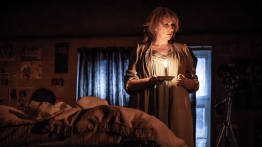
Georges Simenon’s lugubrious detective Maigret has appeared in umpteen screen adaptations and dozens of actors have played him. Now it’s Gérard Depardieu’s turn. Depardieu’s Maigret isn’t, in fact, quite how I imagined Maigret. He’s bulkier than the one in my head; moves more cumbersomely, like a sad circus bear. And I never saw him with that nose – but then who would? Yet he may be the best so far, despite the likes of Jean Gabin, Charles Laughton, Richard Harris and Michael Gambon having had a go. This is adapted from Maigret and the Dead Girl (1954) and is directed by Patrice Leconte. It is minimal and melancholic, beset by the gloominess (I don’t think any lightbulb runs to more than five watts) that also has the great detective in its hold.

The greatest artist chronicler of our times: Grayson Perry, at the Edinburgh Art Festival, reviewed

Exhibitions

The busiest show in Edinburgh must be Grayson Perry: Smash Hits which, a month into its run, still has people queuing at 10 a.m. His original title, National Treasure, was rejected because ‘national’ is a politically loaded term in Scotland. But Perry’s lens is resolutely fixed on England and Englishness. Seen from a Scottish perspective, this riot of rococo folkishness is familiar and exotic. Grayson Perry is the greatest artist chronicler of our times, with an omnificent style that’s all substance The exuberant exhibition, which is curated by the National Galleries of Scotland but showing at the Royal Scottish Academy and ends on 12 November, slaps the viewer around the face with its huge narrative tapestries, prints and pots.

Like an episode of Play School: Dr Semmelweis, at the Harold Pinter Theatre, reviewed

Theatre

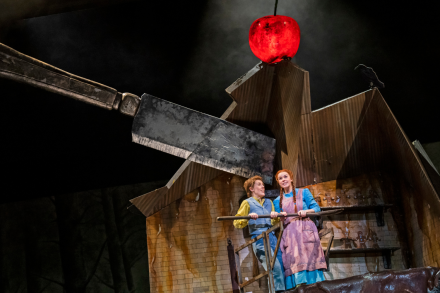
Bleach and germs are the central themes of Dr Semmelweis, written by Mark Rylance and Stephen Brown. The opening scene, set in the 1860s, presents the harmless old doctor as a charming oddball who adores playing chess with his happy, clever wife. This is code: Semmelweis is an intellectual and a feminist whom it’s safe to like. We flip back to 1837 and meet Semmelweis as a student at a Viennese maternity hospital where the male doctors kill three times as many patients as the female nurses. How come? Well, the males sport filthy aprons spattered with their victims’ blood while the nurses wear freshly laundered habits. So the high mortality rate is caused by germs. And germs can be treated with bleach.

Fast cars, minimalist design and en suite bathrooms: the real Rachmaninoff

Arts feature

The train from Zurich to Lucerne tips you out right by the lakeside, practically on the steamboat piers. A white paddle-steamer takes you out of the city, past leafy slopes and expensive-looking mansions. Tribschen, where Wagner wrote the ‘Siegfried Idyll’, slides away to the right as you head out across the main arm of the lake. At the foot of Mount Rigi, shortly before the steamer makes its whistle-stop at the lakeside village of Hertenstein, is a promontory where – if the sun is coming from the west – a yellow-coloured cube shines among the trees. This is the house that Sergei Rachmaninoff built between 1931 and 1934: Villa Senar, his last attempt to make a home outside Russia in Europe.

Dismantle the maestro myth and classical music will suffer

The news that conductor John Eliot Gardiner is thin-skinned, ill-mannered and thuggish should not be news to anyone. Or not to any Spectator readers anyway. ‘What, one wonders, will John Eliot Gardiner be chiefly remembered for?’ wrote Stephen Walsh in October 2013. ‘Perhaps, by many who have worked with him, for his notorious rudeness to performers and colleagues.’ Peter Phillips wrote about Gardiner ‘losing his temper’ with a member of the London Symphony Orchestra in April 2014 (Private Eye had alleged the conductor had clocked a trumpeter). ‘Is there anything [Gardiner] can’t do?’ asked Damian Thompson in a Heckler column from 2015. ‘The answer is yes. One art eludes him: good manners.

At the Science Gallery I argued with a robot about love and Rilke

Exhibitions

A little-known fact about the Fairlight Computer Musical Instrument, the first sampling synthesiser, introduced in 1979, is that it incorporated a psychotherapist called Liza. Stressed musicians could key in an emotional problem and Liza would begin the session with the soothing opening: ‘What is it that troubles you about x?’ She was flummoxed by a frivolous question from my husband, an early Fairlight owner, about a hole in her bucket but dealt expeditiously with my nine-year-old stepson. When he told her to get lost, she shut the system down.

Colourful, tender and sweet, grounded in magical rather than social realism: Scrapper reviewed

Cinema

Scrapper is a film about a working-class kid who, after her mother dies, has to look after herself. I know what you’re expecting. It isn’t that. It’s not an earnestly grim wrist-slitter. It’s not an indictment of modern Britain with no shred of hope. It’s not Ken Loach. It’s not even desaturated and grimy. Instead, it’s colourful, tender and sweet with quirky moments that are grounded in magical rather than social realism. And it’s just 84 minutes long, which is a boon. (‘A boon,’ confirms bladders everywhere.

Enthralling: BBC4’s Colosseum reviewed

Television

In the year 2023, the Neo-Roman Empire was at the height of its powers. A potentially restive populace was kept in check using a time-honoured technique known as ‘Bread and Circuses’. The ‘Circuses’ part consisted of a remarkable piece of technology in which spectacles could be beamed directly into the homes of the citizenry, filling them with awe, wonder, gratitude and a sense of their insignificance in the sweep of history.

It was midnight in a field in Wales and I was lying face down in six inches of mud: Green Man Festival reviewed

Pop

I love Green Man. The smallish festival is the second most beautiful site I’ve ever visited (after G Fest, which is situated on a beach in a fjord in the Faroe Islands). Nestled in a valley between the mountains of the Brecon Beacons, it has great bills, it’s impeccably organised and I feel nourished by it. But, in the interests of being honest about festivals for those who have never been, I should also confess that this year it supplied the single most miserable experience of my music-watching life. It was midnight, in a field in Wales, and I was lying face down in six inches of mud Friday was the kind of day Noah might have felt a little discombobulated by. It began raining before dawn and it never let up. Come nightfall, the wind picked up too.

A brilliantly cruel Cosi and punkish Petrushka but the Brits disappoint: Festival d’Aix-en-Provence reviewed

Classical

Aix is an odd place. It should be charming, with its dishevelled squares, Busby Berkeley-esque fountains, pretty ochres and pinks. Yet none of it feels quite real. It’s as if an AI bot had been asked to design a Provençale city. Everything is suspiciously perfect. And then you notice all the Irish pubs and American student clones. It’s the prettiness of a Wes Anderson set – with the charm of an airport. In this uncanny valley, however, lies what continues to be one of the world’s classiest opera festivals. The major new commissions this year were two British chamber operas. George Benjamin and Martin Crimp were returning with Picture A Day Like This, their third collaboration for Aix.

‘I disliked him intensely’: Richard Lewis on first meeting Larry David

Arts feature

Richard Lewis has died at the age of 76. Ben Lazarus interviewed him for the magazine last year: Richard Lewis first met Larry David at a summer sports camp, aged 12. ‘I disliked him intensely. He was cocky, he was arrogant,’ Lewis says. ‘When we played baseball I tried to hit him with the ball: we were arch rivals. I couldn’t wait for the camp to be over just to get away from Larry. I’m sure he felt the same way.’ Eleven years later they met again on the New York stand-up scene – but didn’t recognise each other. One evening, as they drank into the night, it dawned on them. ‘I looked at his face and I said, “There’s something about you, man, that spooks me.” Just saying that spooks everyone!’ It clicked. ‘“You’re Richard Lewis!

Bags of charm and a gripping plot: Netflix’s The Chosen One reviewed

Television

Some years ago, Mark Millar (the creator of Kick-Ass, Kingsman, etc.) hit on yet another brilliant conceit for one of his comic-book stories: a three-part series based on the premise that Bible-believing Christians are right, that the Antichrist walks among us and that only the second coming will save us – eventually – from the horrors depicted in Revelation. Since the late 1960s, screenwriters have tended to give the devil all the best tunes ‘I have nothing but happy memories of growing up as a Catholic, and I wanted to do a book about faith that was both intelligent and respectful,’ said Millar. ‘If we can do a thoughtful take on Batman surely we can do the same with Jesus?

Imagine a school concert hosted by Bela Lugosi: Budapest Festival Orchestra and Ivan Fischer, at the Proms, reviewed

Classical

‘Audience Choice’ was the promise at the Budapest Festival Orchestra’s Sunday matinee Prom, and come on – who could resist the chance to treat one of the world’s great orchestras like a colossal jukebox? Actually, this wasn’t the latest wheeze of some clueless BBC head of music: it’s a favourite party trick of the BFO and its conductor Ivan Fischer. The audience has a ‘menu’ of some 275 individual works and symphonic movements; they vote for six of them and the BFO plays their selection, unrehearsed, on the spot. Orchestral musicians never do anything unrehearsed. They hate it. But the BFO does it anyway, because they’re the best, and they know they are.

Gripping tale of Ireland’s most polite bank robber: I’m Not Here To Hurt You reviewed

More from Arts

There should really be a special word for it: that vicarious fragility you feel when hearing of a minor decision with catastrophically heavy consequences, as if a falling acorn had tipped a boulder. In the case of John O’Hegarty, the subject of the engrossing podcast I’m Not Here To Hurt You, the catalyst for disaster was a quick short cut the wrong way down a one-way Dublin street while working as a bicycle courier. It would ultimately lead him – an academic with a master’s degree in psychology – into heroin and crack cocaine addiction, followed by a stint as a bank robber and eight years in prison.

You’ll be pleasantly surprised at how unpleasant this is: Strays reviewed

Cinema

Based on the poster showing two cute dogs – a border terrier and a Boston terrier – I had assumed Strays was a (probably lame) kiddie film with a remit to amuse the aforementioned kiddies during the long, long, very long summer holidays, so here’s what I was saying to myself during the opening moments: ‘Christ on a bike, what the hell is this?’ I can now tell you that Strays is vulgar, rude, offensive and disgusting. But the biggest, weirdest shock? At a certain point I realised it was funny, and rather touching, and that I was having fun. In other words, I was pleasantly surprised. Or, given its frequent scatological content, pleasantly surprised, unpleasantly. Here’s what I was saying to myself during the opening moments: ‘Christ on a bike, what the hell is this?

An extraordinary woman: The Art of Lucy Kemp-Welch, at Russell-Cotes Art Gallery, reviewed

Exhibitions

In March 1913 two horse painters met at the Lyceum Club to discuss the establishment of a Society of Animal Painters to raise the profile of their genre. Of the two, it was Alfred Munnings whose profile needed raising. Lucy Kemp-Welch had been a celebrity since her twenties when her 5x10ft canvas ‘Colt Hunting in the New Forest’ caused a sensation at the 1897 RA Summer Exhibition and was purchased by the Chantrey Bequest for the new National Gallery of British Art on Millbank. She threw herself into every activity she depicted, whether rounding up colts or hauling timber The daughter of a Bournemouth solicitor, Kemp-Welch had been riding and sketching horses since the age of five and had developed a photographic memory for catching them in action.

Uneasy listening: Kathryn Joseph, at Summerhall, reviewed

Pop

I have always been fascinated by artists who bounce between tonal extremes when performing, particularly the ones who serve their songs sad and their stagecraft salty. Adele, for example, fills the space between each plushily upholstered soul-baring ballad by transforming into a saucy end-of-pier variety act, coo-cooing at the crowd and cursing like a squaddie. John Lennon gurned and clowned his way through the Beatles’ concerts, subverting the naked suicidal plea of ‘Help!’ in the process. John Martyn would belch and joust in mock-Cockney at the conclusion of a particularly sensitive piece. Jackie Leven punctuated songs of immense pain and sadness with eye-watering stories of defecating in alleyways and getting blootered with the Dalai Lama’s bodyguard.

On the trail of Roman Turkey with Don McCullin

Arts feature

The genesis for our book Journeys across Roman Asia Minor was hatched in the autumn of 1973, when Sir Donald McCullin was a young man. He had been assigned by the Sunday Times to work with the writer Bruce Chatwin on a story that would take them from a murder in Marseille to the Aurès highlands of north-east Algeria. It was an emotionally gruelling journey and they rewarded themselves on the way back by stopping off to look at a solitary Roman ruin. No photographs were taken, but the memory of this place from all those years ago remained embedded in Don’s imagination. Three decades later, that seed bore fruit, as he undertook a series of visits to North Africa. I was lucky enough to accompany him on two of these trips, into western Libya and southern Algeria.

Modest fun: Red, White & Royal Blue reviewed

Film

Red, White & Royal Blue is a rom-com based on the LGBT bestselling novel by Casey McQuiston. Nope, me neither, but the New York Times reviewed it as ‘a brilliant, wonderful book’ and on Amazon UK it has garnered nearly 44,000 reviews, with an average of 4.5 stars, so let’s not be hasty. The romance here is between ‘America’s First Son and the Prince of Wales’, says the blurb, which does sound juicy, and it’s not a YA (Young Adult) novel but an NA (New Adult) one, apparently, aimed at a slightly older audience. I did consider reading it so that I could say this isn’t as good as the book, as is standard in these instances, but then realised that as an OA (Old Adult) life is too (frighteningly) short and I couldn’t be bothered. But my best guess? Not as good as the book.

A vanity exercise: Carlos at 50, at the Royal Opera House, reviewed

Dance

In 2015 Carlos Acosta announced his retirement from the Royal Ballet and the classical repertory. It seemed like the right moment; he was 42 and, truth to tell, some of us could detect a slight waning of his prowess and physique. Time to move on: since then, he has done great work in his native Cuba and is currently a venturesome artistic director of Birmingham Royal Ballet. He is a rather wonderful person. Eight years after his withdrawal from Covent Garden, however, he has made a brief return – addressing an itch, he says, that had to be scratched. The house sold out for five nights running and the reception was rapturous, but I am left with mixed feelings.

Much of the mysteriousness is inadvertent: ITV’s The Reunion reviewed

Television

The Reunion opened in 1997 with some young people being carefree: a fact they obligingly signalled by zipping around the South of France helmetless on motorcycles while laughing a lot. Love appeared to be in the air as well – given that they consisted of two couples: the men in charge of driving (different times), the girls holding them tightly around the waist. But then matters took a darker turn as a voice-over intoned that ‘memory is a false friend’ and we sometimes ‘create our own truth’. And with that, we cut to present-day London where, despite its taste for banalities, the voice-over turned out to belong to a respected author called Thomas Degalais – duly seen signing books for a queue of grateful fans.

Is it all an elaborate practical joke? Mac DeMarco, at Hackney Empire, reviewed

Pop

It’s not just who our pop heroes are that marks the passing of the generations; it’s how those heroes present themselves. Kevin Rowland, who turns 70 next week, appeared on stage for his London album launch in a jaunty sailor’s hat and striped top, looking as though he’d just come from a fashion shoot. Mac DeMarco, aged 33, ambled on in baseball cap, shlubby T-shirt and jeans. Rowland was upstanding, commanding and just a little forbidding. DeMarco sat on a stool and told a long story claiming that he and his keyboard player had been Oregon miners: a story which extended to include coprophagia, hair fetishism and maple syrup. Rowland is total commitment; DeMarco is total detachment. Both were adored above and beyond the usual level of dedication.

Lumpy, bulgy, human: Threads, at Arnolfini Bristol, reviewed

Exhibitions

Trophy office blocks designed as landmarks are not welcoming to humans; their glass and steel reception areas feel more suited to robots. But this summer the cavernous lobbies of two City buildings – 99 Bishopsgate and 30 Fenchurch Street – have been humanised by To Boldly Sew, an exhibition of wall hangings by the winner of this year’s Brookfield Properties Crafts Award, Alice Kettle. As the owners of Renaissance palazzi and Jacobean mansions understood, wall hangings bring warmth and colour to a cold interior: once more prized than paintings, they doubled as decorations and draught excluders. Now, dignified with the name of ‘fibre arts’, fabrics are back in the fine-art fold and most of the artists working with them are women.

Our great art institutions have reduced British history to a scrapheap of shame

Arts feature

Let’s indulge in some identity politics for a second: I am from Hong Kong, born as a subject of the last major colony of the British Empire, minority-ethnic, descended from Chinese refugees, now living here in exile. This summer, both the National Portrait Gallery and Tate Britain are presenting new displays that are meant to reflect the ‘inclusive’ and ‘diverse’ identities of Britain. Supposedly, I fit nicely among their target audience. In reality, as an immigrant looking to be included in this nation, I am perplexed by my visits.

A welcome antidote to UK crime drama: Netflix’s Kohrra reviewed

Television

It has been quite some time since I’ve been able to bear watching UK crime drama. All right, I do cheat occasionally with series like the one featuring the delightfully grumpy, chain-smoking Cormoran Strike, but on the whole I can’t stand the mix of predictability and implausibility: all the goodies will be female and/or ethnic; the murderer will always be white, middle class and male; no one ever gets arrested for misgendering someone on Twitter because in the parallel universe of cop TV the police still actually think it’s their job to solve crimes. So, your options are either to watch classic episodes of The Sweeney or to find a cop series from one of those countries where the old values still prevail. India, for example.

Bizarre and outdated: Word-Play at the Royal Court reviewed            

Theatre

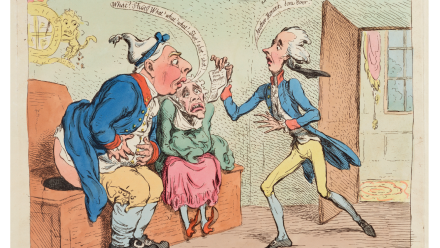
The Royal Court’s new topical satire, Word-Play, opens with a gaffe-prone Tory prime minister giving a TV interview in which he commends Enoch Powell’s ‘Rivers of Blood’ speech. The Downing Street press team suffer a meltdown as they struggle to draft an apology or a retraction. Opposition parties try to profit from the blunder and the PM’s words spread across the globe and earn him praise from various authoritarian governments, led by China. This opening scene makes sense only if the British prime minister is a white male named Boris but the author, Rabiah Hussain, hasn’t troubled to update her script in the light of recent developments. The result is a topical play that feels like ancient history.