Culture

Culture

The good, the bad and the ugly in books, exhibitions, cinema, TV, dance, music, podcasts and theatre.

Magnificent: Pretty Red Dress reviewed

Cinema

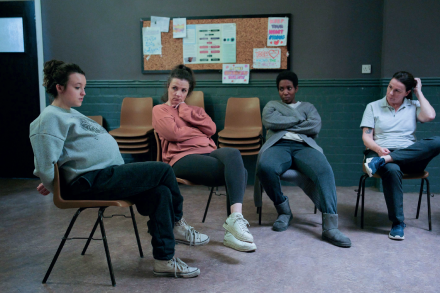
Pretty Red Dress is a debut feature starring a one-time X Factor winner so, you know, kill me now. But it’s a thin week and I’ll cut it some slack and be kind, like it says on the T-shirts. That was my thinking, because, as is now obvious, I can be a patronising fool. This is a terrific film. It’s original, has heft, is magnificently performed, and it blew me away. The writer-director is Dionne Edwards who, as I also now know, was named one of Screen International’s Stars of Tomorrow in 2019. One of her shorts, We Love Moses, is available on Disney+ and it is totally worth 15 minutes of your time. The X Factor winner isn’t Harry Styles, for once, but Alexandra Burke, who triumphed in 2008.

Brilliantly unhinged: Grace Jones, at Hampton Court Palace, reviewed

Pop

Some artists need flash bombs to make an impression on stage. Some need giant screens. Some need to run around like hyperactive toddlers. All Grace Jones needed was a hula hoop – not the delicious potato snack, but the plastic ring. For the ten minutes or so of ‘Slave to the Rhythm’ that ended her set on a balmy evening in the courtyard of Hampton Court Palace, she languidly rotated the ring around her hips, all while she strode across the stage, then climbed a set of stairs. Not a single revolution was missed. I realise that you don’t come to these pages for reviews of hula hooping, but by God, it was astonishing. I like to think it was what Henry VIII would have wanted. It was a fitting end to a brilliantly unhinged show.

Birmingham barbershop meets the Folies-Bergère: Hurvin Anderson’s Salon Paintings, at the Hepworth Wakefield, reviewed

Exhibitions

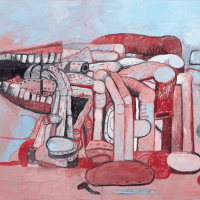
There’s a nice irony to the title Salon Paintings when the salon in question is a barbershop, an irony that won’t be lost on Hurvin Anderson. Born to Jamaican parents in Birmingham in 1965 and trained at Wimbledon and the Royal College at a time when the Euston Road School discipline of measured observation was still being taught in English art schools, Anderson is steeped in the European painting tradition. Explaining the fascination of the mirrored interior of the Birmingham barbershop that first inspired the series of paintings in his exhibition at the Hepworth Wakefield – begun in 2006 and completed this year – he compares it to Manet’s ‘Bar at the Folies-Bergère’: the barbershop as the Caribbean equivalent of the impressionist café.

The woman who pioneered colour photography

Arts feature

When colour photography first came in at the start of the last century, it met a surprising amount of resistance from distinguished photographers. But Madame Yevonde loved it, owned it, revelled in it. She invested in a new Vivex repeating back camera, exhorting her fellows at the Royal Photographic Society in 1932: ‘Hurrah, we are in for exciting times. Red hair, uniforms, exquisite complexions and coloured fingernails come into their own… If we are going to have colour photographs, for heaven’s sake let’s have a riot of colour.’ But what she went on to create was far better than that. In her classical series ‘Goddesses’ (1935) she controlled colour like a Renaissance master, painting with it, creating atmosphere and character.

Hamlet fans will love this: Re-Member Me, at Hampstead Theatre, reviewed

Theatre

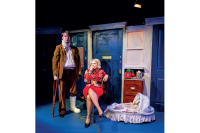
A puzzle at Hampstead Theatre. Literally, a brain teaser. Its new production, Re-member Me, is a one-man show written and performed by Dickie Beau, whose name is a punning allusion to a bow tie. The oddly spelled word, ‘re-member’ refers to the process of reassembling the separated limbs of a dramatic character during the rehearsal process. The poster for the production centres on Mr Beau dressed in 1980s sports gear and wearing a T-shirt blazoned with the logo of ‘Wittenberg University’, written in German. Enfolding his skull is a rainbow headband. These details tell us that the play examines the character of Hamlet with a particular focus on the travails of gay actors performing the role during the 1980s Aids epidemic.

The greatest female composer you’ve never heard of

Classical

One of the most intriguing piano concertos of the late 19th century is unknown to the public – and no wonder: so far as I can work out, it has only been recorded once, on a speciality label devoted to neglected French repertoire. As I write this, there are only 11 copies available from Amazon and I recommend that you grab one quickly, because the Second Piano Concerto of Marie Jaëll (1846-1925) demands repeated listening. If you want proof women of the era could move beyond well-carpentered clichés, listen to Marie Jaëll The concerto’s harmonic language is superficially conventional: sweeping tunes decorated by arm-swinging arpeggios.

Gratuitously twisty, turny nonsense: Sky Max’s Poker Face reviewed

Television

Imagine if you had the power always to tell whether or not someone was lying. You’d have it made, wouldn’t you? The intelligence services would be queuing up to employ you for interrogations; top law firms would pay you top dollar to act as their adviser; you’d win gazillions in all the poker championships; you’d never buy a dodgy second-hand car, not that you’d need to with all that money you’d have. Admittedly, though, your life and adventures would make for a very boring TV series because everything would be so easy. Hence the tortured premise of Rian Johnson’s Poker Face, in which we are invited to believe that our heroine, Charlie Cale (Natasha Lyonne), has blown her skills spectacularly.

Let’s hear it for the lesser-spotted nepo daddy

Pop

Rob Grant releases his debut album, Lost at Sea, this week. A 69-year-old millionaire and former ad man, furniture exec and domain developer, Grant has made a record of ambient, ocean-themed piano doodles glorying in titles such as ‘In the Dying Light of Day: Requiem for Mother Earth’, ‘A Delicate Mist Surrounds Me’ and ‘The Mermaids’ Lullaby’. Not incidentally, he is also the father of one of the world’s biggest (and best) alt-pop stars, Lana Del Rey. The title track features his daughter’s unmistakeable contralto, while her name is emblazoned on the front cover. Father’s Day is just around the corner, and Ms Del Rey has delivered a pearl of a present for Pappy: his very own album.

Wikipedia does more justice to this fascinating story than this film: Chevalier reviewed

Cinema

Chevalier is a biopic of Joseph Bologne, Chevalier de Saint-Georges, whom you’ve probably never heard of, as I hadn’t. He was an 18th-century French-African virtuoso violinist and composer who wowed everyone in his day – in 1779, John Adams, then the American ambassador to France, called him ‘the most accomplished Man in Europe’ – but was erased from history and is only lately being rediscovered. Fascinating, you would think, and he was fascinating. Even a cursory look at his Wikipedia entry is thrilling. But this is not a fascinating or thrilling film. It is handsomely mounted yet strangely bland and strikes too many false notes. I was going to say it’s as if Disney had made it but then remembered: this is Disney.

Perfect radio for a nation of grumblers: Radio 4’s Room 101 with Paul Merton reviewed

Radio

Welcome back to Room 101, which has returned to the radio – after nearly 30 years on TV – and reverted back to its one-to-one format with presenter Paul Merton. The programme sits comfortably within that peculiarly British corner of the landscape that champions The Archers, the Proms, Rich Tea biscuits and knitted dog coats. And its success makes sense. A nation of good-humoured grumblers is arguably more likely to be excited by a list of common grievances than by, say, an overly jubilant selection of Desert Island Discs. Why listen to someone talk about what makes them happy when you can witness a guy losing it over the incomprehensibility of parking signs? Merton indulges this demographic by channelling the spirit of I’m Sorry I Haven’t A Clue.

The 19th century Chinese craze for all things European

Exhibitions

By the 1800s, the mechanical clock had become a status symbol for wealthy Chinese. The first arrived with Jesuit missionaries and Portuguese merchants years earlier, but it wasn’t until the early 19th century that those outside of the imperial court could afford them. Rich merchant families displayed their clocks proudly, like their European counterparts had showed off pineapples. Women’s jackets started to be decorated with ‘clock buttons’ made of enamel and one family embroidered a clock face on to their baby’s silk bib. European aesthetics made their way into other parts of Chinese society too. Traditional ink portraits became colourful and hyper-realistic, inspired by photography. Courtesans learned to play billiards and ate in restaurants decorated like European salons.

We must save this Tudor masterpiece for the nation

Arts feature

Last month there was rejoicing that Joshua Reynolds’s ‘Portrait of Omai’ had been saved for this country at a cost of £50 million. My hat was in the air with everyone else’s. But much less attention has been given to another artwork that is in need of rescuing, one of far greater national and artistic importance: an object that proclaims the birth of the Church of England – and is available for less than a tenth of the cost of ‘Omai’. It has been described as the ‘Holy Grail of Tudor tapestry’ ‘Saint Paul Directing the Burning of the Heathen Books’ by Pieter Coecke van Aelst is a monumental tapestry, nearly 20ft long and 12ft high. It is the sole survivor of a series of nine tapestries that Henry VIII commissioned in the mid-1530s on the life of Saint Paul.

Can we know an artist by their house?

More from Arts

Show me your downstairs loo and I will tell you who you are. Better yet, show me your kitchen, bedroom, billiard room and man cave. Can we know a man – or woman – by their house? The ‘footsteps’ approach to biography argues that to really understand a subject, a biographer must visit his childhood home, his prep-school boarding house, his student digs, his down-and-out bedsit and so on through barracks, shacks, flats, garrets, terraces, townhouses and final Georgian-rectory resting-place. Walk a mile in their shoes – then put on their carpet slippers. So, to know Horace Walpole, we board the 33 bus to Strawberry Hill. For Henry Moore, it’s Hoglands and its cactus house. For Barbara Hepworth, St Ives and sculptor’s dust.

Terrifying: Reality reviewed

Cinema

Reality is an edge-of-your-seat thriller that isn’t like any edge-of-your seat thriller you’ve encountered before. Trust me. It’s a docudrama that isn’t ‘based on a true story’ because it is a true story. It’s an enactment of the FBI’s interrogation of American whistleblower Reality Winner. Taken directly from the transcript of the audio recording, the word-for-word screenplay includes every cough, every ‘um’, every dog bark, every banality, no embellishments. Yet it’s more terrifying than any film that has set out to terrify (see: Sisu). You should trust me on this too. The film is directed with clarity and precision by Tina Satter, a playwright who discovered the transcript online and first turned it into a theatre piece (Is This a Room).

Exceptional career woman, unexceptional painter: Lavinia Fontana, at the National Gallery of Ireland, reviewed

Exhibitions

Reviewing the Prado’s joint exhibition of Sofonisba Anguissola and Lavinia Fontana in the Art Newspaper three years ago, Brian Allen pronounced it well worth seeing but predicted that each of these pioneering 16th-century women artists ‘would wither in the spotlight of her own retrospective’. Was he right? In its new monographic exhibition devoted to Fontana, the National Gallery of Ireland puts his waspish prediction to the test. Her ‘Galatea and Cherubs’ and ‘Venus and Mars’ are believed to be the first nudes painted by a woman Ireland’s National Gallery was an early investor in Fontana, acquiring her most ambitious work, ‘The Visit of the Queen of Sheba to King Solomon’ (1599), eight years after opening in 1864.

One of the most tuneless, vapid, dismaying things I’ve ever seen: Mötley Crüe, at Bramall Lane, reviewed

Pop

I’m not sure I’ve ever seen anything worse than Mötley Crüe in Sheffield. Nothing more tuneless, empty, vapid and dismaying. The Los Angeles glam-metal band became superstars in the 1980s, largely by wearing lots of make-up and doing terrible things, but I’ve never understood why. Even those who weren’t repulsed by the band members’ behaviour and personalities surely couldn’t have detected any actual tunes in there. At Bramall Lane, with a viciously loud PA, the few melodies that were there were largely undetectable. And the band – now in their sixties – still gloried in their obnoxious infantilism.

Wonderfully naturalistic and intriguingly odd: BBC2’s The Gallows Pole reviewed

Television

In advance, The Gallows Pole: This Valley Will Rise was touted as a radical departure for director Shane Meadows. After all, he made his name with the film This Is England and its three rightly acclaimed TV sequels, about a group of working-class folks struggling to survive against the heartless backdrop of that reliable old enemy: Thatcher’s Britain. Now, he’s giving us a costume drama set in 18th-century Yorkshire. In fact, though, it didn’t take long to realise that Meadows’s departure mightn’t be as radical as advertised – because the programme could easily have been entitled This Was England.

The lives of even anti-Putin Russian artists are being made impossible

Arts feature

Swift and sure, the guillotine blade came down on Russians in the West on 24 February last year, the day Russia invaded Ukraine. The logic was clear as concerned Putin loyalists; cutting them off from western gravy trains in the face of their dear leader’s grotesque aggression made some sense. They could bed down with the devil, so to speak, but not on our buck. So one doesn’t weep much over the relegation to Europe’s fringes of the likes of openly pro-Putin musicians such as pianist Denis Matsuev or the former LSO and Munich Philharmonic chief conductor Valery Gergiev. Then there’s the soprano Anna Netrebko, who, seen as being close to Putin, was sacked immediately by the Met when she didn’t condemn the Russian President fast enough.

Why has the work of Franz Liszt fallen into such neglect?

In 1875, Franz Liszt told a pupil of the kiss of consecration – the Weihekuss – that Beethoven bestowed upon him more than fifty years earlier. After watching the young Hungarian prodigy play works by Ries, Bach and Beethoven himself, he kissed Liszt on the forehead and said: ‘Go! You are one of the fortunate ones! For you will give joy and happiness to many other people.’ Liszt isn’t giving joy to many people these days. Take this year’s BBC Proms, which feature only one piece by Liszt, compared to two by Aaron Copland, four by Dora Pejacevic, and six by Samuel Taylor-Coleridge. Over the past decade, Liszt has appeared in eight Proms, while Rachmaninov has featured in 40.

Stunts, gimmicks, tricks, hot air: snapshots from the edge of modern dance

Dance

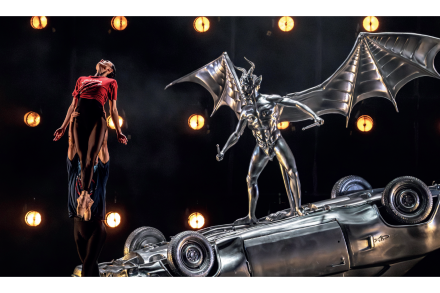
This month I’ve been venturing into the further reaches of modern dance – obscure territory where I don’t feel particularly comfortable. In its hinterland is the Judson Church in New York: it was here, during the early 1960s, that young Turks such as Trisha Brown and Steve Paxton began investigating the idea that dance need not involve formalised gestures or what primary school teachers call ‘movement to music’, but could grow instead out of quotidian activities such as running, jumping and walking. From that point of departure, the journey has become ever more extreme and contorted, traversing the realms of performance art and installation, often politicised and sometimes pornographic.

Spooky, classy dystopian sci-fi: Apple TV+’s Silo reviewed

Television

Back once more to our favourite unhappy place: the dystopian future. And yet again it seems that the authorities have been lying to us about the true nature of reality. This time – in Silo – the lie concerns the nature of the world outside the enormous silo in which our heroes and about 10,000 other survivors have been hiding for the past 100-odd years since some nameless apocalypse. Is it really as dangerous as the Powers That Be say? Or is this an illusion, maintained over a century of relentless official propaganda, designed to keep the enclosed populace frightened and in check? Silo began life in 2011 as a self-published short story by Hugh Howey – called Wool, not Silo – which he put out through Amazon’s Kindle Direct.

Dazzling – if you ignore the music: Beyoncé, at Murrayfield Stadium, reviewed

Pop

Scheduling open-air concerts in mid-May in northern Europe is a triumph of hope over experience. I last spent time with Beyoncé – I’m sure she remembers it fondly and well – in 2016, in a football stadium in Sunderland on a damp, drizzly, early-summer English evening of the type that even strutting soul divas struggle to enliven. I don’t think it was merely the weather which left me underwhelmed by her brutalist attack, the sheer choreographed drill of the show, the lack of engagement, of spontaneity, of joy. By then, Beyoncé was no longer seeking to be regarded as a mere pop star. She had recently taken on the unearthly qualities of an alien presence, entirely unrelatable, tilting for something far more culturally significant than a spot in the charts.

Looking for a male role model? Check out the silverback gorilla

Radio

One so often hears about famous people who are horrible when they think no one important is looking – barking at assistants, or snapping at waiters – that it’s heartening to learn of the opposite: kindness in circumstances that promise little obvious reward. The author and filmmaker Jon Ronson had just such a story last week about his pick for Radio 4’s Great Lives series: the late Terry Hall, lead singer of the Specials and Fun Boy Three, and an attractively morose and compelling presence on the 1970s and ’80s music scene.  The 12-year-old Ronson was at the front of an ‘excitingly feral’ Specials gig in Cardiff when he conceived ‘on a whim’ of the daring plan of pretending to faint, so that bouncers would lift him to watch the show from the side of the stage.

Ugly and humdrum: Brokeback Mountain, at @sohoplace, reviewed

Theatre

Brokeback Mountain, a play with music, opens in a scruffy bedroom where a snowy-haired tramp finds a lumberjack’s shirt and places it over his nose. Then he inhales. Who is this elderly vagrant? And why is he absorbing the scent of an abandoned garment? Two hours later, at the play’s close, we finally learn that the old man, Ennis, is sniffing a shirt that once belonged to Jack Twist who became his lover while they worked as shepherds in Wyoming. Yes, shepherds. The ‘gay cowboy’ label is a misnomer because the lads are ranching sheep, and their affair belongs to the half-forgotten days of homosexual persecution. The precise year, 1963, is signalled to us with a clunky line from Jack about JFK’s decision to escalate America’s involvement in Vietnam.

I may never recover: Sisu reviewed

Cinema

When I went into the Sisu screening I knew only that it was a Finnish film, so was expecting an arthouse drama, maybe featuring bearded men in nice fisherman knits and herrings being salted, rather than this hyper-violent, viciously bloody exploitation flick from which I may never recover. It is a swift 90 minutes and will please those who desire this experience, and it is clever in its simplistic, empty way. But if it’s not your genre, you will almost certainly find yourself praying: ‘Dear God, I’ll never tell another lie if you just make this end.’ The film begins with a title card saying that ‘Sisu’ is a Finnish world that can’t be translated.