Culture

Culture

The good, the bad and the ugly in books, exhibitions, cinema, TV, dance, music, podcasts and theatre.

Incomprehensible and epically anti-climatic: Netflix’s Bodies reviewed

Television

Bodies is another of those ‘ingenious’ time-travel apocalypse mash-ups so tricksy and convoluted that by the time the ending comes you’re praying fervently that the nuclear bomb will go off and everyone will die as punishment for the hours of life you’ve wasted on this angsty, politically correct, humourless tosh. The premise is initially intriguing: four detectives in different time periods – 1890, 1941, the present and the near-future – have to solve the same murder mystery. But it soon becomes clear, as is the way with these things – see, for example, the mind-bending irksomeness of Christopher Nolan’s Inception – that the solution will be simultaneously incomprehensible and epically anti-climatic.

Funny, faithful and inventive: Scottish Opera’s Barber of Seville reviewed

Classical

A violinist friend in the City of Birmingham Symphony Orchestra used to talk about an orchestra’s ‘muscle memory’; a collective instinct that transmits itself, unspoken and unconscious, among the members of the ensemble. The occasion was a return visit from Sir Simon Rattle, a good decade and a half after he’d left Birmingham. At that point, perhaps only one third of the musicians had been present when Rattle last conducted this particular work. No matter. ‘You know how we play this,’ said Rattle, and sure enough they did, slipping as one into the exact articulation and dynamics that Rattle had instilled all those years ago. As with the human body, cells are replaced, but the individual remains the same.

This recreation of Dylan’s Free Trade Hall concert is supremely good

Pop

In May 1966, Bob Dylan toured the UK with The Band, minus drummer Levon Helm, and abrasively pulled the plug on any lingering notions of his being a mere folk singer. Playing two sets every night – the first acoustic, the second electric – even the solo numbers were wild, lysergic, unravelled. The electric ones whipped through the tweed and tradition like the howl of a strange new language. The crowds booed and one chap famously cried ‘Judas!’ (though presumably many of those present also enjoyed it). Dylan muttered and swore and was unbowed. The fast-moving currents of pop culture changed course almost perceptibly.

Joni Mitchell, in her own words

Radio

There’s always been something at once girlish and steely about Joni Mitchell, the stellar Canadian whom Rolling Stone called ‘one of the greatest songwriters ever’. As Radio 4’s Verbatim programme in honour of her 80th birthday reminds us, a stubborn hopefulness has carried her through turbulent times. Perhaps growing up in Saskatchewan, where winter temperatures drop to –30°C, put an early stiffener in her soul. When she contracted polio, aged nine, her mother braved the hospital ward in a mask to bring her bedridden daughter a small Christmas tree, but little Joni made a promise to the tree that she would walk sufficiently well again to be allowed back home for Christmas. This she managed. Before hitting ten, she took up smoking.

The rise of Christian cinema

Arts feature

Author Matthew Vaughan spent much of his life in the church – and even preached the gospel in Pakistan – but never considered himself a fan of Christian media. ‘To be honest, most of the films I saw were pretty corny,’ he tells me over the phone from his home in Birmingham. For Vaughan, that changed when he came across an American box-set drama about Jesus called The Chosen. ‘It kept getting recommended to me by American missionaries,’ he says. ‘They said it was like a Jesus movie for the Netflix generation – well written, well acted and with a good budget behind it.’ Christian viewers vote on which projects should get the green light, then invest their money in them Vaughan is far from alone. Since 2019, more than 100 million people have watched The Chosen.

Riveting and heart-wrenching: BBC1’s Time reviewed

Television

‘Only with women’ is a phrase used by more cynical TV types for a show that takes something that’s been done before with men, but by changing the gender of the characters can pose as ground-breaking. It sprang to mind this week when both of BBC1’s big new dramas unblushingly took the only-with-women approach; the problem for the cynics being that the programmes themselves are rather good. Or, in the case of Time, overwhelmingly so. Jimmy McGovern’s original 2021 series – a heart-wrenchingly effective portrait of life in a male prison – deservedly won a Bafta. Now he’s back to give us a heart-wrenchingly effective portrait of life in a female one.

‘You cannot begin by calling me France’s most famous living artist!’: Sophie Calle interviewed

Exhibitions

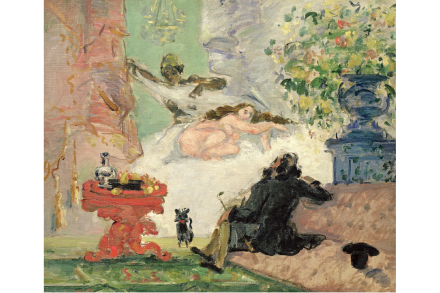
‘You cannot begin by calling me France’s most famous living artist!’ Thus Sophie Calle objected to the first line of the obituary I wrote for her, commissioned for the enormous exhibition, À toi de faire, ma mignonne (‘Over to you, sweetie’), that currently occupies the whole Musée National Picasso-Paris. But modesty aside, it is a fact that no other French artist alive today is so celebrated, loved, debated, denounced and, indeed, imitated, around the world as Calle. Having long mined her own life for her work, Calle now happily mines her death This year is the 50th anniversary of Picasso’s death and that his most important museum should officially mark this by inviting Calle to take over its institution, replacing all his work with her own, is a brilliant provocation.

Spellbinding performance of a career-defining record: Corinne Rae Bailey, at Ladbroke Hall, reviewed

Pop

You won’t see two more contrasting shows this year than Corinne Bailey Rae performing her album Black Rainbows and Brian Eno presenting work with a symphony orchestra. One had music that did everything; one had music that did very little. But both were overwhelming and filled with joy of rather different kinds. When Bailey Rae last made an album, in 2016, it was gentle, tasteful, soulful R&B, the kind the young professional couple in a prestige Netflix drama listen to before their lives are overturned by a vengeful nanny. Black Rainbows,by contrast, from earlier this year, was an abrupt embrace of everything: from scuzzy garage punk to psychedelic soul to American show tunes, all inspired by the Stony Island Arts Bank in Chicago and its exhibits on the black experience in America.

The importance of lesbianism to British modernism: Double Weave, at Ditchling Museum, reviewed

Exhibitions

The name of Ditchling used to be synonymous with Eric Gill, but since he was outed as an abuser of his own daughters the association has become an embarrassment. Obliged to quietly drop its most famous name, Ditchling Museum of Art + Craft has been exploring less controversial connections. Its latest show, about Bourne and Allen, is a tribute to a forgotten creative partnership that casts a fascinating sidelight on the contribution of women’s traditional crafts – and lesbianism – to British modernism. After the Festival Hall put them on the map, they were approached to weave the fabrics for Ben-Hur Hilary Bourne was a Ditchling girl.

Comedy of the blackest kind: Boy Parts, at Soho Theatre, reviewed

Theatre

There’s something mesmerising about watching a good mimic. And Aimée Kelly, who plays fetish photographer Irina Sturges in Soho Theatre’s Boy Parts, is a very good mimic. Across the 80 minutes of this one-woman performance, she inhabits the bodies of dozens of characters, each a carbon copy of the worst kind of person: oleaginous city bankers; shrill, hysterical twenty-something women; ‘Andrew Tate-core’ men. An unnamed boy ends up as nothing more than a severed head Her sneering representations of these characters instruct us to see them (whether we want to or not) as Irina does: pathetic and deeply undesirable. It’s uncomfortable.

Real women do not behave like this: Lyonesse, at the Harold Pinter Theatre, reviewed

Theatre

Lyonesse by Penelope Skinner takes a while to get going. The central character, Elaine, is a washed-up British actress (Kristin Scott Thomas) who lives in a crumbling mansion in Cornwall where she dreams of making a comeback as a movie star. She contacts a clueless researcher, Kate, and asks her to drive down from London to write a screenplay about her reclusive existence in the sticks. Kate meets Chris, a mixed-race lesbian poet who works as Elaine’s chauffeur, factotum, and companion. Chris also keeps the moths away from Elaine’s collection of 12 dead parrots, stuffed and caged. It’s a piece of absurdism that doesn’t know how absurd it is After nearly an hour of stage time, Elaine is ready to narrate her life story with Chris on duty as her stagehand.

Modest means, but striking results: Opera North’s La rondine reviewed

Classical

Opera North is ending its autumn season with a big-hearted production of a lopsided opera. There’s much to love about Puccini’s La rondine, and much to drive you up the wall. This bittersweet love story about an older woman and a younger man, set in Paris and Nice and channelling the operetta sweetness and sparkle of Puccini’s great friend Lehar, ought to sweep you off your feet. Instead, it tempts critics into that most shameless form of condescension, the armchair rewrite. Giacomo, old chap, isn’t five minutes into Act One a bit soon to be introducing your big hit aria? We’re halfway through Act Two: shouldn’t the lovers be together by now? And isn’t this basically just La traviata played for lower emotional stakes? Come on, man, you wrote Bohème.

Can everyone please shut up about Maria Callas?

Arts feature

One thing that exasperated me intensely during my many years as an opera critic was the assumption that I must be a passionate admirer of Maria Callas. She is the only prima donna who most people have heard of, and her supreme status has long been taken for granted, to the point at which the sound of her voice, as well as her personal story, have fomented a myth, a legend, an icon, and made any rational judgment almost impossible. She is Callas, La Divina, the embodiment of opera: one can only fall down and worship. The Callas bibliography runs, according to the British Library, to 136 books In a year that marks the centenary of her birth (she died in 1977), the incense in the temple has become positively stifling.

AI art is folk art, and a revolt against the arts establishment – which is why they hate it

Left-liberals despise AI-generated art. Not because of the themes explored by its adherents (that would be akin to disliking canvas and paint due to the way Goya used them), but because, they say, it has the potential to steal work from artists. Both in the sense that it deprives them of opportunities, and that it uses their images, in aggregate, to inform its output. I suspect the reason for their animus is more culturally contingent than these pragmatic explanations suggest. AI art democratises a medium they see as belonging to them, putting the ability to create arresting images within easy reach of anyone with an internet connection. The monkeys have typewriters, and they're not using them to write Shakespeare.

The miracle of watching a great string quartet perform

Classical

Joseph Haydn, it’s generally agreed, invented the string quartet. And having done so, he re-invented it: again and again. Take his quartet Op. 20, No. 2, of 1772 – the first item in the Takacs Quartet’s recital last week at the Wigmore Hall. The cello propels itself forward and upward, then starts to warble like a bird on the wing. The viola sketches in a rudimentary bass line; the second violin – higher than the cello on paper, but actually playing at a lower pitch – shadows the melody in its flight. The first violin? Nothing: the leader (or so you might imagine) of the group is entirely silent until finally, blissfully, he isn’t. It’s the opposite of how a string quartet is supposed to begin, and it’s perfect.

Basic, plodding and lacking any actual horror: Doctor Jekyll reviewed

Cinema

Tis the season of horror, as it’s Halloween, which we celebrate in this house by turning off all the lights and pretending not to be in. (We look forward to it every year. It’s nice occasionally to go bed at around 5 p.m. and pretend not to be in.) But I thought I’d show willing by at least reviewing a horror film so it’s Doctor Jekyll, starring Eddie Izzard. It’s the latest from Hammer, which you didn’t know was still around, but is. I have a fondness for these films as they were always on TV during my teenage years, with Peter Cushing creeping around some crypt, hammy and campy – ‘Good heavens, man! The lady you saw has been dead for 300 years!’ – rather than terrifying.

Surprisingly addictive and heartwarming: Netflix’s Beckham reviewed

Television

If you’re not remotely interested in football or celebrity, I recommend Netflix’s four-part documentary series Beckham. Yes, I know it’s about a famous footballer who happens also to be a celebrity and who, furthermore, is married to the famous model/celebrity/whatever who used to be in the world’s most famous girl band, the Spice Girls. But trust me, you’re going to be hooked. One of the things that hooked me was the way it enables you to play catch-up on all the David and Victoria Beckham stories you pointedly ignored during the past three decades because, damn it, that pair were quite overexposed enough already without needing any of your attention wasted on whatever nonsense they’d got up to lately – Beckham’s goal, for example.

I’m not convinced Thomas Heatherwick is the best person to be discussing boring buildings

Radio

Architects are often snobby about – and no doubt jealous of – the designer Thomas Heatherwick, who isn’t an actual architect yet still manages to wangle important building commissions. And he knows this. In his documentary for BBC Radio 4, Building Soul, where he examines what he calls the ‘blandemic’ in today’s architecture, he asks to interview fellow Spectator writer Jonathan Meades, who responds: ‘The last person who should be doing a series on urbanism is a designer.’ Heatherwick wears this as a badge of honour. Indeed, qualifying as an architect is no guarantee of quality – check out the past nominations for the Carbuncle Cup, the now defunct prize for the ugliest building in Britain.

Why did this brilliant Irish artist fall off the radar? 

Exhibitions

Sir John Lavery has always had a place in Irish affections. His depiction of his wife, Hazel, as the mythical figure of Cathleen ni Houlihan, which appeared on the old ten shilling and subsequently on the watermark of the Irish pound notes, meant, as the joke went, that every Irishman kept her close to his heart. He was indeed Irish – born in Belfast – but was at home in Scotland, and was the best known of the spirited group of painters called the Glasgow Boys. Yet he lived most of his life in London, was friends with Winston Churchill (they took a painting trip together) and also with Michael Collins, the Irish Nationalist, with whom Hazel was, ahem, close. If ever there were a man who embodied the interconnectedness of Britain and Ireland, it was Lavery.

A Radio 3 doc that contains some of the best insults I’ve ever heard

Radio

A recent Sunday Feature on Radio 3 contained some of the best insults I have ever heard. Contributors to the programme on the early music revolution were discussing the backlash they experienced in the 1970s while reviving period-style instruments and techniques. Soprano Dame Emma Kirkby remembered one critic complaining that listening to her performance was ‘as about as interesting as eating an entire meal of plain yoghurt’. Another critic, writing in Gramophone, pronounced the strings of the new ensembles ‘as beautiful as period dentistry’. Those strings were mostly made of animal guts. There was, as one of the musicians interviewed recalled, ‘a DIY atmosphere’ to the movement, which developed alongside a spate of others in 1973.

If only Caryl Churchill’s plays were as thrillingly macabre as her debut

Theatre

The first play by the pioneering feminist Caryl Churchill has been revived at the Jermyn Street Theatre. Owners, originally staged in 1972, feels very different from Churchill’s later work and it recalls the apprentice efforts of Brecht who started out writing middle-class comedies tinged with satirical anger. Churchill sets her play in the cut-throat London property market where prices are soaring and tenants are apt to be evicted if they can’t cover sudden rent rises. Marion is an estate agent who secretly buys a house occupied by her former lover Alec who is married to Lisa. Their third child is on the way. Marion hatches an evil plan to kick the family out and to claim Alec back as they sink into financial ruin.

No one should trust the camera in the age of AI

Arts feature

This war is being fought with pictures more than words. The poignant shots, often selfies, of families, children, even babies, who were to become victims of Hamas butchery, the wailing mothers and children on stretchers in Gaza, the missile strikes and collapsed concrete buildings. We know politicians on all sides lie, but photography is a mechanical process; these pictures must, surely, be the truth? Almost all these photos have been taken with mobile phones. To a rough approximation, everybody now has a smartphone. There are said to be seven billion smartphones in use around the world – there are only eight billion people. (Sales of what we used to know as cameras have crashed by 85 per cent.

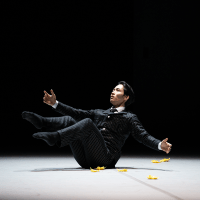
Uninventive and far too polite: BRB’s Black Sabbath – The Ballet reviewed

Dance

Not being an aficionado of the heavy-metal genre, I snootily suspected that I would rather be standing in the rain flogging the Big Issue than suffer the racket that goes by the name of Black Sabbath. The noise, my dear, and the people! How could they? So I approached Birmingham Royal Ballet’s attempt to dance to its shenanigans armed with earplugs and gritted teeth. It wasn’t nearly as bad as I expected: in fact, it erred towards the polite and tasteful, and I wondered if a crowd largely consisting of hairy and leathery old rockers – some of them possibly anticipating satanic rituals or heads being bitten off chickens – got much out of it.

Why intellectuals love Disney

More from Arts

This month marks the 100th anniversary of Walt Disney’s company. The first cartoons it was founded to produce – the animation/live-action shorts Alice Comedies – are largely forgotten, eclipsed not least by the resounding success of Mickey Mouse. Mickey Mouse grabbed much of the attention from the get-go, including that of several philosophers, sociologists and critical theorists, who perceived in him an emblem of the best and worst of the modern age. Also celebrating its 100th anniversary this year is the founding text of western Marxism, Georg Lukacs’s History and Class Consciousness.

Virgin on the astonishing: Madonna, at The O2, reviewed

Pop

When I was a kid listening obsessively to AC/DC and Iron Maiden and Black Sabbath, I despaired of music writers. How come none of them – except the staff of Kerrang! magazine and a couple of writers on Sounds – could see the majesty and splendour of this music? Why were they always banging on about flipping Echo and the Bunnymen and Joy Division, or harking back to old man Dylan? These days, all three of those bands are to some degree or another as revered. Not everyone loves them, but you won’t find many serious critics – even those who don’t personally care for ‘Whole Lotta Rosie’, ‘The Number of the Beast’ or ‘War Pigs’ – who’ll simply write them off as worthless. ‘A wandering worthless exercise’, wrote NME of Madonna’s Like a Virgin.

How Philip Guston became a hero to a new generation of figurative painters

Exhibitions

Why do painters represent things? There was a time when the answers seemed obvious. Art glorified power, earthly and divine, and provided moral exemplars of how to behave – in the case of sacred paintings – or how not to in the case of profane ones. When modernism threw all that into doubt, the picture frame remained. The question for modern artists was, what to put in it? Fifteen years of non-representational painting prompted Guston to question its usefulness For the first decade of his career, Philip Guston had an old-fashioned answer: the murals he painted in the style of Italian Renaissance frescoes in the US and Mexico during the 1930s promoted ideals of social justice.