Culture

Culture

The good, the bad and the ugly in books, exhibitions, cinema, TV, dance, music, podcasts and theatre.

‘Stomp clap hey’ music: Noah Kahan, at O2 Forum Kentish Town, reviewed

Pop

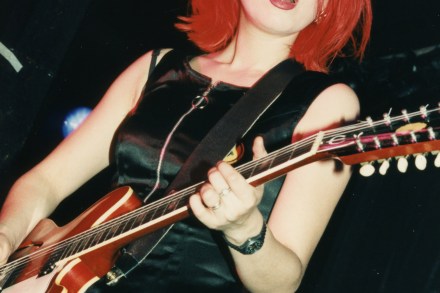
I first heard of Noah Kahan in a cave in France this summer, when my 23-year-old daughter started wailing with distress at realising she had missed the chance to buy tickets to see him because she was in a cave when they went on sale (two shows at the Forum sold out in seconds). Kahan, a 26-year-old singer-songwriter from Vermont, has so far made very little impact on the world of the over-thirties, but his contemporaries and those a little younger adore him. If you Google reviews, you won’t find very much from the traditional music press or from big newspapers and magazines – but you’ll find plenty from student papers. What they like so much about him is a little mysterious.

The art of not taking out the bins: Madelon Vriesendorp, at the Cosmic House, reviewed

Exhibitions

‘I was really angry at this fly,’ the artist Madelon Vriesendorp explains with a grin as I hold out my hand to shake hers, which is in a splint. ‘I jumped onto the bed to swat it, fell over and broke my wrist.’ Vriesendorp is showing me around her latest exhibition, which follows a long list of achievements: she co-founded the ground-breaking architectural practice OMA, and her illustrations of architectural theory defined its visual language for a generation. Now in her late seventies, she’s still characteristically unserious, except about one thing: ‘I’m very serious about jokes.

Eloquent, understated poetry: Llyr Williams, at the Wigmore Hall, reviewed

Classical

Imagine being a concert pianist and choosing your own programmes. All those possibilities; all that power! ‘I am the orchestra!’ declared Hector Berlioz, imagining himself inside the head of Franz Liszt. ‘I am the chorus and conductor as well. My piano sings, broods, flashes, thunders.’ The heart lifts when a pianist thinks a little differently about their recital programmes and tries to make connections and tell stories beyond the familiar tramlines of Bach, Beethoven and late Schubert. Don’t get me wrong; the Austro-German big boys are a healthy part of a balanced musical diet. It’s just that – well, you know. There is a world elsewhere. Solo piano recitals leave me cold.

The award-winning choreographer who fell foul of the mob

Arts feature

Ebullient, articulate and eminently sensible, Rosie Kay never wanted to be a martyr to the culture wars. A modern dance choreographer with an impressive track record – including 5 Soldiers, an award-winning exploration of army life, contributions to the closing ceremony of the 2012 Olympics and a fellowship at Oxford – she would rather be getting on with the business of creating new work for her small dance company. But she’s been given no choice – and all because of a party she held in August 2021 at her home in Birmingham.

An awesome spectacle: The Mongol Khan, at the London Coliseum, reviewed

Dance

When the Ballets Russes first presented Fokine’s Polovtsian Dances at Covent Garden in 1911, such was its orgiastic savagery that ladies in the audience were said to be genuinely terrified that its grease-painted warriors were about to leap off the stage and ravish them. The Mongol Khan, a great hit imported from Ulan Bator, may not induce genteel screaming, but it has some awe-inspiring moments and belongs in the same ersatz orientalist tradition as Fokine’s ballet – primitive Asiatic culture made colourfully palatable to western tastes.

Melodic elegance and literate sass: Ben Folds, at Usher Hall, reviewed

Pop

Choose your weapon. Artists are closely defined in the public imagination by their instrument of choice. Though the most untamed and transgressive progenitors of rock’n’roll – Jerry Lee Lewis and Little Richard – were piano pounders, and despite the later efforts of Elton John, over time the instrument has come to be associated with restraint and politesse; the straight second cousin to rock’s clichéd wild child, the electric guitar. He strolled on stage like a stranger and left 100 minutes later as an old friend I hadn’t realised I’d missed American singer-songwriter Ben Folds has been playing with these expectations for the best part of 30 years, first in Ben Folds Five, then as a solo artist.

‘My show is like life and death to people’: meet TalkTV’s Mike Graham

Television

Hair combed and slicked, Mike Graham sits at his big shiny desk and waits on his cue. When his guest goes rogue backstage and starts swearing at a minion, it barely registers. He remains placid. Unruffled. It’s only his second week doing TV but Mike is in the zone. Three, two, one, zero. ‘Welcome to The Independent Republic of Mike Graham.’ He grins. ‘With you for the next three hours, of course!’ Of course. Independent Republic is a daily celebration of subversive tabloid television, beamed out on TalkTV to a dependable and swelling citizenry. Mike is the republic’s leader. During those three hours he skewers a museum for cancelling Santa, jokes about a ‘mystery eye-bleeding virus’ in France, and derides our brainless politicians.

Rich, beautiful and vital: John Craxton, at Pallant House Gallery, reviewed

Exhibitions

The sensuality of the light in John Craxton’s painting ‘Two Figures and Setting Sun’ (1952-67) has to be seen to be believed. Viewing this large work in Pallant House, you feel its full force. Craxton was concerned with a scene’s essence, rather than simply its appearance and here he achieves not merely an effect but affect. In spite of most of the light being painted in yellows and oranges rather than white, the contrast and refraction of the rays produce a blinding sensation much like staring into the sun on a hot day.   It was as a chorister at Chichester Cathedral that Craxton’s daily encounter with two 12th-century Romanesque bas-reliefs taught him the timelessness of great art; that, even though it was from the distant past, something fresh and modern endured.

Magical: The Box of Delights, at Royal Shakespeare Theatre, reviewed

Theatre

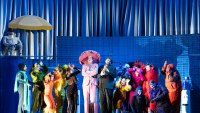
In Stratford-upon-Avon, the wolves are running. And if you’re old enough to feel a little thrill of wintery excitement at those words, you’ll have questions of your own about the Royal Shakespeare Company’s The Box of Delights. Questions about talking rats and flying cars, and whether time and tide and buttered eggs still wait for no man. John Masefield’s novel thrived on radio adaptations for decades after its publication in 1935 but the beloved BBC TV version was in 1984, and four decades is a horribly long time. Piers Torday’s new dramatisation faces the double challenge of entertaining a new generation of youngsters while also pleasing the nostalgia-addled oldies who are, after all, splashing the cash.

Gloriously entertaining: Backstairs Billy, at the Duke of York’s Theatre, reviewed

Theatre

Backstairs Billy is a biographical comedy about William Tallon, who worked as the Queen Mother’s chief footman for years following the death of George VI in 1952. Tallon was an enthusiastic gay cottager whom the tabloids suggestively dubbed ‘backstairs Billy’ during the 1970s when attitudes to homosexuality were growing more enlightened. The show, directed by Michael Grandage, is set in 1979 and Luke Evans plays Billy as a swaggering charismatic stud who loves his role as the unofficial head of the Queen Mum’s household. He adores his employer, ‘the last Empress of India’, and he praises her decision to remain in London during the Blitz rather than decamping to safety in the countryside or overseas.

Can Italy reverse its falling birth rate? 

Radio

Anne McElvoy is on the road again, exploring the state of modern Europe. Following her Radio 4 programme, The Reinvention of Germany in April, the Politico journalist has travelled to Padua, in northern Italy, where reactions to the rise of the right-wing populist Giorgia Meloni appear to vary. Is the 46-year-old PM a breath of fresh air – the best chance Italy has for a future – or a hypocritical dyed-in-the-wool traditionalist? The reinvention (or rather restoration) of Italy is very much Meloni’s goal. Clinging to the familiar principles of faith, flag and family, she has eschewed measures that would allow those born in Italy to define themselves as Italian, ostensibly believing that to be Italian is to have Italian blood.

A bit too short: Napoleon reviewed

Cinema

Ridley Scott’s Napoleon, starring Joaquin Phoenix, has a running time of two hours and 40 minutes, which is scant by today’s standards, but don’t worry: a four hour-plus director’s cut is on its way. So this is Scott’s Napoleon Abridged, you could say, and it does have the feel of a film that’s been scissored to death. The battle sequences are spectacular but the jackhammer cutting-style – hang on, how did he get from there to here? – means the storytelling is hurried and confusing. I’m not too sure about this Napoleon either. Did you know one of the greatest military leaders in world history was essentially a man-child? Phoenix, always a strong, intense screen presence, plays Napoleon as petulant rather than as a brilliant strategist.

Our theatre critic applies to be director of the National Theatre

Arts feature

The director of the National Theatre will be stepping down in 2025. I’ve written to the chairman offering a new vision for Britain’s leading playhouse. Dear Sir Damon Buffini, I’m a reviewer of plays and a part-time theatre producer. In the past 20 years I’ve seen more than 2,000 shows, hundreds of them at your venue, and here is my plan to transform the NT. Britain’s dramatic heritage is the best in the world and our national theatre should meet that standard of excellence. Three simple reforms to start with. US stars crave the prestige offered by the NT. Each year we will hire half a dozen Oscar-winning actors One: cancel the annual £16 million subsidy from the Arts Council. Britain’s leading theatre doesn’t need a donation or the advice that accompanies it.

A farrago of Blakean mysticism and steampunk twaddle: BalletBoyz’s England on Fire, at Sadler’s Wells, reviewed

Dance

It’s nearly a quarter of a century since Michael Nunn and William Trevitt bravely left their safe haven at the Royal Ballet to set up BalletBoyz, a company aimed at developing the underused potential of male dancers and exploiting Nunn and Trevitt’s passion for film technology. At the time this seemed like a useful mission – stereotypes and prejudices lingered around men in tights, and the formats for smaller dance companies needed loosening up. It lasts a moderate 70 minutes and, in its nutty way, it’s quite enjoyable One measure of BalletBoyz’s subsequent success is that so many of their experiments have been incorporated into the mainstream, and the enterprise no longer seems as edgy or necessary as it did.

The death of TV

Television

A while ago, a therapist advised me to go out less and stay in and watch TV more. Having avoided the world of block-streaming until then, I took her advice and immediately found great pleasure in my new pastime. There was so much to watch, and it was all so absorbing and pleasantly addictive. The pleasure and excitement has gone out of making TV – and it shows As soon as one arty but gripping ‘prestige’ series was over, there was another to begin. The golden age of television started around 2000, where innovation was enabled by leaps forward in visual technology and a revolution in storytelling ambition. Many of these shows were international, even if the US dominated.

Raucous, expressive and laugh-out-loud funny: Nicole Eisenman, at the Whitechapel Gallery, reviewed

Exhibitions

There’s a photograph in Nicole Eisenman’s Whitechapel exhibition of the 28-year-old artist, in 1993, sitting at her easel with a big bow in her hair and a bevy of studio assistants – a feminist piss-take of the trope of the heroic male artist surrounded by adoring acolytes. Her resemblance in the photo to stand-up comic Sarah Silverman is not entirely coincidental; Eisenman is Jewish-American and funny. At the time she was producing the bawdy satires on downtown New York lesbian life – battles of the sexes redrawing Michelangelo’s ‘Battle of Cascina’ in the style of Where’s Wally? – which plaster the wall facing the exhibition entrance. She could have been a cartoonist, but she chose art.

Whodunnit that disappears down a rabbit-hole: ITV1’s The Playboy Bunny Murder reviewed

Television

Perhaps unfairly, Marcel Theroux does rather bring to mind Dannii Minogue. Not only does he look very similar to his more famous sibling, but when not writing (pretty good) novels, he’s in the same line of work: like Louis, he makes TV documentaries that feature much brow-furrowing. His latest was a neat fit for ITV1’s continuing obsession with true crime. As it transpired, The Playboy Bunny Murder was an over-simple title for an extremely tangled tale. Nonetheless, the programme did start with the killing of bunny girl Eve Stratford who, in March 1975, had her throat cut at her Leyton home. In those pre-DNA testing days, the police did what they could – which is to say they arrested and soon released Eve’s musician boyfriend, and then hoped for something to turn up.

Gig of the year: Ezra Collective, at the Royal Albert Hall, reviewed

Pop

The American music website Pitchfork is the journal of record for alternative America. It has became this generation’s Rolling Stone, for both good and ill. Long before it was bought by Condé Nast, however, it was famous for a disastrous jazz review in which the site’s founder chose to employ what he appeared to believe was the vernacular of a jazz ‘cat’ of the early 1960s. All is forgiven, though. Here was the London outpost of the Pitchfork Festival, opening with jazz stars Ezra Collective, the quintet who earlier this autumn won the Mercury Prize for their second album, Where I’m Meant To Be. Ezra Collective are very easy to like.

Surprising flop from a top-class team: To Have and To Hold, at Hampstead Theatre, reviewed

Theatre

To Have And To Hold boasts a starry cast and a top-class creative team. Richard Bean’s script is a meditation on ageing, directed by Richard Wilson and Terry Johnson, and it opens with a sight-gag about a wonky stairlift descending into a suburban lounge in Yorkshire. The stairlift is occupied by Flo, a tea-drinking fusspot (charmingly played by Marion Bailey), who looks after her crumbling husband, Jack. Both have endured 70 years of marital bliss and are slithering gently into the grave. Flo gets help from her middle-aged son Rob and his sister Tina, but they’re zestless, bland personalities.

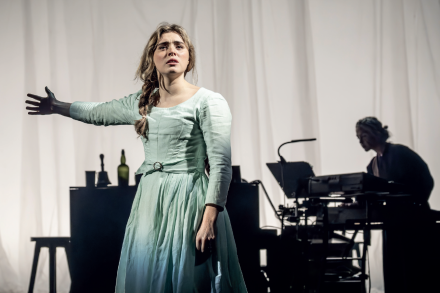
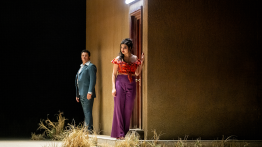
Cliché, cynicism and a car-crash finale: Royal Opera’s Jephtha reviewed

Opera

London’s two opera houses have been busy staging non-operas. Handel’s English oratorio, Jephtha, is his final exercise in a form that only existed because it was, explicitly, not opera (Georgian theatres needed something to play during Lent). We know better today, and dramatised reboots of Handel oratorios are proliferating, possibly because – unlike his actual operas – they give the chorus something to do. Katie Mitchell directed Theodora at Covent Garden last year. Now Oliver Mears has had a bash at Jephtha and has encountered the same basic problem. Operas seduce; oratorios preach. These are explicitly Christian, implicitly patriotic works, and what self-respecting contemporary director could allow that?

The growing revolt against Arts Council England

Arts feature

The acronym for Arts Council England is rather unfortunate at the moment. The organisation is being accused of many things: being overly close to government, underfunded and blinkered – but nobody thinks it is ace. Even friendly culture critics are losing patience. As the august arts commentator Richard Morrison recently wrote in the Times: ‘The Arts Council… seems determined to shift public subsidy on to supporting amateurs and community projects.’ ‘We are tempted to refuse our ACE grant and not spend so much time box-ticking’ Simple purpose has been replaced by a giant strategy paper, Let’s Create, which seems concerned with how ACE can insist on a policy of social engagement, rather than continue as an agency funding a range of professional arts organisations.

Has all the charisma of Chernobyl: Manchester’s Aviva Studios reviewed

More from Arts

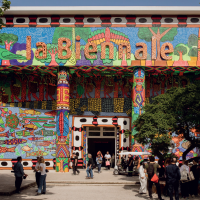
There is a (possibly apocryphal) story about William Morris, where he spends most of his time in Paris inside the Eiffel Tower’s restaurant because ‘that is the only place where you can’t see the damned thing’. Aviva Studios risks a similar fate. Designed by architects OMA as the permanent performance venue for the Manchester International Festival and headquarters for its organisers, Factory International, it’s been savaged by critics and citizens alike for its ugliness. But not unlike the Eiffel Tower, it is from within that one can really witness the spectacles it has in store.

Subtle, intriguing and inventive: Rambert’s Death Trap reviewed

Dance

Ben Duke belongs to a class of younger choreographers who have decided to flout the convention that dancers should remain silent on stage. Liberating their voices is by no means a new phenomenon (in 1961 Frederick Ashton had Svetlana Beriosova speak verse by Gide in his sadly forgotten Persephone), but it’s one that particularly suits our culture’s dislike of rigid genres, and Duke makes playful use of it in the double bill entitled Death Trap that makes up Rambert’s current tour, which lands at Sadler’s Wells on 22 November. Rambert’s superb troupe of dancers let rip in bursts of gloriously exuberant jiving Goat is the less successful of his two pieces.

Branagh can’t quite banish the spirit of Noel Edmonds: King Lear, at Wyndham’s Theatre, reviewed

Theatre

Branagh vs Lear. The big fixture in theatreland ends in a win for Shakespeare’s knotty and intractable script which usually defeats any attempt to make it coherent or dramatically pleasing. This truncated version is a two-hour slug-fest set in the stone age – and it sort of works. The warriors fight with sharpened walking sticks and they stab each other using twigs whetted to a fine point. If you ignore the steel buckles and the writing paper, which were clearly invented earlier, you’ll find it just about believable. On stage, Branagh can’t quite banish the spirit of Noel Edmonds and he adds to the cheeky-chappie persona with a thick golden quiff (possibly a wig) and a mink collar that seems to have been backcombed and scented with talcum powder.

Embarrassment of riches: South Asian Miniature Painting, at MK Gallery, reviewed

Exhibitions

In 1633, British merchants travelling east were issued with a royal command from Charles I: ‘As the king has considered that there is a great deal of learning fit to be known written in Arabic, and great scarcity of Arabic and Persian books in this country… every ship… at every voyage shall bring home an Arabic or Persian manuscript book, to be delivered to… the Archbishop of Canterbury, who shall dispose of them as the King shall think fit.’ One suspects that a hunger for learning wasn’t the whole story, and that the sight of the exquisite illustrations adorning books sent from India as diplomatic gifts had whetted Charles I’s collector’s appetite. He wasn’t alone.