Culture

Culture

The good, the bad and the ugly in books, exhibitions, cinema, TV, dance, music, podcasts and theatre.

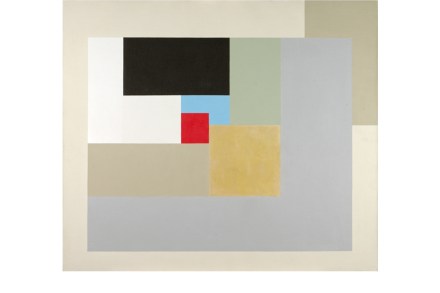
Geometry lesson

Theatre

It’s the usual old muddle. You take a Shakespeare classic and you time-travel it to an alien century, usually the present one, which has no connection with its historic setting. The plan, we’re always told, is to generate that supremely irrelevant attribute, ‘relevance’. Director Dominic Cooke has fast-forwarded The Comedy of Errors to modern London and I have to confess it works extremely well. For once, it’s OK to have wrong-era costumes and juggled chronologies and a visual setting that’s out of whack with the literary context because Cooke is simply mimicking Shakespeare. The Bard nicked a Roman favourite, The Menaechmi of Plautus, and dolled it up in the culture and lingo of London’s red-light district, Southwark.

The joy of Spotify

Music

Like a few who have ploughed through the Steve Jobs biography, I am now heartily tired of early adopters, those strange men who are always at the front of the queue at the Apple shop when some dismal new gewgaw is coming out. I myself am a classic late adopter, discovering the new and exciting only when it’s old and worn out. I had a CD player years after everyone else; a tribesman in Papua New Guinea was the only person to have an iPod after me; and now I am faintly obsessed by Spotify, the music-streaming service out there on the internet, wherever that is. For a mere £9.99 a month, which is just under a tenner more than I want to pay, you can play any piece of music it has stored in its large computers any number of times, and it has extraordinarily large computers.

Highs and lows

Opera

This year’s Christmas offering at the Royal Opera is yet a further revival of Richard Eyre’s production of La Traviata, which began the season and is being revived again early in 2012. The main reason I went again to an opera for which I usually feel distaste was to see and hear Simon Keenlyside in the role of Germont père, hoping that he might make me see the opera in a different light. And, with a few gestures and in magnificent vocal form, that is exactly what he did. Normally I object strongly to Violetta’s giving in to the old bully, and then asking him to bless her, when if there is any blessing to be done it should be the other way round.

For your eyes only

Cinema

Puss in Boots was the surprise hit character — the standout sidekick — of the second Shrek movie, and went on to tickle us in Shrek the Third and Shrek Forever After. Sleek, foolish, vain and blessed with the all-butter voice of Antonio Banderas, he was the roving ginger tom whom audiences wished to take home and make a pet of. His easy charm and roguish asides have earned the well-heeled moggy what every sidekick wants but few deserve: his own ‘origin story’. Puss in Boots is a full-length, computer-animated feature film which describes the making of the mouser. Several fairy tales are put through the scriptwriters’ mouli and served up where once upon a time and long ago a story might have been written.

Ed Balls & his Fellow-Travellers at the New York Times

Ed Balls is a bonny fighter and even his opponents often appear to enjoy being wound-up by the Shadow Chancellor's pleasingly-shameless* approach to opposition. There was a typical piece of Ballsian chicanery during this afternoon's debate on the economy when Balls accused George Osborne of stubbornly sticking to a failed "Plan A" and, to buttress his argument, pointed out that the New York Times agrees that the coalition has failed to get Britain working again. Well, if the New York Times says something it must be true! Or, you know, not. Though the Old Gray Lady is a mighty paper it is not the last word on anything, let alone the British economy.

Top of the pops

Arts feature

Michael Henderson talks to John Wilson, whose obsession with songs from the golden age of musicals led him to form his own band ‘People think I am an expert on musicals,’ says John Wilson, in his pleasing Geordie voice, ‘but that is something I am certainly not. I am obsessed with songs, written by professional songwriters for professional singers in the golden age of popular music.’ It is a nice distinction, to restore the original meaning of that adjective, and Wilson, who is currently touring the country with the orchestra that takes his name, is proving as good as his word. This is a fruitful time for the Gateshead-born conductor, one year short of his 40th birthday.

Mysterious ways | 3 December 2011

Exhibitions

Among exhibition organisers, hyperbole is clearly the order of the day. The crowds are going wild over Leonardo at the National Gallery, expecting an exhibition packed with paintings (though only nine are by the master), and now the Fitzwilliam is hauling them in with a show called Vermeer’s Women that contains just four paintings by Vermeer. On the day I visited, the gallery was thronged, though the queues of which the management warned were thankfully not in evidence. I am frankly horrified by the volume of visitors to art galleries these days. I should perhaps be thankful that art is so popular, but the sheer numbers make the experience of viewing an exhibition increasingly disagreeable and unrewarding.

Power games

Theatre

Plays used to end in marriage. Then they anatomised the highs and lows of life as a couple. Now — at least in Neil LaBute’s latest London première — the relationships are all either over or heading that way fast. Reasons to Be Pretty (Almeida, until 14 January) gives a spot-on depiction of those no-man’s-land months following a break-up, when relations between exes are loaded with an electric ambiguity, and contradictory feelings alternate with bewildering rapidity. After an apocalyptic row in the first scene, estranged Greg and Steph keep bumping into each other about town.

Dark time

Radio

Keep awake, urges the Gospel messenger in the readings for the beginning of the Christian festival of Advent. That’s not easy in late November when by lunchtime the sun is already fast dropping to the horizon. The propensity to nap, to switch off, can be overwhelming. In Finland it must be so much worse. For two months, from mid-November to mid-January, the sun never rises at all. Everything has to be accomplished in total twilight. The Light in Darkness, a 20-minute short on Radio 3 (Thursday evening), took us inside the ‘dark time’, with an eerie impression of the northern winter that was so sharply evoked you could almost hear the air freezing on your breath, crackle, crunch.

Saved by the Bel

More from Arts

Anne Teresa De Keersmaeker’s and Jérôme Bel’s 3Abschied is the latest addition to a long and historically well-established series of choreographic works set to music by Gustav Mahler. There are still those, however, who cringe at the idea of dancing to the notes of this revered composer — as Keersmaeker points out in her initial monologue where she recounts her encounter with the conductor supremo Daniel Barenboim. Barenboim’s words linger menacingly through most of the performance. When Keersmaeker first dances to the ‘Abschied’, from Das Lied von der Erde (in a Schoenberg transcription), played live on stage by the superb Ictus ensemble, one can hear the words ‘I told you so’ ringing eerily in the dark.

Anatomy of an uprising

Theatre

They can’t even be bothered to think of a decent title. Good thing too. The Riots, at the Trike, is a rush job, a gripping and pacey attempt to analyse the disturbances that engulfed Britain last August. Cops, criminals and community leaders have been interviewed by Gillian Slovo, who fashioned their statements into a dramatic investigation. The riots might never have happened if more prudent tactics had been used at the start. The family of Mark Duggan, shot dead by police on 4 August, staged a demonstration outside Tottenham police station two days later. Police refused to speak to them, claiming that the independent investigation into Duggan’s death obliged them to remain tight-lipped. The family didn’t believe this.

A la recherche du temps perdu

Cinema

Hugo 3D is Martin Scorsese’s first child-friendly family film and the first thing to say about Martin Scorsese’s first child-friendly family film is that it is a visual wonder: rich, lush, beautiful, gorgeous. But the second thing to say is nothing else is as exciting as the look of it and if there is a third thing it is this: Hugo himself is rather boringly bland and I didn’t much care for him. Honestly, you can wait ages for one thing to say and then three come along at once. Isn’t that always the way?

Forthright to a fault

Theatre

Her mother was Ellen Terry, the most admired actress of the day. Her brother was Edward Gordon Craig, the celebrated stage designer. Little wonder then that Edith Craig was overshadowed for most of her life by two such towering figures. Yet her theatrical achievements were substantial. She was a talented costume designer and maker, the founder of the radical theatre group the Pioneer Players, and an indefatigable producer and director of countless plays and pageants. She was also an important figure in the suffrage movement, staging many feminist plays, and lived in a famous artistic lesbian ménage-à-trois.

Buried treasure | 26 November 2011

Exhibitions

In recent years there has been a surge of interest in the treasures hidden in our public art collections, many of them rarely if ever on view. The Tate Gallery is perhaps the principal offender here, showing only a tiny percentage of its glorious and wide-ranging holdings of British art, but attention is now being directed towards our provincial galleries and museums. Since 2003 the Public Catalogue Foundation has been recording and publishing the oil paintings held in galleries and civic buildings, county by county, and issuing invaluable volumes of colour illustrations to show us what usually remains invisible. By its calculations, a shameful 80 per cent of these paintings are not on view.

Money talk

Exhibitions

At least one market posted strong results in November. That was the market for contemporary art. In just four days in New York — 7 to 10 November — a phenomenal $775 million was spent on postwar and contemporary art at auction alone (who knows what deals were transacted privately). Sotheby’s evening sale exceeded its expectations by more than $45 million. Here, a real market rarity, a magnificent painting by the American Abstract Expressionist Clyfford Still, fetched a mighty $61.7 million. Some 45 works sold for over $1 million; seven sold for more than $10 million. Good news, one might say — but only up to a point.

Meeting point

Exhibitions

I prepared for this exhibition in Düsseldorf by taking the short train journey down the Rhine to Cologne, which would hate to be thought of as a twin city. Its gigantic cathedral is as I first saw it some 40 years ago, still black with soot (but where would you start to clean it?), and the streets still remind me of Swansea, but without the sense of space. The same low-rise blocks of anonymous postwar buildings are on every side, with the same seemingly temporary shops and takeaways, only with Würstel as well as burgers. Where Swansea has the fine Glynn Vivian Art Gallery, Cologne has the Wallraf-Richartz, now in a handsome new building adorned in the old-fashioned manner with the carved names of artists whose works are held within.

Trading places

Exhibitions

Venice and Alexandria were, as far as the Venetians were concerned, twin cities. According to legend, St Mark had visited Venice before going to Alexandria, where he preached, performed miracles and was martyred. When two Venetian merchants stole the saint’s remains from Alexandria in 828, they were merely fulfilling the prophecy of the Angel that had appeared to Mark in the lagoon and, addressing him with the ringing words ‘Pax tibi Marce, Evangelista meus’, had predicted that a great city would arise upon these waters, which was to be his last resting place. The origins of the mythical links between Venice and Alexandria were as much mercantile as mystical.

Into battle

Exhibitions

The charge of the Scots Greys at Waterloo: you’ll know it from the Risk board game. Hundreds of soldiers on lustrous white horses, manes billowing as they gallop straight at the viewer. A magnificent sight, but the stuff of nonsense: the horses probably weren’t all greys and they definitely weren’t turned out as if for Ascot. This is one fact to emerge from War Horse: Fact or Fiction?, the exhibition now showing at the National Army Museum in Chelsea (until August). Other myths are dispelled. Contrary to popular opinion, the history of British cavalry is not one of heroic failure. Even the bloodiest charges succeeded in their military aims. To adapt Tennyson, the Light Brigade did and died in the valley of death.

Out of kilter

Television

Can a critic simply be wrong, in the way that a mathematician who said that 3x3=10 would be wrong? I’m beginning to wonder, since I am the only person I’ve read who thought Ricky Gervais’s Life’s Too Short was not vile but terrific and The Killing II (BBC4, Saturday) all right, though far from the work of genius others believe. I never quite caught the first series of The Killing on BBC4, though I have tried. I do have the box set, and one day I might even watch it. Mind you, suspicions were aroused when the main talking point seemed to be the heroine’s knitwear. ‘Say what you like about the plot moving like an arthritic snail, but that Faroe Islands sweater really caught the eye!

Limited menu

Radio

The changes to the Radio 4 schedule have been in operation for a couple of weeks. Have they made any difference? The extra 15 minutes added to the lunchtime news programme, The World At One, has had the knock-on effect of squeezing the afternoon. Do we need another 15 minutes of current affairs analysis? After all, we already have three hours first thing in the morning, 45 minutes last thing at night after the ten o’clock news, with another hour in the middle at five. The problem with extending news programmes at a time of budget cuts is that the only way you can fill the extra minutes is to add extra interviews. Anything else would cost too much money. There are just too few resources for in-depth coverage of world events.

Concealed passion

Opera

ENO’s new production of Tchaikovsky’s Eugene Onegin has created something of a stir by departing from the house almost-tradition of postmodernist, stunningly intrusive and invariably grotesquely irrelevant presentations that began in earnest sometime last year. The set designs for this opera, by Tom Pye, and the costumes, by Chloe Obolensky, update it to the late 19th century, but that is just a nervous tic. More surprisingly, Deborah Warner’s direction of the characters and actors is so unobtrusive that one wonders if she told anyone to do anything in particular. The most sensational departure from what we normally see is that Lensky wears glasses (not sunglasses) for the duel, gently stressing his bookish otherworldliness; and one other touch, to be mentioned later.

Historical knockabout

Theatre

It’s a palace drama with all the trimmings. Trevor Nunn’s new production, The Lion in Winter, plunges us into the court of Henry II and his spurned wife, Eleanor of Aquitaine, as they struggle to decide which of their three sons should inherit the throne. Eleanor, held prisoner in a deluxe royal fortress, has been granted leave to join the family at Christmas. ‘Thanks for letting me out,’ she says, on their first meeting. ‘It’s only for the holidays,’ jokes Henry. Clearly a king who locks his wife in the broom cupboard won’t pay much heed to her views on the succession. So there’s an emotional and dramatic illogicality here right from the start. And, right from the start, the playwright couldn’t give a stuff. Which helps.

Choppy waters

Cinema

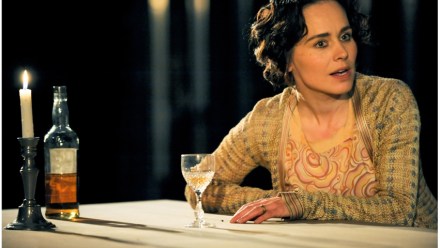
As there were no invites this week from Hollywood movie stars — I thought Nicole Kidman might ask me over for a girls’ night in, to do face packs and nails and stuff, but not a squeak — I have to get back to the business of reviewing, and so here we are with The Deep Blue Sea. This is Terence Davies’s take on the Terence Rattigan play of the same name, and it’s awfully, awfully good — superb acting; superb sweeping crane shots; a superb evocation of postwar London in the Fifties — but it somehow fails properly to come to life. A new Davies film is, of course, a celebration, and this is his first narrative one for 11 years, but I think it may be too good for its own good, if you get my drift. (Don’t worry if you don’t.

A night at the opera

Opera

Thanks to the generosity of friends, Mrs Spencer and I went to the opera the other week, an exceptionally rare event. Having grown up with the rougher edges of pop and rock music, the trained voices of opera singers always strike me as being artificial and overblown. And there is something about the snooty splendour of Covent Garden that brings out a chippy adolescent resentment in me, though on most matters these days I am soundly right-wing and usually enjoy a spot of luxury. The evening didn’t begin well. Our taxi got stuck in a traffic jam and we had barely travelled 100 yards before the meter hit ten quid and we bailed out.

Let the Telegraph be the Telegraph

Few things on Fleet Street are as reliably embarrassing as the Daily Telegraph's efforts to appeal to the Yoof market. Experience is a tough dominie however and, unabashed, the paper still strives to attract a younger, hipper type of reader even though said types of reader should sensibly be banned form purchasing the Telegraph. It is all very silly. We want the Telegraph to be the Telegraph. Three cheers then for Rev Dr Peter Mullen, Rector of St Michael, Cornhill and St Sepulchre-without-Newgate in the City of London, who has written this splendid, trencant piece asking, with good reason, Why is every BBC programme invested with a blast of pop music? Why indeed and even on Radio 4?