Culture

Culture

The good, the bad and the ugly in books, exhibitions, cinema, TV, dance, music, podcasts and theatre.

Rich rewards

Arts feature

For as long as I’ve been interested in Modern British art, I’ve been fascinated and intrigued by the work of Graham Sutherland (1903–80). One of the first Cork Street exhibitions I went to as a schoolboy was of paintings, gouaches, watercolours and graphics by Sutherland from the collection of Douglas Cooper, held at the Redfern Gallery in the autumn of 1976. I was enormously impressed, particularly by the golden-eyed toad rampant, the thorny sentinel figures, a 1944 Welsh landscape and a gouache of bomb-damaged buildings from 1942. (My recall is not always quite so accurate: in fact, I have the fold-out card from the exhibition before me as I write.

Who does she think she is?

Cinema

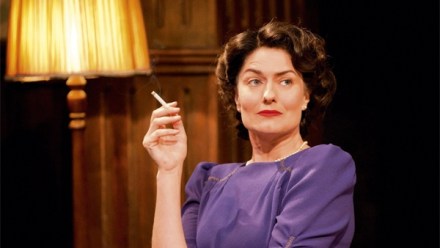
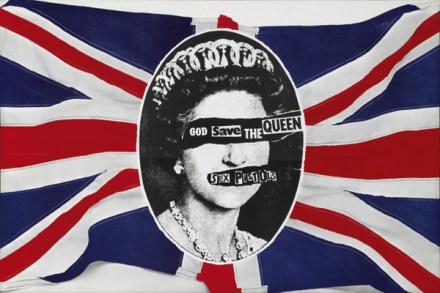
W.E. is Madonna’s second outing as a film director, and this tells ‘the greatest royal love story of the 20th century’ via two women separated by more than half a century: Wallis Simpson (Andrea Riseborough) and a modern-day New Yorker, Wally Winthrop (Abbie Cornish), a society wife who becomes obsessed with Mrs Simpson when her possessions come up for auction at Sotheby’s. These days, it is common practice to ridicule and deride Madonna — just who does she think she is? And so on — but I am not of this camp, believe this film has much to teach us, and the top ten lessons are as follows. 1.

Look at life

Opera

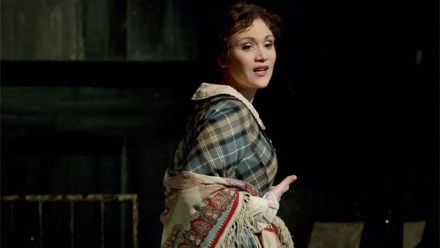
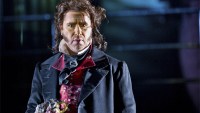
Giulio Cesare was the first of Handel’s operas to return to general favour after more than a century and a half of neglect, and I suppose that it is still the most frequently performed. That isn’t surprising, since its plot is, by Handelian standards, simplicity itself, and the level of inspiration in the arias is astonishingly high. There is a problem with it, at least in the UK at the moment, and that is that David McVicar’s Glyndebourne production of 2005 has been so widely and wildly acclaimed, and distributed, that new productions are bound to be seen in its shadow.

Out and about

Music

We are already more than halfway through January and I am still managing to stick heroically to my new year’s resolution. This is to keep smoking throughout 2012 — with a particularly large intake of nicotine and tar planned for the dreaded Olympic Games when everyone will be banging on about the glories of physical fitness. There will be no end of temptations to quit, of course. I was at a wonderful dinner party over the festive period, held, romantically, in a candlelit, lovingly restored vintage railway carriage. When I announced I was going to nip outside for a fag, the hostess looked at me with a mixture of disbelief and horror, as if I had proposed shooting up heroin or molesting a young child.

Adult viewing | 21 January 2012

Television

How in God’s name did Jonathan Meades ever get a job presenting TV programmes? I ask in the spirit of surprised delight rather than disgust, for Meades is that rare almost to the point of nonexistent phenomenon: the presenter who doesn’t treat you like a subnormal child or so irritate you with his incredibly infuriating mannerisms that you want him immediately executed with one of those bolt guns they use on cattle. Which isn’t to say Meades doesn’t have his drawbacks. His work reminds me a bit of my old tutor Peter Conrad’s: it’s so dense and intense and packed with ideas that one page of writing — or TV minute — is equivalent to about 30 of anyone else’s. So it’s not what you’d call relaxing.

Communal listening

Radio

Where mostly do you listen to the radio? In the kitchen, on the M25 or M62, under the duvet, soaking in a bathtub? We’ve got used to moving around with the wireless, often listening with just half an ear, not really connecting at all, and with no opportunity to share the experience with anyone else. In the Dark, a band of radio enthusiasts who’ve got together to produce unusual audio documentaries, is trying to take us back to the sensation shared by those first listeners to radio, when families, friends, neighbours joined up to listen and laugh along to The Goon Show or Children’s Hour. They organise communal listening events in unusual venues, usually with the lights out, but with an unconventional twist.

From the archives: Brown, the opera

Perfect for Friday evening is this: the Gordon Brown-themed version of Ko-Ko's ‘little list’ from The Mikado that Jeff Randall wrote for us back in 2007. The chorus should be sung, according to Jeff, by three people who have been quite prominent this week: Ed Miliband, Ed Balls and Yvette Cooper... The clunking fist, Jeff Randall, The Spectator, 3 March 2007 Britain doesn’t do Lord High Executioners, but if it did, Gordon Brown would probably be the best in the world. The prospect of the Chancellor in this role occurred to me while listening again to Gilbert & Sullivan’s masterful satire, The Mikado. Ko-Ko makes his entrance with ‘a little list’ of those who are for the chop. Among the joys of W.S.

Riding to the rescue

Exhibitions

As cuts in government funding begin to bite, the innovative Tricycle Theatre in Kilburn finds itself short of £350,000 a year, and its long-serving artistic director, Nicolas Kent, is standing down as a result. Into the breach has stepped 89-year-old philanthropist and Tricycle devotee Al Weil. He is donating 37 paintings (including ‘The Gulf of Salerno’, above) by an artist he has collected since the 1960s, the distinguished Victorian watercolourist Hercules Brabazon Brabazon (1821–1906). Brabazon was a man of means who didn’t have to sell his work to survive, but nevertheless created a body of paintings and drawings of rare sensibility.

Pursuit of truth

Exhibitions

When R.B. Kitaj put together The Human Clay, his ground-breaking 1976 exhibition of figurative art at the Hayward Gallery, he wrote: ‘If you have a great subject, say, a person or people or a face or some complex theme, you have no right to be negligent about form or colour. Great themes demand the highest artistic qualities and ambitions.’ The current loan exhibition at the newly reopened Haunch of Venison gallery (with a handy new shopfront on Bond Street) is a splendid example of great themes articulated by the highest artistic qualities and ambitions.

Saturday Morning Country: Townes van Zandt

This ain't necessarily Townes at his best. Then again, the singing was never the biggest point of TvZ. But of all his songs this is close to being my favourite and not just because it means much to at least one other person. Self-indulgent? Sure. But so what? This is a blog. My blog, actually.

No compromises

Cinema

The latest film by the Turner Prize-winning artist and now acclaimed film-maker Steve McQueen is an electrifying snapshot of the life of Brandon, a sex addict, played by Michael Fassbender. Shame (released this week) is McQueen’s second feature and follows his 2008 debut Hunger, about the Irish Republican hunger-striker Bobby Sands, which also stars Fassbender. McQueen, 42, is west London-born and Amsterdam-based.

Lost in translation | 14 January 2012

Cinema

Steven Spielberg’s version of War Horse is like an extended Sunday afternoon episode of Black Beauty gone mad via the first world war, just so you know, and although it made me cry this is no endorsement. I rarely cry in real life but have been known to howl in the cinema, even when I’m aware something isn’t much good. It’s as if my brain and tear ducts are entirely unconnected so while, in this instance, my brain was saying this is a mediocre film, prosaic, plodding, over-sugared and with nothing like the power or imagination of the stage play, the tears still plopped. I wish there was something I could do about it. Is there a lead available to somehow connect my brain to my tear ducts? From Maplins, say? It would be good if there was.

Dickens on screen…

Television

Nobody is going to be excused Dickens in his bicentennial year. This is good news for television people, since Dickens wrote his novels in the form of screenplays. He worked closely with his illustrators, making sure the scene they drew was exactly what he had in mind. He even acted out the roles as he wrote them, so the family would hear Fagin, or Pecksniff, or Squeers booming from his study as he worked. Someone pointed out in the Arena documentary, Dickens on Film (BBC4, Tuesday), that it is impossible to overact any of those characters, as clips of W.C. Fields and Bob Hoskins in the role of Micawber proved.

…and on the air

Radio

The trouble with Dickens is that there’s just far too much plot. How do you make sense of his incredibly complex stories in just three hours as the BBC tried to do at Christmas with its TV version of Great Expectations? It looked fabulous but the storyline made no sense because there was no depth to any of the characters. The melodrama was laughably inept, the plot so confusing you needed to have read the book to understand what was happening. Over on Radio 4, the writer Ayeesha Menon has also been given just three hours to retell one of Dickens’s least popular novels in a three-part edition of the Classic Serial (Sunday afternoons, repeated Saturdays).

Burra revealed

Exhibitions

The last major show of paintings by Edward Burra (1905–76) was at the Hayward Gallery in 1985 and I remember visiting it with a painter friend who was rather critical of what she called Burra’s woodenness and lack of movement. At the time, I was impressed by her criticisms, but now they rather seem to miss the point. Burra made highly stylised images of people (often actually in movement) which are mostly about the darker side of humanity and the ways in which we distract and amuse ourselves in the face of despair.

Opportunity knocks

Arts feature

Tony Hall tells Michael Prodger about how he transformed the Cultural Olympiad into the London 2012 Festival The most obvious gift possessed by Tony Hall, or Baron Hall of Birkenhead to give him his proper title, is for cleaning up an almighty mess. When he joined the Royal Opera House in 2001, after a long career at the BBC where he had been director of News and Current Affairs, the place had just chewed through five chief executives in four years. Under his aegis turnover has more than doubled, the number of new operas performed is up, and he introduced £10 student tickets while lowering its reliance on the government grant. However, when he was asked in 2009 to take over the running of the Cultural Olympiad as well, the mess he faced was of even more Augean proportions.

Mixed blessings | 7 January 2012

Cinema

Firstly, my review of 2011, which I was going to do in photographs until I realised I didn’t take any, and then in animal thumbprints, but they are quite rubbish. My dog, for example, looks nothing like a dog. So I will spare you my review of last year — my giraffe is getting there, but still needs work — and, instead, will give you our first film of 2012, Mother and Child, which is terrifically acted and affecting in part, but also peculiarly pat and unsatisfying. If you haven’t yet seen The Artist, I would put that way, way, way ahead in the queue, and if you’ve yet to see it, I would further ask you this: something wrong with you? My recommendations not good enough for you all of a sudden?

Special relationships

Opera

‘It is impossible that you should not have sensed,’ wrote Wagner to Ludwig II shortly before the first performance of Die Meistersinger von Nürnberg, ‘under the opera’s quaint superficies of popular humour, the profound melancholy, the lament, the cry of distress of poetry in chains, and its reincarnation, its new birth, its irresistible magic power achieving mastery over the common and the base.’ The King, and anyone else, might well not sense that in the latest revival of Graham Vick’s production of the opera at Covent Garden.

Swapping stations

Radio

‘Do you feel like crying?’ asked Shaun Keaveny on his 6 Music breakfast show this week, before replying, ‘Text us your tears.’ It was Tuesday, the first day back at work for many listeners. And Keaveny was trying to cheer us up. Then he played ‘Grey Day’ by Madness. Keaveny’s lucky. 6 Music reckons that its listeners, being creative types, don’t have to get up so early to leave for work. Their alarms will be set for later, and Keaveny doesn’t have to be in the studio for his three-hour show until 7 a.m. By which time, over on 5 Live, Phil Williams and Rachel Burden have already been up and chatting for an hour with their version of the Today programme — a little less news, a lot more football.

Sleuth at work

Television

One of my resolutions this year is to make a lot more money. But how? In fact, I’ve noticed recently, it’s very simple: all you have to do is take a popular character with enormous worldwide brand recognition (e.g., King Arthur, James Bond, Sherlock Holmes) and shamelessly reinvent him for the youth demographic. So, for example, you dress up Dracula in Abercrombie & Fitch, emphasise the sublimated but not consummated sex angle, throw in a werewolf to complete the platonic love triangle, and suddenly you’re Stephenie Meyer selling trillions to pubescents.

Girl Power

Theatre

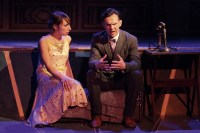
Those seeking to banish the January blues should hotfoot it to the Cambridge Theatre for a gloriously uplifting injection of energy and exuberance courtesy of the RSC’s Matilda the Musical. Roald Dahl’s celebration of the redeeming power of the imagination is magically translated to the stage by writer Dennis Kelly and lyricist Tim Minchin. Watching pint-sized prodigy Matilda, champion of justice and mistress of her own destiny, triumph over a truly toxic trio of odious parents and diabolical headmistress is both enormous fun and unexpectedly moving. The role was expertly played by mini powerhouse Kerry Ingram (who alternates with three other girls).

Here’s to Searle, the captain of cartoonists

The business of cartooning is in a pretty perilous state now that we have lost the captain of the ship. Ronald Searle was a cartoonist who could also draw — a rare thing. After the war, he became famous for a series of drawings he did for 'Lilliput' called St Trinian's. The girls Searle created did the most appalling things to each other and to their teachers. But it wasn't really about school-children. Searle was in fact using St Trinian's as a way of exorcising the horrors he encountered whilst a prisoner of the Japanese, building railways in a chain gang. After the success of St Trinian's, he ran away from England to rid himself of the naughty school girl tag and became famous for his documentary drawings.

A look ahead | 31 December 2011

Arts feature

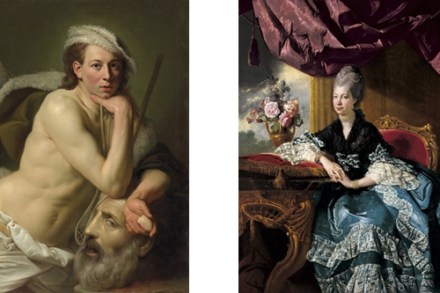
For those seeking refuge from the Olympics, Andrew Lambirth picks out the exhibition highlights of 2012: Freud, Hockney, Turner, Zoffany, Lely, Picasso... In the coming year, when the country will be besieged by all things Olympic, and many people of taste and discernment will (I am assured) be fleeing to spots less barbarous and sports-obsessed, there will still be a lifeline of art exhibitions to refresh those parts that physical activities cannot reach. Focusing on English artists, the main attractions will be shows dedicated to Lucian Freud (at the National Portrait Gallery), David Hockney (at the Royal Academy) and Damien Hirst (at Tate Modern).

Glorious farewell

Theatre

Michael Grandage says farewell to the Donmar with a farewell play. Richard II tells of a glorious but profligate king compelled to hand over his realm to a workmanlike, Steady Eddie successor. Entirely devoid of romantic interest, and with only teeny-weeny roles for women, this is not a show-stopping Shakespeare favourite. It appeals to specialists who note that it marks the Bard’s transition from medieval thriller-writer to dramatic philosopher. Grandage rises to this level and puts on a production that will satisfy the most ardent purist. Richard Kent’s ecclesiastical set is ravishing. The clever split-level arrangement of arches and tracery creates a versatile warren of spaces that are entirely practical but also fully evocative of religious awe.

Beyond compare

Opera

Bernard Levin once wrote an article in the Times called ‘But seriously, how can anyone compare Verdi with Wagner?’ (or something very like that). I can’t remember the article in detail, but its drift was ‘No one can seriously compare them’, something that I had and have always felt. Yet there is the temptation: they were born within a few months of one another in 1813, they were indisputably the two greatest opera composers of the 19th century, and each of them is thought to embody some of the most striking characteristics of their country.