Culture

Culture

The good, the bad and the ugly in books, exhibitions, cinema, TV, dance, music, podcasts and theatre.

There will be blood | 7 April 2012

Theatre

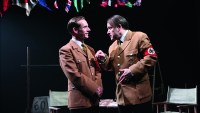
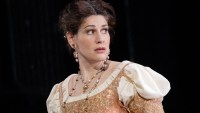
John Webster had one amazing skill. He could craft lines that glow in the memory like radioactive gems. ‘A politician is the devil’s quilted anvil; he fashions all sins on him, and the blows are never heard.’ Eliot loved him. Pinter used to stroll around the parks of Hackney shouting his soundbites into the sky. But Webster never discovered how to put his highly wrought lines into the mouths of likable or captivating characters. The Duchess of Malfi is a Jacobean slasher-play, a straight-to-video Tarantino blood-fest, full of cloaked assassins and scheming dukes. We’re in an Italian court where a beautiful noblewoman, played by Eve Best, has fixed her eye on a handsome young bumpkin.

Early adopters

Music

The death of Gustav Leonhardt at the age of 83 brings to an end the career of one of the giants of the early music movement. As an organist, harpsichordist and conductor he was long at the forefront of the experiments and revelations that the drive to perform music on period instruments made possible. He will be remembered for being fearless in his single-minded pursuit of what he thought his chosen repertoires required. And he was producing peerless recordings of those repertoires right from the beginning which — one forgets — was in the late ’40s. The term ‘early music’, and its demanding fellow traveller ‘authenticity’, have had a long innings.

Standing room only | 7 April 2012

Opera

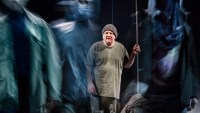
Of all the operatic ventures that have sprung up in England in the past 20 years, Birmingham Opera Company may well be the most remarkable. Its artistic director is Graham Vick, who is well acquainted with opera at its most elitist — he was artistic director of Glyndebourne from 1994 to 2000. BOC is at the other extreme, in that productions now regularly take place in a disused steel foundry on the outskirts of the centre of Birmingham, and the aim is to involve as many local inhabitants as possible. Over the past few years there have been impressive performances of Verdi’s Otello (it was televised, and survived the scrutiny extremely well), Idomeneo and, most movingly to me, Ulysses Comes Home, a wonderful version of Monteverdi’s greatest opera.

Night life

Radio

He’s got the perfect voice for radio, gruff and gravelly, slow and measured so you can catch every word. His new series is not, as you might expect, on 6 or 1, or even 2, but on 4. Jarvis Cocker’s Wireless Nights (late on Thursdays) is quite a coup for the former Home Service, the Pulp frontman bringing a touch of street cred to the network once proud to be considered middle-of-the-road. Cocker promises that his series will wander through aspects of the night, drawing on the stories of those who stay awake through the witching hours. Tilly, a young shepherdess, is facing her first night shift alone, struggling to keep alive a ewe who is giving birth to twins. The legs of both lambs are out but their heads are stuck.

On the beach | 31 March 2012

Exhibitions

As exhibitions in London’s public galleries become increasingly mobbed and unpleasant, it is heartening to report that the drive to take art to the provinces continues apace. New museums seem to be opening all over the country, from Wakefield to Margate, and although one may entertain doubts about their sustainability, their enhancement of our current cultural budget is very welcome. The latest public art gallery to open on the south coast is in Hastings, a once rather grand town that has in recent years been down on its luck. It takes more than an hour and a half to get there from London by train, and there isn’t a fast road, and these factors have contributed to keeping the town just outside the easy commuting belt.

Close encounters

Radio

Kate Chisholm looks forward to The People’s Passion on Radio 4 which explores the role of the cathedral in a modern, secular world ‘We began by wanting to do something about cathedrals and the life that goes on within them,’ recalls Christine Morgan, head of religion and ethics at BBC Radio. That was about 18 months ago, when not much attention was being paid to these great beacons of British history and belief. But by coincidence (or perhaps divine intervention) cathedral stories have been hitting the front pages in recent months after the tortuous attempts by St Paul’s to extricate itself from Occupy London and its battle with money, capitalism and the workings of the City.

Straying from the brief

Opera

‘Praising! That’s it!’ Rilke exclaims in one of his ecstatic Sonnets to Orpheus. It seems to be an unconditional injunction, but he hadn’t tried being an opera critic, and I’d like to see anyone even try plausibly to praise either  of the two productions I saw this week. One was new and absolutely terrible, the other was old, neglected and may or may not be good — it wasn’t easy to judge. Tête à Tête is an opera company and enterprise that I have often admired and enjoyed, but its speciality is very brief works, which could hardly be staged alone, and which don’t demand of their librettist and composer that they write an extended piece with all the problems that involves.

Old meets New

Theatre

It’s back. And I can’t believe I missed it the first time. Live Theatre’s dramatisation of Chris Mullin’s diaries has returned to Soho for a lap of honour. Richly deserved as well. The show moves unobtrusively between Mullin’s many spheres of interest. We see his home life as a father of two and as MP for Sunderland South. And we get an insider’s view of Westminster during the glory days of New Labour when parliament, and the entire country, was infatuated with its tooth-some superstar. Some of Mullin’s recollections have already acquired the status of classics. The late Tony Banks confided to him that no one ever saw Peter Mandelson enter a room. ‘There’s just a chill in the air, and suddenly, he’s there.

Male order | 31 March 2012

Television

I suspect that, when men and women watch Mad Men, they see very different things. Women probably see a witty indictment of male patriarchy. I, on the other hand, see Heaven on Earth. Everything shown on Mad Men is what male dinosaurs like me expect from western civilisation: liquid lunches, beautiful secretaries, exquisite suits and witty conversation. Alas, all of this is absent from the 21st-century workplace. Nowadays, downing half the contents of a bottle of Canadian Club whiskey in the middle of a business meeting can be a sackable offence. Mad Men returned to our screens on Tuesday night (Sky Atlantic) with a two-hour special. For those who care about plot, it’s now 1966 and the Sterling, Cooper, Draper and Pryce ad agency is still in business.

Con air

Radio

Imagine a small room, no windows, institutional cream on the walls. Bare of all decoration except for a circle of cheap chairs and the most basic of recording equipment. A gathering of people squeeze into the space — three young men, a strained-looking couple, an official-looking woman with clipboard and notes, a man in jeans with an earpiece. There’s not much room for manoeuvre, or to opt out of what’s going on. This is Prison Radio, an outreach scheme that began in HMP Feltham for young offenders in the early 1990s. Two radio producers wanted to do something about the high rates of self-harm, and of reoffending. Why not give prisoners the chance to learn new skills at the same time as providing them with a means to share experience, consolation, communication?

Bad habits | 31 March 2012

Cinema

When the late Ken Russell published his autobiography in 1989, he called it A British Picture. That title could just as easily describe The Devils, his 1971 adaptation of Aldous Huxley’s The Devils of Loudun, relating the true story of supposed demonic possession among Ursuline nuns in north-west France in 1634. Here is a world-class film by a British director, with British stars and crew,  sets by Derek Jarman and a score by Peter Maxwell Davies. So why is it only now getting a DVD release? Combining sexual abandon, outright blasphemy and scenes of convent life unlikely to be mistaken for The Sound of Music, The Devils fought a notorious battle with the British Board of Film Censors that has been allowed to eclipse the quality of the film.

Earl Scruggs, 1924-2012

The man who was probably the greatest banjo player in history has died, aged 88. Steve Martin says everything that needs to be said here. Here he and Earl are performing the immortal Foggy Mountain Breakdown.

Losing the plot | 24 March 2012

Arts feature

You know those sad, confused people you sometimes see, standing on street corners and shouting dementedly at passing cars. Well, the other week, that madman was me. I was in Sheffield to cover the Crucible’s Michael Frayn season, and had risen early to write my review. And then my usually reliable laptop failed to come up with an email connection. I kept trying, and failing, to get the copy across, then realised that unless I got a shift on I would miss my train. So I ordered a taxi and checked out. Only the taxi didn’t come and catching the train looked less and less likely. And it was then that I lost the plot entirely, shaking my fist at passing but occupied cabs, and shouting at God that I wished I were dead — all the symptoms of a certifiable nutter, in fact.

Seeing the light

Exhibitions

One of the more considerable pleasures of exhibition-viewing outside London recently was the Claude show at the Ashmolean. London exhibitions are becoming mobbed by crowds, and there is little enjoyment in shoving or being shoved in the supposed pursuit of artistic enlightenment, and absolutely no chance to contemplate individual pictures in the hurly-burly. As the devout will queue up to kiss the wizened toe of a saint, now the football fans of art will jostle to snatch the merest passing glimpse of a Leonardo or a Freud. The being there is all: the experience has very little to do with serious looking. Afterwards, you join the ranks of the blessed and tell your friends that you too were in the presence. There is apparently much comfort to be drawn from such sharing.

Poirot power

Arts feature

Will Gore talks to David Suchet about his forthcoming West End role and his debt to the Belgian detective The first thing I notice about David Suchet is his facial hair. It isn’t a stick-on Poirot tash, unfortunately, but a grey beard that he has grown for his latest role, James Tyrone, in the West End revival of Eugene O’Neill’s Long Day’s Journey into Night. The second thing is his smile. He greets me with a broad grin, and beams amiably throughout our time together. He has rehearsals to be getting on with, but is happy to let our scheduled 30 minutes stretch to an hour. Suchet is the most cheerful interviewee I’ve ever encountered. He’s unpretentious, too. Some actors, mentioning no names except Richard E.

Rhythms of the Caribbean

Theatre

There should be a sign on the door. ‘Plotless play in progress.’ Moon on a Rainbow Shawl, by Errol John, won first prize in a 1957 scriptwriting competition organised by Kenneth Tynan and judged by Alec Guinness, Peter Ustinov, Peter Hall and others. The West End promoters thought the script uncommercial and never gave it a decent shot at success. They had a point. Errol John, an apprentice writer, hadn’t learnt how to shape his tale for the theatre and give it that insistent rat-a-tat-tat rhythm of twists and surprises that audiences expect. His languid drama is set in a Trinidad ghetto where a crew of washouts and wanna-bes bicker and copulate their way through a few steamy midsummer days. The grinding poverty seems quaint, and even attractive, to modern eyes.

Fatal flaw | 24 March 2012

Opera

Judith Weir’s Miss Fortune, whose UK première was at the Royal Opera last week, has received the severest critical panning I can recall for any new opera. It is no masterpiece, but I wonder why it has been rounded on when so many new — not to mention old — pieces with no more going for them, so far as I can tell, get greeted warmly or at least tepidly. Admittedly, it takes an ambitious subject — Fate — and treats it in a largely unpretentious way. But Verdi’s La Forza del Destino takes the same subject and treats it in an utterly preposterous way, and has some dreadful passages of music, yet has survived for a century and a half.

JAM today

Radio

On the page a minute’s worth of words doesn’t look like much. A hundred and forty-four or thereabouts. But try spouting forth for 60 seconds on any given subject without hesitation, deviation or repetition and those 144 words become an awful lot to find, especially when they have to be summoned up at speed from some inner reservoir of thoughts and phrases. Maybe that’s the reason why Just a Minute is still such a fixture on the Radio 4 schedule. The panellists make it sound so easy that we’re always puzzled when a new, unpractised contestant struggles to survive for longer than 20 seconds. We’re puzzled but we also relish their embarrassment. We feel superior. If only we were invited on to the show, we would be able to talk, no problem.

Of God and men

Television

Two documentaries this week made us ponder what our country, with its 1 per cent of the world’s population, exists for. How God Made the English (BBC2, Saturday) had the historian Diarmaid MacCulloch musing about the way we have believed for a thousand years that we were God’s chosen people, having taken that baton from the Israelites — thanks to the Venerable Bede. I am not sure that he made the case. Most nations have believed at one time or another that God was their principal cheerleader. When the Israelites were in the smiting business, anyone they successfully smote, such as the poor wretches who lived in Jericho, were simply in God’s bad books. When they themselves were taken into slavery, it was because they had disobeyed orders.

Healing art

Radio

‘It’s like acting,’ says the illustrator Quentin Blake about his latest project. ‘You imagine yourself there, in that situation. You imagine you are that person.’ The first-ever children’s laureate has been taking his acute eye for gesture, for character, into hospitals, as part of the Nightingale Project. His funny, colourful, bursting-with-life paintings are now decorating the walls of a mental health ward at Northwick Park, the Vincent Square Clinic and a maternity hospital in France, and are being celebrated in an exhibition at the Foundling Museum (40 Brunswick Square, London WC1). They reflect so accurately the experience of illness, parenting, age and infirmity that Blake has been asked, ‘How do you know that?

Shape shifters

Exhibitions

Someone asked me recently whether I actually liked Mondrian’s paintings. The implication being that his form of geometrical abstraction was too pure — or too antiseptic — to contain the necessary germ of human warmth required to engage the emotions; and that though one could admire his work intellectually, it was difficult to be passionate about it. There’s plenty of passion in Mondrian, but it is controlled fire, banked down to burn with a white-hot flame. Perhaps it should be termed the Higher Passion, as it does not immediately affect the ordinary emotions, but inspires instead to the spiritual ecstasy of the saint.

Touching the void | 17 March 2012

Music

In April, for the first time in ages, I am going to a wedding. At least it will make a change from all the funerals. The middle-aged pop fan feels this all the more deeply, because few of our favourite musicians seem to make old bones. Or, more accurately, they make old bones, but at three or four times the speed that everyone else does. Some of these rock deaths are relatively mundane: falling down stairs (Sandy Denny), car crashing into a tree (Marc Bolan), ski-ing into a tree (Sonny Bono). Others are bizarre. It was Chicago’s guitarist Terry Kath, of course, whose career came to a premature end during a boozy game of Russian roulette. ‘Don’t worry,’ he said, ‘it’s not loaded.

Spirit of Schubert

Music

Every December, for the past decade, I have laid a red rose on Schubert’s grave in Vienna’s southern cemetery. What began as a gesture has become a custom, a way of giving thanks to the most lovable of all composers. Schubert may not be as great as Bach or Beethoven, who established the musical language of an entire culture, but no musician has touched so many hearts. Blessed Franz, holy Franz, immortal Franz: nobody, not even Mozart, has inspired such love. The details of Schubert’s last days are well known. In March 1827 he walked behind Beethoven’s coffin and, upon repairing to a local inn to toast the memory of the older man, raised his glass ‘to the one who shall follow him’.

Knock-off Chekhov

Theatre

Calling all thespians. Roll up, you theatre folk. The Hampstead’s new show is a dramatic love-in you can’t afford to miss. Farewell to the Theatre introduces us to Harley Granville-Barker, one of the greatest playwrights of the early 20th century, as he enjoys a sabbatical in Massachusetts in 1916. Everything is languid, atmospheric and high-minded. Granville-Barker is busy giving lectures and watching American productions of Shakespeare while one of his chums, a literature professor, has had a bust-up with another academic. It’s a pity this off-stage conflict doesn’t test or expose Granville-Barker at all. He just lolls around the garden of a country house making cold, lofty speeches about the theatre and generally being a didactic pest.

Succulent pleasures

More from Arts

It was about time a dance-maker exacted revenge on dance academics. In Alexander Ekman’s 2010 Cacti, a voiceover explains the alleged semantics of the choreography by resorting to theoretical clichés and the known modes of that mental self-pleasuring that many academics indulge in. As the vacuously pompous words bear little or no relation to the quirky actions, the contrast between the taped voice and the dancing becomes explosively comic. Later on, recorded voices are also used to let viewers peep into the minds of two dancers performing a duet, humorously highlighting the kind of artistically detached thinking performers frequently engage in while dancing.