Culture

Culture

The good, the bad and the ugly in books, exhibitions, cinema, TV, dance, music, podcasts and theatre.

Redeeming creatures

Cinema

We Bought a Zoo — in which a family buys a zoo — does what it says on the tin and if you like this sort of film you will like this and if you don’t you won’t, and you have to ask yourself why you buy The Spectator every week? It’s for analysis like this which, I think you will find, is unavailable elsewhere. But do I like this sort of film? Actually, I rather do. There are no surprises. It is comfortingly straight up and down. It is heartwarming, to the extent you can buy it. There are animals: lions, tigers, a grizzly bear, and a funny little monkey. I found it a perfectly agreeable way to spend the two hours I would otherwise waste and you may feel similarly if this is the sort of film you like, but probably not if you don’t.

Listen up!

Radio

Life-changing moments are not always as dramatic as Saint Paul’s Damascene experience. Often they emerge from conversations that begin with mundane exchanges about last night’s Masterchef, the film you saw last week, the last time there was a drought. Then gradually the talk moves on to other, deeper matters. Something is said, some connection is made which opens up a shaft of light on a problem, a question, a source of confusion that’s been troubling you for years. You might not realise for a while that the conversation marks a change, but looking back on what was said leads you to recognise how from that moment your life has taken a different (though not necessarily dramatically different) tack.

Downton on sea

Television

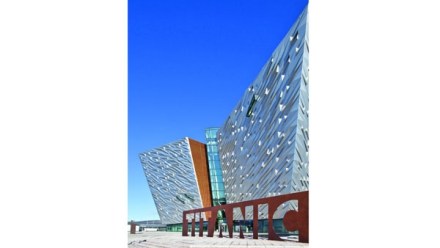
If Titanic hadn’t actually sunk on its maiden voyage not even Jeffrey Archer would have dared invent such a hammily extravagant plot. The passenger list — Benjamin Guggenheim, John Jacob Astor IV (Macy’s owner), Isidor Straus, the silent film actress Dorothy Gibson, inventor of the New Journalism W.T. Stead, and sundry English toffs — was just too implausibly rich and diverse. The sudden social levelling induced by disaster too neat and melodramatic. The background details — the band playing on, the lifeboat shortage, the men’s Birkenhead drill stoicism as their female loved ones and children clambered into the lifeboats (or not) — were too upsetting, maddening and moving. And the deus ex machina — an iceberg, for God’s sake?

Surviving the Ides of March…

I'm indebted to Patrick Kidd for unearthing this terrific advertisement for Scotsh Whisky, published in the Western Morning News in 1927. These are indeed treacherous times so it is pleasing to be reminded that March winds hold no peril for those who are fortified with Scotch Whisky. As Patrick says, what a shame the liquor industry can no longer offer sage advice like Scotch Whisky can be taken at the strength and in the volume best suited to the individual constitution, the time and the climate. Good to be reassured, too, that whisky is The safest & best drink in any climate. That said, it seems a stretch to suggest even a dram or two would have been enough to save Caesar from the conspiracy...

Road to Mecca

Exhibitions

The British Museum’s latest exhibition Hajj: journey to the heart of Islam (until 15 April) sets out to explain the mysteries of this annual pilgrimage. Last year, a total of 2,927,719 pilgrims went to Mecca, Saudi Arabia, something that all Muslims should try to do at least once in their lifetime. Such huge numbers are hard to visualise, so a film, projected on to a wall, is a great help: one sees, I suppose, hundreds of thousands of pilgrims arriving in the city, and walking round Islam’s most sacred site, the Ka’ba, confined as they are to the courtyard of the Grand Mosque and surrounding areas. And because of its rather claustrophobic atmosphere, the BM’s old reading room is — for once — just the right place to hold an exhibition.

Spring round-up | 10 March 2012

Exhibitions

The fashion for museum-quality exhibitions in commercial galleries continues apace with two notable shows in Mayfair: Cy Twombly at Eykyn Maclean, and Julio González at Ordovas. Both galleries specialise in this kind of display, which must be more to do with impressing potential clients than with generating income, given that both are loan shows. I hope there’s also an altruistic motive here, however slight: to provide another forum for the public to view high-quality art they might not see elsewhere. Certainly these venues offer a new and welcome resource to the London gallery-goer, and should be better known.

At home with Rubens

Arts feature

William Cook believes that the British cannot really understand the artist until they’ve been to Antwerp In a quiet corner of Tate Britain there is a little exhibition that sheds fresh light on an artist whom the British have never really learned to love. Rubens & Britain (until 6 May) is a fascinating show, documenting his work in England, and like all good exhibitions it leaves you wanting more. There are Rubens in countless British galleries, of course, but really to understand him you have to travel to his hometown, Antwerp. Here, Rubens is everywhere, even on the toilet doors in trendy bars and restaurants. My first visit was a revelation, and I’ve been back several times since.

Theatre of rudeness

Features

I’m told that the new production of Dvorˇák’s Rusalka at the Royal Opera House is controversial. There were boos at the first night and reports of audience members walking out in disgust. I too walked out in disgust. Mine, however, had nothing to do with what was happening on stage. It was prompted by the man sitting next to me, who arrived trailing BO the impact of which could alone knock out any Iranian nuclear bomb. The odour was so powerful that I had to get out as soon as possible. No part of my mind could focus on the performance; I had to hold myself together until the first pause when I could flee. When I mentioned this to friends the next morning, the floodgates opened. Almost everyone had had a similar experience.

Anthems for the Queen

Music

The Choirbook for the Queen, which has recently been launched, is a remarkable initiative, involving most of the leading Church musicians of our day and many philanthropists besides. The idea behind it is simple enough: to put together a collection of anthems (I use the word precisely) to celebrate the Queen’s Diamond Jubilee, with the added intention of showcasing ‘the excellence of choral writing and the continuation of the choral tradition by cathedral choirs and other choral foundations around the country’. Already in place is a plan for 80 of our cathedral and collegiate choirs to sing two of these anthems each this year, some to be broadcast on the BBC.

Reflections on guilt

Theatre

There can be no doubting the nobility of John Adams’s intentions in writing The Death of Klinghoffer to a text by Alice Goodman, nor ENO’s courage in putting it on, though they do have a captive audience for minimalist and near-minimalist operas. The work is conceived, as all commentaries tirelessly tell us, in the spirit of Bach’s Passions, in which a dramatic narrative thread alternates with arias of reflection and choruses of penance and grief. Yet Bach’s purpose was different in kind from Adams’s.

Only the best

Theatre

Jackie Mason, the New York stand-up, looks very strange. It’s as if somebody shrank Tony Bennett and microwaved him for two hours. Mason is short, dark, troll-like, densely built, with shining bulbous lips and a twinkly expression of diabolical mischief. His hair gathers over his head in a wave of red-brown crinkliness. For his solo show he wears a sharp, grey business suit. He could be Rumpelstiltskin selling real estate. All his jokes are Jewish. And none of them are. He uses ‘the Jew’ as a catch-all tag for a fretful, brow-beaten loser. ‘The Gentile’ is his relaxed, prosperous and self-confident counterpart. The Jew wants to impress people by sporting designer outfits but everyone who talks to him spends all their time reading labels.

Running on empty | 10 March 2012

Cinema

Bel Ami is based on Guy de Maupassant’s 1895 novel of the same name about a young man who sleeps himself to the top of Parisian society — I once slept myself to the top of Parisian society, but by the time I got there I was far too exhausted to properly enjoy it — and while it is lush and handsomely mounted and features copious sex scenes it lacks what it would absolutely have to have were it to work: erotic sizzle.

Friends reunited | 10 March 2012

Television

Paula Milne’s drama serial White Heat (BBC2, Thursday) starts in 1965 which to some of us might seem like yesterday, but is equidistant between the end of the first world war and now. So to most people it’s ancient history. Various students in London are looking for accommodation, which is strange since Churchill died in January, around the start of their second term. Doesn’t matter. You take your historical milestones where you find them. The students are selected by their young landlord Jack, a reach-me-down leftie whose father is a wealthy Tory MP. Jack wants them to be part of a socialist commune reflecting all demographics — white, black, gay, working class, and so forth. Jack has the odious arrogance of many public school lefties.

Overdoing the drama

Radio

What took them so long? For weeks and weeks he’d been limping into the farmhouse whining about how cold he is, how tired, how he’s had enough of Tom gadding about Borsetshire selling his gruesome-sounding pork meatballs while he’s stuck on the farm trimming leeks and getting up at the crack of dawn to do the milking. The clues were so obvious even Sergeant Lewis would have guessed that something bad must be waiting in the cowshed for Tony Archer. Perhaps it was intentional, the scriptwriters of The Archers (Radio 4) calling our bluff to prove that they’re in charge, and carefully manipulating our fears and premonitions to ensure that we keep on tuning in day-by-day. You might think you’ve second-guessed what’s in the script for Tony. But we know best.

A question about Question Time

I think we should have a short poll. Who is the thickest person ever to appear on the BBC’s Question Time? I ask having watched a woman last night, can’t remember her name, who worked for the Daily Mail, and who could have been outwitted by a bowl of semi-thawed Iceland Atlantic Prawns. Also, she looked remarkably like Austin Powers. Maybe it was Austin Powers. The singer Will Young was on too, and he was quite staggeringly thick. Are they the worst yet? Let me hear your nominations. Votes for ‘Rod Liddle’ will be discounted on grounds of predictability and taste.

Losing its edge

Exhibitions

Last November the Museum of Contemporary Art in Los Angeles held its annual fund-raising gala. Previously the event had used the tried-and-tested formula of wheeling in celebrity hosts such as Lady Gaga to try to persuade the great and good of Los Angeles to part with cash to fund the museum’s programme. This time, however, the museum changed tack, and appointed the performance artist Marina Abramovic as its creative director. When the guests, who included Kirsten Dunst, Pamela Anderson and Will Ferrell, turned up, they were asked to don white lab coats. They were then led to their tables, many of which featured a live human head poking up through the middle, revolving like a Lazy Susan. Other tables had as their centrepieces naked performers lying underneath skeletons.

All the fun of the fair | 3 March 2012

Exhibitions

It is easy to take the art and antiques fair for granted. After all, thousands of them take place every year, from humble events in village halls — cardboard boxes, old newspaper and cups of tea — to fairs so glamorous that on opening nights the ticket alone can cost $5,000. It was not ever thus. That revered mother of all such selling exhibitions — what became known as the Grosvenor House Art and Antiques Fair — was conceived in 1934 as a daring initiative to stimulate trade in the dark days of post-Depression London. As for the word ‘fair’, the late and much-lamented Frank Davis, who was still writing his Country Life saleroom column aged 97, recalled in 1961 that the very use of the term had caused unease when first mooted.

Miniatures to dazzle

Exhibitions

Alongside his distinguished career as a painter, Howard Hodgkin has also long been a collector of note. As a schoolboy at Eton he was given to bouts of running away but while briefly in situ his art master, Wilfrid Blunt (the brother of Anthony), borrowed a 17th-century Indian painting of a chameleon from the Royal Collection to enliven a lesson and Hodgkin was hooked. He started buying Indian pictures then and has continued ever since. ‘My collection has nothing to do with art history,’ he says. ‘It is entirely to do with the arbitrary inclinations of one person.’ It is a method that has, nevertheless, resulted in one of the world’s great collections of Indian art.

Down but not out | 3 March 2012

Arts feature

It’s not every J.D. Wetherspoon’s pub that has a preservation order slapped on it. In fact, I’m prepared to bet there’s only one: The Trafalgar in Portsmouth, Grade II-listed in 2002 for its mural by Eric Rimmington. Rimmington was 23 in 1949 when he won the commission to decorate the clubroom of the old Trafalgar House Services Club and chose to paint a view of Portsmouth and Southsea Station with passengers coming and going on the platforms. More than 60 years on, comings and goings on station platforms haven’t lost their fascination for the artist, though for his latest London show at The Millinery Works he has plunged down the metropolitan rabbit hole to pursue his observations underground.

Going nowhere | 3 March 2012

Cinema

The first and perhaps only thing to really say about Hunky Dory is that it is anything but. It is not hunky dory at all. Instead, it is half-baked and tiresome. I’d had rather high hopes for it. It’s a ‘let’s-put-on-a-show!’ film set in a Welsh comprehensive during the long hot summer of 1976 — the summer I turned 16, as it happens — so I expected at least some of it to resonate, but its characters are so unfinished and improbabilities so plentiful and narrative so unoriginal it’s like an extended episode of Fame, only worse.

Cold at heart

Theatre

‘A masterpiece comparable with the last great plays of Shakespeare’, ‘a veritable turbocharged dynamic of music’, ‘a cliffhanger’, ‘a rollercoaster of a drama’ — which opera deserves these and many more ecstatic epithets? They all occur in the brief programme notes to last week’s concert performance at the Barbican of Mozart’s La Clemenza di Tito, though also quoted there, as an example of outdated hostility to the work, is Charles Rosen’s ‘it’s difficult to convey how unmemorable it is’. Try as I might and have with Clemenza, I am on Rosen’s side.

Bohemian bliss

Theatre

Strange sort of classic, Hay Fever. Written when Noël Coward was an unknown actor, it won him no converts among producers. He couldn’t get anyone to stage it. The title is weak and vague. The script lacks incident and action. And the humour is more subtle than audiences were used to. Only after Coward had broken through with his auntie-blasting Oedipal shocker, The Vortex, could he find managers ready to take a second look at his back catalogue. Hay Fever introduces us to a family of maddeningly self-indulgent Bohemians, the Blisses, whose home is swamped by a quartet of weekend guests. A gruesome house party follows. All the wrong people flirt with each other. A few hasty kisses and some overfrantic proposals ensue. Then everyone leaves and the Blisses carry on as before.

On the ropes

More from Arts

‘Aerial’ ballets were all the rage in late-Victorian London. It mattered little that they were more circus acts than actual ballets; their female stars, swinging from either a trapeze or sturdy ropes, were worshipped on a par with the greatest ballerinas — as in Angela Carter’s novel Nights at the Circus. I often wonder what those people would think of their postmodern successors, as performing with ropes seems to be a growing trend within contemporary dance-making. Take Ilona’s Jäntti’s Handspun, which opened the Exposure: Dance programme at the Linbury Studio Theatre last week.

Archive treasures

Radio

It’s a bit of a surprise to discover that my young nephews are huge fans of radio. Since Radio 4 abandoned programmes designed for children, and CBeebies disappeared from the airwaves, radio has become a kids-free zone. What on earth do they find to listen to? Why, of course, Radio 4 Extra, and especially the comedy classics, The Navy Lark, Beyond Our Ken and The Men from the Ministry. Kids are getting the listening bug from programmes that were created more than 50 years ago. Brilliant. To them, these treasures from the archives sound as weird and fantastical as Harry Potter. As Mary Kalemkerian, Radio 4 Extra’s director of programming, has proved so pertinently in these straitened times, who needs vast amounts of money to be creative?

Kindred spirits

Television

There’s a game you have to play at the BBC and Jeremy Paxman plays it very well — which is why he is currently still the most famous Old Malvernian after C.S. Lewis whereas I’m way down the list at maybe fourth, fifth or sixth. The rules are very simple: no matter how great your sympathies secretly might be towards the British Empire, Tory values, climate-change scepticism, Israel, the idea of national sovereignty, Margaret Thatcher or any other manifestation of what the BBC would consider WrongThink, you must suppress, suppress, suppress, using the mental equivalent of that spiked metal ring the late Victorians devised to discourage young men from masturbating. With Paxo, this self-administered therapy has been extremely effective over the years.