Culture

Culture

The good, the bad and the ugly in books, exhibitions, cinema, TV, dance, music, podcasts and theatre.

Male bonding

Theatre

Both these plays are about concealed sexuality. Straight, by D.C. Moore, is based on an American indie flick named Humpday. The play has one of the funniest openings you’ll ever see. We’re in a flat occupied by suburban nonentity Lewis and his wife Morgan. Lewis’s old college mucker, Waldorf, has come home after seven years in Mongolia and he cheekily decides to announce his return to western civilisation by inserting his unsheathed tumescence through the letterbox. Lewis doesn’t see it. His wife does and she has to persuade him that she isn’t hallucinating. The gate-crashing phallus symbolises the play’s theme of male eroticism thrusting itself uninvited into soporific domesticity.

Chorus of approval

Music

Is there anything more essential to one’s well-being than the sound of an English choir at evensong? Is there, for that matter, any word in our language more beautiful than ‘evensong’, with its evocation of architecture, music and the Anglican liturgy? This is the season to reflect on such matters. On Christmas Eve, Cambridge once again becomes the centre of the world for two hours as the choristers of King’s College celebrate the famous festival of carols and lessons and two days before, in St John’s, Smith Square, the choir of Trinity College will perform Bach’s Christmas Oratorio with the Orchestra of the Age of the Enlightenment. Moreover, they will be singing from memory.

In the worst possible taste

More from Arts

What are the rules of taste at Christmas? How might the fastidious chart a neat path through this garish and cluttered carnival of unreflective consumption? How might dignity be maintained in this tinselled and glitter-balled waste of space? Actually, how might we design it better? Nicky Haslam once and quite correctly, without a flicker of irony, advised me that ‘coloured lights are common’. There is value in such advice and we will return to this refreshing idea a little further down the page. Germans and Americans have a peculiar historic hold over our imaginations at this time of year. It was Victoria’s earnest German Prince, Albert of Saxe-Coburg and Gotha, who first imported the hitherto pagan Christmas tree.

Tiger feat

Cinema

Wow! Just: wow! Life of Pi may be the most ravishingly beautiful film I have ever seen. It’s stunning. It’s gorgeous. Its visual inventiveness made me want to weep for joy. It is magical realism made magical and realistic. The palette of colours is extraordinary. You will feel you are in the sea and above the clouds and as if you are on a boat with a Bengal tiger too. Wow! Just: wow! But, weirdly, while enraptured by its look, its emotions never seemed especially pressing, and as for the spiritual journey, it didn’t exactly float my own particular boat. Is it saying a belief in God always makes life a better story than one without a God? That this is why we require faith? Is it advocating a Life of Pi-ety?

Heavenly hands

Arts feature

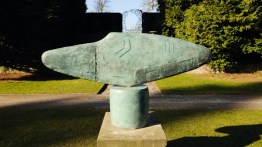
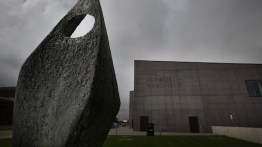
The Hepworth has been garnering plaudits right and left as a new museum to be welcomed to the fold, and my first visit to this monolithic structure with its feet in Wakefield’s River Calder exceeded all expectations. Designed by David Chipperfield Architects, the ten linked blocks that make up this new suite of galleries are spacious and light-filled with excellent views out to the river and town. Restaurant, education centre and offices are on the ground floor, and upstairs the art comes into its own. At the top of the stairs is a room of six classic sculptures by Barbara Hepworth (1903–75), whose name the museum has taken since this significant figure of British Modernism was born in Wakefield.

Imperialist ambitions

Exhibitions

In 1997, the Russian Academy of Sciences gave the names Hermitage 4758 and Piotrovsky 4869 to two small planets discovered 500 million kilometres from earth. The signal honour paid to the State Hermitage Museum and Boris and Mikhail Piotrovsky— its dynastic succession of directors — heralded a new era of post-Soviet expansionism for the former Imperial museum: from now on, the sky would be the limit. Since then, the Hermitage has opened branches in London, Las Vegas, Amsterdam, Kazan, Ferrara and Vyborg. More than a goodwill gesture, the St Petersburg museum’s overseas expansion has been a way of getting its collections seen.

The quiz biz

Music

Come December, I often find myself writing a lot of quizzes. Not that I’m complaining: I love writing quizzes, and I really love being paid for writing quizzes. There’s a definite skill in crafting a decent question, and therefore considerable satisfaction in getting it right, tempered only by the unceasing fear of getting it completely wrong. (Like all writing, therefore.) All of us who toil in the quiz mines are naturally aware that we have our favourite subjects, our home territories if you like. I could go on writing increasingly abstruse questions about cricket or pop music far into the night, but I don’t, because the audience simply isn’t as interested in those subjects as I am. If you are a quizmaster, your job is to entertain people.

Field Marks

More from Books

The bulk of what I retain I learnt through him, from that trek to Flanders Moss in the hope of seeing a grey shrike on a blackened tree-fork, to a pair of hen harriers whose upward glide made him beam with pleasure. His first ringing-trap dismantled (it attracted vermin), he designed and built one that bears his name on the Isle of May; while in the cottage we shared, coffee-mugs and cigarette-butts cleared, and like as not whisky glasses from chess the night before, he’d set up his carousel of colour-slides to display the field marks of various species — pointing out such features as eye-stripes and wing-bars, nesting habits and flight-patterns — or draw lightning sketches, his profile more and more that of a raptor.

Selling secrecy

More from Arts

In the ‘psychotherapy ward’ of a secret venue somewhere in east London, watercolour portraits of troubled male faces line the wall. Nearby in the ‘court-room’ a sound installation broadcasts an ominous tick-tock into the airy acoustics of a large hall, while the ‘Warden’s Office’ below is furnished by quilts handmade by inmates. This is Secret Gallery, the latest venture from the company behind Secret Cinema, which stages immersive screenings of celluloid classics (kept secret until the screening itself) that have so far included Blade Runner, The Red Shoes and now The Shawshank Redemption, Frank Darabont’s cult tale of prison injustice.

Sounds in silence

Radio

Two really scary programmes this week, and not a vampire or psychopath to be heard. Both gave personal accounts of catastrophic hearing loss. Not something you’d expect to work on radio, the aural medium. How can you explain what it’s like to stop hearing when there’s no pictures, no other way to explain the absence of sound except through sound? But that’s what made them both such terrifying programmes. All the time I was listening, I kept on thinking: what would it be like if I suddenly couldn’t hear these voices, that piece of music they’re playing, this discussion of ideas. Hearing loss doesn’t mean, of course, that you actually stop hearing. It’s far worse than that, as both programmes illustrated, to alarming effect.

I love Michel Roux Jr

Television

For the past month I have been glued to the BBC’s Why Poverty? season — ‘part of an unprecedented collaboration between public service media in which 37 EBU members have been dedicating multiplatform programming on the theme of poverty’. No, I jest. What I’ve actually been watching is MasterChef. Served with a MasterChef reduction, a smear of MasterChef purée, MasterChef shavings, MasterChef pickles and MasterChef tapenade and pommes, style Masterchef. With more MasterChef for pud, obviously. Does this make me a bad person? Well, possibly. But it also makes me a normal person.

Battle of the sexes | 6 December 2012

Theatre

Tough play, The Taming of the Shrew. Uniquely among Shakespeare’s comedies, it moves audiences to pity and fear. It’s a video-nasty in the garb of a marital farce, an uncomfortable romance whose closing reconciliation scene invariably draws lusty hisses from female play-goers as Kate renounces her autonomy and bows to the will of her brutal husband, Petruchio. Directors prefer to approach this squirm-inducing parade of sexual violence through the comforting distortions of a veil. Single-gender productions are popular. In a Gujurati version, Kate is portrayed as an immigrant and the title had been coyly changed to A Foolish Foreign Woman Comes to Her Senses. Cole Porter goes for the vegetarian option by taking us backstage during a tour of the play.

Grape expectations

Cinema

Five minutes into You Will Be My Son (or Tu seras mon fils in its original French), I expected a very different film from the one that eventually emerged. The first scene takes place in a crematorium, as a coffin and its occupant are cooked to ashes. A relative of the deceased picks at a flower, and asks whether the ashes of the man and of the wood will mix. At which the funeral attendant leans over like a great crow to say, ‘It’s all just carbon.’ The whole thing seems very poised, quite refined and a little bit clever. But then the film turns into something else entirely. Its location switches to a vineyard in Saint-Émilion, where we are properly introduced to the owner, Paul de Marseul (Niels Arestrup), and his son Martin (Lorànt Deutsch).

Scandal at court

Opera

The way the director James Conway sees it, Monteverdi’s last opera L’incoronazione di Poppea is about that most delicate of subjects, adult abuse by youngsters. That isn’t what he says in his programme note for his production at the Royal College of Music, where he claims that the opera is about power, ‘love, yes, but love’s power’. That is tendentious: you might as well say that Otello is about the power of jealousy, which is true, but that doesn’t make it ‘really’ about power; or that Wozzeck is about the power of powerlessness, etc. Poppea is about several things, power among them, but also love, jealousy, ambition, ruthlessness, the abuse of power.

Fourth Floor

More from Books

I reason with the crown of the tree. Surely from this fourth floor window, we are equals now. I calculate the trajectory, whether it would catch me if I threw myself at it. I comb for clues from the uneasy rocking of the branches, the slow swimming of its fingers stirring the air. There must be something in the moth flutterings of the mylar balloon trapped between the twigs; a pincered ghost, failing to tear itself away even with the wind as an ally. You can’t blame the Poplar for wanting to hoard it, the only fruit it has ever held onto or is capable of bearing.

Declaration of independence

Arts feature

Taking a break doesn’t come naturally to Michael Grandage. His decade-long run as artistic director of the Donmar Warehouse came to an end less than a year ago, but his latest big adventure is already set to begin. ‘The idea that I’d leave the Donmar and cruise for a bit would have been such a waste,’ he tells me, between mouthfuls of soup and crusty bread. Not even lunchtime can stop him. He is chatting to me during a break in rehearsals for Privates on Parade, the first show in a debut West End season for his new venture, the Michael Grandage Company. Four more productions will follow, all at the Noël Coward Theatre, and Grandage will direct each one. Did he not fancy a long holiday after finishing at the Donmar?

Friends reunited | 29 November 2012

Exhibitions

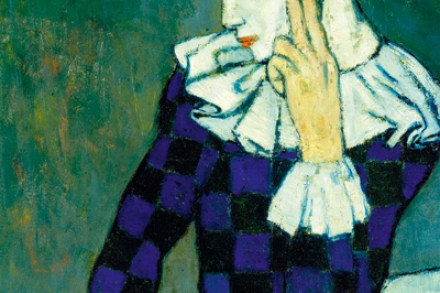
Christopher Wood (1901–30), billed as the great white hope of British Modernism, who perished by his own hand before his full potential could be explored. Friend of Ben Nicholson, with whom he supposedly ‘discovered’ the naïve painter Alfred Wallis in 1928, he was a Europeanised sophisticate who knew Picasso and Cocteau and dabbled in Cubism and Surrealism. He was a talented painter with a penchant for harbour scenes, but, as this fascinating exhibition suggests, his gifts have been exaggerated (no doubt because of his romantic life story), while the achievement of his older contemporary Cedric Morris (1889–1982) has been marginalised and largely ignored.

Missing

More from Books

What is so noticeably lacking in Mathew Brady’s interviews with the dead are the smells; likewise in Ambrose Bierce’s corpses their faces gnawed by hogs near the Greenbrier, Cheat, Gauley; or the wounded roasted in gullies a foot deep in leaves at Shiloh, Spotsylvania; and you, reader, cannot supply what is left out.  So how much more eludes us? . . . the scent in the rain.

Review: The Rolling Stones at the O2 Arena

More from Arts

‘How’re you doing in the cheap seats? They’re not that cheap, though, that’s the problem,’ said Mick Jagger as he launched into the first of the Rolling Stones’ 50th anniversary concerts. Still, the electrifying combination of swagger, swing and blues transformed the O2 Arena into a raucous celebration of the self-proclaimed ‘greatest rock-and-roll band in the world’. The Stones were last on stage in 2007, and the intervening years have done little to diminish the band’s sprightliness. Jagger remained the archetypal front man, while 71-year-old drummer Charlie Watts kept up the momentum. The gnarly fingers of guitarist Keith Richards did, however, sometimes fail to find the notes, his languid playing style exaggerated by age.

Fame and fortune

Television

Having planned to devote every one of this week’s 800 words to Sir David Attenborough’s 60 Years in the Wild (Friday, BBC2), I was distracted by fame, fortune and the politics of influence: Give Us the Money (Sunday, BBC4) and Park Avenue: Money, Power and the American Dream (Tuesday, BBC4). Both these programmes I watched with interest but absolutely no enjoyment whatsoever; their combined effect was a feeling of overall grubbiness, as if I had sat too close to a wrestling match on a wet afternoon in a swamp. ‘Give us the money!’ was the instruction given by Bob Geldof to the public at Live Aid in 1985. The public reached into their pockets and did as he asked, and a new kind of charity was born.

Comic clockwork

Theatre

Pinero’s comedy The Magistrate is a marvellous confection of shameful secrets and multiplying concealments. Agatha, a beautiful widow of 36, has trimmed five years from her age in order to bag her second husband, Aeneas Posket, an agreeably pompous magistrate. Her subterfuge is imperilled by her 19-year-old son who must pretend to be 14 in order to make the maths work. To please his mother, the young buck behaves like a child at home. But elsewhere he pleases himself. He keeps a private room at the racy Hotel des Princes in town. One evening, he persuades his weakling stepfather to accompany him for a night of drunken antics. The police swoop on the hotel and Posket has to run pell-mell from the officers of the law.

Caravan killers

Cinema

Here’s a fun diversion for all the family: how many ‘high-concept’ film ideas can you think of in a single minute? These are the films with premises that can be summed up — and pitched to expectant, impatient Hollywood producers — in only a few words. ‘Jaws in Space’, say, or ‘Arnie versus Hitler’. Get started now, and you could soon have the studios drooling a path to your door, eager to turn your aphorisms into easily marketable products. Red carpets and golden paycheques await. I mention this because, at first glance, it seems as if Ben Wheatley’s Sightseers is the result of a similar game.

Decline and fall

Opera

Some operas become, thanks partly to the frequency with which they are produced, victims of their own popularity. The most obvious sufferer is Carmen, which is a no-winner for singers and directors alike. As soon as the curtain rises and you see lemon trees and swaying hips, your heart sinks and you spend the interval agreeing with everyone that it’s just another tired old cliché; while if the scene is a mortuary or a garage you complain — and fairly — that it’s wholly inappropriate for the drama and the music that gives it substance. Last time it was produced at ENO, in 2007, it failed on all scores and it’s almost unseemly to mention it.

Talking dirty

Music

Attached to the ménage of every artistic outfit these days will be an employee who believes there is a magic formula which,  once found, will bring in millions of everything: fans, column inches, money. Perhaps all artists secretly believe that what we do must have universal appeal: our insights are simply too significant to be overlooked. The only reason why other people don’t come to our concerts, buy our discs, or otherwise frequent our places of high culture is that it hasn’t yet got through to them that we exist. They only have to be drawn in by the right kind of publicity and everybody will love what we do. To find this publicity is the job of expensive professionals who spend their lives identifying the perfect image or coining the irresistible slogan.

The Ladies’ Man

More from Books

The ladies that he spoke to, soft and sure, Believed in dresses longing to be made Of no material but that very shade Of fabric he laid out. So his demure Debs’ fingers would dip gracefully to azure Yards of silk, and his housewives’ eyes, displayed A deep vermillion with a silver braid, Would find themselves seduced by its allure. On flipping round the CLOSED sign for the day, Before easing his scissors on their hook, The pleasant-suited draper paused a while At his tall mirror, practising his smile, Trying to figure quite how he might look Now all his many ladies were away.

Lonely Lakelander

Arts feature

Five years ago I had never heard of Percy Kelly (1918–93). I knew the work of some Cumbria artists, and much admired the dark and moody landscapes of Sheila Fell (1931–79), for instance, but Percy Kelly had not then registered on my radar. He was already highly regarded in the Lake District, but it was not until after his death that his work was really exhibited and promoted. He was one of those artists who believe in their own value, and want others to share their high opinion, but are not prepared to sell their work to achieve this. Time and again Kelly was offered exhibitions and sabotaged them, while potential buyers were frustrated in their attempts to purchase the paintings and drawings they admired.