Richard Cork

We must never again let this 19th century Norwegian master slip into oblivion

From our UK edition

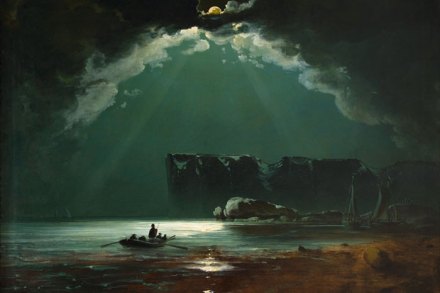
You won’t have heard of Peder Balke. Yet this long-neglected painter from 19th-century Norway is now the subject of a solo show at the National Gallery. And it’s an absolute revelation. Walking around, I marvelled at the intensity of a man obsessed with revealing the frozen grandeur and elemental drama dominating his country’s northernmost shores. Like Turner, he was driven by a restless urge to travel, discovering landscapes that enlarged and transformed his vision of the world. In 1832 he took an arduous sea journey to the far north of Norway, ceaselessly sketching the rugged coast and mountains along the way. His excitement grew as he passed the primal North Cape, and the onset of a hurricane only increased Balke’s avid involvement.
The story of the first painting to sell for over a million pounds

From our UK edition

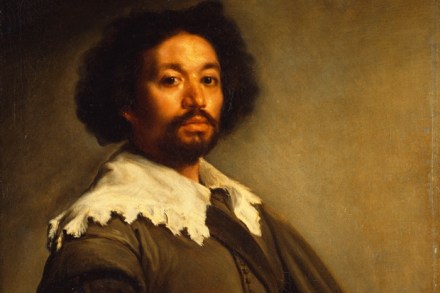
Nothing could have prepared the art world for the astounding moment in 1970 when, at a Christie’s sale on 27 November, the world auction record for a painting smashed through the million-pound barrier for the very first time. It was Velázquez’s portrait of his assistant Juan de Pareja, and in the week leading up to its sale the international press became excited about the possibility that it would beat the previous record of £821,482, paid in 1961. I had recently become the art critic of the Evening Standard, and its enlightened editor, Charles Wintour, asked me to write a special article about this Velázquez portrait. Propped up on a chair in a secluded top-floor room at Christie’s headquarters, this painting impressed me profoundly.

Private passion

From our UK edition

Right until the end of his life, Euan Uglow remained one of the most elusive English painters. An intensely private man, known only to a small circle of devoted artists, critics, models, collectors and former students, he disliked promotional exposure and the celebrity cult. His reputation has always been high, but it was largely confined to those familiar with his work from group exhibitions or visits to his studio. Uglow saw no reason to submit himself to the public gaze. Utterly absorbed in his own work, he thrived on solitude and the quiet life. But interest in his achievement keeps on growing. Now that figurative painting is no longer regarded as a hopelessly obsolete pursuit, his steadfast commitment to working from life is arousing a great deal of renewed curiosity.

In the labyrinth

From our UK edition

Nothing might seem more idyllic than Fragonard’s large, manicured paintings of playful seduction. Executed in the early 1770s for Madame du Barry’s Pavilion at Louveciennes, they celebrate the erotic rituals enacted by aristocratic lovers in the grounds of an opulent estate. The young woman and her equally well-groomed suitor dart, gesticulate and embrace among overflowing flower-beds dominated by classical urns and statues. But by the time Yinka Shonibare has finished with them, in an elaborate and unnerving installation at the new Musée du quai Branly, all their carefree poise is replaced by a macabre alternative.

Shock and awe

From our UK edition

At the age of only ten, Leon Kossoff undertook a momentous journey across London on his own. He travelled from his family home in the East End to Trafalgar Square and, having mounted the steps, entered the National Gallery. At first, the early Christian art he encountered inside filled the boy with fear. But after a while, trepidation gave way to awe. Discovering the existence of paintings was a total revelation, and he subsequently ensured that the works displayed there became an indispensable part of his life. Today, 70 years after that initial childhood visit, the National Gallery is saluting the intensity of Kossoff’s commitment. For he has made hundreds of unbridled drawings from pictures in the collection, and a selection of these images now becomes a galvanic exhibition.