David Hare

David Hare is a playwright and screenwriter.

Satire is nothing without contempt

From our UK edition

On 30 April, the solicitors Mishcon de Reya asked me to join a panel commemorating the 25th anniversary of the High Court trial in which David Irving unsuccessfully sued Deborah Lipstadt for calling him a Holocaust denier. Deborah was there, alongside her lawyer, Anthony Julius. Irving’s anti-Semitism had a particular purpose. Postwar, the chief obstacle to restoring the ideas of Adolf Hitler was what happened to the Jews. If their genocide could be denied, fascism could be rehabilitated.

What’s gone wrong at the National Theatre?

From our UK edition

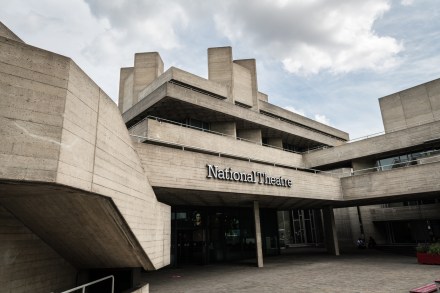
Now we have a Labour government, it would be nice to feel repertory will return to the National Theatre. It used to be possible to come to London for a week and see six plays. Audiences loved it. New writing spoke to old in ways which enriched both. Today, you’re more likely to see Ibsen, O’Neill, Molière and Marlowe in the West End. What happened to the library of world drama? The new practice is to offer only a couple of straight runs, sometimes first-rate. So there’s nothing to stop any random producer saying: ‘Hey, the Lyttelton seems to be empty this autumn, can I hire it to do one of my shows?’ Shaw and Granville Barker wanted to assert that theatre was art, not commerce. The model was European, not American.

Why do people resent the theatre?

From our UK edition

By chance, I was living in New York when John McPhee published his New Yorker essay ‘Brigade de Cuisine’. It was 19 February 1979. It caused quite a stir. McPhee described in lip-smacking detail a restaurant which was situated somewhere upstate. He inflamed the reader’s imagination by detailing how delicious the food was without revealing the restaurant’s name or location. McPhee knew what he was up to. He succeeded in animating the most intense aspirational fantasy of middle-class Manhattan. There existed an ideal dinner place of which no one knew. It was, he said, run by a mysterious chef called Otto whose technique was so fast it ‘became a collage of itself’. At one point, I believe, three investigative reporters from the New York Times were assigned to try to identify it.

Just how much lower can the Conservatives sink?

From our UK edition

This is the year in which Michael Gambon died, so by definition a grim one for theatre. Of all the tributes, one of the most acute was by Tom Hollander, who recalled how expressive Gambon’s voice was after 30 years on stage. He could reach hundreds of people while seeming to address only one or two. That’s essential theatre acting. When Gambon turned to cinema, his voice had become supple and mellow. It set me to thinking of other great cinema voices. Simone Signoret came first to mind. Then Jeanne Moreau, James Mason, and above all, Henry Fonda. These actors have you at hello. I would have added Marlene Dietrich, but if you can be so easily parodied, can you be truly great? A Los Angeles record producer tells me that teenagers no longer consider actors as role models.

Musicals are killing theatre

From our UK edition

This has been an agonising time for those of us who love Julian Sands. On 13 January, he went for a one-day hike up Mount Baldy, 50 miles from Los Angeles, and hasn’t been seen since. No one who knows Julian can believe he’s dead. He’s the very epitome of the free-spirited actor. You never know where Julian will be turning up next. As soon as he lands in the UK, he always telephones to tell me about, say, playing a paedophile in the terrifying Czech film The Painted Bird or going to help Mike Figgis on his latest project in Hong Kong. If it’s Terence Davies, he’ll do it. Doesn’t mind the size of the part. That’s who he is. Julian knows a lot about art, wine and mountaineering, but it’s his enthusiasm and generosity which makes him an outstanding reader of poetry.

Why shouldn’t we worship the NHS?

From our UK edition

For obvious reasons, stocks in ex-editors of The Spectator are experiencing an all-time low. But my own complaint is with Nigel Lawson. Lawson may say it’s hardly his fault that his remark ‘The NHS is the closest thing the English people have to a religion’ has been appropriated ever since by anyone who thinks it’s a clinching argument for privatisation. Actually, it’s the opposite — a clinching argument for the present arrangements. I’ve had to make a lot of visits to hospitals in the past year, far more often than I’ve been to the theatre or the cinema. By force, I’ve seen a great deal of the NHS at first hand. My conclusion is that if I were to follow a religion, the NHS would be top of my list.

David Hare’s notebook: The National Theatre belongs to taxpayers, not corporate sponsors

From our UK edition

The nicest day of the year was spent at Charleston in May. The Sussex farmhouse shared by Duncan Grant and Vanessa Bell looked splendid in the streaming sunshine. As a dramatist, I’ve idly disparaged bald and white-haired audiences. But as soon as I started speaking at the literary festival, I realised that everyone in panama hats and cardigans was way to the left of me. The first question was about my local childhood, and I said that growing up so close to the Channel meant that stories of people like Bernard Shaw and Virginia Woolf sitting on English lawns and hearing the sound of battle in the first world war from across the water had always moved me.

David Hare’s diary: Actresses are smarter than journalists

From our UK edition

So mysterious, the Conservative party. In every poll, our five most admired institutions are the NHS, the BBC, the Royal Mail, the armed forces and the monarchy. The Conservative party wants to destroy four of them. Conservative? The only traditional aspects of British life to be preserved are private education, executive over-pay, the rights of both the security services and the press to wiretap innocent citizens, and the delegation of foreign policy to Washington. Some Tories even want to send high-speed trains zipping through their own rural constituencies. Ministers muttering into their beards about how everything must be changed and changed utterly more closely resemble the Trotskyites of my youth than Conservatives. Shouldn’t the party change its name?

Notebook

From our UK edition

For obvious reasons, people are always looking for a nicer word for right-wing. For a while, they tried ‘free-market’ — after all, it sounds spirited and buccaneering — but the 2008 financial crisis left that one holed below the waterline. There was a brief fashion for trying to make the word ‘laissez-faire’ sound attractive, but it succumbed to the same lethal question Raymond Williams once asked of the permissive society. ‘Oh yes? And, tell me, who exactly is meant to be doing the permitting?’ After that, the right tried vainly to appropriate the word ‘radical’ and make it work for their side.

Diary – 11 February 2012

From our UK edition

One of the best things about being a writer is that you get asked to interesting places. I’ve always turned everything down because I believed I should sit at my desk and write. About six months ago, I decided to see what would happen if I accepted everything for a while. Admittedly, I had a kick-start. My BBC film Page Eight, about the moral ructions in MI5 in the past ten years, was given the unusual honour, for a TV film, of closing the Toronto Film Festival. So I went to Toronto (refreshing), then to Edinburgh (uplifting), Warsaw (fascinating), Rome (matchless), Hamburg (serious), Jaipur (fabulous), Eastbourne (serene) and Gothenburg (-14°C).