Culture

Culture

The good, the bad and the ugly in books, exhibitions, cinema, TV, dance, music, podcasts and theatre.

Living history

Television

It has been a while since the BBC really pushed the boat out on the epic history documentary front. Perhaps to make amends it is treating us to possibly the most historian-studded, blue-screen-special-effects-enhanced, rare-documentastic, no-hyperbole-knowingly-under-employed series ever shown on television. Armada: 12 Days to Save England (Sundays, BBC2). Having clearly spent a lot of money here, the BBC is taking no chances with its demographic spread. For the laydeez, in the Ross Poldark role it has Dan Snow, captured somewhat gratuitously piloting his handsome yacht into the choppy waters of the English Channel. (Just like in 1588! Sort of.

Carmen v. Carmen

Opera

It’s been a busy operatic week, with a nearly great concert performance of Parsifal in Birmingham on Sunday (reviewed by Anna Picard in last week’s Spectator), Carmen at the Coliseum on Wednesday, Donizetti’s Poliuto at Glyndebourne on Thursday and Carmen, also at Glyndebourne, on Saturday. A trajectory that Nietzsche would have approved of, moving from brooding northern transfiguration to sunlit, brilliant southern violence and destruction. Poliuto is mostly known, if at all, in the live recording made at La Scala in 1960 as a vehicle for Callas’s return, in a role that made comparatively small demands on her, and much larger ones on Franco Corelli and Ettore Bastianini.

Stolen goods

Cinema

Man Up is a British rom-com starring Simon Pegg as Jack and Lake Bell as Nancy. Nancy’s problem, at the outset, is that she is 34 and still single — has yet to ‘man up’ — and is therefore a failure, and if you can buy that as a premise for a film, then that’s your look-out. I’m old and I’m tired and I can’t be always telling you what’s right and what’s plain wrong. So it opens with Nancy, who is single (at 34!; the horror!), attending a friend’s engagement party and refusing to come down from her hotel room as her love life, we are given to understand, has been somewhat disastrous and now she has a pathological fear of putting herself out there.

One foot on the catwalk

Theatre

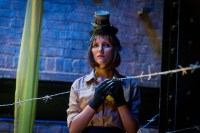
St James Theatre hosts a new play about Alexander McQueen (real name Lee), whose star flashed briefly across the fashion world before his suicide in 2010. It opens with a mysterious stalker, Dahlia, breaking into McQueen’s Mayfair home and demanding that he make her a dress. ‘I’m calling the police,’ he shrieks but she placates him and they embark on a surreal odyssey to his childhood haunts where they meet his mentors past and present. A pretty clunky start. Who is Dahlia? A dramatic ploy, a figment of McQueen’s imagination or a real person? We don’t know so we don’t care about their relationship. Still less about her flipping dress.

There’s one obvious reason why this image could only be of Shakespeare

Professor Stanley Wells writes that the newly identified picture of Shakespeare on the title page of Gerard’s Herball (1597) is ‘obviously not Shakespeare’ but neither he, nor Mark Griffiths, the botanist who made this discovery, have fully understood why it is obviously Shakespeare.  That the figure is a poet is undisputed.  In his right hand he holds a Narcissus lily (snakeshead fritillary) which is the flower that grew from the spilled blood of Adonis in Shakespeare’s Venus and Adonis (1593). In his other hand he holds a cob of ‘Turkey Corne’ (which we call ‘maize’ of ‘sweet corn’), again representing Adonis who is God of Corn.

Restoration drama

Arts feature

Yes   William Cook Rejoice! Rejoice! Fifty-four years after its destruction, Euston Arch has returned to Euston. Well, after a fashion. Four blocks from this lost portico, salvaged from a murky river bed in east London, have been deposited outside the station by Euston Arch Trust, a heroic pressure group that is campaigning to rebuild this much-lamented landmark. It’s only a tiny fragment of the original, but I can’t begin to tell you how much this small pile of rubble cheered me up. Wouldn’t it be terrific fun to reconstruct this splendid monument? Wouldn’t it be wonderful to bring old buildings such as Euston Arch back to life? Even by the philistine standards of the Sixties, the demolition of Euston Arch was a particularly crass and shameful episode.

Eastern reflections

Arts feature

In his introductory remarks to the Afro–Eurasian Eclipse, one of his later suites for jazz orchestra, Duke Ellington remarked — this was in 1971 — that east and west were blending into one another, and everyone was in danger of losing his or her identity. Nowhere is it easier to observe that phenomenon than on the little island of Naoshima, in the Seto Inland Sea of Japan, which I visited last month. Naoshima possesses sandy beaches and tranquil blue waters dotted with further islets stretching towards the horizon. But this is an especially heavenly spot for a relatively small and specialised, even eccentric, group of travellers.

Dedicated follower of fascism?

More from Arts

The ‘revelations’, 50 years after he drowned, that Le Corbusier was a ‘fascist’ and an anti-Semite are neither fresh nor startling. Indeed they’re old hat. And it defies credibility that the authors of three recent books about this tainted genius were ignorant of what anyone with even the frailest interest in architects’ foibles and tastes has been aware of for years. Not that this has deterred them; nor has it deterred newspapers from filleting the books for supposedly sensational titbits. What next? The hot news that the cuckold Carlo Gesualdo murdered his wife and her lover? That Jean Genet has been discovered to have been, you know, on the light-fingered side?

Two batons better

Music

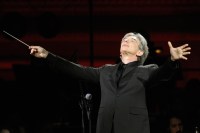
The morning after the Berlin Philharmonic Orchestra failed to elect a music director, I took a call from Bild-Zeitung, Berlin’s most popular tabloid, seeking analysis. Later, they asked me to write a full-page op-ed. Now shut your eyes a moment and try to imagine any circumstance in which the Sun would ever shine an inch of space on an orchestral conductor — unless, of course, he or she was snapped pants down by paparazzi in an M4 layby. Nothing will ever convince British tabloids to overcome their class-based scorn for art and, while we may think of German media as less counter-elitist, Bild readers consume no more Beethoven per head than Sun browsers. So why the sudden interest? Because, for Germans, this is existential. In Germany, culture defines nation.

Moving pictures | 21 May 2015

More from Arts

About six years ago the first section of the now celebrated High Line was opened in New York and made a palpable hit both locally and internationally. Locally it revealed what one might have guessed, that the inhabitants of Manhattan’s downtown suffered a severe lack of amenity. Every place to walk or run or ride a bike, every place to exercise the dog, is valuable and well used. This new and unusual park, restoring and converting the tracks of a disused overhead railway, was reserved neither for running nor biking nor walking the dog, but rather for strolling, sitting and sunbathing, and for the novelty of looking in on buildings old and new, from unusual angles and with an unusual degree of impertinence.

Yank bait

Theatre

Here come the Yanks. As the summer jumbos disgorge their cargoes of wealthy, courteous, culture-hungry Americans, the West End prepares to bag a fortune. Death of a Salesman is just the kind of timeless post-war classic that Americans adore, isn’t it? Not quite. Arthur Miller is mistrusted in his homeland. For starters he was a closet pinko who kept the closet door wide open. He was wooed by Hollywood but spurned every inducement. He married Marilyn Monroe and failed to make her happy. And top of the chargesheet is this play, which proposes that the American dream is a con, a swindle, a diabolical cruelty that hounds mortals to death by engorging their bellies with fantasies of happiness. It’s a superb artefact but relentlessly uncomfortable to sit through.

Sexed-up pacifism

Cinema

Big-screen documentaries never change the world. Blackfish has not shortened the queues to see maltreated killer whales leap through hoops at SeaWorld. Super Size Me reduced neither the all-American waistline nor the profit margin of McDonald’s. The Cove did not prevent the Japan whale industry slaughtering dolphins. So what possible chance, more than a decade after Michael Moore’s Fahrenheit 9/11, has a mere film of bringing about that most chimerical of holy grails: an admission that the case for invading Iraq was knowingly built on a lie? We Are Many revisits the anti-war marches of 15 February 2003.

Lost boys

Opera

In Beryl Bainbridge’s novel An Awfully Big Adventure the producer Meredith Potter issues a doughty injunction on the subject of staging Peter Pan: ‘I am not qualified to judge whether the grief his mother felt on the death of his elder brother had an adverse effect on Mr Barrie’s emotional development, nor do I care one way or the other. We all have our crosses to bear. Sufficient to say that I regard the play as pure make-believe. I don’t want any truck with symbolic interpretations.’ Symbolic interpretation hangs heavily over the rough-and-tumble jumble of Janacek, Beethoven, Stravinsky, Satie, Handel, Vivaldi, sea shanties and klezmer in Lavinia Greenlaw and Richard Ayres’s half-brilliant, half-bewildering operatic adaptation for Welsh National Opera.

Woolf haul

More from Arts

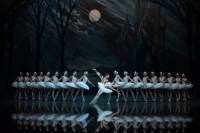
People have been saying that Wayne McGregor’s new Woolf Works has reinvented the three-act ballet, but not so. William Forsythe reinvented the three-act ballet 20 years ago with Eidos: Telos, a mesmerising masterpiece that I found myself recalling as I watched the McGregor. There are many formal similarities: the search for sense through words, the woman facing darkness and death, the central act in period costume, spectacular light, video, ambitious structures on stage, and so on. You get the picture. McGregor’s work isn’t reinventing the wheel — it just reinflates it with a jet of new hot air. Since last week’s première, every possible view has been taken about Royal Ballet’s Woolf Works, from rapture to loathing.

Strange ways

Television

BBC One’s 2015 choice of Sunday-night drama series is beginning to resemble the career of the kind of Hollywood actor who alternates between reliable crowd-pleasers and more eccentric personal projects. The year started with the return of the much-loved Last Tango in Halifax, followed by the distinctly peculiar A Casual Vacancy. Now, after the mainstream triumph of Poldark, we get Jonathan Strange & Mr Norrell — which, whatever else you might think about it, definitely can’t be accused of feeling like drama by committee.

Object lesson | 21 May 2015

Radio

The idea of using objects — salt, cod, nutmeg, silk — to turn history lessons into something popular and accessible has been around for at least a generation. It’s a great way to avoid complicated chronologies and the need to remember dates. A well-chosen object, or trading tool, can tell a narrative story that at the same time reflects the multicultural present, often showing unusual and previously unconsidered connections between places and peoples. Neil MacGregor brought the technique to Radio 4 with his brilliantly conceived and executed account of world history as told through 100 objects in the British Museum.

Happy Retirement

More from Books

Retired persons are not necessarily retiring or withdrawn although we are entitled to feel tired and/or rejuvenated by our superannuated state. In France they are en retraite or they have retreated. In Italy they are pensionati if they are lucky and in Germany Rentner. In Spain they are jubilados and in Portugal simply reformados. Happy euphemisms! In the fullness of time as a senior senior citizen you will have to re-retire stateless into a non-state where not one word of language exists in the breathless air.

Game of Thrones has always been a vacuous banquet of sex and violence. Why are people suddenly outraged by it?

If you’ve never watched Game of Thrones, it is a twee fantasy show in which men and women discuss politics at length, dance in Austen-like balls, and drink small amounts of wine by streams. Characters communicate as much by the angle at which they hold their fans or opera glasses as by the subtext of their artfully crafted bon mots. It has attracted a massive following for the cultured and intellectually stimulating qualities of the series, but there has been some outrage after the last episode featured what appeared to be a rape scene.

The past catches up with Downton Abbey cast

With Downton Abbey drawing to a close after the next series, Mr S suspects that, in the interest of historical accuracy, it may be for the best that it bows out sooner rather than later. After it initially began in 1912, the show has raced through the years at such pace that it has now spanned over a decade since the first series was broadcast in 2010. As a result, the cast are having a difficult time keeping up. Maggie Smith recently went so far as to suggest that her character, the Dowager Countess, would be lucky to be alive in real life: ‘I mean, I certainly can’t keep going... To my knowledge I must be 110 by now. We’re into the late 1920s.

Why do directors of comic opera encourage performers not to behave like human beings?

The Royal Academy of Music's Sir Jack Lyons Theatre is closing, whether for refurbishment or to make way for something more ambitious I don't know. It's a place where I have spent many great evenings, with immense amounts of young vocal talent - most of it never heard of again - under the batons of Colin Davis, Jane Glover and other superb conductors. Next year's productions will be in Hackney, Shoreditch and in the underground hangar across the Marylebone Road. To bring the curtain down on the old theatre, the RAM chose two comic English one-acters, of a certain vintage, the 1950s - that abused decade. The first was Walton's The Bear, from Chekhov.

Dulwich Picture Gallery fakes its own Fragonard

This article was first published on Apollo magazine’s blog The latest addition to Dulwich Picture Gallery’s permanent collection display was a bargain at $88. For weeks the cheap Chinese copy after Fragonard’s Young Woman – commissioned by contemporary artist Doug Fishbone – stood in for the original, unmarked and slotted into the old frame, as a challenge to visitors. Could they spot the ‘fake’? They could not, as it turns out. Of the 3,000 people who made a guess, only 12 per cent correctly identified the impostor. The rest of us walked past without a second thought – though perhaps with a slightly diminished opinion of poor Fragonard.

More Marx than Dante

Arts feature

At the start of Canto XXI of the ‘Inferno’, Dante and Virgil look down on the pit of Malebolge, the Eighth Circle of Hell, in which sinners guilty of simony, hypocrisy and graft are punished. The last of those spend eternity immersed in a river of bubbling pitch. This sinister black liquid, the poet noted, looks much like the tar that Venetians boil up in their arsenal to smear over the hulls of their ships. Those lines came to mind more than once as I walked around the 56th edition of the Venice Biennale, not least because a large section is installed in the ancient buildings of that very Arsenale. The Biennale is always the same — the crowds! the people! — yet always different.

Chris Burden created some of the most exciting and utterly deranged art I’ve ever seen

I once went out with a girl who jabbed me in the ribs every time I mouthed the phrase ‘conceptual art’. It hurt, but I got her point. The C-word, you see, is a tricky one. All too often, it conjures up terrifying images of ‘explanatory’ texts that take 5,000 words to communicate precisely zilch. It implies student politics, gnomic utterances and an unhealthy dependence on the word ‘dialectic’. Too much critical dogma dictates that art must be oblique for its own sake, and utterly devoid of humour. But it wasn’t always thus.

To the maddest max

Cinema

No one goes slack-jawed in wonder at the movies any more. In our cyber-enabled times, kid designers can mega-pixelate any old apocalypse on to the screen of your local Imax. It puts the new Mad Max in a strange relationship with its hoary forebears. Mel Gibson first fired up his turbo-jalopy back in 1979 (two sequels followed with ever bigger engines and hair extensions). All these years on, Mad Max: Fury Road has a narrow strip of tarmac to navigate: it must keep faith with the trilogy’s pre-digital va-va-voom, while serving up enough throaty thrills to raise a tingle on the desensitised dermis of today’s lard-bucket gamer. Does it pull this off? Does his Holiness ride a popemobile? This fourth instalment has been on director George Miller’s to-do list since the Nineties.

Polite pillage

Opera

Forget the pollsters and political pundits — English National Opera called it first and called it Right when it programmed Gilbert and Sullivan’s The Pirates of Penzance to open just days after the general election. Who else is the target audience for an operetta that guilelessly proclaims, ‘We love our House of Peers’, and celebrates both the dynastic possibilities of marriage and the material aspirations of a Major-General who bought his ancestors along with his faux-baronial castle, if not Tories (shy or otherwise)? But if ENO has hit a political home run, the same can’t be said artistically of a production Gilbert himself might have described as ‘skim milk masquerading as cream’. Mike Leigh swore he would never direct an opera.

Four play | 14 May 2015

Theatre

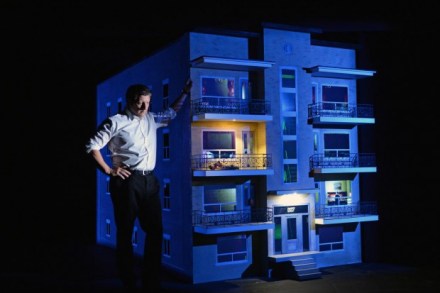
If Julian, Dick, George and Anne had become terrorists they’d have called themselves The Angry Brigade. It’s such a Wendy house name. The quartet of violent outcasts met in a Camden squat in the late Sixties and moved to Stoke Newington where they rented a house to deflect unwanted attention. They began planting bombs around London in the hope of jerking the proles from their consumerist trance and sparking a communist war. They preferred catchy locations for their fireworks: the Albert Hall, a BBC film unit, an MP’s garden. And it took the cops ages to track them down and sling them in jail. James Graham’s new play uses a neat staging device. There are four terrorists and four detectives, and the same actors play both hunters and quarry.