Sum total
More from BooksMidnight to dawn adding one more to the serial tally, love and irritation carried over, borrowed and paid back, all these vulgar fractions seeking to shape a perfection divisible only by one and itself.
The good, the bad and the ugly in books, exhibitions, cinema, TV, dance, music, podcasts and theatre.
Last week something rather unusual happened in the quiet Italian city of Turin. Inside the 15-century cathedral, an ancient, stained, and burned piece of medieval linen was removed from its airtight, bulletproof case and put on display. The exhibition will last 67 days. Last time the intensely controversial textile was brought out, in 2010, over 2.5 million people poured into the cathedral to see it. Or, more precisely, to see the images on the ivory-coloured fabric, which seem to depict faint life-size brown impressions of the front and back of a man.
This much we know. If Ed Miliband wins, he will reintroduce the 50p top rate of tax, impose a mansion tax on homes worth over £2 million and abolish rules enabling registered non-doms to cheerily reside in the UK and avoid tax on their overseas earnings. In other words, he'll whack the rich. Whether the rich deserve to be whacked we have debated elsewhere. What hasn't been discussed is whether our eagerness to whack the rich might not have an adverse impact on charitable giving, in particular donations to the arts? One non-dom to consider is Sir Christopher Ondaatje.
If you’re unsure about the man (or woman) you’re dating, go and see this film. It’ll cause rifts in a weak relationship, and yield powerful debate – or perhaps agreement on the central themes – in a strong one. It asks men to defend or disown the role of hero, and begs us to consider whether motherhood naturally graces its host with more altruistic instincts than fatherhood. Who’s braver: men or women? Or, let’s cut to the chase, you or me? At the core of this slick and sometimes hilarious Swedish film by Ruben Östlund is the non-rhetorical question: when push comes to shove, what would you do? I’ve always been a believer in the universal – and the humorous – springing from the particular.
Long live the glockenspiel, that typically dull percussion stalwart usually relegated to primary school memories, along with humdrum gym classes and endless repetitions of Kumbaya. Here the glock is like a new instrument altogether. Its eery, metallic tones haunt the early scenes of Carol Morley's The Falling, filling them with an unexpectedly ethereal quality that is both childlike and yet somehow sophisticated at the same time - just like the longed for worldliness of the impatient teenage girls at the heart of this warped coming of age story. The music (recorded by Everything but the Girls’s Tracey Thorn) is the backbone of this flawed yet deeply atmospheric film, which gets under your skin and stays there.
Everyone keeps talking about classical music’s image problem, and proposals on the table designed to rescue the music from apparent extinction have included the suggestion that conductors ought to face audiences rather than orchestras, and the cunning plan, mooted by Julian Lloyd Webber, that we stop calling it ‘classical music’. But what classical music really needs right now are more performers like Barbara Hannigan, whose embrace of music is absolute; whose solution to the problem of what classical music might represent in our increasingly fragmented culture is not to go into denial but to dive deeper, forever deeper, inside music. Hannigan has anchored her reputation around high-wire modernism.
Different concepts of luxury may be inferred from a comparison of the wedding feast of Charles Bovary and Emma Rouault with the habits of their contemporary the Duke of Wellington. At the Bovary wedding were served four sirloins, six chicken fricassées, stewed veal, three legs of mutton, four chitterlings (with sorrel), brandy, wine, foaming sweet cider, yellow custards, tarts and sweets with an architectural cake comprising angelica, oranges, nuts, jam and chocolate. The austere Duke’s ‘conception of duty’, David Piper wrote, ‘did not provoke popularity at all times’. His daily routine was tea with bread and butter in the morning, no lunch and an unvaryingly simple dinner of a joint with a pudding and iced water.
For the past year Russell Brand - who is worth an estimated £10 million - has been making a film about inequality. You may already know this. The comedian’s antics filming across the capital have regularly made the news. His attempt to storm RBS resulted in a temp angrily blogging that the palaver had caused his paella to go cold. Meanwhile, his visit to confront the Daily Mail proprietor Lord Rothermere about his non-dom tax status came to no avail as he wasn’t home. Not that such a small technicality has stopped the scene from being included in the final cut. Russell instead interrogates a woman over the telecom - a woman who I can only presume was Lord Rothermere’s housekeeper.
She was considered the cleverest girl in the school, and deservedly so, and as such started the lower sixth with no trepidation, so who could not feel for her when she stretched back in her chair, casually, in a lesson-break on an autumnal afternoon, remarking, ‘Live long and prosper… that was Horace, right?’ There was a brief outbreak of disbelief then the boys’ eyes curled; they were on hand, forever after, chevaliers, free with the sign of the vulcan.
As a purveyor of lairy souvenirs Venice outdoes even Lourdes. The scores of shops and booths that peddle this lagoonal kitsch are manned by graduates of hard-sell whose market-barker schtick does not need to include descriptions as their goods are self-explanatory. Every other year they coexist with a different sort of operation: the galleries, ateliers, showrooms and studios of the Biennale. And with them an ever-burgeoning cadre of soft-sell operatives, who compose the hieratic order of the curatocracy. There is no piece of approximate art or workshopped event that cannot be curated just as there is no foodstuff that cannot be sourced. At a recent ‘ideas festival’, I was enjoined to participate in a curated walk round a small town.
The new controller of Radio Three, Alan Davey, was on Feedback this week (Radio Four) talking to listeners about his plans for the network. Roger Bolton, who presents, wondered if Davey was worried about ratings — Radio Three hovers around two million listeners compared with the 5.5 million boasted by its commercial rival Classic FM, or perhaps more alarmingly the two million lured to BBC upstart 6 Music. ‘Ratings aren’t a pressure for me,’ said an ebullient Davey, while admitting that he does want to find more listeners, and then to ensure they stay tuned. But how? Without going down the Classic FM route of more audience participation, more gimmicks, more cheesy competitions? ‘We have to get better at explaining what Radio Three is about ...
Ever since the days of Tony Hancock, many of the best British sitcoms — from Dad’s Army to Fawlty Towers, Rising Damp to The Royle Family — have featured a middle-aged man convinced that he’s the only sane person left in an increasingly mad world. The frankly subversive twist in W1A (BBC2, Thursday) is that the middle-aged man in question might well be right. As the BBC’s Head of Values, Ian Fletcher (Hugh Bonneville) is surrounded by any number of jargon-spouting younger colleagues whose apparent aim is not to let anybody realise how stupid they are — or at least it would be if they realised it themselves.
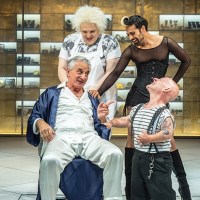
The smash hit Matilda, based on a Roald Dahl story, has spawned a copycat effort, The Twits. Charm, sweetness and mystery aren’t Dahl’s strong points. He specialises in suburban grotesques who commit infantile barbarities. But his prose is sensational. No ‘style’ at all, just the simplicity and clarity of a master copywriter. He’s as good as Orwell. Mr and Mrs Twit are a pair of malignant outcasts who enjoy tormenting innocents. They keep a family of monkeys in a cage and they glue birds to trees and shoot them. You can read the story in about 20 minutes. It probably took Dahl a bit longer than that to write. And Enda Walsh’s essay-crisis adaptation may have delayed him for a day or two.
Avengers: Age of Ultron is the second film in the Avengers franchise, as written and directed by Joss Whedon, and stars Robert Downey Jr as Tony Stark (Iron Man), Chris Evans as Captain America, Chris Hemsworth as Thor, Scarlett Johansson as Black Widow, Jeremy Renner as Hawkeye and Mark Ruffalo as Dr Bruce Banner, aka the Incredible Hulk, who probably had to be included, as no one would have wished to piss him off. (‘IF HULK NOT IN MOVIE HULK WILL THROW CAR!’) I am not among the target audience for this particular genre, but I attended with my son (22), which was useful, as I found it confusing — a lot of prior knowledge is assumed — and he was able to fully debrief me afterwards as to who was who, and where Samuel L.
The current talking-point at the Royal Ballet is the Russians milling around. One can sound unfortunately as if one’s starting a Ukip conversation here, but the Royal Ballet never used to be short of half a dozen home principals, any one of whom could be looked on as sufficiently glittery to attract the opening-night audience. Right now, though, the recent loss of a wonderful generation of artists — Cojocaru, Kobborg, Rojo, Benjamin, Polunin — has left the top rank rather thinned of true star quality, especially among the women. Hence the excitement at the recruiting to the Royal of Natalia Osipova from the Mikhailovsky and Bolshoi, Vadim Muntagirov from English National Ballet, and the guests Iana Salenko and Evgenia Obraztsova recently in Swan Lake.
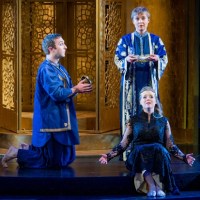
Big slats of orange, burning yellows, an Adriatic in electric blue: I wish I’d bought my sunglasses to the Royal Opera’s latest revival of Il turco in Italia. Moshe Leiser and Patrice Caurier’s production of Rossini’s opera buffo first burst on to the Covent Garden stage in 2005, and its shrieking colours haven’t dimmed with the years. For good or bad, this is one show when you do actually come out whistling the sets (they’re by Christian Fenouillat). I was humming Agostino Cavalca’s costumes too, from gypsy confusion through bouncing fezzes to the absurd glitter of the climactic masked ball.
She’s meant to be good with words, used to medicating others with a timely postcard — FABULOUS WOMAN YOU! Today she can’t find it in herself to buy, let alone send, A SISTER IS WORTH A THOUSAND FRIENDS. If only she knew the right phrase, the sort other people have stored in their mouths, like a kindly tongue. Cards as commands, white and black shouts on a carousel, IT’S CHOCOLATE O’CLOCK The shopkeeper can’t find it in herself to say good morning, even in lower case, as she heaves her cleavage about by the till.
The sparrows banter in the bushes that crowd the walls of the World’s End alleyway as I walk to the library. There is, it seems, much to catch up on. Winter was bitter cold; five months that had us by the throat, five months in our house that were bone lonely. April. And earth is touched by the hand of a new sun. A sun, from its stoked store, that wants to warm us, pulls at zips, unbuttons a thick-coated Saxon taciturn resistance. The releasing rays bring back lost leisure: walking back home, in the dry dust of my road, a black and white tabby reclines, eyes me disdainfully with the look of a Cleopatra on an invisible chaise longue.
Dear Lord Sugar, it’s been a sad week. A kind of bereavement, really. Today, a council employee in a yellow jacket climbed down from his municipal truck and flung into it my old friend of — what? — twenty years? We never needed passwords between us. It never told me bad news about my server or jumped off the edge of the screen or tried to sell me corduroy trousers or ham or celebrity gossip. It was like a butler: discreet, self-effacing. But at last it began to suffer touches of dementia. Sometimes, I told the council man, things have to die quietly and be eviscerated for the common good. He nodded deferentially, but raced off in an eye-watering flourish of exhaust.
We ought to have discovered Esa-Pekka Salonen’s Nyx (2011) before now. The dense orchestration was dappled with soupçons of indigenous music, folk, noir, Harryhausen Hollywood and French impressionism. The New York Philharmonic poured it all molten gold and plummy red and let it radiate about the auditorium. The premiere seemed to begin without its lighting engineer. All sat there fully lit, orchestra pounding away until the first decrescendo a few minutes in when the house was finally dimmed. If deliberate, it was rather gimmicky. Conductor Alan Gilbert put in a measured performance throughout but fell short of expressing a dedication to the full trajectory of each work. He didn’t bathe in any of them.
Earlier this year Mr S revealed that Russell Brand had made an unwelcome visit to the home of Lord Rothermere, the proprietor of the Daily Mail newspaper group, as part of filming for his new documentary The Emperor's New Clothes. Now new footage has been made public ahead of the film's release. In the clip he is shown turning up at Lord Rothermere's home only to find that he is not in. Brand then jumps the fence, climbs scaffolding and puts a poster on the property criticising Lord Rothermere's non-dom status. Of course, if Ed Miliband wins the election Lord Rothermere's non-domicile tax status could cease to exist. Not that the comedian will be bothering to vote for this policy in the general election.
If the Fast & Furious team made Casablanca 2 ('Morocco Drift') it would be a more artistically credible, better acted, and more entertaining movie than Star Wars: Episode I - The Phantom Menace. Vin Diesel’s Victor Laszlo may have gained an impressive set of guns fighting for the Czech resistance since we last saw him - shame, too, about the hair loss - but at least he wouldn’t spend even one second of the film talking about 'midi-chlorians'. In his decision to revisit the Star Wars universe and create a trilogy of prequels, George Lucas looked upon the epic vista of his cinematic triumph and decided to open-cast strip mine it for cash.
Imagine for a moment Harley Earl, head of design at General Motors, Detroit’s wizard of kitsch. Standing before him, in his studio, is the cetacean bulk, nipple-coloured pink paint, churrigueresque chrome ornaments and rocket-ship details of his 1959 Cadillac Eldorado Brougham Seville Convertible. He is talking to his acolytes, as attentive as Rubens’ studio assistants in Antwerp 300 years earlier. Earl is describing his stylist’s art, the astonishing formal achievement of the pink Caddy. He says, pointing perhaps to a tail fin: ‘I want that line to have a duflunky, to come across, have a little hook in it, and then do a rashoom or a zong.’ Our language lacks a vocabulary to describe what cars do to us. So Harley Earl had to invent his own.
In 1978, shortly before she died, the artist Sonia Delaunay was asked in an interview whether she considered herself a feminist. ‘No! I despise the word!’ she replied. ‘I never thought of myself as a woman in any conscious way. I’m an artist.’ It is pretty obvious, though, that the Sonia Delaunay retrospective at Tate Modern (which has come from the Musée d’Art Moderne de la Ville de Paris) has been organised if not explicitly by feminists, then at least with feminism in mind. You can see the thinking behind it: let’s give the wives of the artists a break. And Mrs Delaunay, whose work has traditionally been discussed in the same breath as her artist husband Robert’s, must have seemed a suitable candidate for some revisionism.
Overseeing Boris Johnson’s futuristic office, with its spectacular view of the increasingly culinary skyscape of the City of London with its Gherkins and Cheesegraters, is a bust of Pericles, distinctive in his helmet. It is no surprise that the Mayor should hold himself up to the gaze of the Athenian general and politician because he instituted the greatest programme of public works in the ancient world in Athens in the middle of the 5th century bc. Since Boris was elected Mayor in 2008 there has been an enormous amount of development in London. The demand that fuels growth is ever present. The south bank of the Thames is bristling with cranes and after years of stalemate Battersea Power Station is in development.
Out of tune The use of a song, ‘Love Natural’ by the Crystal Fighters, at the launch of the Labour manifesto backfired when the band’s drummer urged people to vote Green instead. Some other campaign songs whose writers disowned the campaign: — Ronald Reagan used ‘Born in the USA’ by Bruce Springsteen for his re-election campaign against Springsteen’s wishes. — In 2008, Barack Obama was asked to stop using ‘Soul Man’ by Sam Moore. — In the same year Jackson Browne sued the Ohio Republican party for using his ‘Running on Empty’ for John McCain’s election campaign.
A very British thing happened at the dance industry conference last weekend. Three of the UK’s most celebrated contemporary choreographers said British contemporary dance training is not up to snuff. Foreign dancers were better trained from a younger age, they said, were fitter, readier, worked harder. That’s why they got more jobs in British companies than UK-trained graduates. The two instant results were (a) a chorus of outraged denial from the dance establishment and (b) the resignation of the chairman of Dance UK, the umbrella body and ‘voice of dance’, which staged the conference. Now, its chairman, Farooq Chaudhry, was certainly playing some fairly brutal politics.
It was called Frankly Speaking and by golly it was. The great screen actress Bette Davis was being interviewed by not one but two men: George Coulouris, with whom she co-starred in Hollywood, and a BBC producer. ‘It’s a little sad for some of us who adore your work that a lot of your best performances have been in fairly trivial films,’ said the producer, Peter Duval-Smith, as if to tempt Davis into dishing the dirt on the directors who made her what she became. ‘I don’t know what you’re talking about,’ Davis replied, not a woman to be tricked into anything. ‘Who do you think made you a star?’ Duval-Smith persisted. ‘Me myself,’ said Davis. ‘And my sweat, blood and tears...’ ‘Nobody helped you?
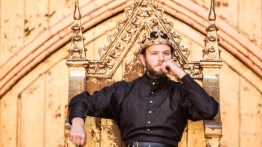
Blimey, there has been so much good stuff to watch on telly of late: the Grand National, the Boat Race and the Masters; The Island with Bear Grylls; the final of University Challenge (bravura performance from Caius’s Loveday, though how the winning Cambridge team’s hearts must have sunk when they realised that the public intellectual chosen to present this year’s prize was that literary equivalent of a Dalí melting clock poster on a pretentious fifth former’s bedroom wall — Will Self); and, of course, the first episode of the new season’s Game of Thrones (Sky Atlantic, Monday). I’m assuming you’re all on board with Thrones, now, and that it doesn’t need any introduction.