Culture

Culture

The good, the bad and the ugly in books, exhibitions, cinema, TV, dance, music, podcasts and theatre.

Serial thriller

Television

For keen students of China, this week’s television provided yet more proof that Deng Xiaoping’s decision to open the country to the West has had consequences that he’s unlikely to have foreseen. He probably couldn’t have predicted, for example, that one day a former Bond girl would travel the country finding almost everything ‘thrilling’. Or that a bloke who made his name in a British makeover show would proudly explain to a group of Chinese journalists that ‘I’ve got the sunglasses, I’ve got the big hair — all [sic] of these things are what you’d expect from a celebrity.

Tax return

Radio

Make no mistake: the Proms, whose 2015 season was launched last night, would not, could not, exist without the BBC, or the licence fee. Just under half the cost of putting on such an ambitious nightly series of concerts throughout the summer, drawing on orchestras from across the globe, commissioning new work, pulling together programmes that mix popular and safe with little-known and challenging, comes from the sale of tickets, the rest is subsidised by taxpayers. To social-justice campaigners this might seem like an outrage.

Night at the circus

Theatre

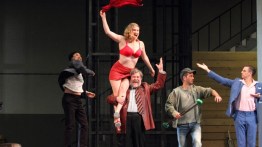
Easy playwright to get on with, Ben Jonson. His world is simple, his tastes endearing. He likes golden-hearted swindlers and unscrupulous servants who outwit their bungling masters. Volpone, the ‘sly fox’ played by Henry Goodman, is a rich Venice merchant without a family who persuades three wealthy rivals that they stand a chance of inheriting his estate. He feigns mortal illness and accepts their tributes, or bribes, from his sickbed while secretly lampooning their folly. This is hardly the most sophisticated hoax but it’s fun to watch the slick, spruce millionaires queuing up to be despoiled of their loot. Trevor Nunn’s up-to-date version skilfully harmonises the Jacobean and the modern.

Eastern promise | 16 July 2015

Opera

These are nervous times at the opera. When should we expect the gratuitous rape scene? Will the director relocate the action to a Croydon laundrette? Who might be booed, and for how long? With Opera Holland Park’s Lakmé, however, almost any of these diversions might actually be welcome — anything to save us from the tasteful visual torpor that looms over Aylin Bozok’s production like a choking black cloud. Consider the riot of colours embedded in Delibes’ opera. We’re in India in the late 19th century, where officers of the British Raj fly the flag and march to fife and drums. There’s a bustling bazaar and glinting jewellery. Sensuous hues burst from the music. Flowers creep in everywhere, from the luminous lotus to the poisonous datura.

He wuz robbed!

Music

Lucas Debargue, a 24-year-old French pianist, came fourth in the finale of the Tchaikovsky competition in Moscow on 30 June, yet he’s the only competitor anyone is talking about. Why? The main reason is that they’re riveted by his backstory. Have you noticed how we all say ‘backstory’ these days, instead of boring old ‘background’? It’s defined as ‘the things that have happened to someone before you first see or read about that person in a film or story’. Neal Gabler wrote a book called Life: The Movie, about our entertainment-obsessed society’s urge to stretch and squash everything from terrorist attacks to an argument at the checkout into an imaginary plot.

All you need is love | 16 July 2015

More from Arts

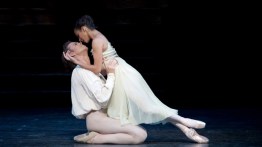
What could induce a grown-up, rational, childless person to go to see the ballet of Cinderella? You’ll expect to cringe at the panto comedy; on the other hand, you do not want to see verismo child-abuse and uglies-baiting. So what’s left for modern eyes? Two things: the Prokofiev score — as magical a charmer as Tchaikovsky’s Nutcracker — which plays with the contrasts of grotesque and beautiful, misery and hopefulness, and glistens with fairy dust in the right places. The overture melts the heart, the waltzes make you want to dance up into the sky.

Growing Up

More from Books

This morning, as I commuted through Hendon Central, I remembered you telling me you saw that day’s newspaper there on a board, announcing the king had died, how life stalled for a moment. This evening I got the call I’d long dreaded, telling me you were dead. ‘We are not a grandchild,’ Thatcher might have said. My kingdom has lost its last queen. I grow tall into the footsteps of each late centenarian grandmother, may start taking the Telegraph. I cry, then hear both of them laugh with an obstinacy that skipped a generation, realise I’m now their only resurrection, have crossed the chess board, no longer a pawn.

‘Shocking is too easy’

Arts feature

Brace yourself, reader. This is an account of a conversation with the director of the yucky trailer-trash comedy Pink Flamingos. Perhaps you won’t recall the final scene in which the overweight transvestite Divine munches on an actual dog turd. No, it wasn’t faked — this was in 1972 and there was no budget for trickery. ‘Because we were on pot all the time it didn’t seem that strange,’ John Waters recalls. ‘It’s lost today, but it was a political commentary. At the time Deep Throat had just come out; pornography had become legal. What’s left? What can’t you do?’ Waters is celebrated for his pencil moustache and transgressive movies, which shake a (knowingly limp-wristed) fist at the tyranny of good taste.

Curiouser and curiouser | 9 July 2015

Exhibitions

Art is not jewellery. Its value does not reside in the price of the materials from which it is made. After all, the cost of the pigment, oil and cloth that made up a Rembrandt was negligible. It’s what he did with them that counts. On the other hand, spectacular works of art can be made from gold and gems, as is clear from some — if not all — of the items displayed in the new installation of the Waddesdon Bequest at the British Museum. ‘As soon as the swallows made their appearance,’ Baron Ferdinand de Rothschild wrote in his memoir Bric-à-Brac, ‘my father’s curiosities were packed and stored away in a strong room.’ It was the young Ferdinand’s privilege to help pack these objects.

Rihanna’s latest offering is the perfect anthem for contemporary feminism

Popular culture is all about the shock factor, especially when it involves female popstars. The late Eighties set a precedent for women making statements in their music videos. In 1989 Madonna broke taboos with an interracial love story, complete with burning crosses and a crying saint. A year later Sinead O’Connor was the first woman to cry in a music video. Since then pop-feminism has produced a steady stream of provocation, from the Spice Girls kicking girl-power in our faces, angry man-hating from Alanis Morissette to the independent women of Destiny’s Child. The noughties were pretty much a romp through string bikinis in preparation for Lady Gaga borrowing an outfit from the butchers in 2010.

Love-lies-bleeding

Poems

Of course the bride’s dog came to the wedding and was allotted a chair at the top table at which he sat with a gloomy expression and a chewed satin bow. The groom fed him morsels of pheasant — laughing rather theatrically when his finger was nipped and the blood dyed his table napkin a shade to match the azaleas. A honeymoon is no time for blood poisoning. Surely it was sunstroke or an allergy to the spiky local fish? Excitedly aghast, the wedding guests re-assembled for the funeral. The dog was left at home but he didn’t seem to mind.

Home and away | 9 July 2015

Theatre

Refugee crisis in the Mediterranean! Fear not. Anders Lustgarten and his trusty rescue ship are here to save mankind. Lampedusa consists of two monologues, one Italian, one English, which tackle the problem at home and abroad. We meet Stephano, a cartoon fisherman with a Zorba beard and a chunky woollen sweater who lives on Italy’s southernmost salient about 70 miles off the African coast. He follows an improbable path from xenophobia to enlightened altruism. At first he mistrusts the runaways whose corpses choke his native shore. He asks survivors why they don’t ‘speak the language’. ‘We do,’ they reply, in English. ‘This is Europe’s language.

Caught offside

Radio

It’s not surprising that politicians have such an on-off relationship with the broadcast media. One slip. One casual comment. One lapse of memory. Even the immaculate, armour-plated Nicola Sturgeon was caught out by Jane Garvey last Wednesday as the Woman’s Hour presenter congratulated her on her latest elevation. It had just been announced that Scotland’s First Minister was top of the Woman’s Hour ‘power list’ of the top ten women for 2015 (beating Angelina Jolie and Caitlyn Jenner) and Sturgeon was doing a live telephone interview on the Radio 4 programme from her office in Edinburgh. Garvey then lobbed a question, oh so casually, but oh so deliberately, like a lioness waiting to pounce. ‘The Big Game tonight?

Chorus of disapproval | 9 July 2015

Cinema

If heartwarming, against-the-odds, triumph-over-adversity, wrong-side-of-the-tracks films float your boat and you are in no way demanding then The Choir is your boat floated, pretty much, but otherwise it’s nothing we haven’t seen before, hundreds of times. This is one of those films that appears to have never watched any other films, or it surely wouldn’t have bothered. My own particular boat, as you’ve probably already surmised, was not floated. It didn’t even leave the dock. Chances are, it may even be all rusted up by now. I was initially attracted to seeing this film because 1) I do adore Dustin Hoffman and 2) I do adore choirs and 3) I honestly had no idea quite how rubbish it would be. Dustin Hoffman. Choirs. What’s not to love?

Behind the Black Flag curtain

Television

So you’ve just popped out of town for the day on an errand. And when you get back, everyone has gone. Your wife, your kids, your nephews and nieces, your friends, your customers: they’ve all been kidnapped and dragged off to a place so barbarically horrible that really they’d be better off dead. Your daughter, for example. If she’s nine or over then she’s considered fair game. She’ll be sold as a slave in the market to the highest bidder — as ever, there’s a premium for blonde hair or blue eyes— after which her new owner can use her as she wishes. The very least she can expect is to have to spend her every day in the most restrictive clothing anywhere in the Muslim world.

Shaw hand

Opera

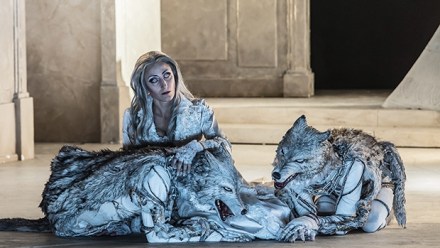
When is a rape not a rape? It’s an unsettling question — far more so than anything offered up by the current headline-grabbing William Tell at the Royal Opera House — and one that lies beneath the meticulous dramatic archaeology of Fiona Shaw’s The Rape of Lucretia. Unlike William Tell, however, there seems little chance of this attack starting riots. Where the director of Tell asserts, Shaw interrogates — a delicate, insistent questioning that probes further and more intrusively, a violation of ideological rather than physical absolutes. Debuted in 2013 as part of the company’s touring season, Shaw’s production now returns to the main festival, where the chamber opera had its première in 1946.

The beat goes on

Music

It’s rare that I see a piece about music that makes me want to cheer from the rafters and shake the perpetrator by the hand, but one such appeared in these pages last week on the subject of Ringo Starr, 75 this week. James Woodall, who may or may not be a Beatles tragic of the first water, argued that Ringo was a genius and that the Beatles were lucky to have him. True Beatles fans know this to be true and are enraged when anyone suggests otherwise. For years an urban myth had it that John Lennon, when asked if Ringo was the best drummer around, said that he wasn’t even the best drummer in the Beatles. But as Woodall reported, Lennon never said this. Jasper Carrott did, in 1983.

Epitaph for a Star

More from Books

A chance in a million: he was perfectly cast In the role of his own life, though he almost flipped When told it was all in the future, and not in the past, And someone (who?) had forgotten to give him the script. He tried his damnedest, but there were other factors That made the going tough. The director allowed No rehearsals and gave the supporting actor All the best lines. His face was lost in the crowd. The shooting proceeded in too much of a rush For him to be shown the rushes. All those heartaches! That foiled ambition! He demanded re-edits, But the final cut revealed his busted flush. There was never an occasion to save the out-takes, And in the end his name was removed from the credits.

‘A lot of bands know how to rock. Not many know how to roll’: AC/DC at Wembley reviewed

The main thing that strikes you as you watch AC/DC whip 70,000 people into a frenzy at Wembley stadium is, of course, how very similar they are to David Hockney. And Peter O’Toole, come to think of it. Not to mention Beryl Bainbridge, Eric Morecambe and Sheridan Smith. What all these people share in common is perhaps the most important quality any artist or performer needs: the ability to take your work seriously without taking yourself seriously. It is very, very difficult to play guitar as well as Angus Young, or to hold an audience as well as Brian Johnson. Watch a pub band cover ‘Highway to Hell’ and you’ll realise just how good the originals are.

The self-taught French pianist who wowed the Tchaikovsky music competition

Vladimir Putin was sitting a few rows in front of me last Thursday evening in Moscow listening patiently to three hours of classical music without interval. I could not imagine David Cameron or HMQ doing the same - Britain’s Got Talent is more their cup of tea. But then classical music is as much a part of Russian politics as its attitude to neighbours and this was the winners’ gala of the monumental four-yearly Tchaikovsky music competition, which never ceases to be a political event. That was why I went, after all - to see how today’s politics would play on the choice of top prizes, whether Russia would sweep everything, given present geopolitical sabre-rattling and this being Tchaikovsky’s 175th anniversary.

Magic Mike XXL reviewed: stripping can be sexy – but lying on a pinned-down woman’s face is not

It’s hard to overstate how much I wanted to like Magic Mike XXL, the sequel to the 2012 Steven Soderbergh hit about male strippers. I have long proclaimed loudly to anyone who will listen that the first film is a stroke of genius, a subtle, sweet and, yes, gloriously sweaty exploration not just of women’s desire but of men’s too. It also, incidentally, features one of the last pre-Oscar performances from Matthew McConaughey before he got all serious in True Detective and Dallas Buyers Club, working that pop-eyed southern charm and those absurdly large abs in a tiny yellow crop-top and grotesquely leathery y-fronts until the audience wasn’t sure whether it was tickled or turned on.

Starr quality

Arts feature

‘He was the most influential Beatle,’ Yoko Ono recently claimed. When Paul and John first spotted him out in Hamburg, in his suit and beard, sitting ‘drinking bourbon and seven’, they were amazed. ‘This was, like, a grown-up musician,’ thought Paul. One night Ringo sat in for their drummer Pete Best. ‘I remember the moment,’ said Paul, ‘standing there and looking at John and then looking at George, and the look on our faces was like ...what is this? And that was the moment, that was the beginning, really, of the Beatles.’ I think Ringo Starr was a genius. The world seems to be coming around to the idea. Two months ago, he was finally accepted into the Rock and Roll Hall of Fame — the last Beatle to be inducted.

The Camp

Poems

Near the dogleg turn of the lane down to the ponies’ field, skulking in summer among cow parsley and meadow sweet, in winter with their streaked black corrugated walls laid bare, were the half-dozen Nissen huts my father refused to mention. A prisoner of war camp for Italian soldiers, my mother told me, but also part of the silence my father had brought back with him ten years before from Germany which now could not be ended although the reason for that was one more thing he never gave. Why spoil an early morning stroll bringing halters for the ponies so we could lead them home to the stable yard then saddle up?

Glastonbury knight

Music

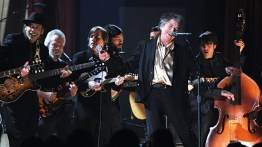
I had meant to write a dispassionate account of this year’s Glastonbury, really I had. But I’m afraid my plans were ruined by a chance encounter on the final day with my old friend Michael Eavis — the distinctively bearded dairy farmer who founded it 45 years ago. Rather sweetly he has got it into his head — long story — that I once helped him save the festival. Gosh, I hope this is true because it would annoy so many people: suck on that, all you Guardian readers, you lefty stand-ups, you Greenpeace activists. Every time you go to Glasto from now on you must offer a silent prayer of thanks to the Prince of Darkness himself. ‘You coming to see The Who tonight?’ said Eavis. Usually, I like to leave early to avoid the traffic.

Show and Tell

Opera

There’s no such thing as a tasteful rape scene — or there certainly shouldn’t be. It’s an act of grossest violation, of primal violence. It’s also a reality — and a growing one at that — of contemporary warfare, a ‘weapon’ increasingly deployed strategically, coolly, by armies rather than individuals. Setting his new production of Rossini’s Guillaume Tell in the Balkan conflict of the 1990s, director Damiano Michieletto puts the issue front and centre in a scene whose music was almost lost on opening night in the extraordinary and unprecedented chorus of boos and catcalls from the audience.

Bid low, break even

Theatre

A new Seagull lands in Regent’s Park. Director Matthew Dunster has lured Chekhov’s classic into a leafy corner of north London to see if it needs an upgrade. The new script, by yuppie-baiting playwright Torben Betts, is casual, slangy and sometimes gauche. Favourite moments have been struck out including the great opening line, ‘Why do you always wear black?’ And Betts decides to make Chekhov’s characters swear. ‘Bollocks’, ‘piss off’. I don’t know Russian but I’m sure Chekhov didn’t need coarse language to portray coarse souls. The outside staging has been jazzed up too. A clunking great mirror hangs over the playing area like a bit of broken satellite.