Culture

Culture

The good, the bad and the ugly in books, exhibitions, cinema, TV, dance, music, podcasts and theatre.

Gnats

More from Books

after Robert Hooke, Micrographia (1665) Their world is a glass of rainwater. They move up and down through the clearness,    swallowing their way, or hang by their tails from the surface: tiny transparent caterpillars with their bristled segments of body,    horned trophies of head. The glass holds nothing that I can see, but they find matter to eat in it, which pulses through a black thread of gut.    They graze what they breathe, the blank element they dangle in. After some days, I observed their heads to fatten and grow monstrous, the tails    to curl and dwindle. They floated head-up now, like commas, not feeding, yet they were still alive – poked, they tumbled beneath the surface.

The master returns

Arts feature

There’s a scene in 887, Robert Lepage’s latest show, which opened at the Edinburgh International Festival last week, in which the French-Canadian director stands alone in his kitchen, lit up by the glare of his laptop, watching his own obituary. Three beers sit on the work surface and he has a fourth in his hand. As it plays, he tuts, peeved that three decades of visionary theatre merit merely two minutes of screen time — inaccurate, at that. Even if his reputation has waned in recent years, Lepage is still considered one of the world’s great theatremakers.

French connection | 20 August 2015

Exhibitions

Walter Sickert was fluid in both his art and his personality: changeable in style and technique, mutable in appearance — now dressing as a French fisherman, now as a dandy, next shaving his head — and even in name (for a while he styled himself Richard, not Walter, Sickert). All of which makes his long artistic association with the seaside resort of Dieppe apt in more ways than one. This is the theme of an excellent exhibition at Pallant House Gallery, Chichester. A century ago Dieppe was a very Sickertian place. In ancestry and artistic attitudes, Sickert was an exemplary cosmopolitan.

Hills

Poems

As soon as you stop and rest you see more hills ahead, Great chains of hills to some improbable horizon. Will it always be like this? you ask yourself. Don’t let the hills tower over you, Don’t let their shadows creep before mid-afternoon And when they come, savour the blue. Enjoy the flatness of the land you’re on, lend it your weight And don’t look up too high; Ideally don’t lift your head at all, look straight. Remember, you are not being cowardly or slack, You have worked and now deserve to rest. Just think: no hills, no flat, Or, if you prefer, regard them as clouds, those hills, Great bubbling folds of gentle gas. Leave it at that.

Male order | 20 August 2015

Cinema

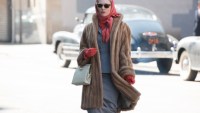
Gemma Bovery is a modern-day refashioning of Gustave Flaubert’s literary masterpiece Madame Bovary, and while such refashionings can work well in some instances — Bridget Jones as Pride and Prejudice, for example, or West Side Story as Romeo and Juliet, if we want to go further back —this is not one of those instances. Instead, this is that other kind of instance; the one that desperately makes you wish they’d left well alone. It’s based on the graphic novel by the writer-artist Posy Simmonds which, in turn, was based on her comic strip in the Guardian.

Poldark porn

Television

My favourite moment in The Scandalous Lady W (BBC2, Monday) was when the heroine played by Natalie Dormer was shown being taken vigorously from behind by one of her 27 lovers. It wasn’t the sex that did it for me but the appalled expression on the face of Girl, who, with perfect timing, had just poked her head round the TV room door to see what the grown-ups were watching. She let out a little yelp of horror — and ran. Which was rather how I felt during a lot of the sex scenes. ‘Do you think they put in this stuff for us? Or the women?’ I said to the Rat (over on a flying visit from Hong Kong, where he’s doing very nicely as an interior designer, thanks for asking). ‘Oh, the women, definitely. We’re much more Games of Thrones. Straight in there.

Northern lights | 20 August 2015

Theatre

In the clammy shadows of Cowgate I was leafleted by a chubby beauty wearing all-leather fetish gear. ‘Hi! Want to spend an hour with a prostitute for nothing?’ Yes, please. Her show The Coin-Operated Girl (Liquid Room Annexe, until 30 August), part of the free fringe, deals with the seven years she spent servicing sex-starved men in swish London hotels. One of the commonest fantasies was ‘GFE’, which has nothing to do with threesomes or gimp-masks. ‘The Girlfriend Experience’ means sex, kissing, cuddling, chatting, bickering and everything involved in a normal relationship.

Summer listening

Radio

Just back from a few nights in Sweden to find the perfect programme on Radio 3. It was one of those interval shorts that are always such a nightly bonus during the Proms season. That 20-minute space between concert halves is the perfect length for listening. On Sunday night it was Kate Clanchy’s turn to fill in between Sibelius symphonies and what better topic than The Summer House (produced by Julian May), or rather the stuga, mokki, sommerhus or dacha beloved of Scandinavians and Russians, where Sibelius would retreat to write those symphonies redolent of dark woods and deep waters. Here the hassle and routine of city life are abandoned and days are spent chopping wood, gathering cloudberries or just soaking up the long-awaited sunlight.

The greatest pianist you’ve never heard of

Music

William Kapell was an American concert pianist with the looks of a male model and the fingers of a wizard. He played the concertos of Rachmaninov at dashing speed but with delicate precision. He was snapped up by RCA in 1944 at the age of 22 and the world’s leading conductors queued up to accompany him. In October 1953 he toured Australia. On his last night there he visited Jascha Spivakovsky, a pianist who had escaped the Russian pogroms as a child, settled in Berlin and then fled to Melbourne after Richard Strauss warned him that he was on a Nazi hit-list. He spent the war helping fellow émigrés escape. That was one reason he never signed a recording contract. Also, Australia didn’t have a classical label.

Ai Weiwei

More from Arts

In September, the Royal Academy of Arts will present a solo exhibition of works by the Chinese artist Ai Weiwei. This follows his installation of porcelain sunflower seeds in Tate Modern’s Turbine Hall, a solo show at Blenheim Palace and two solo exhibitions at the Lisson Gallery (which represents him). Peculiarly, the Royal Academy’s press release claims that Ai’s work has not been seen extensively in Britain, which might suggest that its press team doesn’t get out much. He has certainly been exhibited here more than other key Chinese contemporary artists such as Zeng Fanzhi, Yang Fudong or Gu Wenda. Ai transcends the art world, particularly since his arrest by the Chinese authorities in April 2011 when he was held without charge for 81 days.

Elysium

More from Books

The best time is the summer time When cow parsley is high, And daylight hours of field flowers Are spread beneath a sky That drops upon them so much light And unseals blooms that closed with night. The best time is the summer time Till cow parsley is dry. And there is clover now And bees to take the yield. And it is over now And there are changes in the field. The best games are the summer games, The bowler rushing in. Though voices call and wickets fall To seamers or the spin, Men caught in the pavilion’s shade Can play the strokes they never played. The best games are the summer games We still have time to win. And so we find we’re staying After afternoon. And so we find they’re playing Changes to a tune.

I reshot Andy Warhol

Arts feature

It’s one thing to make the most boring film in cinema history — at least you can kid yourself at the outset that it might turn out differently. It’s quite another to lovingly recreate the same film half a century later, shot by eye-bleeding shot, but that’s exactly what I’ve been doing, I’m proud to say. I say shot by shot, but since Andy Warhol’s Empire consists of a single locked-off shot of the Empire State Building running to 8 hours 5 minutes in black-and-white yawn-o-vision, that’s not much to write home about. Nor is the rest of the movie, from almost any popcorn-munching perspective you can think of.

Seeking closure | 13 August 2015

Exhibitions

A while ago, David Hockney mused on a proposal to tax the works of art stored in artists’ studios. ‘You’d only have to say they weren’t finished, and you are the only one who could say if they were,’ he suggested. ‘There’d be nothing they could do.’ This is the state of affairs examined in Unfinished, a thought-provoking little exhibition at the Courtauld Gallery. Once upon a time, it was as clear whether a painter had completed a picture as it was whether the gardener had thoroughly mowed the lawn. Indisputably, Perino del Vaga downed tools for some reason halfway through his ‘Holy Family with Saint John the Baptist’ (1528–37). That’s obvious.

Recombobulation

Poems

My fiancé has coined a word for Saturday recuperation which describes what much of the world does to allay its tension. From schoolchildren to the orthodox this is a time to reboot, rest, restore and relax, but none of these words quite suit in the way his term translates, acknowledging the week’s angst which the process encapsulates, as we purge the Sturm und Drang.

Words on war

Radio

It’s really hard to imagine now a world before 24-hour news, continually and constantly accessible in a never-ending stream of on-the-spot, up-to-the-minute reports. What, then, would it be like to have no news summaries on the quarter-hour, no ‘live’ bulletins, no way of knowing what’s going on at this very moment in Kathmandu, Kabul or Khartoum? In his new three-part series for the World Service, War and Words (Sundays), Jonathan Dimbleby looks back to the late 1920s, when the fledgling BBC was not allowed to broadcast any news item until it had first appeared in print. Newspapers reigned supreme when it came to reliable and up-to-date reportage.

Edinburgh round-up

Theatre

Propaganda is said to work best when based upon a grain of truth. Ukip! The Musical assumes that most electors are suspicious of the movement and its leaders. And in Edinburgh that may well be the case. The show portrays Nigel Farage as a bewildered twerp with no charisma and little talent for oratory. His first speech at an Essex shopping centre begins, ‘I am not a pretty nationalist, sorry, a petty nationalist.’ He then falls under the influence of a manipulative racist named Godfrey Bloom. I should point out that ‘Bloom’ in this piece refers to the character in the show, not to the retired politician. Bloom is first seen in a Westminster club, Gay Banana, dressed in a grass-skirt and singing the praises of Bongo-Bongo Land.

Watching the clocks

Opera

When I saw the first performance of this production of Ravel’s two operas at Glyndebourne three years ago, I thought it was the nearest thing to operatic perfection I had witnessed. But this revival is even finer. Whereas I concluded last time that L’heure espagnole was fundamentally an old-time bore that goes on for far too long — only 50 minutes, but it seemed much longer — this time I found it absorbing from start to finish, though I still think it is no funnier than most of what used to be called dirty jokes. The decisive difference, I think, is the conducting of Robin Ticciati (or was it where I was sitting, the front row of the circle as opposed to the centre of the stalls?).

Afterthoughts

More from Arts

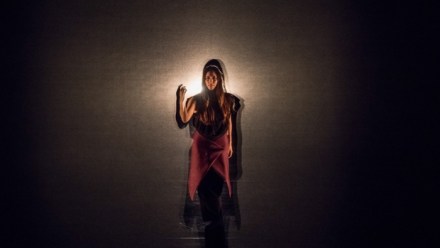
The blackness that sweeps along the stage behind Sylvie Guillem’s disappearing figure in the Russell Maliphant piece on her farewell tour is an astonishing moment. One flinches. An eclipse has happened and the light has just run away with her. All gone. Michael Hulls’s momentous lighting states Guillem’s intentions as clearly as Elias Benxon’s filmwork in the closing piece, Mats Ek’s Bye, which shows this singular performer quitting her elite world of imagemaking and humbly, nervously, going out to join the masses in the street. After lights out, she intends there to be no legacy.

August

More from Books

The weather is unseasonably cold, the flat’s floorboards cold. In the garden the courgette flowers but fails to fruit. The tomatoes hang green and heavy, like water bombs. Everywhere the boughs bend, the elder with its black beaded bunches, its little popping mice eyes. The crooked old pear across the street is having a stellar season, lit up like a winter tree with row upon row of olive green light bulbs. No one comes or the boughs are too high. In disgust it is chucking them on the road.

A Broken Appointment

More from Books

I opened the envelope: it contained a ticket in my name from London St Pancras to Paris Nord, departing at 9.17 on the 12th of the 12th, a Friday; coach 3 seat 27, non-smoking; and another for returning the following day, at 13 minutes past two, in the afternoon – dans l’après- midi; and a postcard of Pierre Bonnard’s Le bol de lait, and there was just one word on the back — ‘Come’, followed by an ‘x’. Whenever I pour a dish of milk, or dwell on the loop in the ‘C’ of her flowing unfamiliar hand, I can’t help thinking — ‘Oh what a poem — what a poem Thomas Hardy might have written about this!

Life after death

Exhibitions

This is not the biggest exhibition at Edinburgh and it will not be the best attended but it may be the most daring. While the main gallery at the Royal Scottish Academy, commandeered as usual for Festival season by the National Galleries of Scotland, hosts a glittering exhibition of David Bailey photographs, the lower galleries offer three small rooms of Jean-Etienne Liotard. Who? You may well ask, because for anyone not schooled at the Courtauld, Liotard is likely to be as obscure as Bailey is recognisable. Drawing the two together in the same building is less of a leap than it might appear, however, for Liotard was also an eminent portraitist of his time, and, like Bailey, was himself a celebrity figure.

Cuban comet

Music

By chance, my first night in Havana in 1987 was the night the clubs went dark to mark the death of Enrique Jorrin, the inventor of the cha-cha-cha, whose rhythmic brainstorm had gone global. My grandparents used to dance cha-cha-cha at Latin nights at the Grand Hotel in Leicester in the 1950s. Rubén Gonzalez, Jorrin’s pianist, thought that his death spelled ‘the end of the old music’ and went into retirement, his piano destroyed by termites in the tropical humidity. Another contemporary who didn’t quite make his mark was Ibrahim Ferrer — he’d been in a moderately successful band Los Bucucos. Ibrahim retired at about the same time, for similar reasons to Rubén — the work had dried up.

Chekhov by numbers

Theatre

Chekhov so dominates 19th-century Russian drama that Turgenev doesn’t get much of a look-in. His best known play, A Month in the Country, was written before Chekhov was born but Patrick Marber’s adaptation, with its new nickname, feels like Chekhov scripted by a Chekhov app. Turgenev’s characters, his atmosphere and his scenarios feel entirely familiar but they lack the tragicomic gestures that give Chekhov his unique appeal. There are no fluffed murders or dodged duelling challenges. No one tries and fails to blow his brains out. We’re on a rural estate where a group of crumbling, damaged sophisticates pootle around falling in love with each other. Every affair is doomed.

Nuclear overreaction

Television

When I was growing up in the 1970s, my three main fears were: being blown up by the IRA; being eaten by a Jaws-like great white shark; being vaporised by a nuclear bomb. I expect it was the same for most kids of my generation. The first two, obviously, were a function of the Birmingham bombings (et al.) and the Peter Benchley/Steven Spielberg axis of shark terror. And the third was the product of the relentless propagandising of CND as rehearsed faithfully on pretty much every BBC programme going from John Craven’s Newsround to The Archers, Animal Magic and Roobarb and Custard.

Portrait or landscape?

More from Arts

One of the default settings of garden journalists is the adjective ‘painterly’ — applied to careful colour harmonies within a border (or equally considered clashes) and long, swooping vistas. It evokes soft sfumato smudges of pink and green, much as I imagine the interior of the late Queen Mother’s wardrobe must have looked. But it’s also misleading. Among minor inconsistencies of British culture is that, despite the national obsession with gardening and an attachment to landscape painting, the two have failed to find one another. We still have no more than a fitful tradition of garden painting. Granted there have been moments.

Selective memory

Radio

It’s 70 years since the bombs were dropped on Hiroshima and Nagasaki and yet there has been no rush to commemorate this anniversary. It’s perhaps not surprising. Who would choose to recall the events of 6 August 1945 when the world first witnessed the effects of nuclear warfare? Yet the absence of date-setting, the annual forgetting, makes it appear that we’re much less keen to remember something that might make us feel uncomfortable or discredit us. One exception was on Radio 4 on Monday morning, when, in Under the Mushroom Cloud, Shuntaro Hida, a 98-year-old survivor of Hiroshima, told us frankly and without sentiment his memories of that day in August 1945.